The clapper that replaces church bells
The wooden instrument dates back to Medieval Ages
The sound of church bells falls silent during Maundy Thursday in some localities, replaced instead by the distinctive wooden clapper known as the ċuqlajta.
In Żejtun, this centuries-old tradition remains a central part of Easter celebrations.
From Maundy Thursday to Holy Saturday, bells in certain parishes stop ringing, and in their place the ċuqlajta produces a sharp, rhythmic sound that many associate with mourning and reflection. It is also considered a nuisance by many residents who complain about the repetitive clacking that can echo through the streets.
The instrument, also known as ċualajta, ċualajqa or ċoklajta, comes in various sizes. Large versions are typically installed in church belfries, while smaller ones may be used inside churches.
In Żejtun, the church ċuqlajta goes by a unique name: idiona.
It was built in 1986 by Carmelo Caruana, who named it after his niece, who had died at a young age.
“It’s part of the village’s tradition and is an important part of the Easter celebrations,” said Kevin Schembri, a member of the committee of the Ġimgħa Kbira feast in Żejtun, who takes care of the wooden structure.
Addressing concerns by residents about the noise caused by the instrument, Schembri defended the ancient practice.
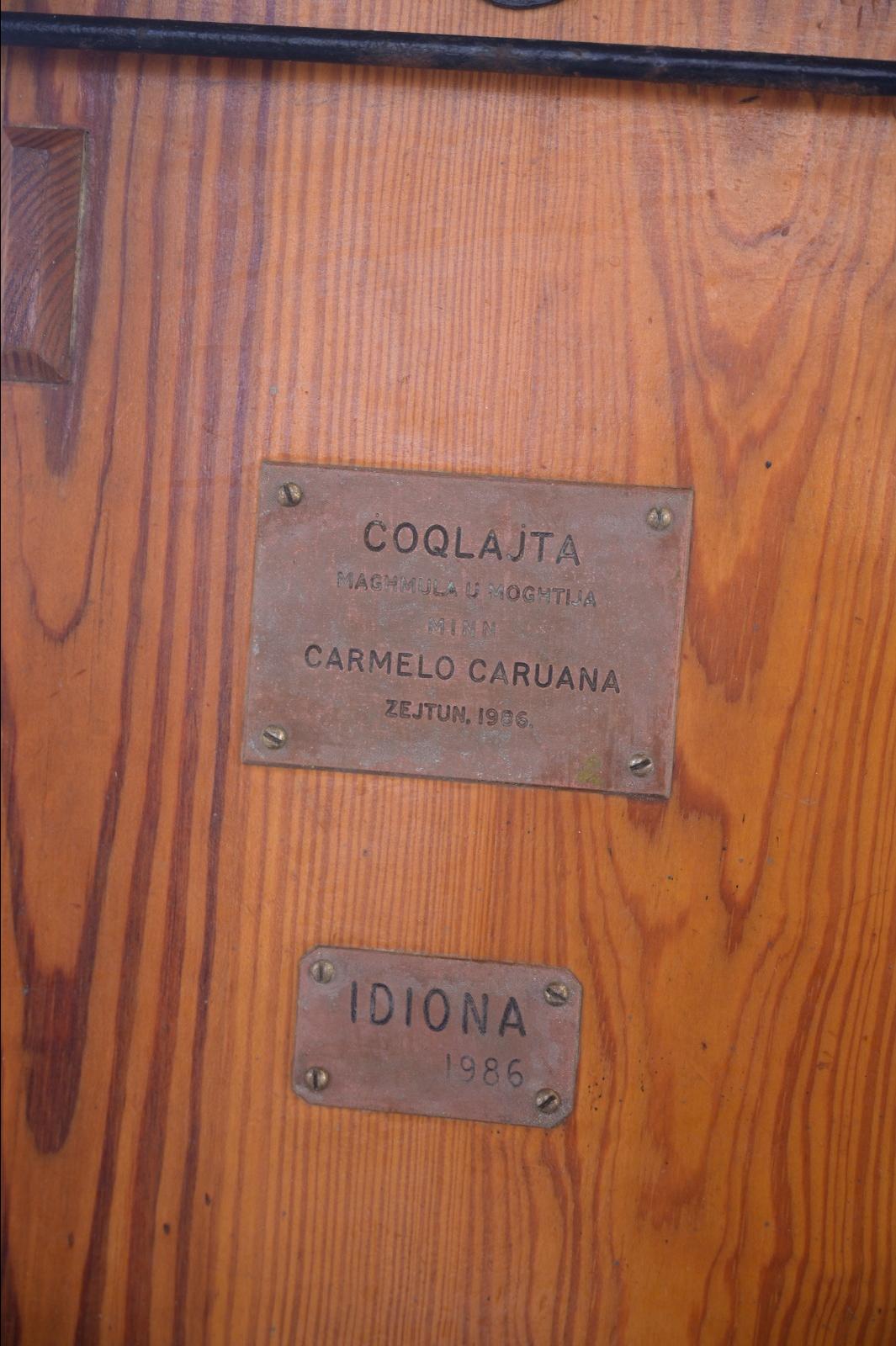 The wooden instrument was designed and built by Carmelo Caruana in 1986. Photo: Matthew Mirabelli
“Imagine we stopped setting off fireworks, just because they are noisy? The ċuqlajta is an important symbol in our tradition and liturgy. It would be a true pity if we had to stop it.”
Originally, the instrument had to be operated manually, but today it is motorised. When it is not in use, it is stored in a room on the roof of the Żejtun parish church.
History of the ċuqlajta
The ċuqlajta tradition dates back to the Middle Ages, and it is believed to have been influenced by Spanish, Sicilian and southern Italian customs.
Research by Anna Borg Cardona suggests the instrument may have reached Malta through these regions during the period of the Aragonese rule between 1282 and 1530.
Borg Cardona notes that the act of producing sound with wooden instruments was seen as a symbolic rejection of sin, echoing older beliefs about purification.
“The large cross-shaped instrument with mallets used in many Maltese belfries bears a decided resemblance to the Spanish matraca, which is a large construction that is also struck by wooden hammers,” Borg Cardona said.
“The matraca, like Malta's larger instruments, is hung in the belfry and used during Holy Week. This instrument may be considered a rotary development of the more primitive tric-trac, usually having one clapper or hammer, or of the triccaballacca of Naples, which consists of three or more percussive clappers.”
Just as historically, church bells were believed to ward off evil spirits, the same beliefs were associated with the ċuqlajta. The wooden instrument is also associated with the suffering of Jesus, mourning, repentance, and the betrayal of Judas Iscariot.