The curious case of the missing Valletta façade
Authorities seek answers after removal of protected shopfront raises concerns over heritage enforcement
Planning and heritage authorities are meeting the owners of a protected, century-old Valletta shopfront in an effort to “rectify the situation” after its removal sparked anger.
The Planning Authority said it would meet the lawyer representing the “third party concerned” but stopped short of identifying those responsible.
The meeting comes over two weeks after the prominent red façade on Merchants Street was torn down.
The Superintendence of Cultural Heritage was also looking into the removal of the wooden shopfront, but to date, there has been no feedback on any developments.
The disappearance of the Raffaele Portelli 1917 shopfront, which was scheduled together with some 100 others, had caused a stir among the public. The state of disrepair had been highlighted over the years, and they were angered and nostalgic about the loss.
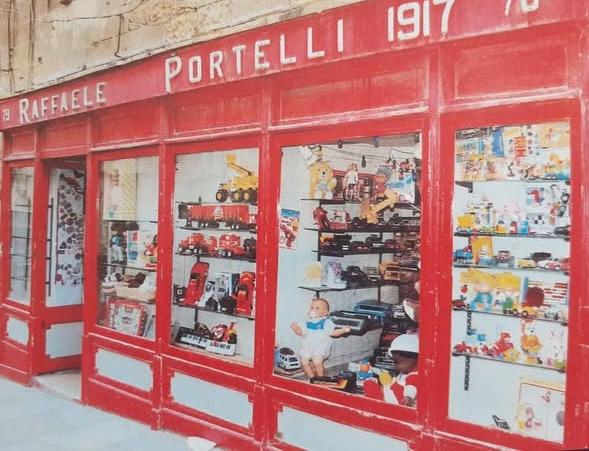 An old photo of the Raffaele Portelli shopfront.
Its loss raised questions about the scheduling exercise carried out 30 years ago and updated in 2011. That PA public notice for scheduled properties in Valletta was originally hailed as an “excellent” initiative to protect the old wooden shopfronts in the city. But it remained on paper.
The property at 78/79, Merchants Street, housed in the university building, belonged to the government and was leased from the Lands Department, with tenants being identified as the owners of a bar across the road that used the old stationery shop as storage for their street furniture.
Footage of chairs being carried out prompted Momentum leader Arnold Cassola to question “who stole the shop”.
He asked whether the Lands Department was an “accomplice in having let some wise guys occupy the place and dismantle historic woodwork” and whether rent was being paid.
Cassola joined a flurry of concern about the Grade 2 scheduled façade and others that are deteriorating in Valletta – an integral part of the capital’s streetscape, but left to decay until they fell apart and were removed.
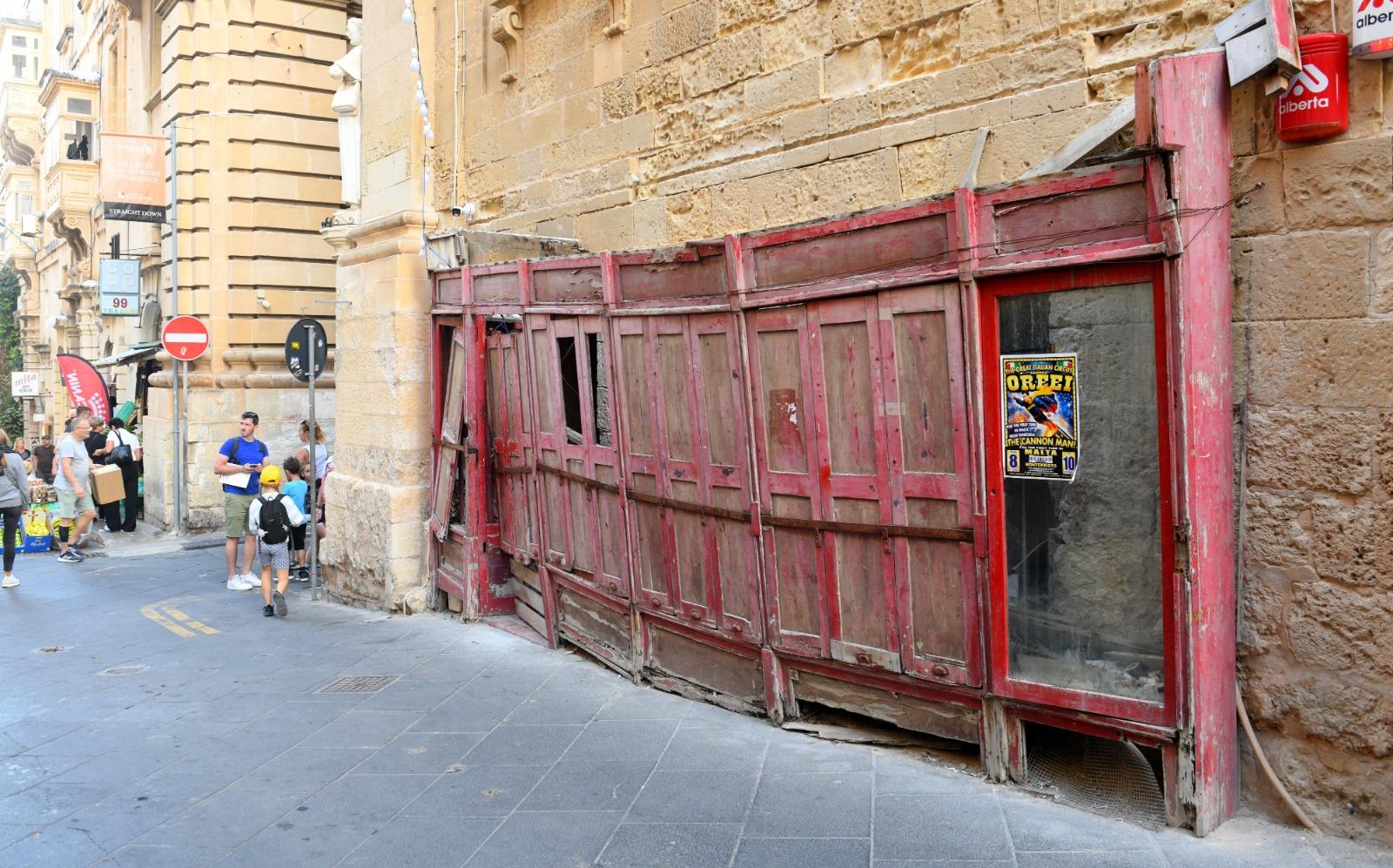 The façade left to deteriorate in 2025.
Valletta shop owner Thomas Camilleri, who recently painstakingly renovated his own vintage sign, believed the broader problem was that the maintenance of these scheduled properties was not enforced unless they were part of an ongoing PA application.
“When I came to restore (the shop) Hollywood, I had to deposit a bank guarantee of €2,300, and the SCH was on me like hawks.
Then, there are many that are falling apart, and their owners are not being made to restore or maintain them,” Camilleri said.
“Valletta’s history is slowly being eroded past a point of no return. It is just about quick renovations so people can start making a quick buck off a site,” he added.
A 2018 planning application by Mark Portelli to restore the timber façade while replacing any parts beyond repair was initially approved in principle but dismissed two years later after the PA ruled that pre-development conditions had not been met.
The conditions included a commencement notice from the architect, notice of works being displayed at the site, and a €4,000 bank guarantee to cover monitoring and compliance of restoration works. It is not clear which conditions were not met.
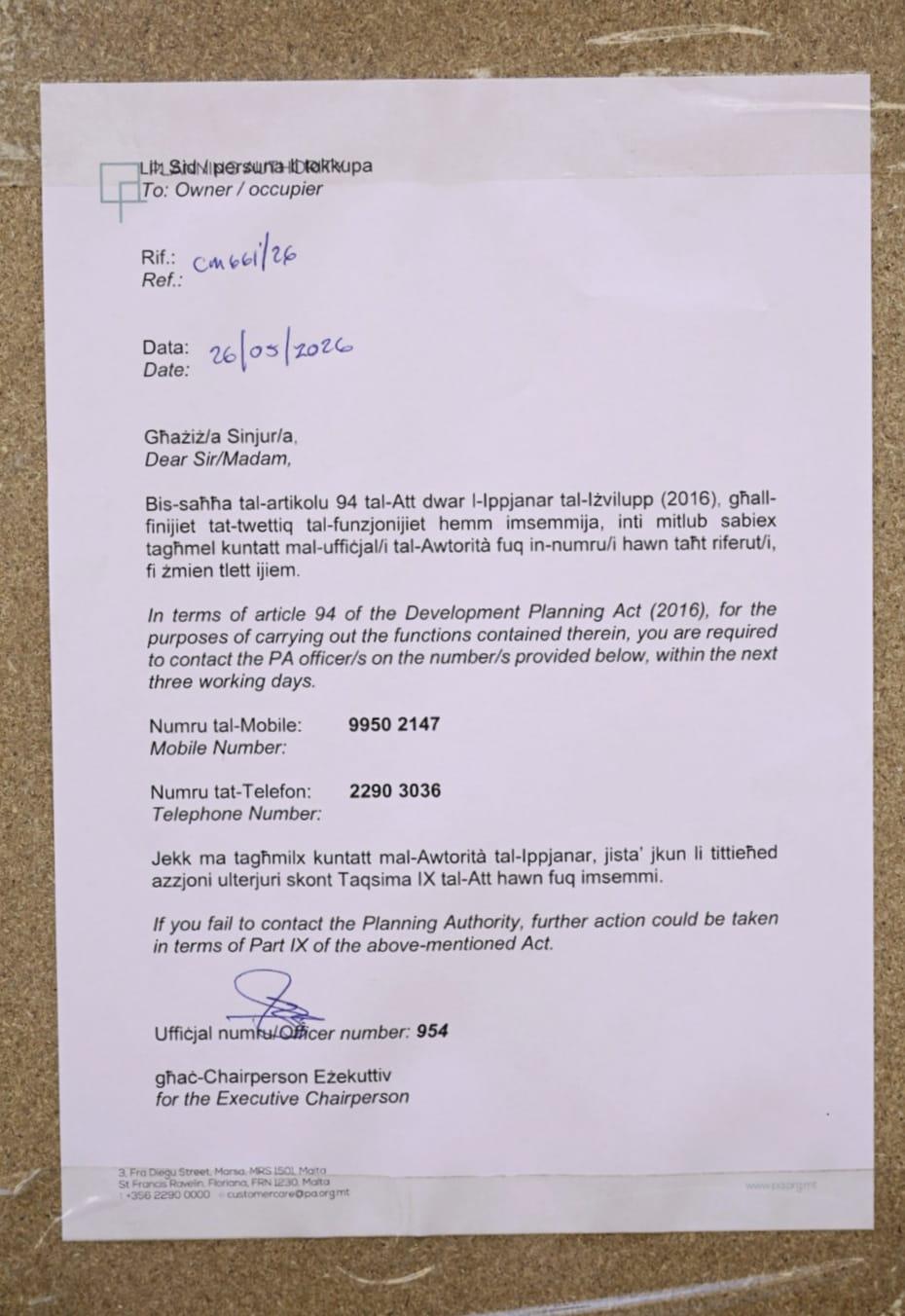 The PA notice requesting the shopfront's owner to contact it.
On the day the disappearance was highlighted, the PA put up a sign on one of the now exposed doorways requesting the owner to contact it “in terms of article 94 of the Development Planning Act (2016)”. Failure to do so could result in further action, it warned.
According to the Development Planning Act, the PA can exercise its powers of enforcement and issue a conservation order when a scheduled property is at risk of damage.
The order would require the owner to carry out conservation works to avoid any further damage.
In the case of any infringement of the Cultural Heritage Act 2019, the superintendent may serve a conservation and protection order on the owner or occupier of the property.
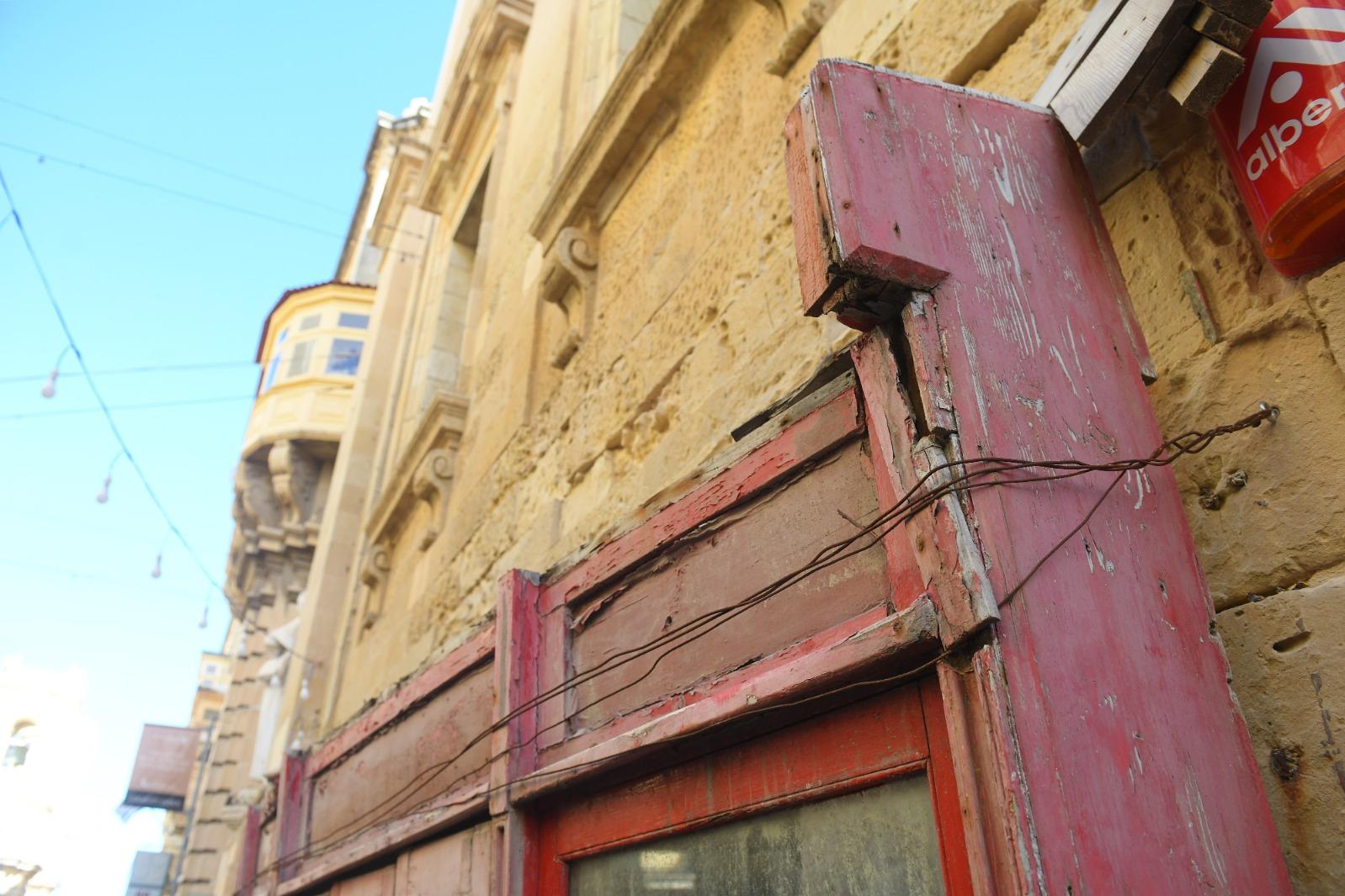 The timber front was barely bound together by a piece of wire by 2025.
In 2021, the PA had told Times of Malta it would be carrying out a site inspection after a Facebook page pointed out its state of disrepair.
Back in 2012, the Belt Valletta Facebook page had raised the alarm when an enforcement notice pinned on the deteriorating façade was ripped.
It had subsequently questioned what would happen if these properties were not owned by anyone and left to fall apart.
The SCH had explained that it was the property owner’s responsibility to ensure it was kept in good condition and not left to deteriorate.
In the case of government-owned property, the responsible entity would be the Lands Authority, it had said.