Data gaps and staff shortages undermine planning for ageing population – NAO
NAO report on Malta's preparedness for an ageing population presented in Parliament
A National Audit Office investigation into current and projected use of services for the elderly has pointed to fragmented financial and human resources data, which makes planning difficult.
NAO said it sought to present a comprehensive picture of the current and projected use of services, as well as related budgets and utilisation, but this objective was hindered by a lack of reliable and consistent data.
The limited information provided by some entities was insufficient for the precise calculation of staff deployment or shortages across services. Despite this, it concluded that there is a material shortage of staff.
For 2024, a minimum shortage of 38 full-time equivalents (FTEs) was identified across all reviewed entities and services, regardless of designation.
Approximately 196 FTEs were deployed across those services, making the identified shortfall significant.
The NAO warned that worker shortages, combined with poorly filtered and fragmented data, created risks to service provision, particularly in terms of timeliness and coverage.
These information gaps may also undermine forward-looking planning, capacity-building efforts and the development of future strategies.
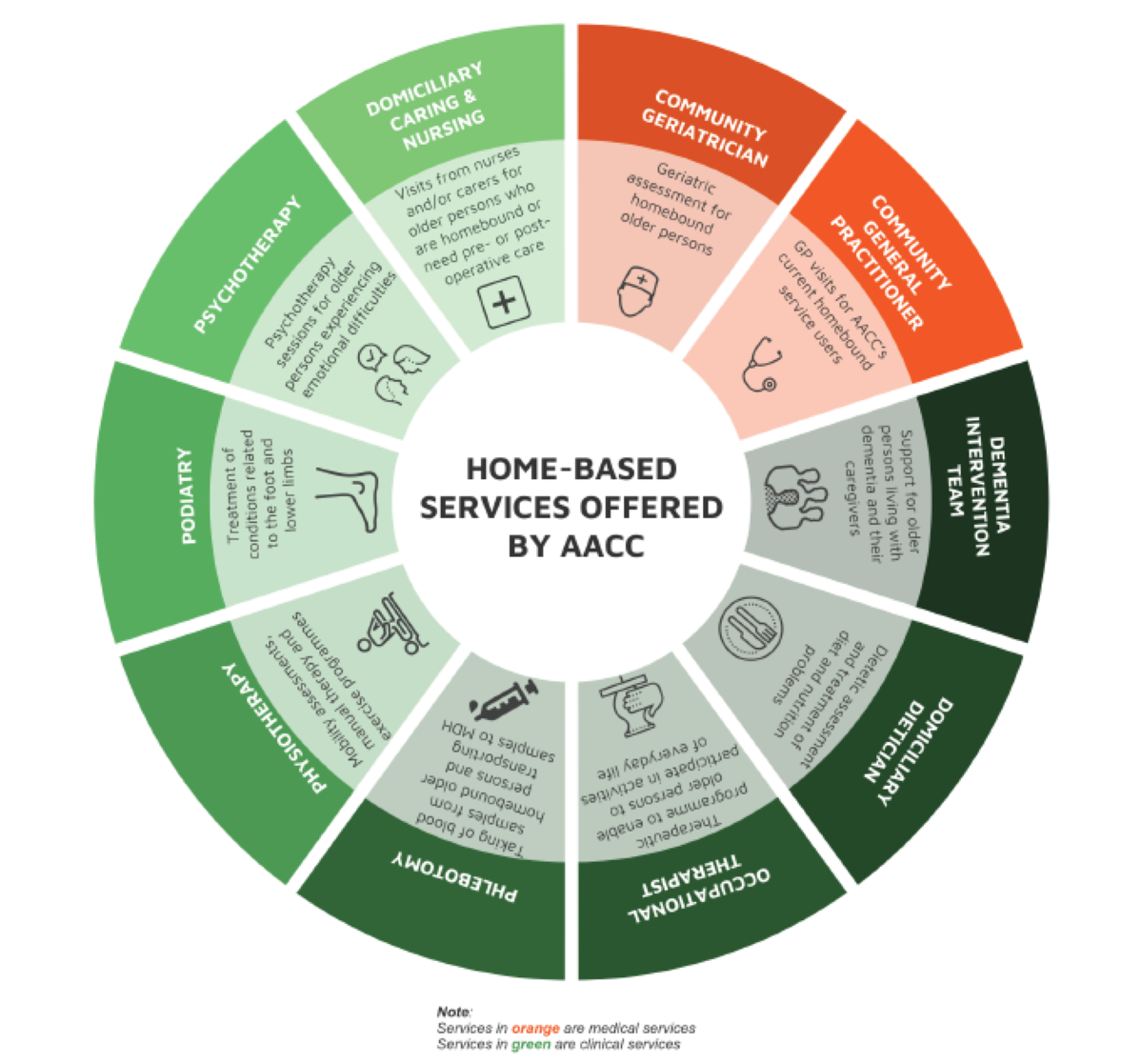 Services offered by Active Ageing and Community Care. Source: NAO
The report, prepared by Auditor General Charles Deguara and presented to the Speaker of the House of Representatives, examined the government’s preparedness for an ageing population.
It mapped all home-based medical services available to people aged 60 and over in Malta and Gozo - between 2019 and 2024 - and included exploratory meetings with the government entities responsible for delivering them.
These entities included Active Ageing and Community Care, the Directorate for Allied Health Services, Gozo General Hospital, Mater Dei Hospital, Sir Anthony Mamo Oncology Centre, Mental Health Services and Primary Health Care.
The audit confirmed that a wide range of home-based medical and clinical services is offered to individuals aged 60 and over. However, the decentralised manner in which these services are delivered may create unnecessary complexity for elderly patients navigating the system.
While most services saw increased usage during the period under review, the NAO noted that there was still considerable scope for wider uptake. It did not, however, express concern in this regard, given Malta’s context, including barrier-free access to community health centres, the availability of complementary services and user preferences.
The NAO requested data from each entity on the number of employees deployed to deliver these services between 2019 and 2024, any recorded shortages over that period, and related financial expenditure. Clear human resource data was only provided by Active Ageing and Community Care and Gozo General Hospital.
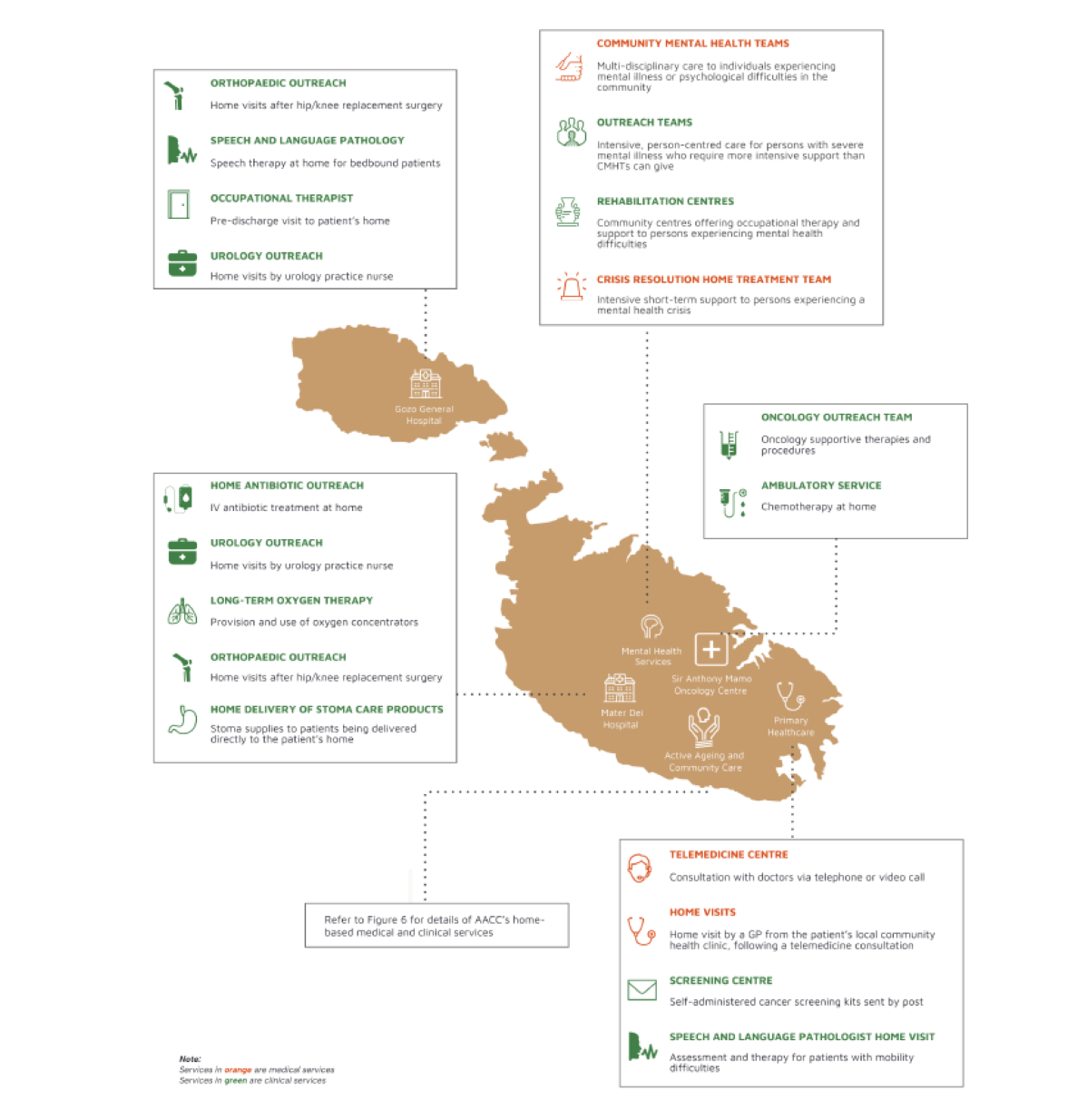 Home-based medical and clinical services offered by entities other than AACC. Source: NAO
When it came to financial information, most entities explained that spending on these services was absorbed within broader programme budgets, without specific line items allocated to home-based care.
Available expenditure data nonetheless showed a clear upward trend. Spending on the Dementia Intervention Team within Active Ageing and Community Care increased from €181,767 to €740,729 by 2024, while expenditure on physiotherapy services for the elderly rose from €179,111 to €395,958.
The NAO concluded that government entities providing home-based medical and clinical services should improve coordination, communication and information sharing.
This could include clearer referral pathways or the development of a one-stop-shop model covering all relevant services. In parallel, the Ministry for Health and Active Ageing was encouraged to consider a dedicated strategy for home-based services to improve collaboration and cost-effectiveness.
The NAO strongly recommended strengthening information management systems to ensure that financial and operational data, including staffing levels, could be easily extracted and comprehensively compiled. Such data would be essential for long-term strategic planning, service development and the possible recognition of home-based care as a distinct component of the national health system.
The report also noted that the difficulty in isolating financial and human resource data suggested the government was not currently treating home-based medical and clinical services for the elderly as a distinct, costed concept. This was reflected in the limited attention given to these services in national strategies and the absence of readily available trends or projections.
The full report is available on the NAO website at nao.gov.mt.