Starbucks planned for historic Mdina palazzo
db Group applies to convert Palazzo Santa Sofia into two cafes
Updated 4.44pm
db Group is planning to convert the ground floor of an Mdina palazzo to house US coffee giant Starbucks and UK cafe brand EL&N.
Applicant Francesco Apap Bologna is seeking Planning Authority (PA) permission to convert the ground floor of Palazzo Santa Sofia into two cafes while restoring the building's facade.
The plans (PA/00253/26) emphasise that the development will be limited to the ground floor while involving only “minor internal partitioning works and no demolition of any kind”.
The architect for the project is Sergio De Gabriele, with plans uploaded to the PA drawn up by design company Doric Studio, listing db Group as the client.
A render provided by db, which the group noted is currently being reviewed by the PA, suggests the development would feature an understated design with minimal branding.
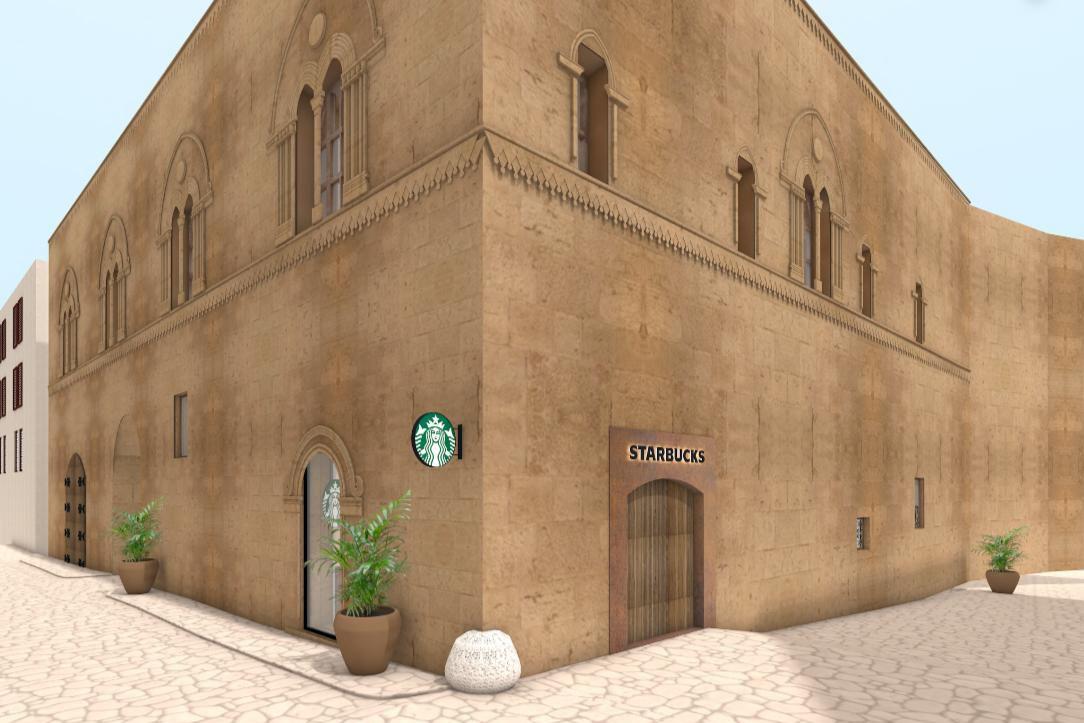 A render of the design provided by db shows minimal branding on the palazzo's exterior. Render: db Group.
In June 2024, db Group announced it had partnered with EL&N - known for its pink-coloured branding and neon lighting, and which bills itself as "the world's most Instagrammable cafe" - to bring the UK brand to Malta.
The group’s portfolio already includes all local Starbucks outlets.
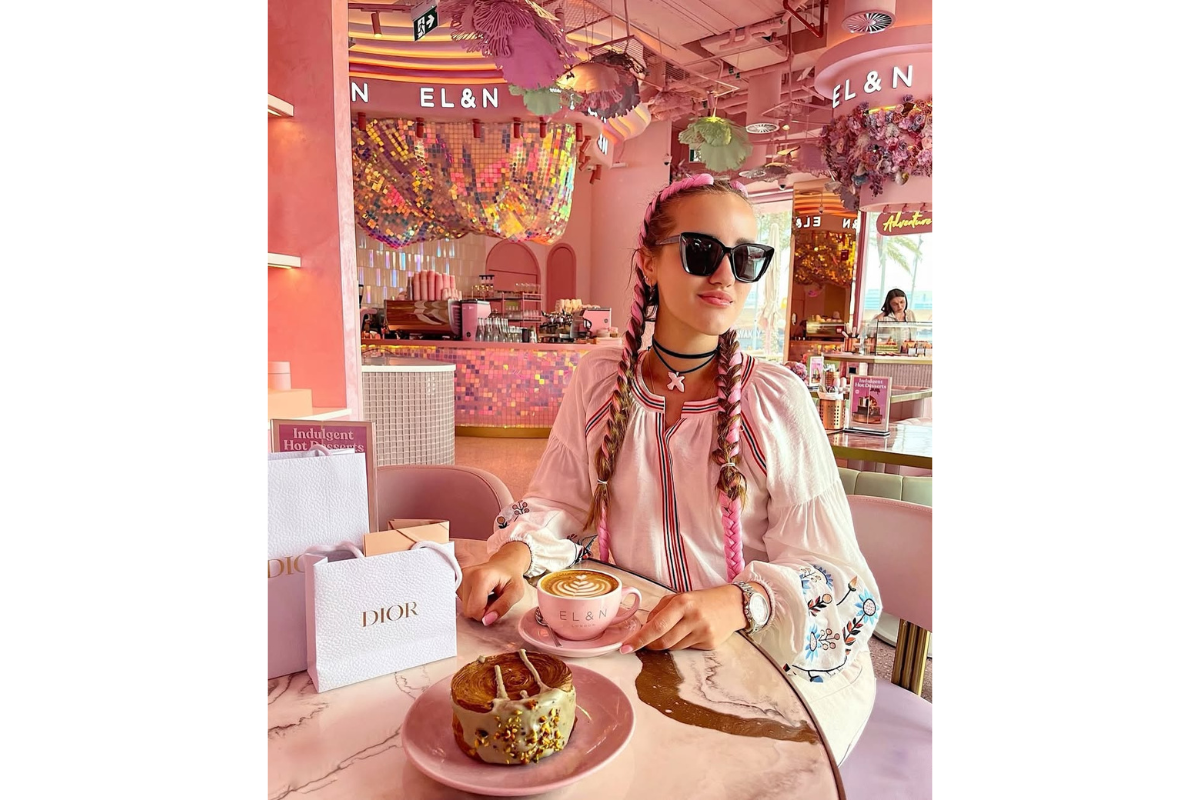 UK brand EL&N bills itself as "the most Instagrammable café in the world". Photo: EL&N/Instagram.
A spokesperson for db told Times of Malta that both brands had “experience working within historic settings” and that the outlets would be “designed specifically for this location”.
The cafes would be designed “in full respect of Mdina’s historic and cultural context, as well as its strict planning laws, and will include only discreet external signage”, he said.
“In the meantime, the facade of the building will be restored to its former glory”.
Medieval palazzo
Palazzo Santa Sofia, located opposite St Paul's Cathedral, is thought to date back to at least the 13th century, with the date 1233 etched above a window, according to the Mdina Local Council website.
The Grade 1 scheduled two-storey palazzo, spanning two buildings, is believed to be one of the oldest in Malta and features Gothic medieval architecture, interior courtyards and a passageway across a public road connecting the two halves of the building.
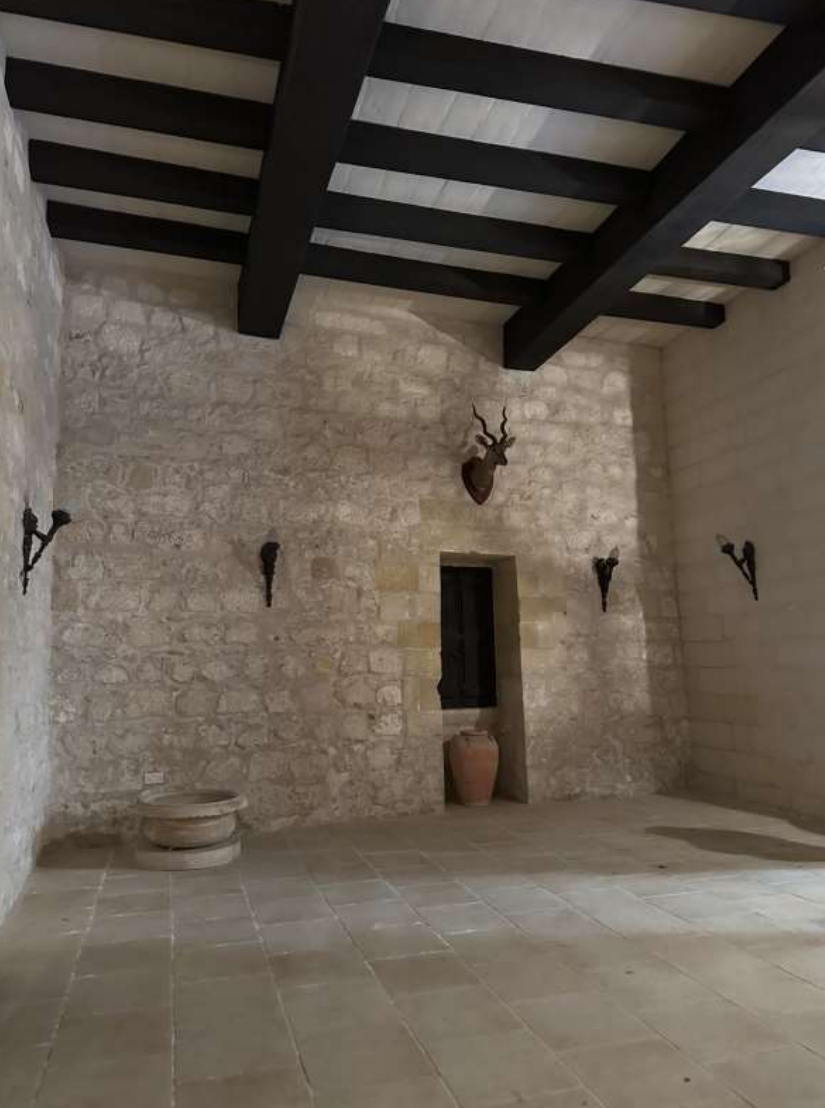
The building is thought to date back to at least the 13th century. Photo: PA.
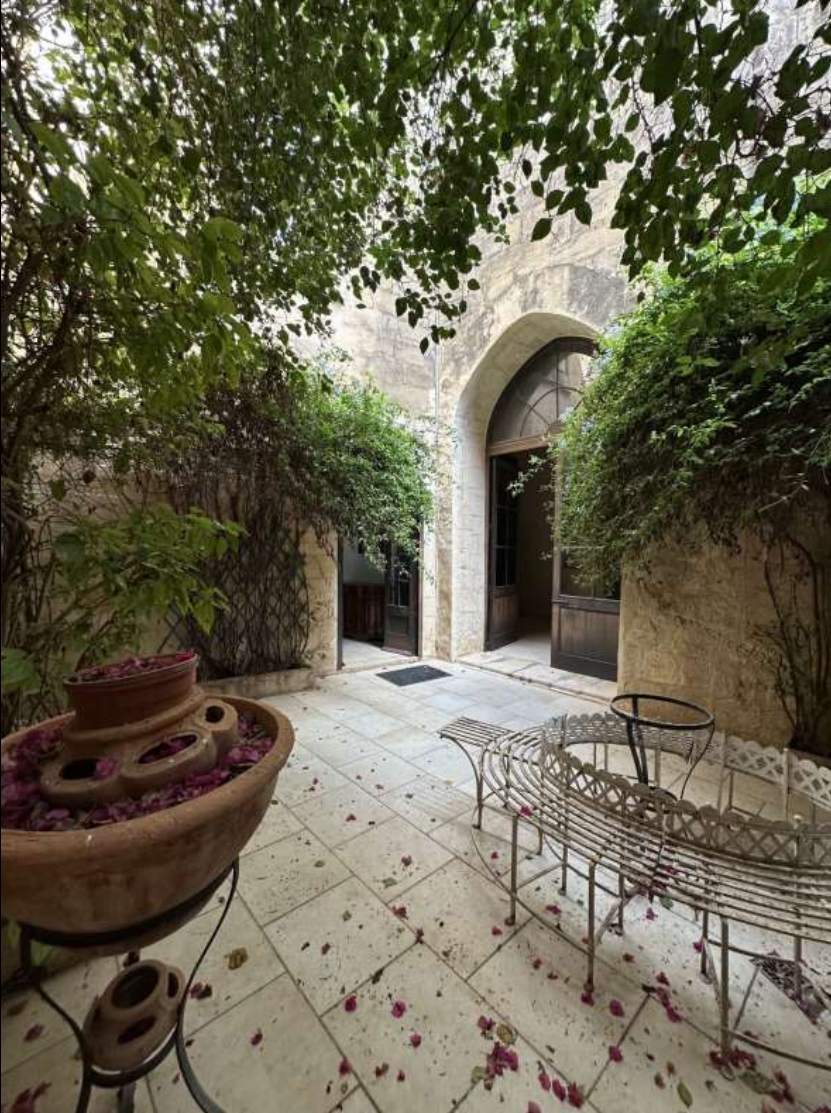
The plans feature outdoor seating areas. Photo: PA.
Photos of the interior uploaded to the PA website show high-ceilinged rooms featuring pillars, arched doorways, and beams and fixtures detailed in black. A leafy courtyard connects different parts of one half of the palazzo, while a smaller courtyard can be seen connecting those in the other.
Two buildings, two cafes
Plans for the development show two cafes: one in the section of the palazzo bordering Triq San Pietru, and a slightly smaller one in the building bordering Triq is-Salib Imqaddes.
The two halves of the palazzo, separated by Triq Santa Sofija, both face Villegaignon Street, which is slated as the side to feature signage.
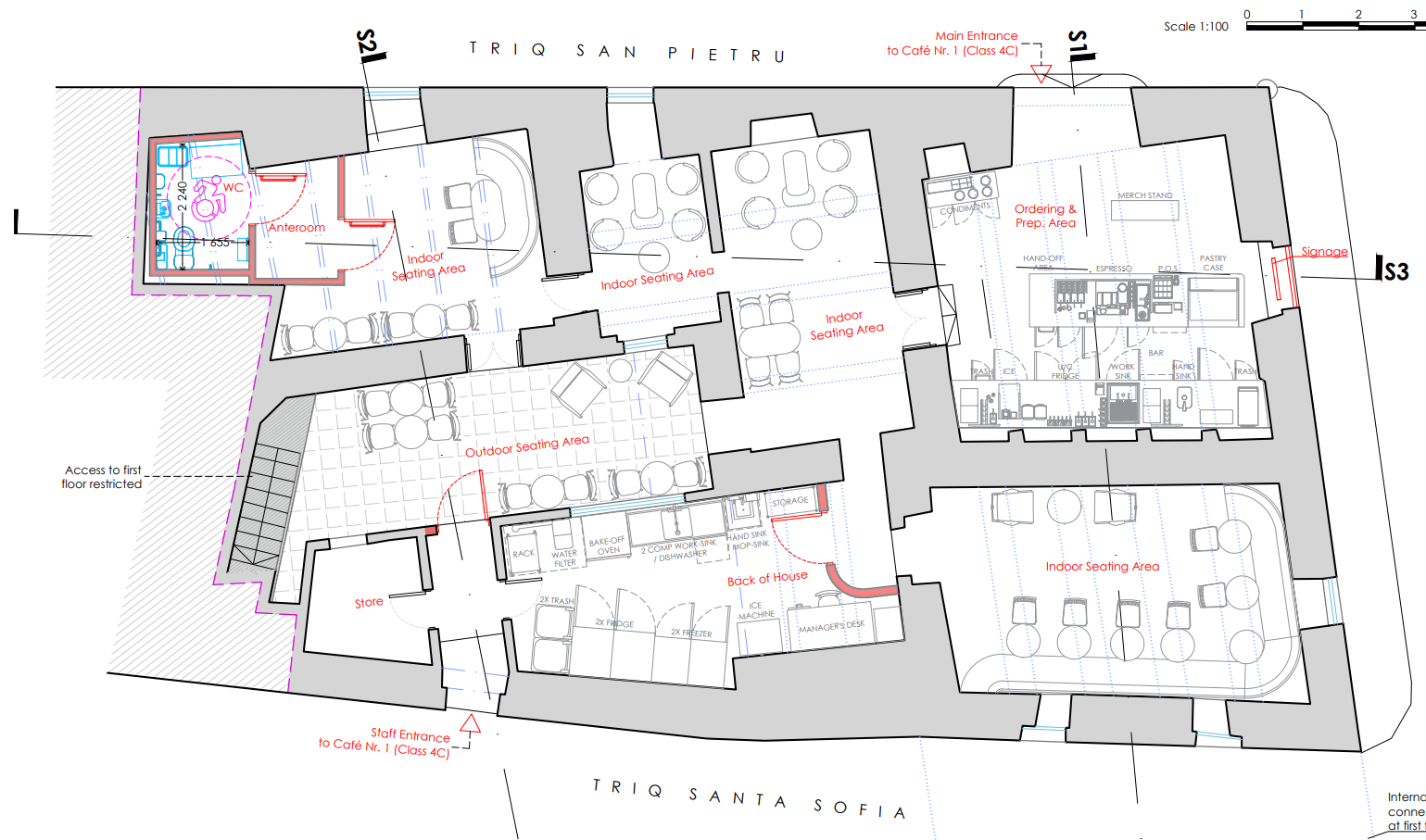
A more intensive cafe will occupy one half of the palazzo. Graphic: PA.
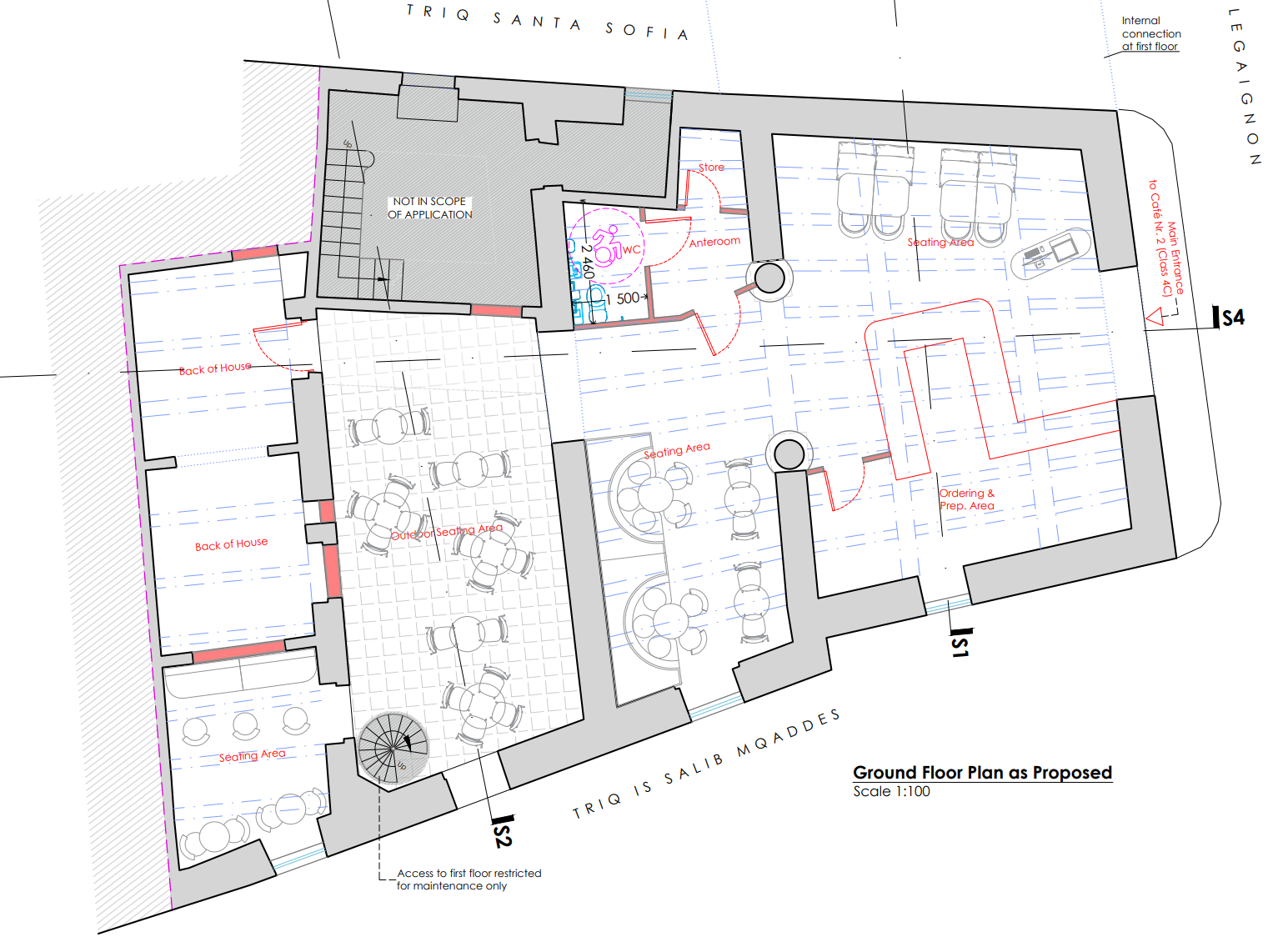
A slightly smaller cafe will occupy the other half. Graphic: PA.
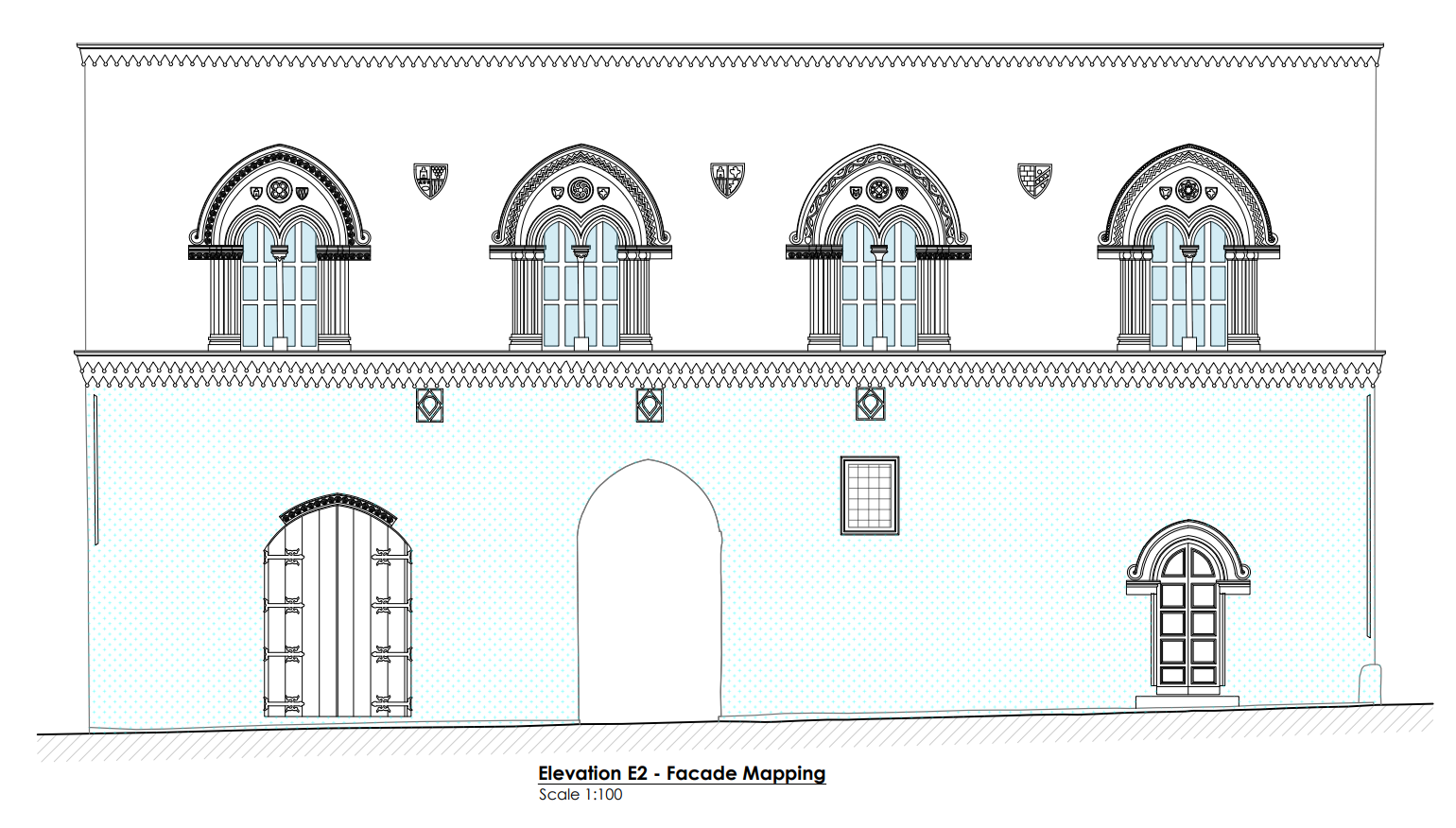
The ground floor facade will be restored under the plans. Graphic: PA.
The plans show rooms dedicated to receiving and preparing customer orders, indoor and outdoor seating areas, and back-of-house, storage and bathroom facilities. Access to the first floor of the property will be restricted.
Interventions to the facade of the palazzo are to be “strictly limited to gentle cleaning and repointing of any loose joints” and only affecting the ground floor, the plans say.
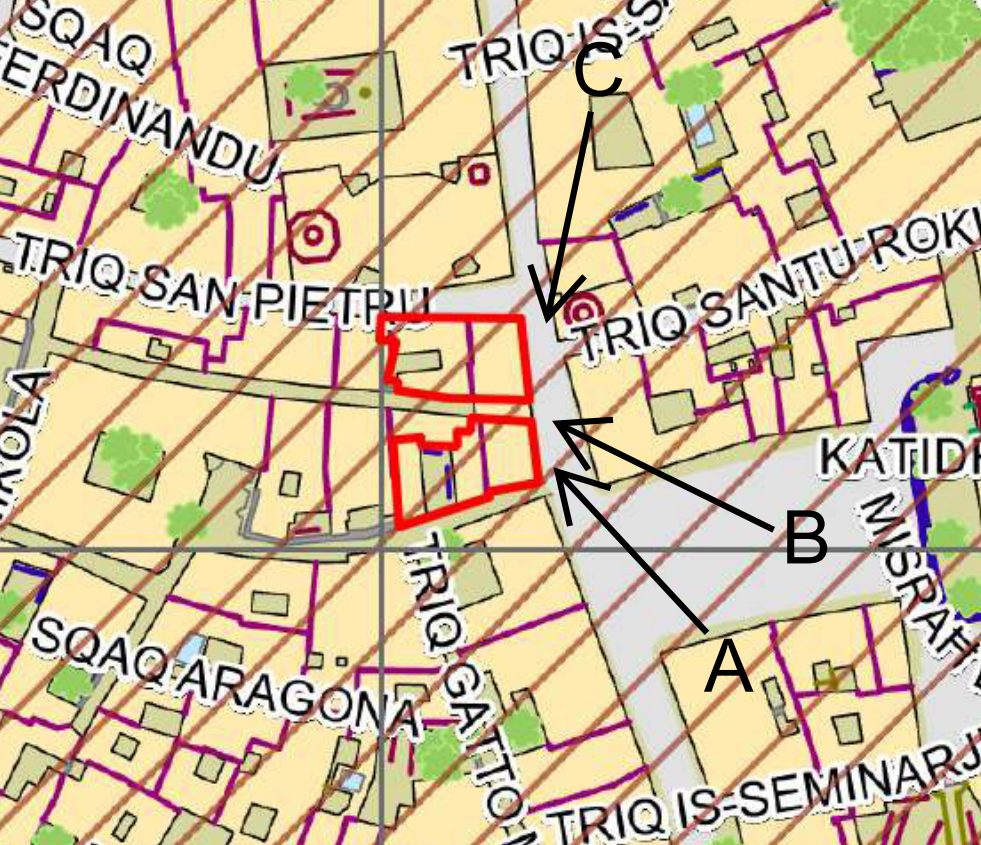 The palazzo occupies is spread across two buildings. Graphic: PA.
The application, published earlier this week, has yet to receive a recommendation from a PA case officer. Apap Bologna — who holds the oldest nobility title in Malta — owns the palazzo in its entirety, according to the plans.
Those wishing to object to the development have until February 20 to do so.
This is not the first time in recent history that an Mdina palazzo has been eyed for development; in September, plans were submitted to convert the 17th-century Palazzo Mangion into a five-star hotel.
‘Shocked’
Fondazzjoni Wirt Artna has objected to the plans to convert Palazzo Sofia into two catering outlets saying it was “shocked” by the announcement.
In a statement on Saturday, FWA chairman Mario Farrugia pointed out Mdina has been “over-commercialised” in recent years and this has “sadly degraded its unique medieval and once-silent character”.
“The addition of yet another two catering outlets in this very special building should be flatly dismissed,” Farrugia said.
He suggested a “more sympathetic use” should be found, one that will “not only respect its ancient character but also guarantee its long-term preservation”, such as a permanent museum on Mdina and Rabat, “which is sorely lacking”.
“Despite its ancient history, Mdina has only two true museums, and none are dedicated to the city itself. Mdina is visited by some 1.5 million tourists annually, most of whom leave with little more than the faintest idea of its important past.”