When development erases memory: the loss of the Macaroni Premier factory
Malta still appears hesitant to acknowledge the cultural value of its 20th-century architectural landscape
With the demolition of the Macaroni Premier pasta factory in Balzan, Malta has lost yet another piece of its 20th-century architectural heritage, a loss that reveals how fragile the island’s modern built legacy still is.
Because we are memories, and memories give us identity, the erasure of such structures is never merely physical, but cultural.
Malta rightly prides itself on the preservation of its baroque churches, palaces and fortifications. These monuments are restored, protected and celebrated as pillars of the island’s cultural identity.
Yet when it comes to 20th-century architecture, particularly modernist and industrial buildings, the attitude often changes dramatically. Structures from this period are frequently treated as expendable, valued less for their cultural significance than for the development potential of the land they occupy.
This reflects a broader cultural tendency. Just as Malta still lacks a dedicated museum for modern art, 20th-century architecture is often undervalued.
The recent demolition of the Macaroni Premier factory in Balzan illustrates this troubling reality.
For decades, the industrial building stood at the junction between Lija, Birkirkara and Balzan, marking the entrance to the area. Though long disused, it remained a distinctive presence in the urban landscape, forming part of the locality’s visual identity.
Today, it has been reduced to rubble, cleared for a multi-storey residential and commercial complex.
The demolition proceeded despite acknowledgement from the Superintendence of Cultural Heritage that the building possessed architectural and historical value. Documented in 1940s air-raid shelter plans and displaying characteristics of interwar industrial architecture, the factory formed part of Malta’s modernist landscape.
Yet as often happens with 20th-century structures, its heritage value ultimately proved secondary to the economic potential of the site.
Architect Theo Cachia had proposed an alternative approach: a redesign incorporating key elements of the original factory within a new scheme. Such strategies are widely used in contemporary urban planning, allowing historic structures to be preserved while accommodating new functions.
This ongoing pattern ultimately contributes to a wider process of cultural amnesia
Across Europe, former industrial buildings have been transformed into cultural centres, galleries, offices and residential spaces without erasing their architectural identity. These projects often become vibrant urban environments precisely because they preserve visible layers of history.
Malta, however, still appears hesitant to acknowledge the cultural value of its 20th-century architectural landscape.
Part of the problem is that buildings from this period are often perceived as too recent to merit preservation. Yet modernist architecture represents one of the most significant cultural movements of the 20th century.
Emerging across Europe between the 1920s and post-war decades, modernism introduced new architectural languages shaped by functional design, new materials and social change. Buildings like the Balzan factory form part of a broader historical narrative linking Malta to international architectural developments.
Elsewhere in Europe, buildings from the same era are increasingly recognised as cultural landmarks. A revealing example is E-1027, the modernist villa designed between 1926 and 1929 by Irish architect Eileen Gray.
Overlooking the Mediterranean at Roquebrune-Cap-Martin, the house is widely regarded as one of the pioneering works of the International Style.
Gray conceived it as a total work of design, integrating architecture, furniture and everyday living into a highly personal and functional modern environment.
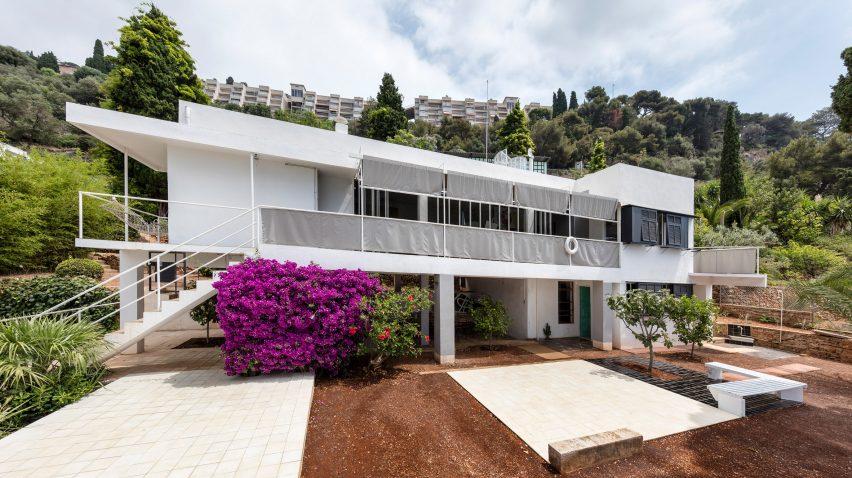 E-1027, the modernist villa designed between 1926 and 1929 by Irish architect Eileen Gray, overlooking the Mediterranean at Roquebrune-Cap-Martin, France.
Yet the building’s survival was far from guaranteed. For decades it suffered neglect before the French state acquired the property and initiated a conservation project. Reopened to the public in 2021, it now forms part of an internationally recognised modernist heritage site.
The contrast with Malta is striking. While other European countries are investing in preserving modern architectural heritage, buildings from the same period in Malta are still frequently demolished with little hesitation.
Malta nevertheless possesses its own modernist legacy. The island’s architectural culture has historically been conservative, and the adoption of modernist principles occurred relatively late. Baroque forms dominated for centuries, and it was not until the 1950s and 1960s that Malta began to develop a new architectural language.
During this period, a generation of young architects within the Public Works Department − including Renato Laferla, Joseph Huntingford and Joseph Tonna − applied modernist ideas to schools, social housing and private residences. Inspired by international architecture journals and the International Style, they introduced a design vocabulary based on functionality, light, cross-ventilation and minimal ornamentation. Industrial buildings, villas and public structures from this period represent Malta’s gradual entry into modernist architecture.
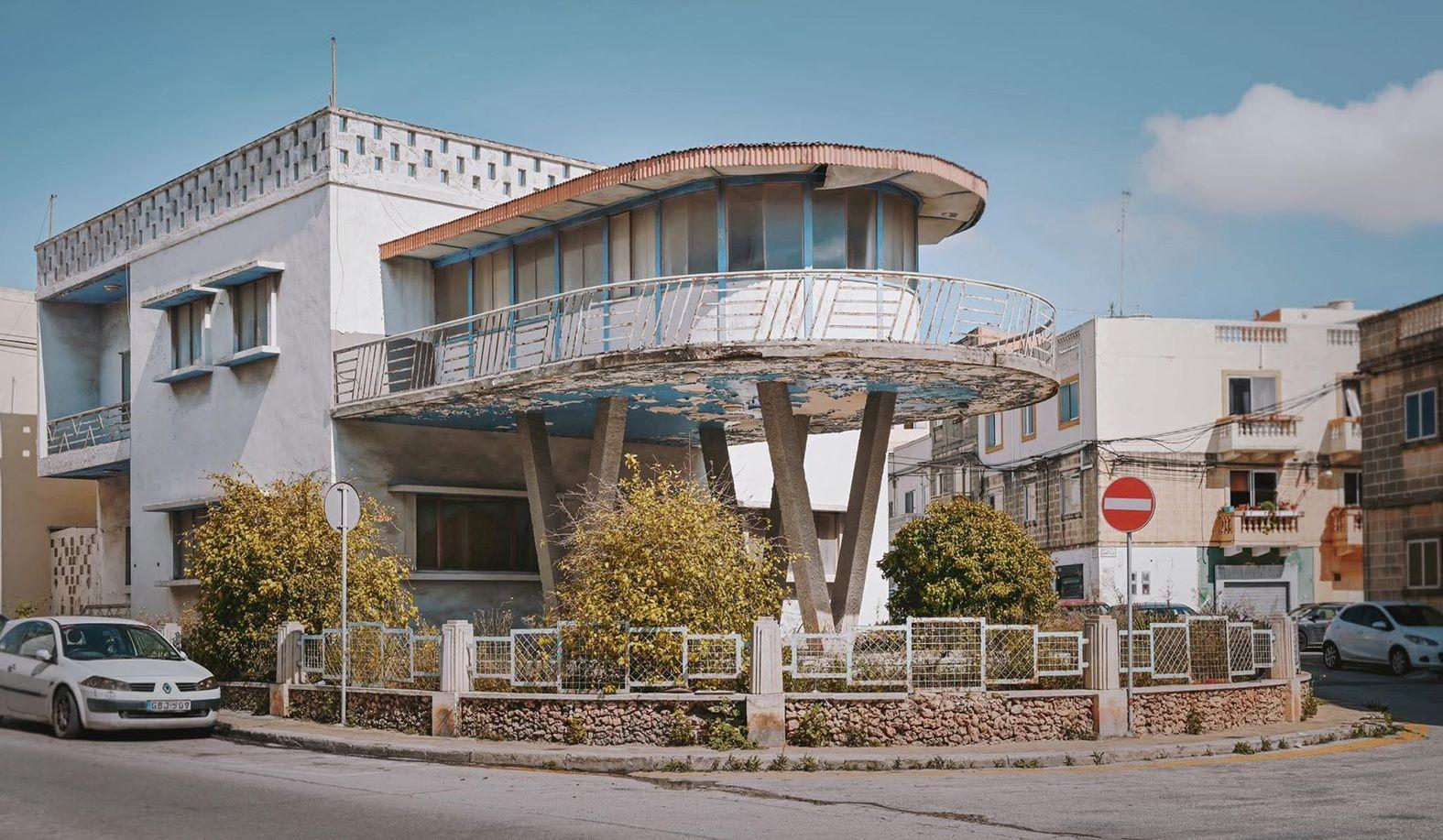 Villino Grech, Birkirkara, was designed by Louis Rizzo Naudi in the 1960s.
A notable surviving example of this moment is Villino Grech in Birkirkara, designed by Louis Rizzo Naudi in the 1960s.
Built by entrepreneur Carmelo Grech, the villa stands out for its striking modernist design, including V-shaped concrete columns and a projecting semicircular terrace.
Situated along Naxxar Road, it remains one of the island’s most recognisable examples of mid-20th-century residential modernism. Yet despite its architectural significance, the building has suffered neglect in recent years, illustrating the fragile position of many modernist structures within Malta’s heritage landscape.
Despite these losses, there are examples that demonstrate how modern industrial heritage can be successfully preserved. The redevelopment of the former Farsons Brewery complex in Mrieħel, now known as The Brewhouse, shows how adaptive reuse can safeguard architectural history while giving historic buildings new life.
Founded and designed by Lewis V. Farrugia and William Binnie and inaugurated in 1950, the brewery was one of the earliest reinforced-concrete art deco industrial structures in post-war Malta.
Its recent transformation preserved the building’s distinctive architectural character while adapting it into a vibrant mixed-use destination, affirming that development and heritage preservation need not be mutually exclusive.
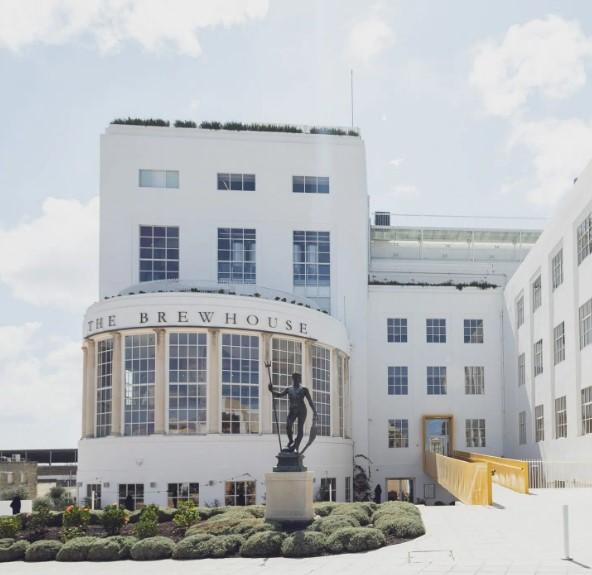 The redevelopment of the former Farsons Brewery complex in Mrieħel, now known as The Brewhouse, shows how adaptive reuse can safeguard architectural history while giving historic buildings new life.
Projects like the Brewhouse redevelopment thus demonstrate that a more thoughtful approach is possible, one that respects the architectural achievements of the 20th century while allowing cities to evolve.
Yet in Malta, demolition too often remains the default solution. Examples such as the neglect of Villino Grech and the loss of the Balzan factory reveal how vulnerable Malta’s modernist architecture remains, even when its significance is acknowledged.
The demolition of the Macaroni Premier factory is, therefore, more than the loss of a single building. It reflects a broader failure to recognise modernist and industrial architecture as part of Malta’s cultural heritage.
This ongoing pattern ultimately contributes to a wider process of cultural amnesia. Unless Malta begins to value and protect its modernist heritage in both art and architecture, the island risks erasing the physical traces of its passage into modernity.

Rowna Baldacchino is an art historian and cultural critic with postgraduate specialisation in art history, literature and translation, focusing on modern and contemporary art in Malta.