‘DIJA’: a contemporary meditation on light inspired by a Gozitan ‘Mappa Mundi’
The exhibition draws on the presence of light in two familiar places: the home and the vast expanse of the sea
The new exhibition in Il-Ħaġar Museum, Victoria, DIJA (‘light’, or ‘glow’, perhaps ‘shine’ or ‘sunbeam’) is a fresh and abstracted take on the world around us that draws on a 16th-century cartographical work, the detailed Mappa Mundi by Gozitan philosopher and scientist Antonino Saliba, a contemporary of Galileo Galilei.
Saliba’s imaginative map of the world wove together nature, geography, astrology and religious iconography as he portrayed the earth within the concentric circles of a wider celestial order.
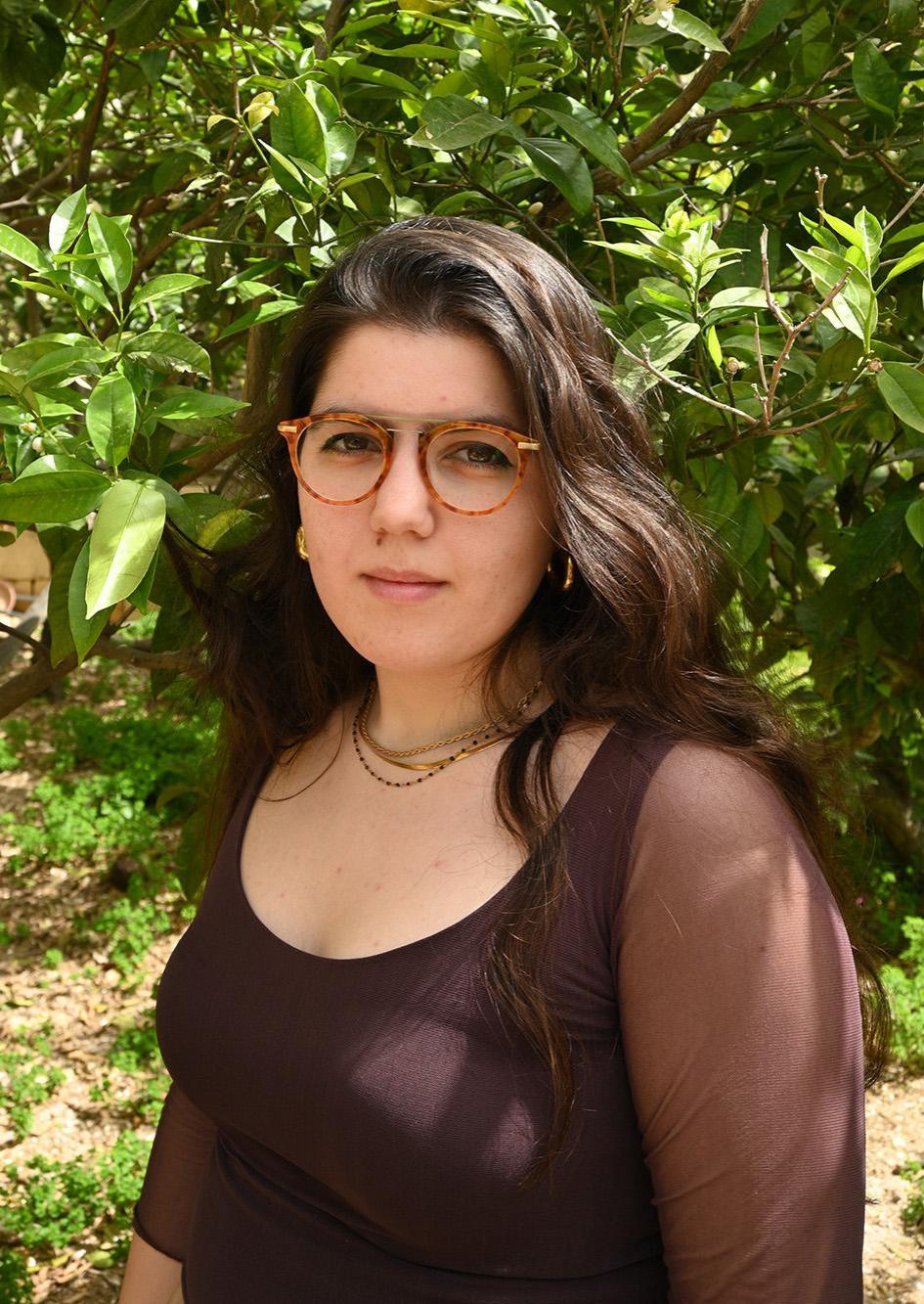 Clara Azzopardi
Over 400 years later, Mappa Mundi has served as the inspiration for Clara Azzopardi’s first solo exhibition, a collection of works in a diverse range of materials – fabric, paint, paper – in which she examines the motifs embedded in medieval maps, and the strata of Saliba’s layered depiction in particular.
“I graduated in architecture and conservation and so whenever I want to look forward, I always look to the past!” she smiles.
 Beam
Beam“[Azzopardi] reinterprets one motif in particular which stands out: light,” explains curator Sera Galea, and light lies at the heart of Azzopardi’s practice, serving as both muse and subject, as “a conceptual nucleus through which she navigates ideas of presence and absence, the known and unknown... Azzopardi explores light’s dualistic dynamics, contrasting its role as an agent of sanctuary and as a constantly shifting, fluid element, as both presence and absence, illumination and obscurity.”
“DIJA draws on the presence of light in two familiar places: the home and the vast expanse of the sea,” she continues. “Indoors, it transforms a space into a sanctuary; outdoors, the sea’s surface playfully mirrors light, constantly shifting with the undulations of the waves, recasting light in new forms.”
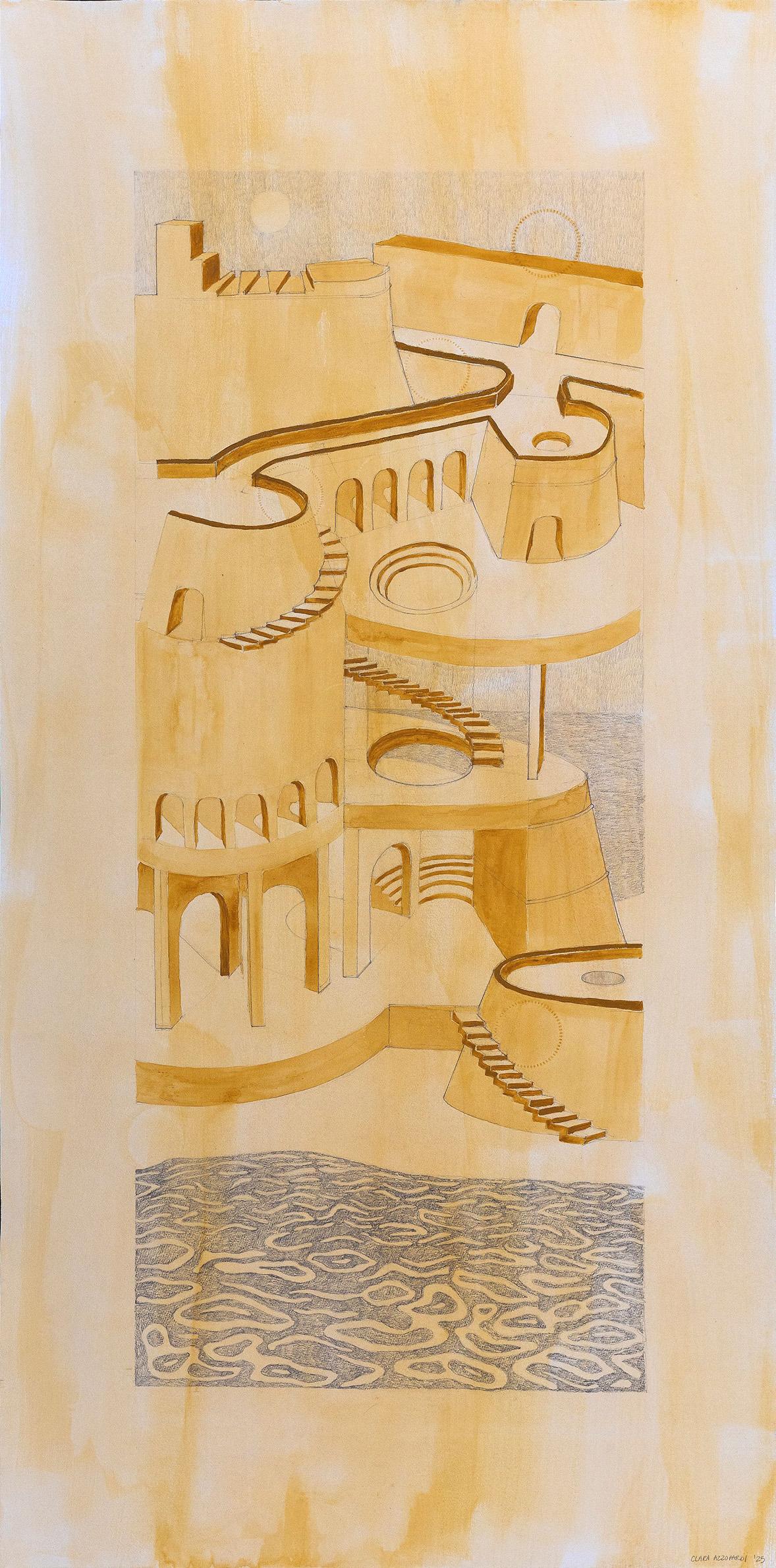 Architecture of Memory
Just as the Mappa Mundi is presented in layers, so too is this exhibition. It begins with the artist’s table, a reminder of the studio and the processes that have fed into the finished works.
“Making art is how I relate to people and the world around me,” smiles Azzopardi.
Here, too, hangs a pair of drawings showing a section through an imaginary building on stilts, how light is received in both interior and exterior spaces and the blurred boundary Azzopardi perceives between the built-up and the natural world.
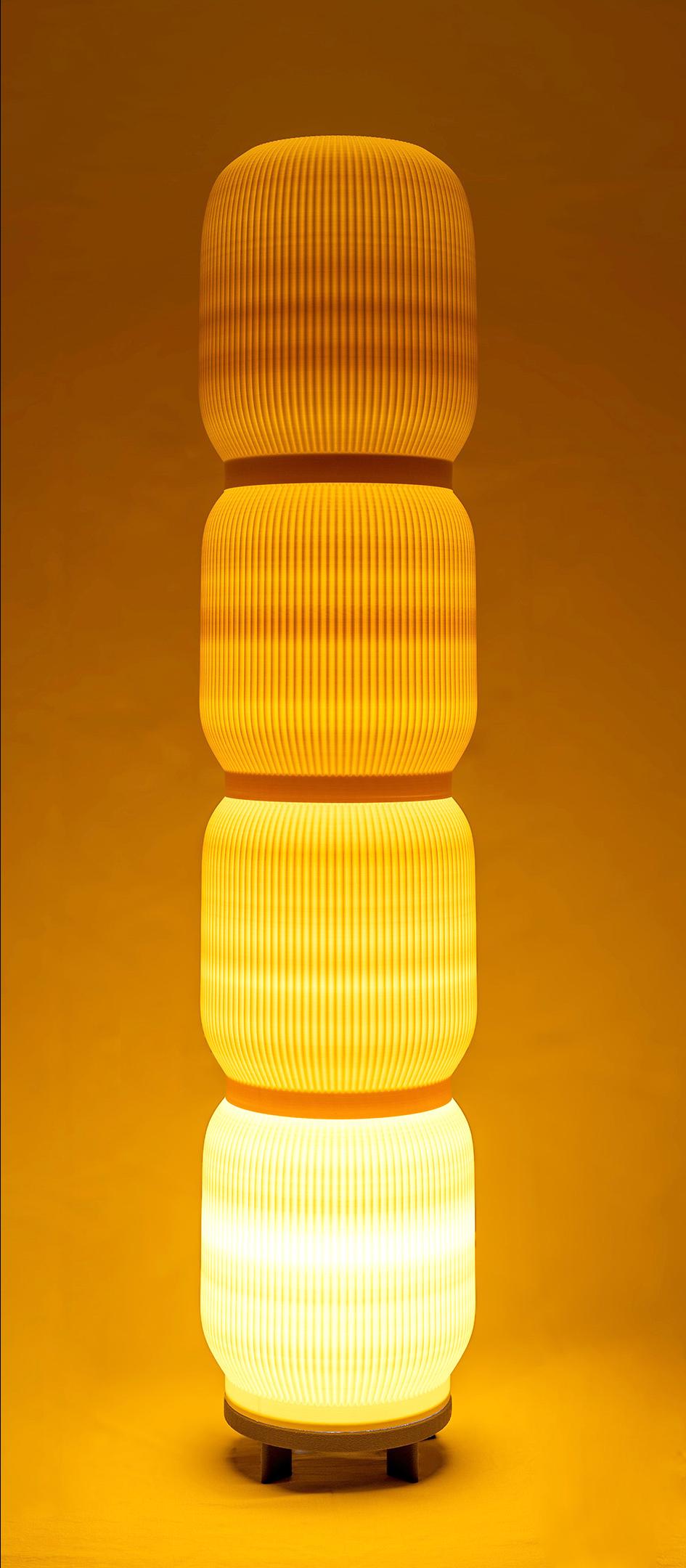 Sikka Lamp V
The first gallery room focuses on Seeking the Self which, she explains, relates to the interiors of our everyday life in relation to the feeling light gives us. It’s a homely room in golden stone, lit with Azzopardi’s own 3D-printed lamps (co-fabricated with her husband Keith), and the shape of the roof mirrored in three honey-ochre works illustrating the ‘architecture of memory’, a ‘labyrinth of light’, and the ‘echoes of a sunlit city’.
Each is layered to reference the strata in Saliba’s work, and together they introduce the abstracted motif of the sea, a surface pattern drawn from Mappa Mundi, that runs throughout the whole show.
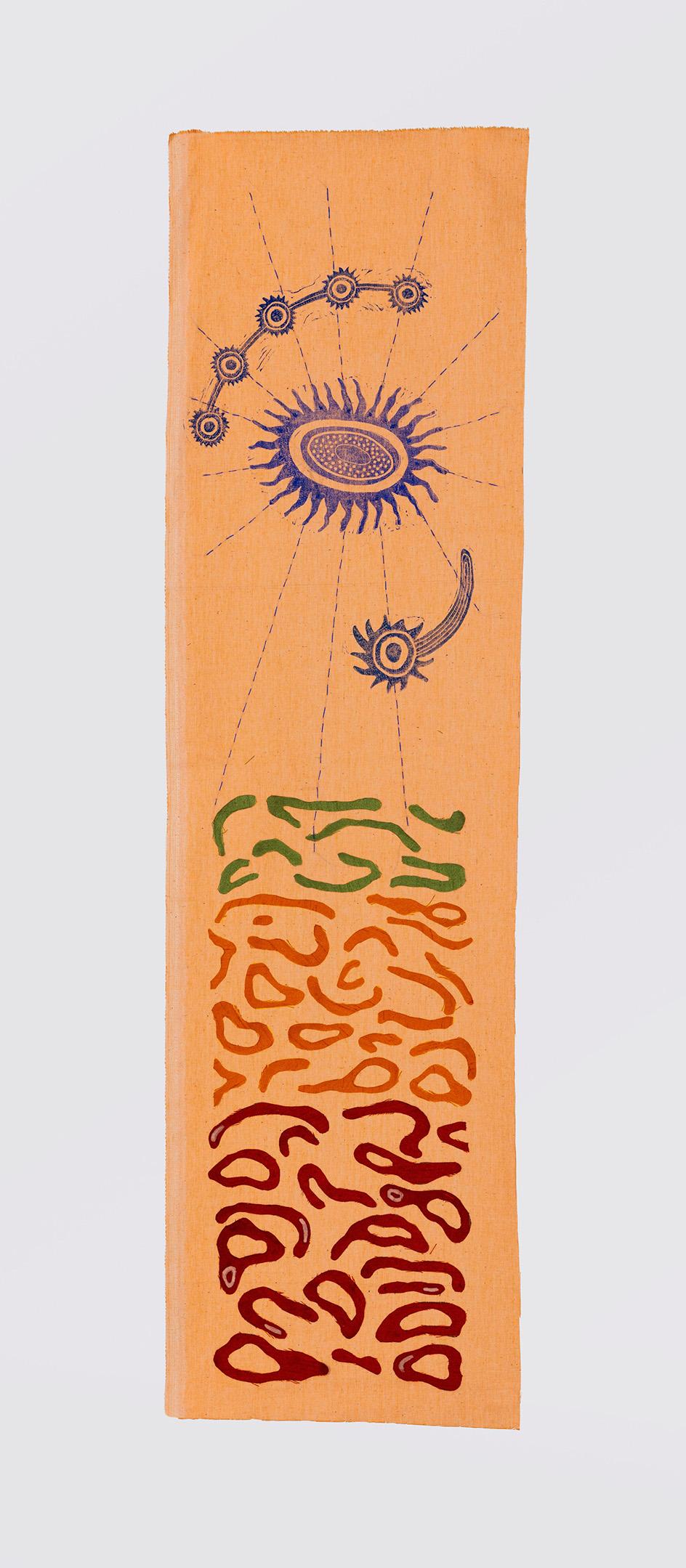 Map – finding the self (IV)
Directly above, a second gallery space houses Where Nothingness Becomes Immense, a collection of work in which Azzopardi reflects upon the coastline. Together the pieces encapsulate the dualistic notion of being alone on the edge of the island, and at peace, while the sea stretching away from you serves as a reminder of the immense nature of the universe.
An installation of sheer fabric, onto which Azzopardi has stitched a constellation of lino-printed motifs, drifts and moves with the air, while large lamps cast a silhouette of a bodily-form, “reminding us that the way light beams can change and transform is integral to life”. You’ll also find a perky lino-print of a typical Maltese ladder leading down into the sea.
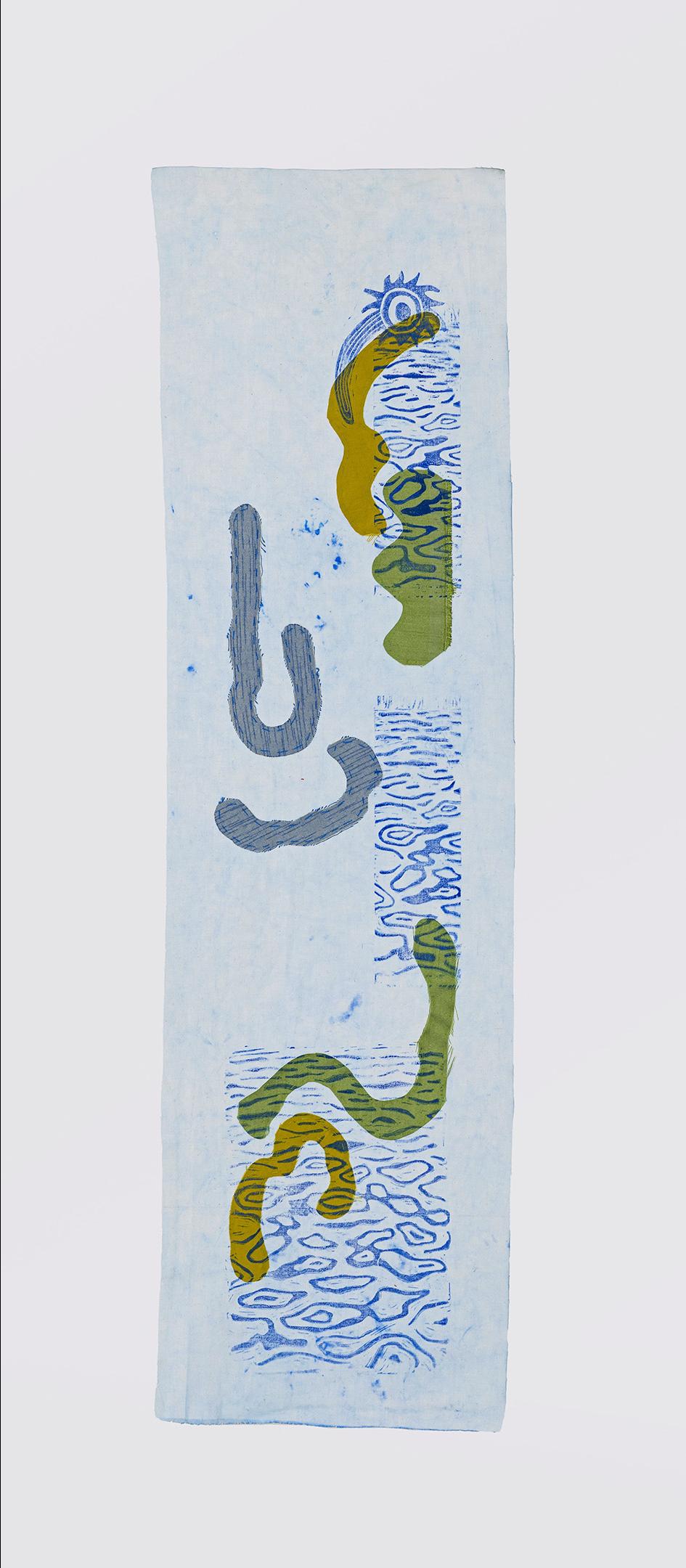 Map – finding the self (V)
“When I’m relaxing at the coast, I spend lots of time looking at the surface of the sea, watching the light moving and dancing. Light is my wayfinder –and I’m transmitting that feeling into the work,” she explains. “I’d like visitors to be imbued with a sense of calm because that’s how light makes me feel. Back when Saliba produced the Mappa Mundi, people watched the sea, waiting for an enemy to arrive so I feel privileged to simply sit and idle. However, it’s a privilege I’m not taking it for granted given the tensions in the world.”
After the ‘mood building’ of these first two spaces, DIJA culminates in the large upper gallery with a celebratory finale of 24 abstracted works in fabric collage and long etchings, dynamic depictions of earth, land, sky, skin and memories that shoot like meteors and fizz like fireworks.
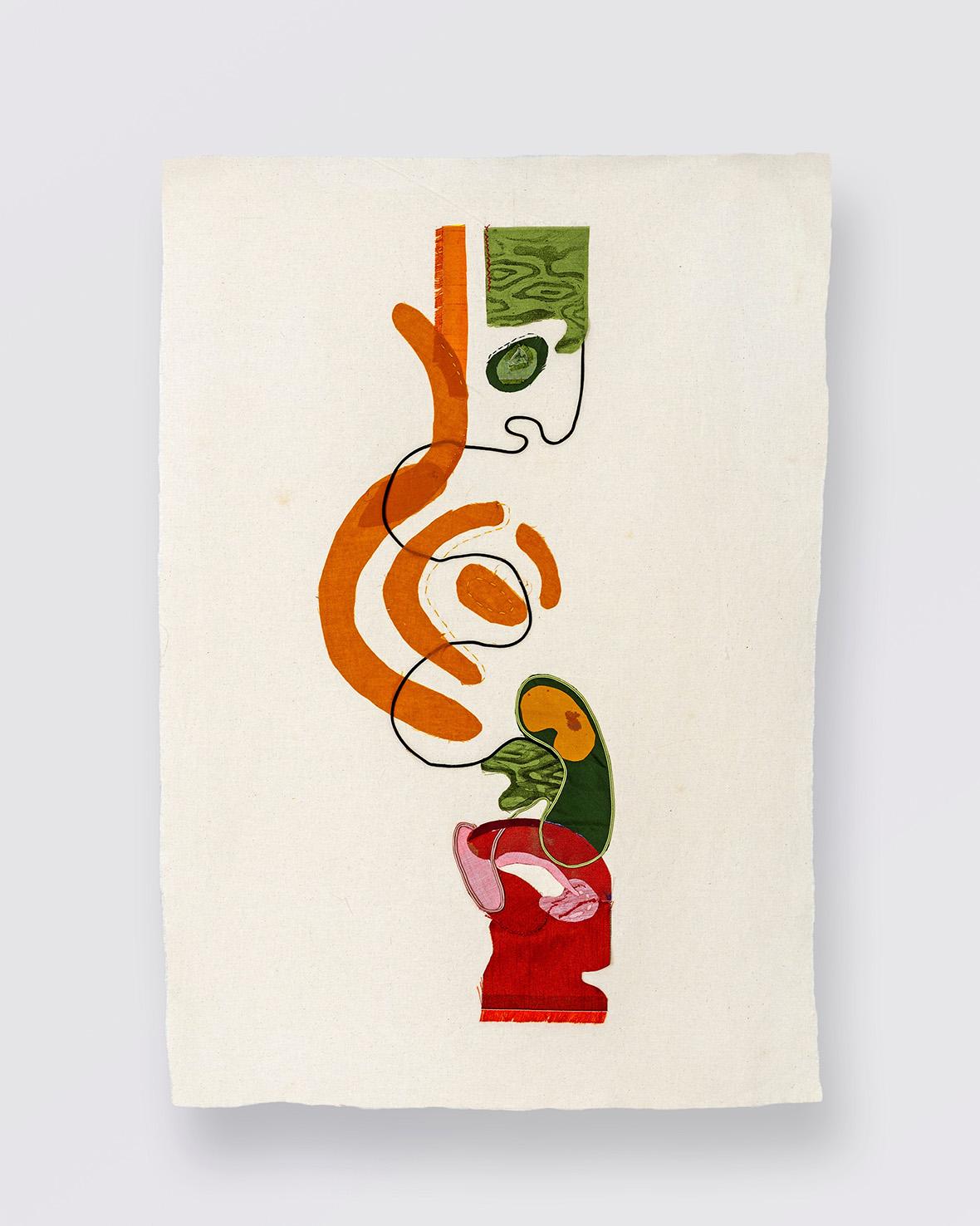 Land
LandThe patterns, swirls and sweeps – in greens, reds, oranges and blues that match the hues of Saliba’s original work – reference the shapes seen in Mappa Mundi more closely, as the four centuries later Gozitan Azzopardi presents these dazzling contemporary cartographical works in response.
DIJA is running until March 22 at Il-Ħaġar – Heart of Gozo Museum, Victoria.