On display for veneration: the bones of St Francis of Assisi
Up to half a million pilgrims from around the world are expected to view the relics before they are put back into the saint’s tomb on March 22.
Last Sunday, February 22, the mortal remains of St Francis of Assisi were brought out from the metal coffer in which they are kept in a stone tomb in the crypt of the basilica of St Francis in Assisi. The Franciscan friars are organising a month-long display of the relics to commemorate the 800th anniversary of the saint’s death, this year.
The relics will remain on display for pilgrims and visitors at the basilica until March 22. It is expected that hundreds of thousands – some estimate half a million – pilgrims from around the world would have visited the relics before they are put back into the tomb again.
The skeleton of St Francis is enclosed in a nitrogen-filled plexiglass case that bears the Latin inscription ‘Corpus Sancti Francisci’ (the body of St Francis).
The exhibition is taking place in the lower church of the famous basilica of St Francis in the hill town of Assisi in Umbria, Italy.
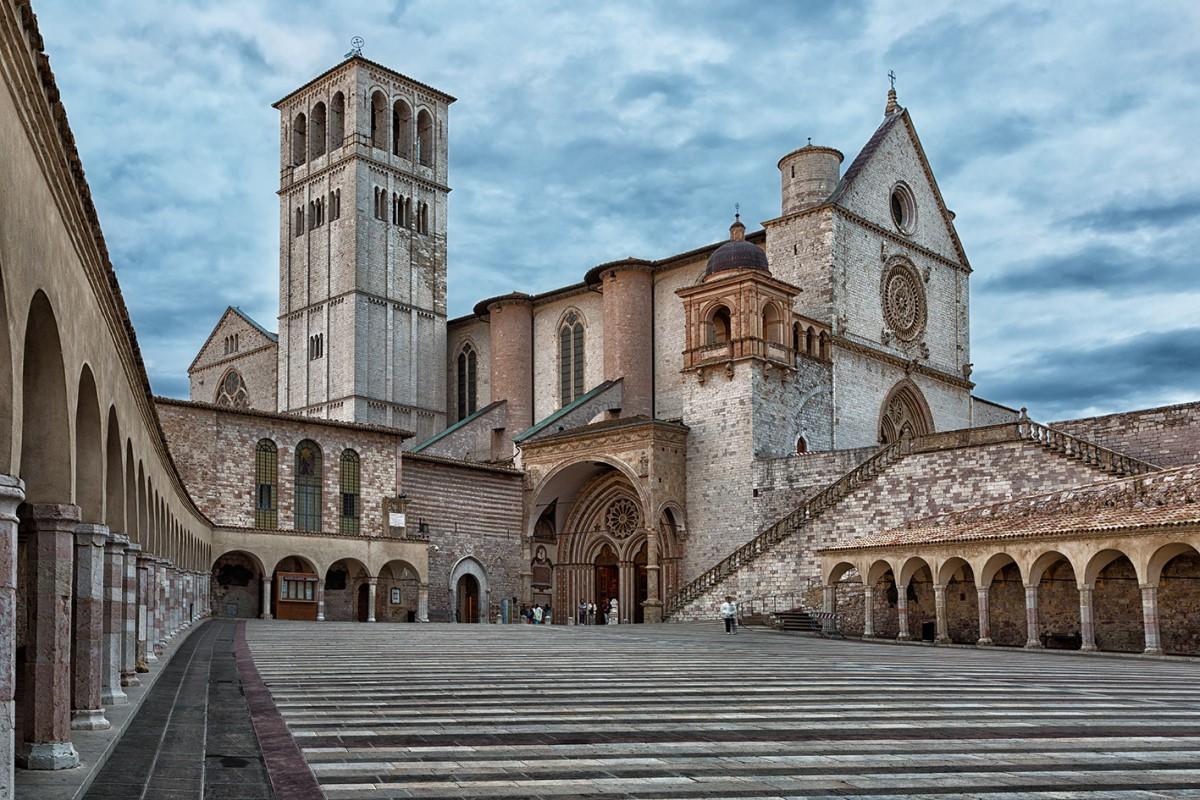 The basilica of St Francis in Assisi. Photo: Shutterstock.com
His remains have only been seen in public once before – for a single day in 1978 – and by a very limited group of people.
St Francis – the medieval friar who inspired Pope Francis and generations of Christians before him, one of the most venerated figures in Christianity and the patron saint of Italy (and of animals and the environment) – died on October 4, 1226.
He founded the Franciscan Order after renouncing his wealth and devoting his life to the poor.
The true relic is not the remains of a dead saint
The following is an ‘imaginary speech of Francis of Assisi’, as if speaking during the days of the exhumation, display and public veneration of his bones, by Fabio Tesser. It is a faithful translation of the speech (in Italian) sent to me by Fr Carlo (from Bari) in one of his weekly e-mails:
The speech
“Brothers and sisters, you have called me out here. You have opened a shrine, you have lit lights, you have placed flowers. You will bring your children, your prayers, your hopes.
“And I ask you – not in reproach but out of love – ‘What do you come here looking for?’ My bones? I willingly left them in the earth. They have never been the place where God dwelt.
“I have known an empty tomb. And from there I learned that ‘God does not hold back’. If the Lord is risen, why do you seek him among immovable things? If Christ lives, why do you want to guard him?
“When I walked in the streets, I had nothing to show; no relics, no signs, no power. I had only one Word burning in my heart and some poor people who taught me to understand it.
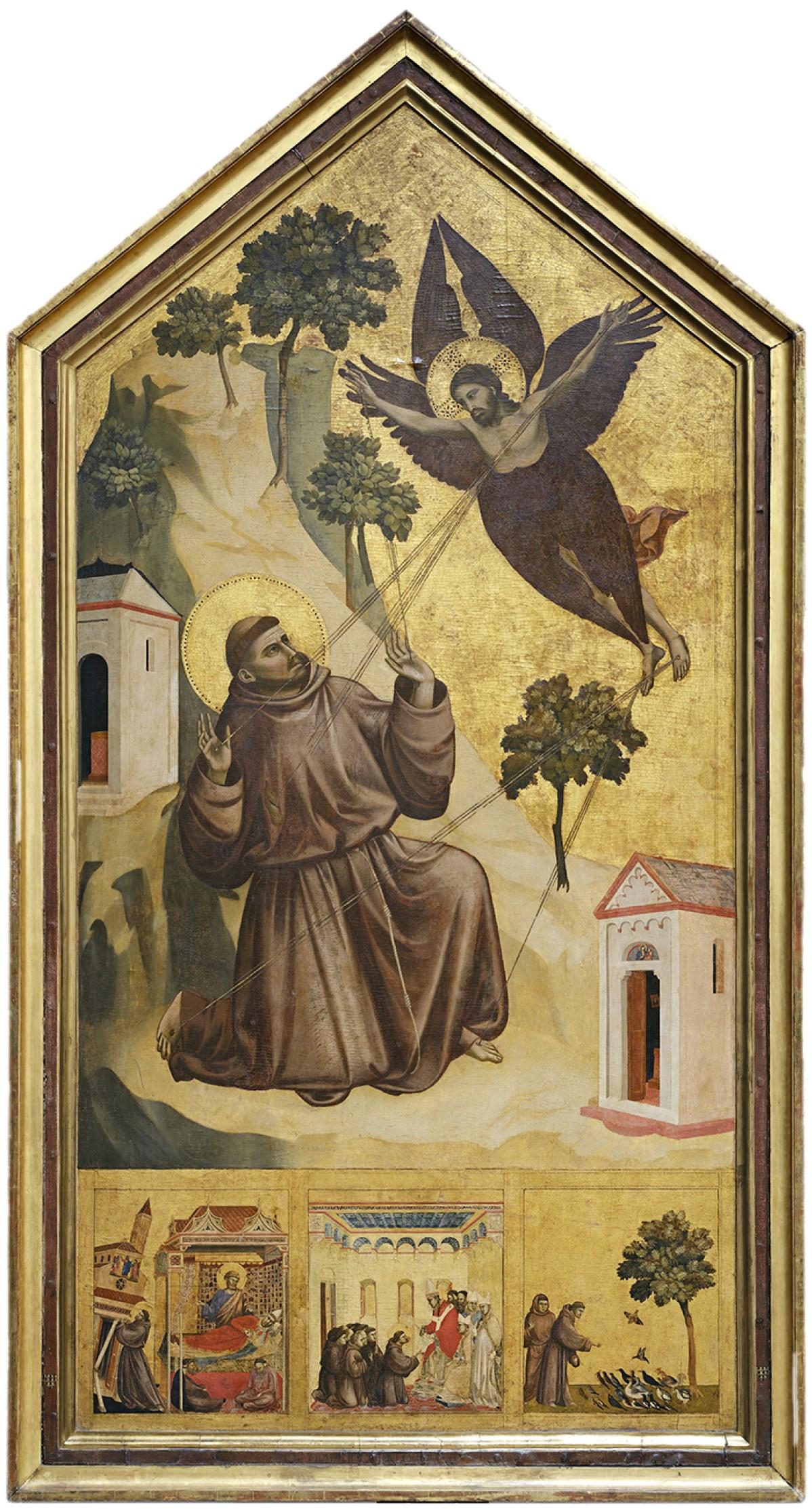 Saint Francis receiving the Stigmata, a panel painting in tempera by the Italian artist Giotto, today in the Musée du Louvre in Paris. Photo: Wikipedia
“You tell me that faith needs to see. I tell you that ‘faith needs to serve’. You tell me that man seeks contact. It’s true. But the contact that saves is not with the bones of saints; it is with the living flesh of wounded brothers.
“You filled the churches with things to look at because you were afraid to listen. Listening is dangerous. Because those who listen to the Gospel can no longer remain as they were before. Seeing is easier. You can see, cry, be moved and then go home without changing anything.
“But the Lord did not say: ‘Blessed are those who have touched’, but rather, ‘Blessed are those who have not seen and yet have believed’.
“I do not ask you to destroy anything. I ask you not to stop here.
“If you kneel before my bones but remain standing before the poor, you have understood nothing about me.
“If you kiss a relic but avoid today’s leper, you have betrayed the Gospel.
“If you seek in me an intercessor to avoid listening to the living Christ, you are using me as an alibi.
“Do not make me a sacred object. I wanted to be a brother.
“Do not ask me for miracles. Ask yourselves for whom you are willing to lose your life.
“The true relic is not the remains of a dead saint.
“The true relic is a Church that lives in poverty, freedom and faithfulness.
“If you leave here more gentle, more just, more caring for the least, then I bless your journey.
“But if you leave only consoled and not converted, go ahead and close the shrine. I do not live there.
“I will wait for you in the street.” (Fabio Tesser)