The doomed Maltese 1826 expedition to Cephalonia
A British experiment to improve agriculture on the Ionian island using Maltese migrants failed when the latter turned out not to be farmers, and then starting falling ill and misbehaving.
Exactly 200 years ago, nearly 300 Maltese migrated to the Ionian island of Cephalonia in search of greener pastures.
Charles James Napier, British Regent of Cephalonia between 1822 and 1830, had decided in 1826 to improve Cephalonian agriculture by importing a colony of Maltese farmers “because their well-known industry and skill would inspire the lazy and indifferent Cephalonians to exploit properly their agricultural resources” (Price 1989: 40) and because there could “be no doubt that the best thing for the [Cephalonia] poor was the establishment of the Maltese colony” (Napier 1833: 300). Basically, “in Cephalonia, for example, land and labour were available but the farmers were hampered by a lack of knowledge and tools” (Hannell 1989: 116).
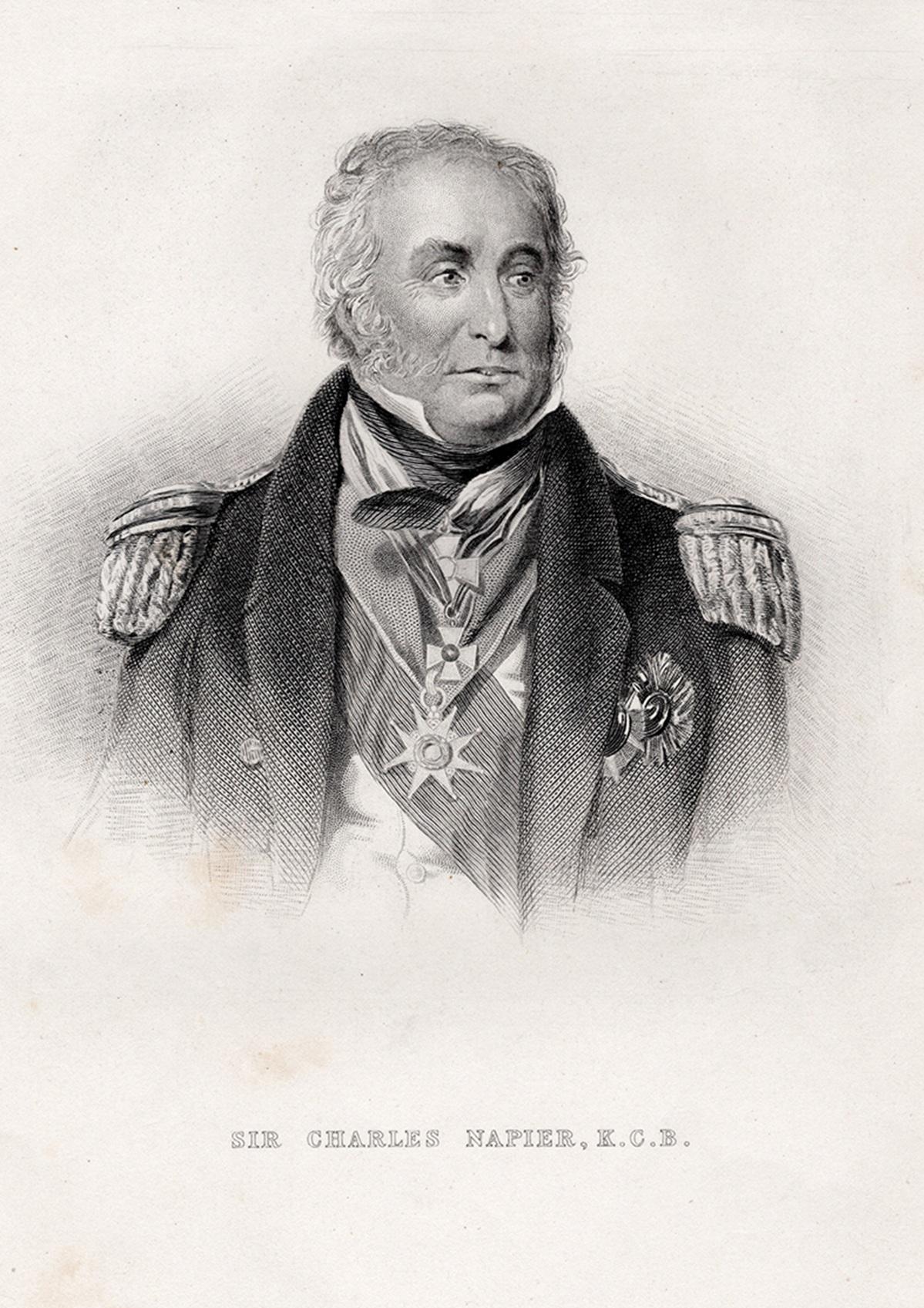 Charles Napier, British Regent of Cephalonia 1822-1830
The area of Pronos was a vast extent of public ground in Cephalonia that had been abandoned, totally overgrown with arbutus trees, and seemed ideal to be developed into a fertile agricultural area (Napier 1833: 265). This land was owned by convents of Christian Orthodox monks. The convents’ funds started being administered by the British, and the incoming Maltese migrants were destined for the village of Arakli. On September 17, 1826, 285 Maltese embarked on a 219-ton English brig named Adolfo, headed for Argostoli, in Cephalonia. This was probably one of the first group of migrations organised by the British from Malta.
Documentation in Argostoli and Maltese archives shows that these Maltese were totally unable, and possibly also unwilling, to integrate into the new reality they found themselves in and, with the halting of government subsistence, were reduced to a state of vagrancy, roaming all over the island, begging for food.
Realising his error of judgement, Napier offered to take on the Maltese who had remained on Cephalonia at six pence a day, which was basically half of the normal wage.
The 1828 lists
A December 8, 1828 list entitled ‘Names and descriptions of those Maltese who are willing to go to Malta’ seems to have been an exercise in character profiling by the British authorities, who basically divided the Maltese in Pronos into two categories: productive and unproductive workers.
The Maltese… were reduced to a state of vagrancy, roaming all over the island, begging for food
The profiling was even more cynical in a second undated list, entitled ‘Names and descriptions of those Maltese who are willing to go to Malta’. This list gives the age of the Maltese willing to be repatriated as well as a comment (often not nice at all) on their individual behaviour.
The Maltese arriving in Argostoli started frequenting the Catholic church of San Nicola dei Latini. The superiors of the Capuchin monastery built next to the church, who normally came from Italy, now started being appointed from Malta.
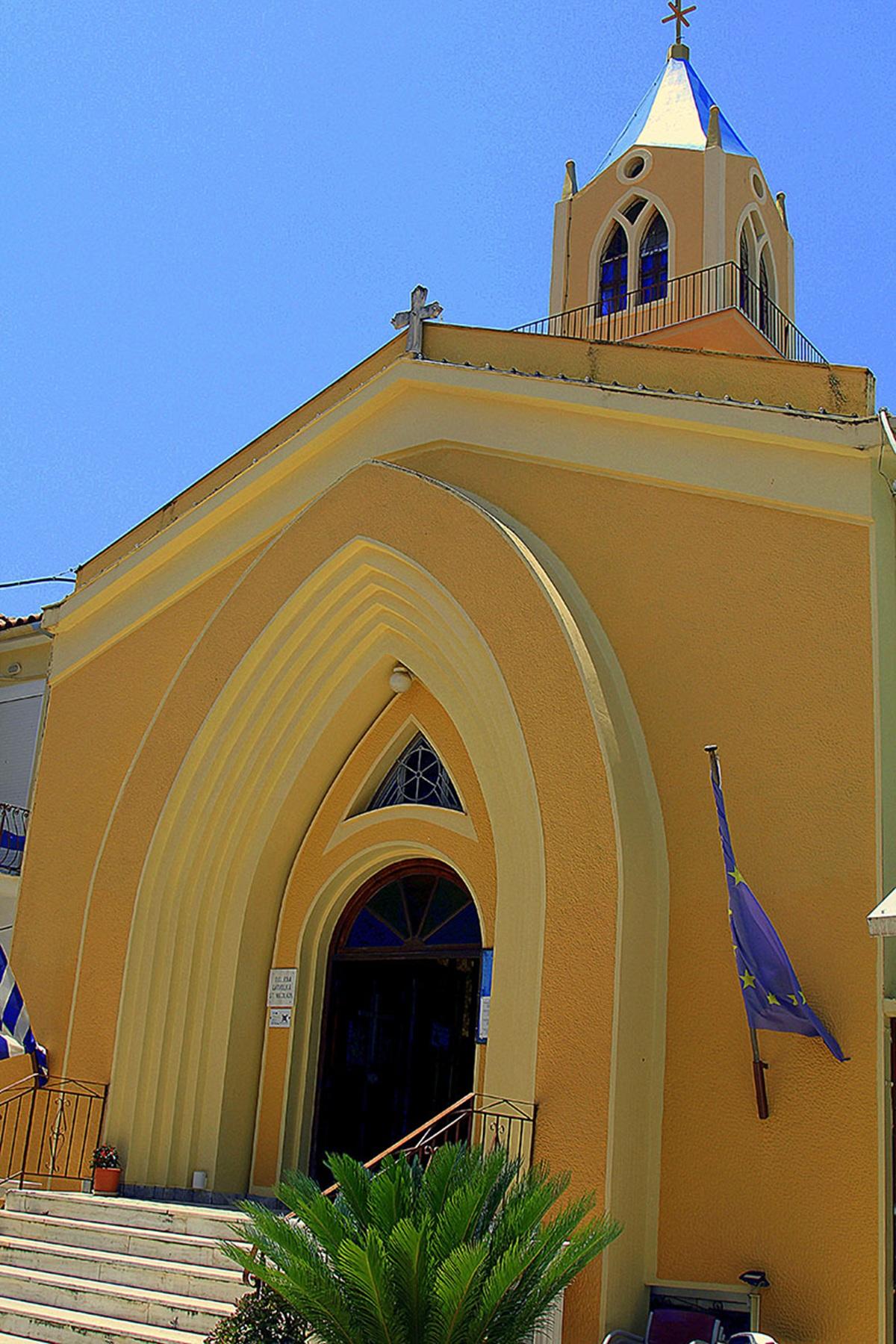 San Nicola dei Latini church, rebuilt after a 1953 earthquake. Photo: Lionel Cassola
Child labour and food rations
The two above-mentioned lists – the originals are to be found in England, but photocopies exist in Argostoli, Cephalonia – shed clear light on a number of specific situations. Firstly, it is evident that child labour was rampant in Arakli and Pronos under the British administration. A second element that sticks out in these lists is the high number of Maltese in Pronos who were ill or sick. The amount is quite impressive. Limited only to the above two lists, the word “ill” was written 28 times, while the word “sick” appears 15 times. Why is it that the Maltese were so prone to illness? What were the conditions in the Pronos area?
What is evident is that there was trouble brewing almost immediately with regard to the medical doctor Francesco Camilleri, who had accompanied the Maltese contingent on the Adolfo in September 1826. In fact, only four months later, Camilleri, who signed himself as “medico e capo della colonia Maltese”, sent in his resignation letter, with a request to be repatriated to Malta.
Thirdly, it seems quite evident from these lists that the British mistrusted the Maltese community regarding the good use of the rations provided, and therefore imposed strict conditions on them. All rations were to be handed out exclusively to the colony chaplain, Don Ricca, and were to be distributed in the presence of Demetrio Cambici, who proved to be very kind and generous with the Maltese community who, especially at the beginning, would find refuge and hospitality in his house, which also served as the local inn.
Then, only weights and measures previously calibrated by the British authorities were to be used in the process, and finally it was only those Maltese who proved themselves to be good workers that could eventually benefit from the opportunity of having their rations substituted by monetary payments.
Misbehaving Maltese
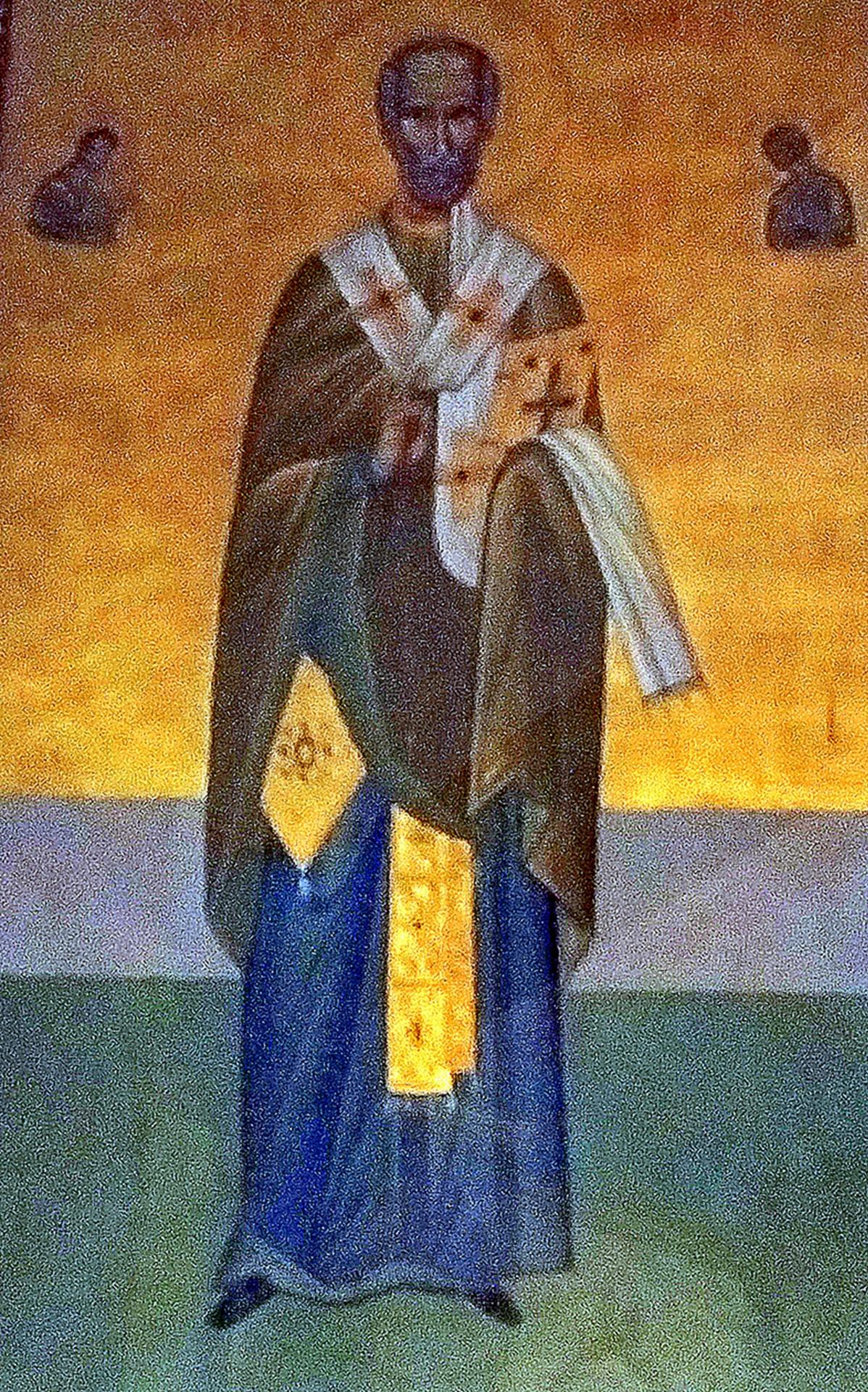 Icon of San Nicola in the Argostoli church. Photo: Lionel Cassola
An undated declaration by Don Ricca, Dr Pasquale Conti, who was the “medico della suddetta colonia”, and Demetrio Cambici, sheds light on the many misbehaving Maltese in Cephalonia. The declaration exposes 14 members of the Maltese community who were considered to be “disturbatori della nostra legge, mali travagliatori, non fanno altro nella nuova colonia Maltese che mangiare, imbriacarsi, e sussurare gli altri coloni contro i loro superiori”.
A second March 14, 1829, sworn declaration, this time signed only by Ricca, denounces the Maltese, in general, for being lazy and incompetent: they had left Malta not to come and work the fields in Cephalonia but to enjoy themselves and free themselves from the [Maltese] courts.
Another reason given for their incompetence is that many were not really farmers. In fact, Ricca declares that “alcuni erano pescatori, altri muratori, altri carnanisti, altri bottegai, altri macellatori, altri gladiatori, altri giocatori, ed altri disprezzatori della nostra Cristiana legge, e non già lavoratori di terra come dovevano essere”. So, the supposed experienced Maltese farmers were everything but that, since they turned out to be fishermen, masons, slaughtermen, shopkeepers, butchers, fighters, gamblers and, worst of all, people who disrespected the Christian religion.
Basically, after a few years, Napier was to come to the sad conclusion that “the persons sent to me from Malta, completely baffled my project of forming a tenantry with small farms, low rents, and long leases; after a trial of two years, they threw up their farms, and became day labourers, instead of being tenants” (Napier 1833: 264-265). The 300 or so imported from Malta proved to be a big flop and gave the lie to Napier’s grandiose agricultural plans for the island he was governing.
The author’s ongoing research aims to identify not only the Maltese who formed part of the original 1826 expedition, but also any others who had previously gone to the Ionian island independently and others who had remained there after the failure of the expedition.