‘Echoes of Now’: a sculptural performance
Last chance to view Chris Ebejer's exhibition at the Oratory of the Immaculate in Valletta
I write hoping to inspire art lovers to rush and see the sculpture exhibition at the Jesuits’ Oratory of the Immaculate in Valletta, titled Echoes of Now, by Chris Ebejer, which closes on Sunday. I am no art academic but a simple art lover. I am so enthusiastic in this case because this exhibition is more of a performance than a static show.
At the entrance, the viewer is greeted by a terracotta, metre-high statue of Dante Alighieri riding above an infernal sphere. Behind it is a reconstruction of a dissected classic Renaissance frame. This could serve as a proscenium arch or the frame of a theatrical stage.
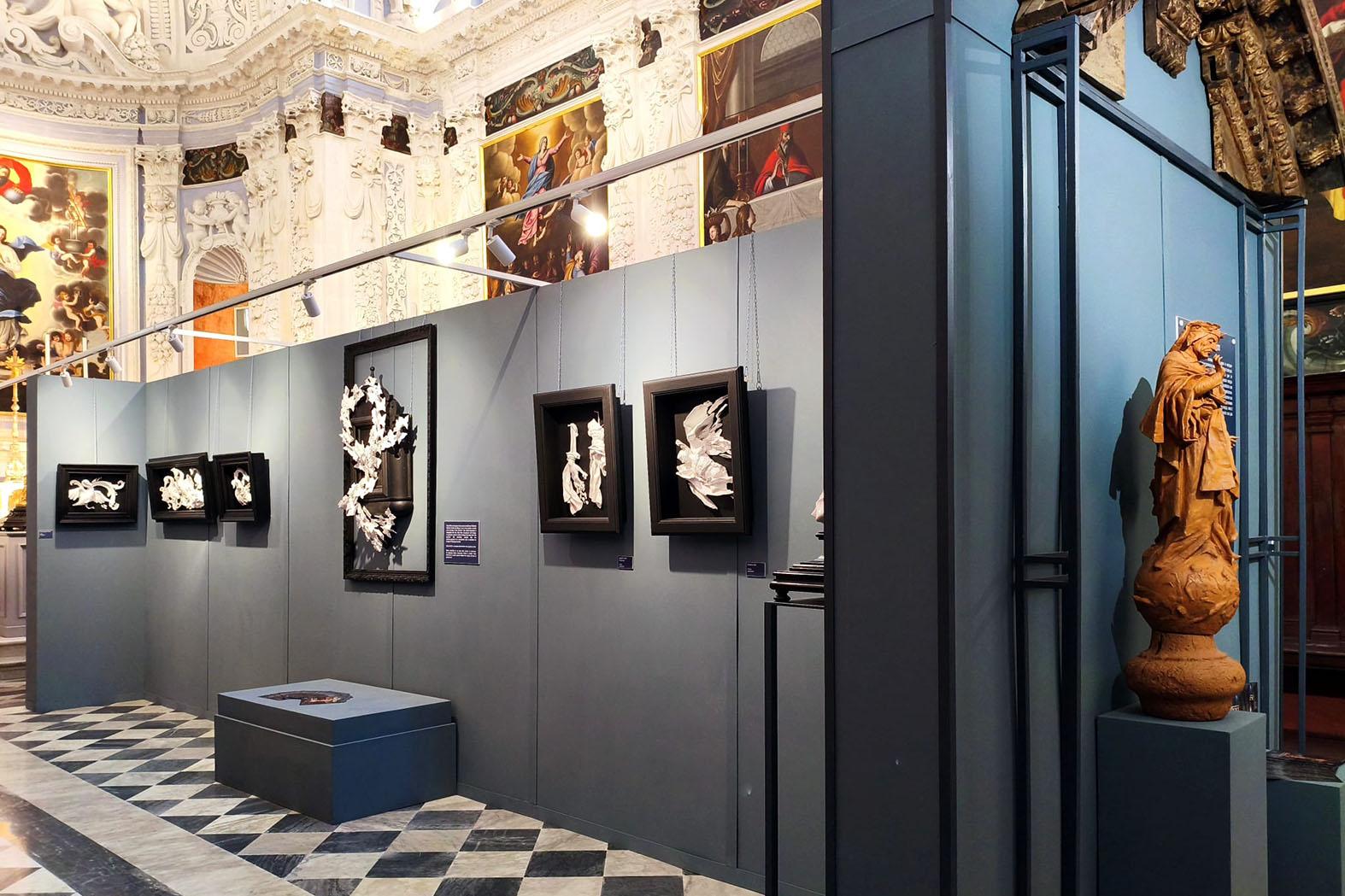 A general view of the exhibition.
Dante is holding a grave dramatic stance as though recoiling from the burning heat of the dissolving figures of hell below him. This is no comedy as we came to understand it today − this is a dramatic event which does not end with death and tragedy. It is a serious matter which Dante named a ‘commedia’, or performance, and which eventually Boccaccio had called La Divina.
As visitors move along the exhibition aisle, they sense a subtle rhythm animating the static pieces. This is achieved both through a carefully designed lighting scheme and the works themselves, whose baroque qualities are tempered with elements of modern art. Hence the ‘now’ of a reverberating ‘echo’ in the exhibition’s title. These sculptures are not dumb: they challenge the viewer to relate to them.
The lighting is Caravaggesque. To many, this would mean a single light source coming in from high above, at an angle of about 45 degrees. Well, it is never just so with Caravaggio. Look at our Beheading of St John at St John’s Co-Cathedral. Notice how the the saint, strewn on the ground, has a spotlight on his receding foot. This gives the opus a sense of perspective and dynamism.
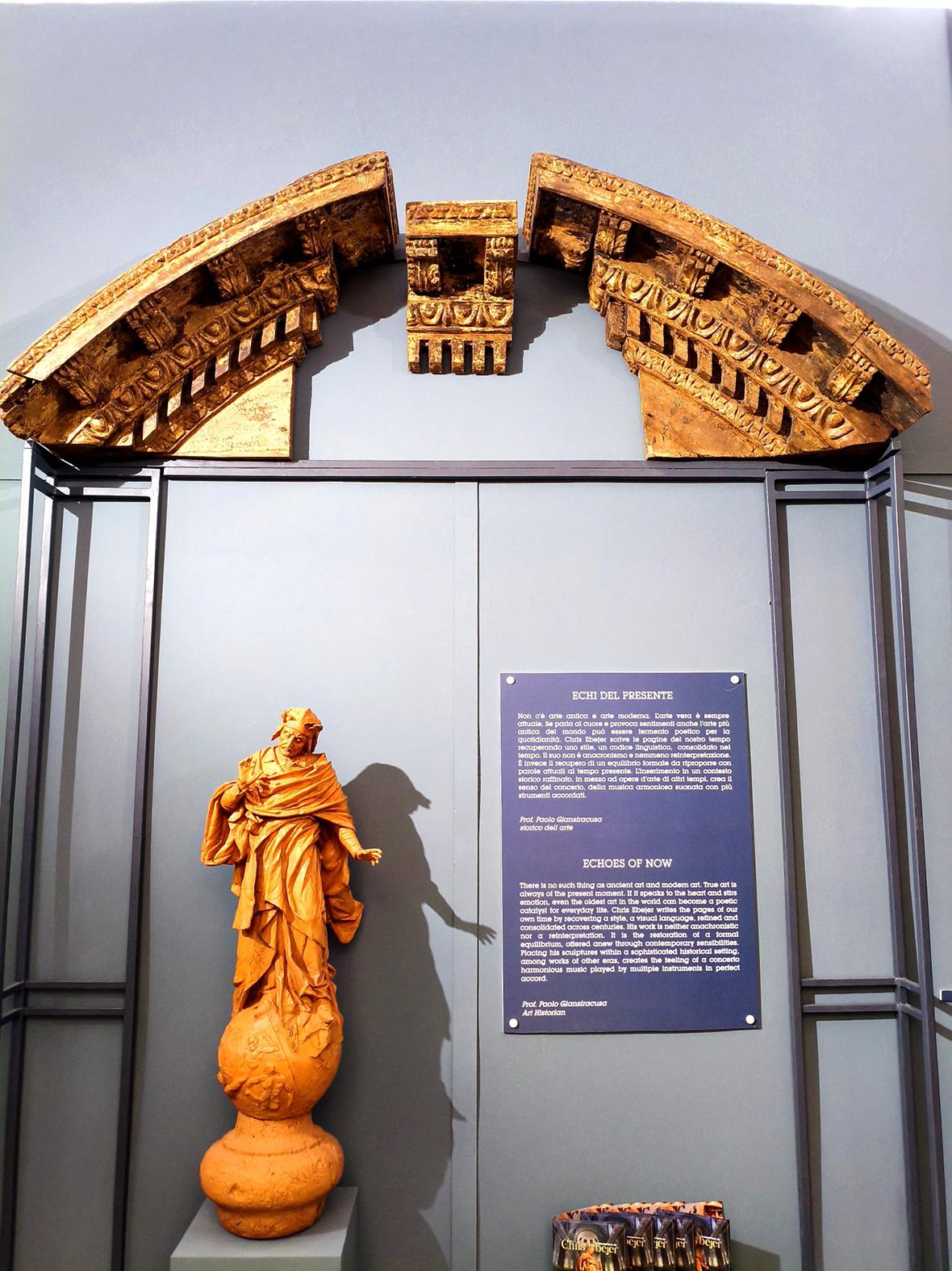 Dante under the proscenium arch.
Centuries later, the cinema directors of photography copied this method, using dedicated spotlights to create depths and levels on the flat screen. Ebejer intentionally illuminated his sculptures with similar lighting.
The artist would also explain how baroque artists stretched the ordered conventions of the Renaissance, expanding beyond the classical framework and indulging in spiralling, excessive decoration. He adds the occasional reference to a modern remnant, like his portrait of a blindfolded angel called Myth. The face is partially framed by a giant hand, probably a leftover from an old monument, which upstages the portrait. The artwork looks like a modern collage of classical ruins, animated by a breathing, angelic face.
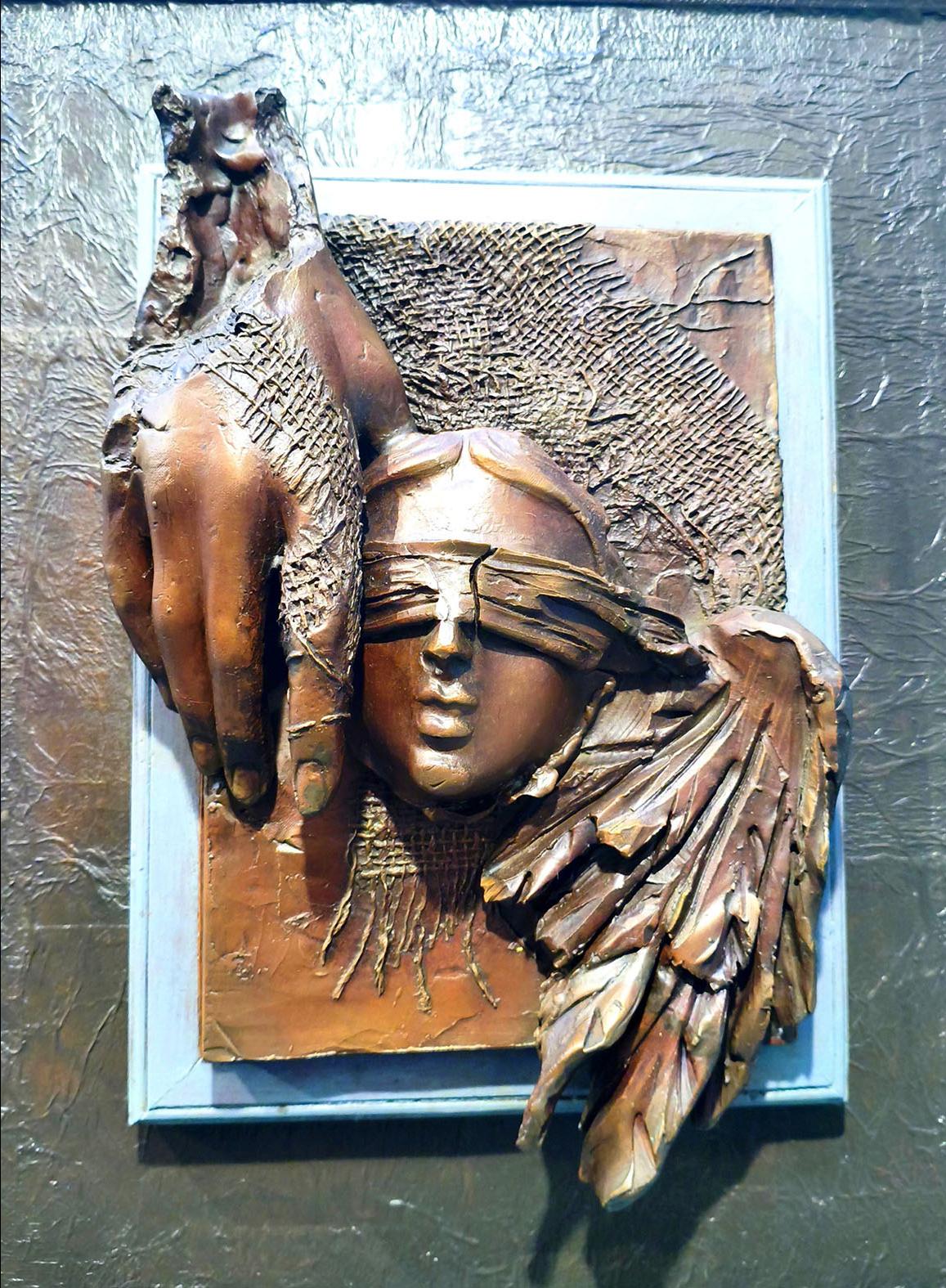 Myth
MythIn his CV, Ebejer mentions a period of cinema studies in his youth. In this exhibition, he exploited this artform both by his inventive lighting scheme but also by building a containing stage set that neutralises the excessive baroque triumphalism of the oratory where the exhibition is being held. The stage set is made of smooth, flat surfaces holding together nooks and crannies painted a matt and dull greyish blue. Thus, the stage set does not reflect back any light, leaving the sculptures to capture and project it.
I will give one other example: the Pietà, or the Madonna and The Deposed Christ. Cast in heavy bronze, the sculpture nevertheless conveys a remarkable sense of weightlessness, as though it were suspended in flight. How?
A focused beam of light caresses its curves, highlighting the contrast between the ethereal and luminous sacred bodies of Mary and her dead son, and the weight of the rock tomb.
Ebejer further prises open the base of the rock and introducing a twisting grapevine of realistic proportions, which contrasts with the miniature scale of the dramatic scene. The result is a powerful chiaroscuro effect. This is beyond sculpture as we know it.
Ebejer divided the oratory in two sections. In the second part, he is exhibiting a collection of ceramic works that transcend traditional art. Rendered in white and finished with a lustrous glaze, these pieces look like Meissen porcelain or sculpted white gold.
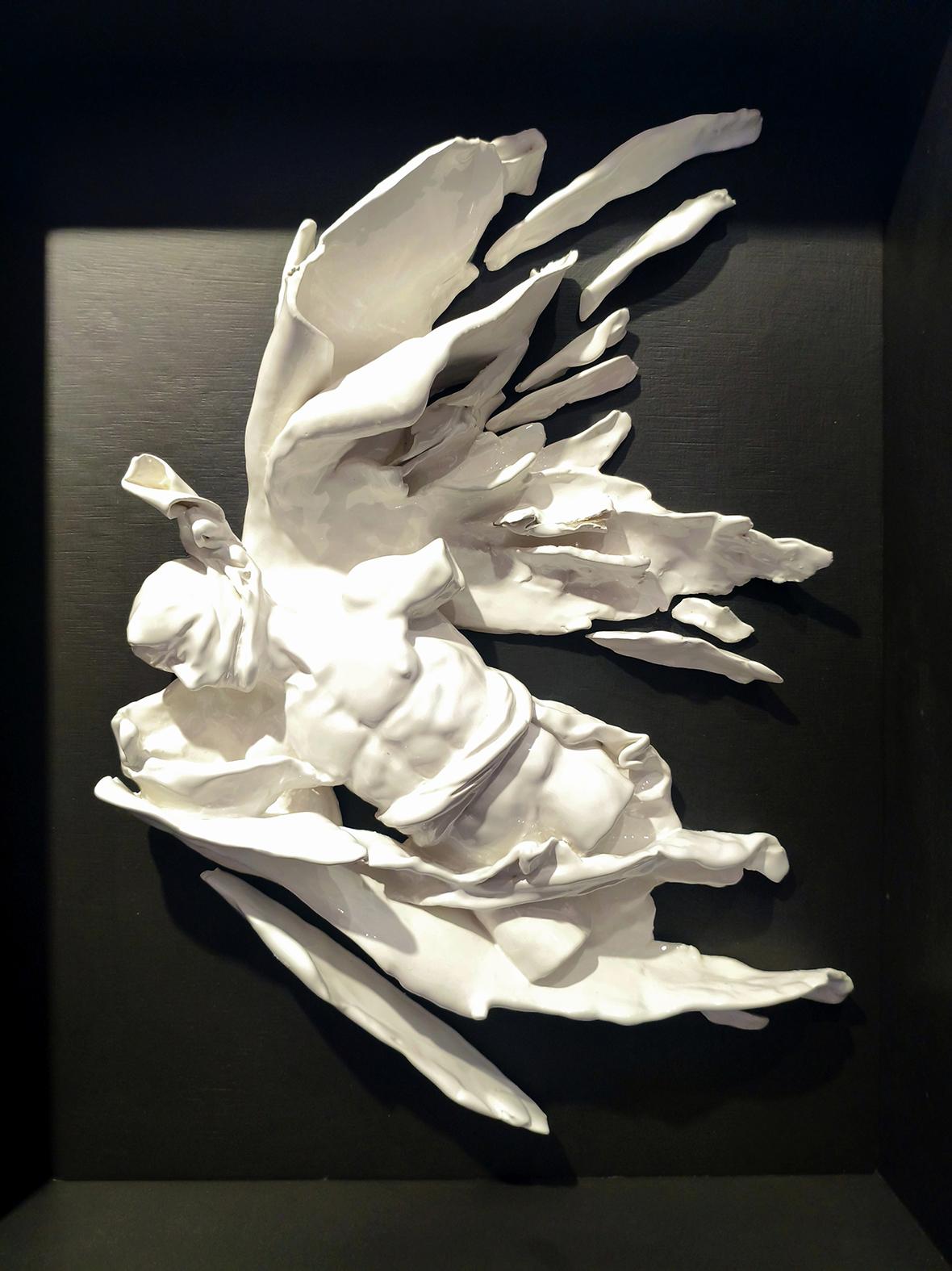 Icarus
Each item is contained in a matt black frame but invariably spills beyond its artificial boundaries. His Icarus dives down and melts onto the bottom of the frame and beyond.
His Time Flies is mounted on an elaborate traditional Maltese ‘tal-lira’ clock design, painted matt black and which is obviously no longer functional. Yet, Ebejer created a swarm of butterflies on its surface, flying in a spiral, echoing the circular motion of clock hands. These white porcelain butterflies, bursting with energy, seem to have just emerged out of their cocoon. It is a dance of beauty. Yes, it is another performance.
Go and see it for yourselves. This is a next-generation collection of sculptures enriched by its traditional baroque origins but eager to experiment and discover the new world.