Why Labour won, and why there's hope for the PN
Christopher Scicluna has covered 11 general elections for Times of Malta. This is his first take on the outcome of the 2026 general election
Has Malta just witnessed its most inconsequential general election since Independence? Yes and no.
Few would have been surprised by the result. If anything, the outcome felt predetermined long before voters went to the polls. Malta will have its fourth Labour government since 2013, albeit with a sharply reduced majority of the popular vote.
So how did Labour secure its record win?
The simplest explanation is also the most persuasive: it is for governments to win or lose elections, but this one had very little reason to lose. By most conventional metrics, Malta is doing well. Economic growth remains solid, inflation is contained, unemployment is virtually non-existent, and consumption is visibly strong - restaurants are full, supermarkets busy, planes are packed. For many voters, daily life still feels comfortable. And that matters.
Yet the explanation runs deeper than macroeconomics. Labour governed as though an election was always imminent. Budget after budget - and in between - it prioritised popular measures, retail politics, and targeted benefits. It maintained a coalition between its core working-class supporters and other sectors which in the past tended to vote PN, particularly the self-employed and businesses.
Labour governed as though an election was always imminent
At the same time, it consistently avoided controversial decisions. Even institutional appointments, such as that of a chief justice, were delayed to avoid backlash among party diehards.
The result was a government that never really switched out of campaign mode. Despite it nearing the end of its third term, it managed to project itself as fresh.
Success in defeat for the PN, and a ray of hope
Labour’s strategy was reinforced by timing and by context - particularly the condition of the Nationalist Party.
For much of the legislature, the PN appeared divided and internally consumed. Alex Borg's leadership came only months before the election, leaving him little time to consolidate authority or craft a fully coherent alternative vision.
Yet, he performed creditably under the circumstances, energising sections of the electorate and likely securing his political future. It is largely to his credit that the Nationalist Party managed to significantly narrow its deficit to Labour. Halving Labour's majority, roughly, was no mean feat.
But he was never in a position to win. Because the PN’s challenge runs deeper than leadership. It is structural. The party increasingly lacks depth - both organisationally and in policy formation. Experience has thinned out, and this showed in how proposals were developed, communicated, and defended.
There were moments of flair in the PN campaign, and Borg managed to generate enthusiasm, particularly among younger voters. But the campaign sometimes appeared unwieldy, prone to avoidable missteps and lacking the clarity and punch that characterised Labour’s messaging - encapsulated in simple, effective slogans like the “super bonus”.
For years, the Nationalist Party was criticised as overly negative, obsessed with corruption and governance failures. It watered that down somewhat in 2022, without much result. This time, it abandoned that line of attack altogether. Corruption - once central to political discourse - was barely mentioned, despite having triggered major scandals and resignations in recent years. Issues such as poor governance, nepotism, and favouritism were similarly muted.
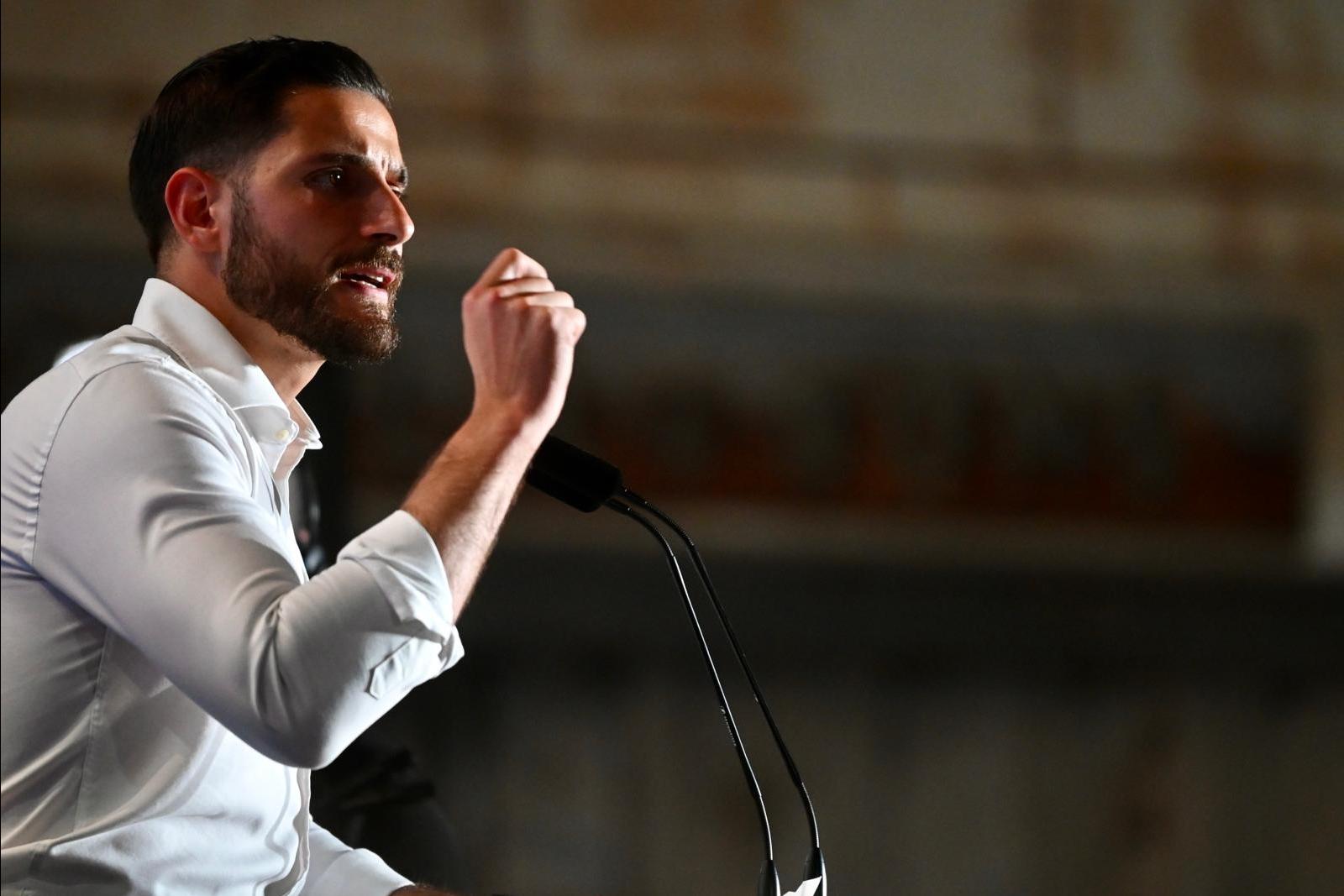 Alex Borg, just months into his leadership, managed to shrink the PN's deficit to Labour.
An opposition must do two things in an election: persuade voters that the recent past could have been better, and demonstrate it can offer a better future. The PN focused on the second but barely addressed the first.
In doing so, it created another problem. Some of its pledges - from a metro system to multiple hospital projects within a single legislature - stretched credibility. Instead of reinforcing trust, they risked undermining it.
Still, the future for the PN looks rosier now than it has been since 2013. It has reasons to hope for the future.
Remember that in 2013 Labour won by a majority of almost 40,000 votes after having been in deficit just five years previously.
An uneven playing field
But the broader campaign environment matters. What we saw in this general election was not a level playing field. Labour did not just benefit from superior organisation and funding; it maximised the power of incumbency to an unprecedented degree.
Incumbency always mattered in Maltese politics. Alfred Sant complained of it after his razor-thin 2008 defeat. But this time felt different in scale and intensity.
Even during what should have been a caretaker period, government activity did not meaningfully slow down. Pay rises, appointments, and targeted benefits and promises continued at pace. Rather than a caretaker government, Malta had a government taking care of itself as if there was no tomorrow.
This blurred the line between governance and campaigning. It also reinforced a political culture in which electoral support is closely tied to material expectation.
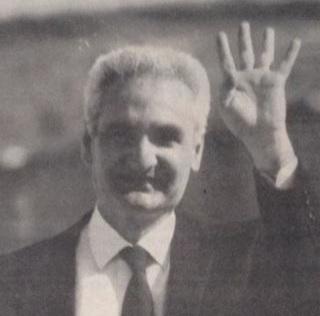 Karmenu Mifsud Bonnici had hoped for a fourth successive Labour victory in 1987, but his hopes were ultimately dashed.
There is also a more subtle factor at play: narrative control.
Labour shaped not only policy but perception. It entered the election as the default choice. The PN first needed to persuade voters that change was even necessary before arguing that it was preferable.
That is perhaps why this election felt so inconsequential. There was no sense of a country at a crossroads, no overriding national question demanding resolution. Instead, it resembled a confirmation exercise rather than a contest to reshape it.
But the PN may have just managed to ensure that the next general election will be altogether different.