Environmental sustainability and outdoor education
Two educators from St Jeanne Antide College’s Immaculate Conception Secondary School, Tarxien, took part in EU-sponsored professional development
Claire Lauri
Earlier this year, I took part in an Erasmusplus course on São Miguel Island in the Azores that offered an immersive and hands-on experience in sustainability and outdoor education.
The course combined classroom discussions, cultural exchange and extensive outdoor activities across the diverse landscapes of the Azores. This enriching experience allowed me to connect with nature, explore innovative teaching methods, and reflect on how I can incorporate sustainability into my home economics and hospitality lessons.
We visited the Priolo Centre and learnt about protecting endangered species like the Azorean bullfinch. We discussed the harmful effects of pesticides, the importance of organic food and the six ‘Rs’ of sustainability: rethink, refuse, reduce, reuse, repair, recycle.
The outdoor learning sessions were particularly impactful. We engaged in forest games using sounds, textures and leaves – experiences that I can easily adapt to the classroom. I also appreciated the chance to slow down and connect with nature: listening to insects, noticing the details of plants and enjoying the fresh air. I wished I had more time in the wild to truly immerse myself in the natural beauty of the Azores.
The course provided participants with new teaching strategies on how to integrate sustainability across various subjects. We learned about organic agriculture, the dangers of pesticides and the importance of protecting local ecosystems, and studied real-life examples of sustainability, such as reuse of invasive plants, forest regeneration and community-based conservation.
The benefits of outdoor learning include (a) the promotion of physical health – active exploration in nature improves students’ fitness and energy; (b) mental well-being – time outdoors enhances students’ mindfulness and reduces their stress; (c) real-world connection – sustainability concepts are better understood through direct experiences; and (d) social development – group work among students promotes collaboration, communication and idea-sharing.
During the course, we also visited various projects that show how environmental protection and sustainability can go hand-in-hand with tourism, agriculture and community well-being. We saw inspiring practices such as sustainable agriculture and organic food production, the use of renewable geothermal, solar, and wind energy, and a coastal conservation project involving controlled access to Vila Franca do Campo islet to protect its ecosystems.
These initiatives illustrate how environmental, social and economic sustainability can coexist and serve as excellent models for other island regions, including small countries like Malta.
Inspired by these Azorean models, I plan to (i) encourage community gardens to promote food security and education; (ii) organise clean-up events in local natural areas; (iii) offer workshops on sustainability and responsible consumption; and (iv) build partnerships with local businesses to support eco-friendly practices.
This experience has deepened my connection to nature and enriched my teaching approach. I now have a toolkit of engaging, adaptable activities and a renewed motivation to involve my students and the wider community in creating a greener, more sustainable future.
Teachers learn how to cut stress
Janice Galea
Together with 16 other participants from seven different countries, I took part in an Erasmusplus project titled ‘Stress Management and Recognition: Key Strategies for Teachers’ in Florence, Italy. It was an insightful and enriching experience that I am truly grateful to have been involved in.
As a newly qualified teacher, the first few years can be particularly challenging while trying to organise materials and resources. This was one of the main reasons I was drawn to the project.
Furthermore, during the last academic year, I noticed that many of our students experience stress and I felt a strong desire to better understand how to support them, another key motivation for applying.
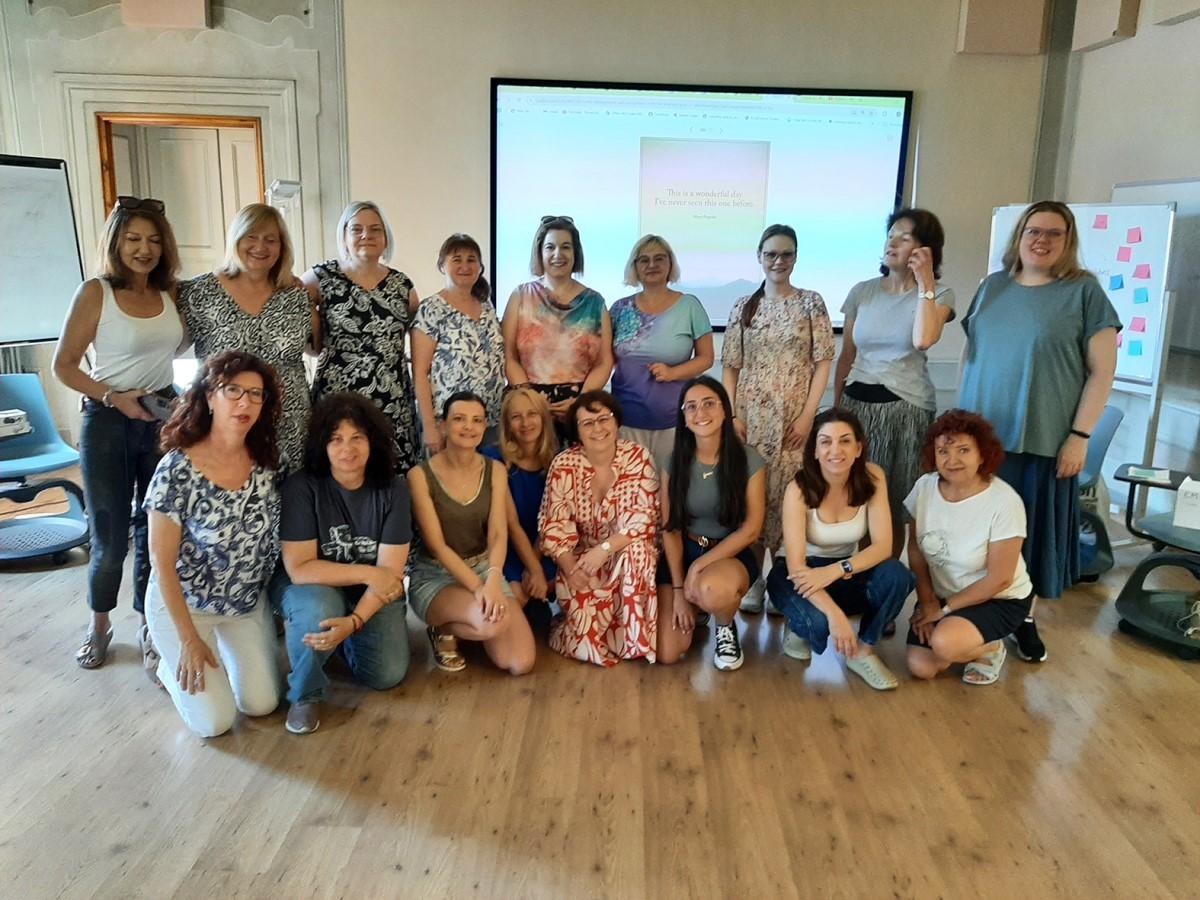 The author (front row, sixth from left) with the other participants in the course.
The sessions, delivered by Susan Gagliano, were highly interactive and provided a wealth of valuable insights. We explored the PERMAH model; strategies for managing and alleviating stress and anxiety; mindfulness practices, breathing techniques, yoga, reflection, body tapping and the Emotional Freedom Technique (EFT).
A particular highlight was learning about the different education systems across Europe. As the youngest participant, I also received lots of practical advice and support from the more experienced teachers in the group. This is the true beauty of Erasmus: connecting, learning together and sharing experiences across cultures.
The course’s cultural element added even more to the experience. Immersing myself in Italian architecture, culture and cuisine made the trip all the more memorable. It was truly an unforgettable experience and I’m incredibly thankful to have taken part.
I look forward to applying what I’ve learnt to better support both myself and my students moving forward.