ERA gives its go-ahead for St Julian's waterpolo club extension
A final decision will be taken by the Planning Authority
The Environmental Resources Authority has given its green light for an extension of the St Julian’s Aquatic Sports Club, although the Planning Authority still has to take the final decision on a development permit.
ERA board members approved the development with seven votes in favour and two against after initial plans were downsized. NGO representative Martin Galea DeGiovanni and Charmaine Mangion were the only board members to vote against.
The plan (PA/6663/24), filed by waterpolo club president Peter Bonavia through architect Edwin Mintoff, involves the building of a waterpolo pitch, a children’s training pitch, viewing stands, a deck for a lido and restaurants, changing rooms, toilets, showers, a meeting room and other facilities.
The development will extend into the bay, requiring some 2,230 square metres of land reclamation. It will encroach on 197 square metres of a seagrass meadow (Posidonia oceanica).
The plan was downsized from a previous application that was withdrawn two years ago after ERA refused to approve it amid concerns over its visual impact and the encroachment on Posidonia oceanica.
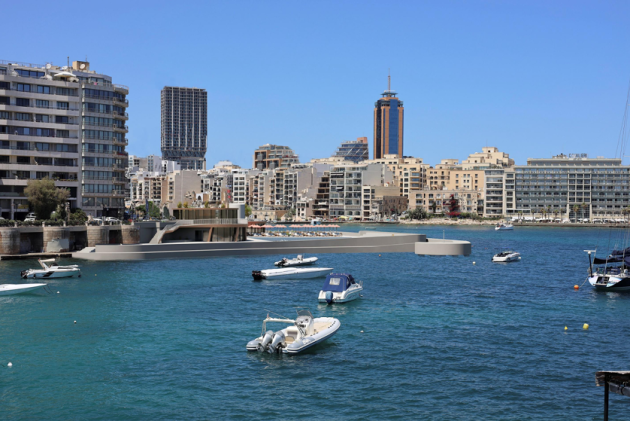
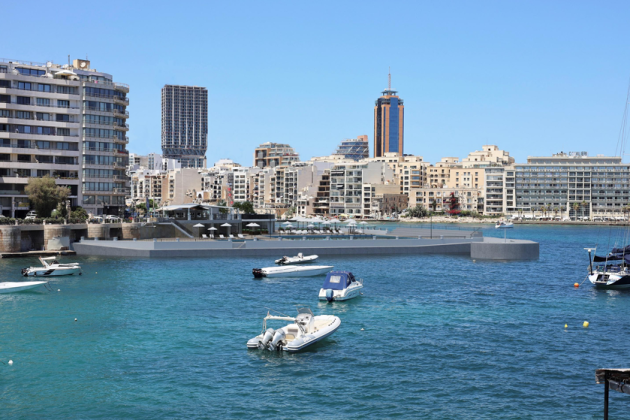
Following an updated environmental impact assessment carried out by AIS Environment, ERA noted that the proposed land reclamation area has been reduced from 3,140 square metres to 2,230 square metres.
Also, the new plan has reduced the encroachment on the seagrass meadow by 80 per cent, from 1,089 square metres to 197 square metres.
These plans are a “considerable improvement”, ERA said, as they reduced the environmental impact from being “major-significant” to being “minor-to-moderate-significant”.
“The breakwater structure will be constructed on piles and thus not bury all seagrass below, though remaining specimens will still be affected by shading or scouring,” ERA said.
Regarding the project's visual impact, ERA said that design alterations, such as rounding the edges of the concrete platform, reduced the visual impact of the proposed development.
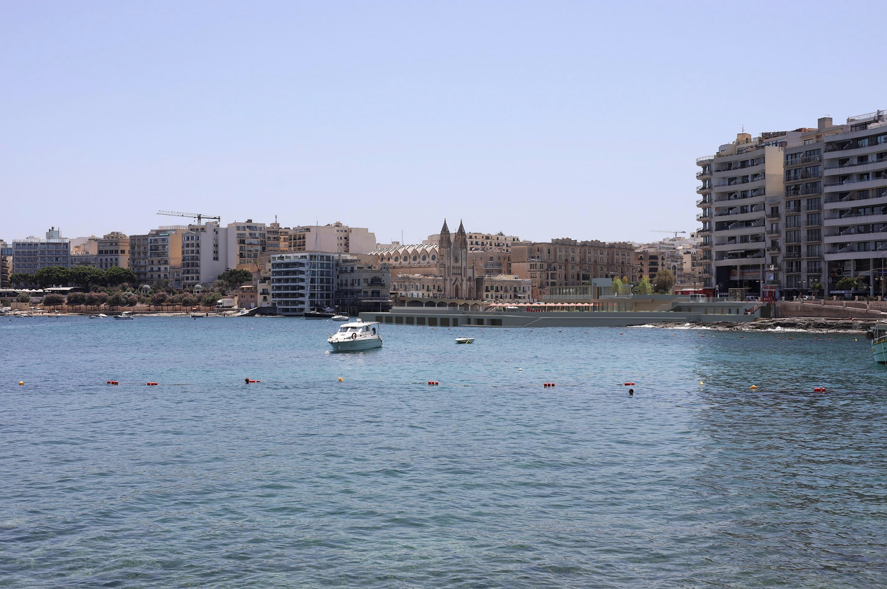 What the development will look like from Xatt is-Sajjieda. Photo: AIS Environment
Previously, ERA said that the development would have a major visual impact when seen from across the bay, from Pjazza Balluta and Xatt is-Sajjieda, but the new changes reduce this impact to moderate. Otherwise, the visual impact from other areas will remain the same – “moderate to major significant”.
The environmental watchdog recognised that any remaining visual impacts are “unavoidable when involving land reclamation", especially in urban areas.