Exactly how many London Studios were there in Valletta?
We now know there were three London Studios belonging to four separate owners
Up till now, we were aware through the published texts of Maltese photographic history, namely Harker (2000) and Casha (2016), that there were two photographic studios in Valletta using the name “The London Studio”, one in Victorian times and one in the interwar era. Effectively, we now know there were three London Studios belonging to four separate owners.
The first studio is well documented, starting its business life in 1878 as a business partnership between Saverio Ciantar Paleologo dei Conti Preziosi etc and his brother-in-law, Herbert John Davison, a photographer of Canadian descent.
The name “The London Studio” was brought over by Davison himself, who alleged he had a studio by the same name in Gibraltar previously. The partnership was short-lived and the fallout acrimonious, going their separate ways in 1881, with Ciantar Preziosi maintaining use of “The London Studio” business name until his passing in 1899.
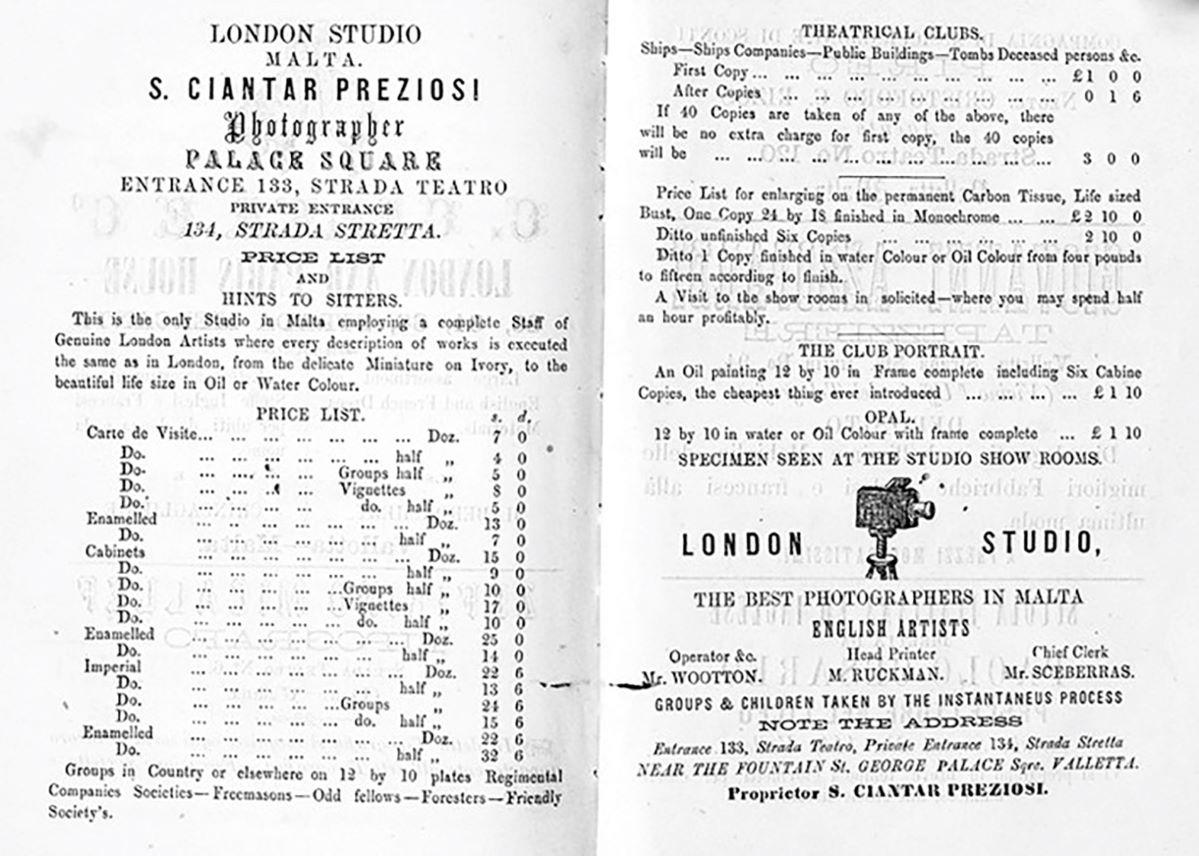 The price list of Ciantar Preziosi’s London Studio.
The price list of Ciantar Preziosi’s London Studio still survives, including the names of its photographic operators, Mr Wootton and Mr Ruckman (Ciantar Preziosi was not a photographer himself) and his chief clerk, a Mr Sciberras. Its position is well visible in an image from the 1880s by Horatio Agius, and its signage is visible in a hitherto unseen image courtesy of the Richard Ellis Archive.
This same studio location would pass to Edoardo Grech Cumbo in 1899, who already was in the photographic business from two previous sites within a stone’s throw of Piazza San Giorgio, Valletta, namely Strada Forni and 141, Strada Stretta.
In 1900, Edoardo passed the site as part of the marriage dowry to his eldest daughter Giuseppina, who married Ugo Calì, son of Giuseppe Calì. Hence the E. Grech Cumbo business name changes to G. Grech Cumbo, probably making Giuseppina Grech Cumbo the first female Maltese photographic business owner and possibly the first Maltese female photographic studio operator as well, although her husband Ugo Calì was certainly an operator at this studio.
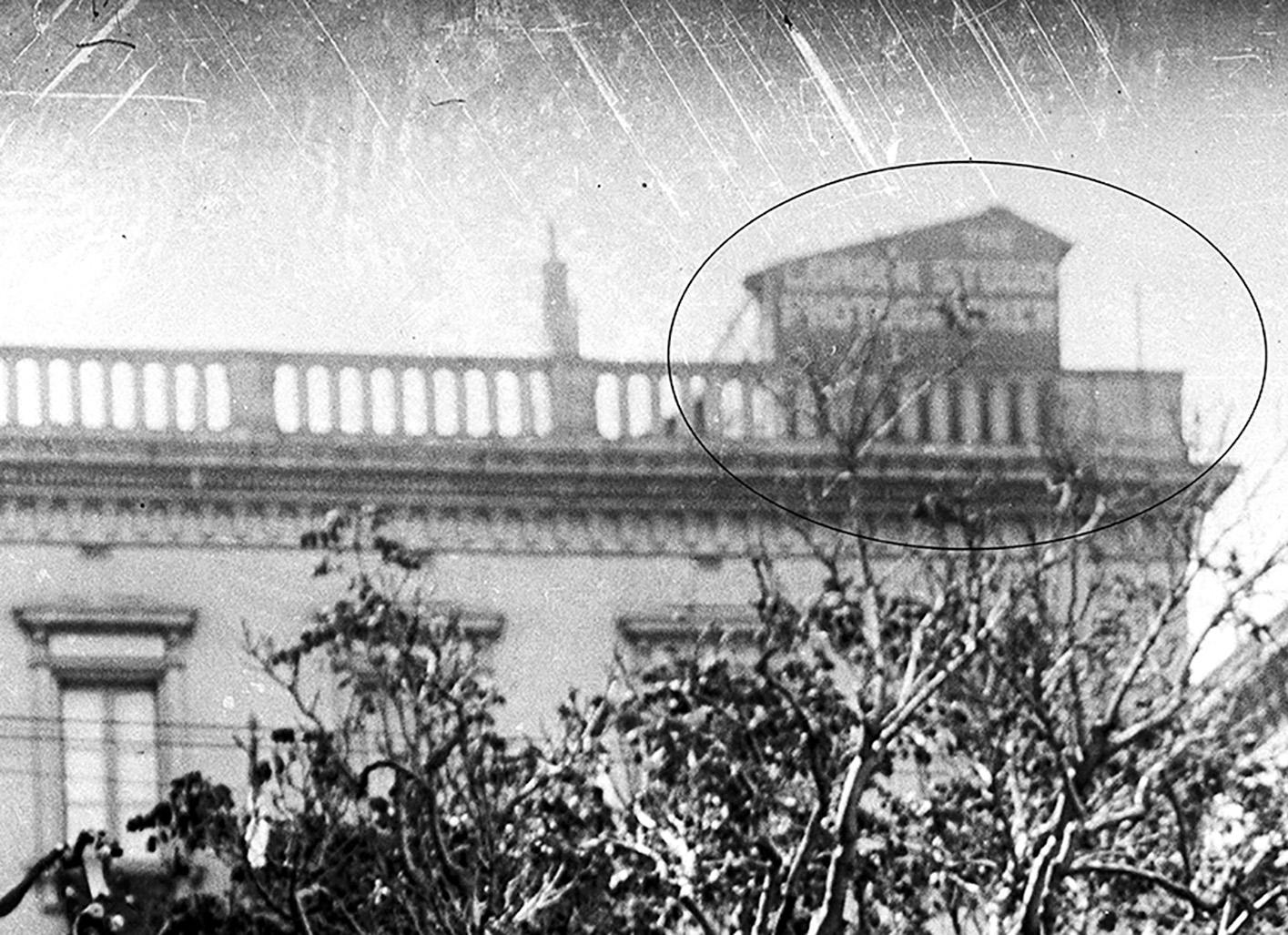 The wooden barracca of the studio atop the roof, with a glass topped hut, is visible in an image by Edward Alfred Gouder pre-1920.
Edoardo Grech Cumbo and his youngest son, Matteo, took over the site previously occupied by E. Camilleri of the Globe Studio fame at 107, Strada San Giovanni, and renamed it “The London Studio”.
The use of the “London Studio” name must have been acquired in the same business transaction which transferred the Piazza San Giorgio site from Ciantar Preziosi to Eduardo Grech Cumbo, and the business name was used when a separate branch of the photographic business of the Grech Cumbos was opened in Strada San Giovanni.
The evidence is clear – between 1906 and 1919, another London Studio, which will be designated as London Studio II for the sake of clarity, was operational from 107, Strada San Giovanni, and the proprietor and operator was Edoardo, and later followed by his son Matteo Grech Cumbo, as evidenced by an advert. A passport application for the 16-year-old Matteo from 1908 gives his residence address as the same 107, Strada San Giovanni address.
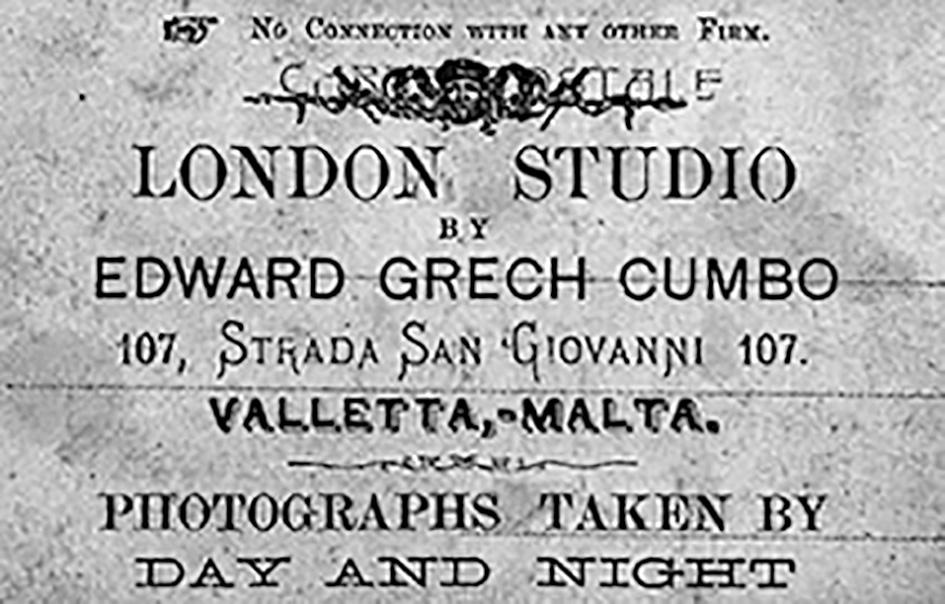 An advert showing a second London Studio operated by Edoardo Grech Cumbo.
Both Grech Cumbo studios remained operational in parallel, with no apparent friction between the two factions of the Grech Cumbo family.
In fact, the cabinet card verso of the London Studio II is a veritable facsimile of the G. Grech Cumbo verso, with the only difference being G. Grech Cumbo usually has a green colour. In contrast, the London Studio II cabinet card versos come in a shade of pink.
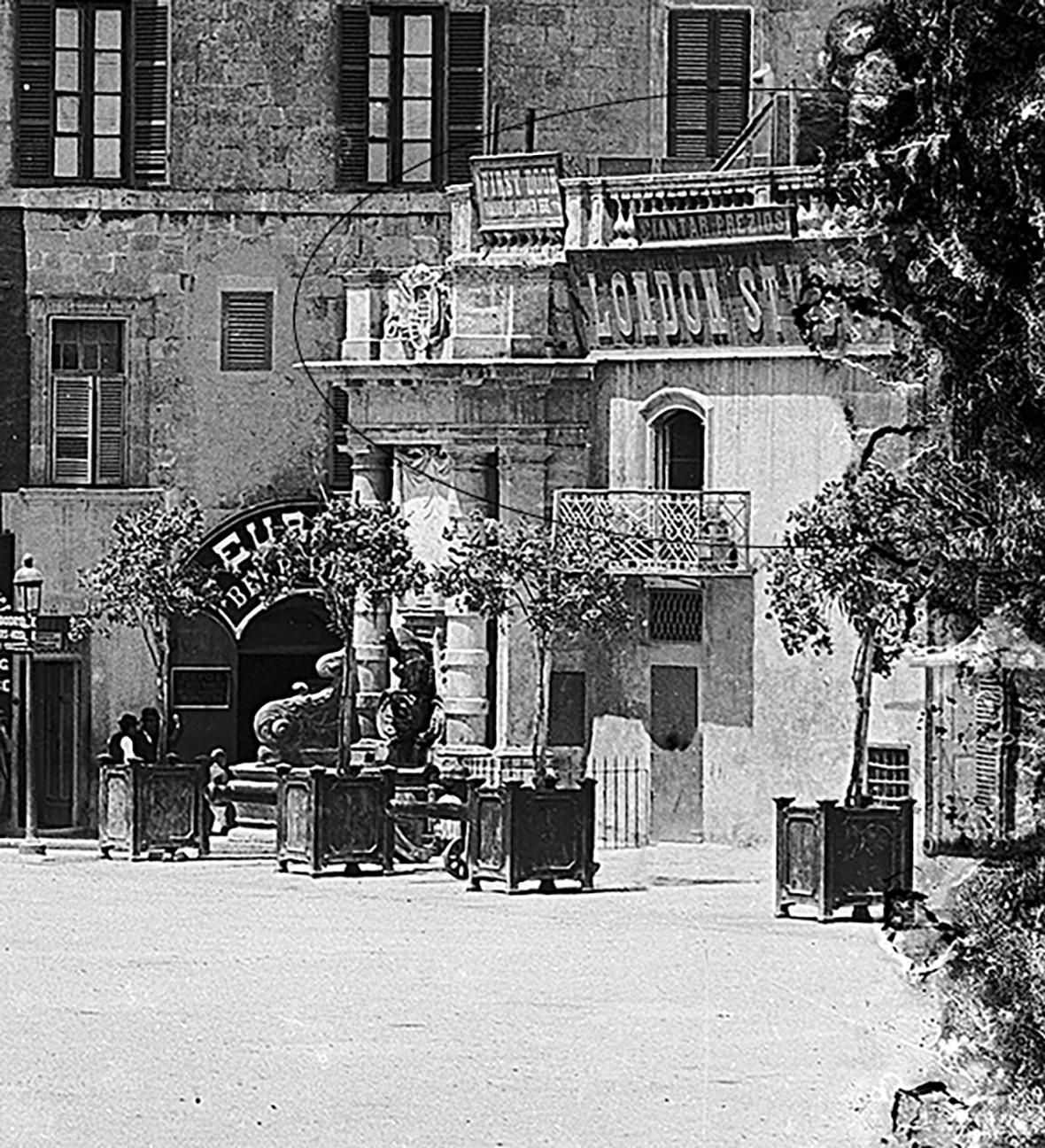 Ciantar Preziosi’s London Studio signage seen in an image courtesy of the Richard Ellis Archive.
There can be no doubt that the provenance of the cabinet card design is identical, as both the leitmotif and the text are practically identical throughout the designs used by the three studios, except for the everchanging name of the studio proprietor out of business necessity. The wooden barracca of the studio atop the roof, with a glass topped hut, is visible in an image by Edward Alfred Gouder pre-1920.
The Grech Cumbo extended family, namely the elder Edoardo and his wife, Giuseppina, Ugo Calì and their children, as well as the younger Matteo and his family, emigrated to New York in 1919. Giuseppina would remarry in the United States, whereas Matteo Grech Cumbo passed away within mere months of his arrival on the other side of the Atlantic. The fate of both branches of the Grech Cumbo photography studios is well documented but with a twist.
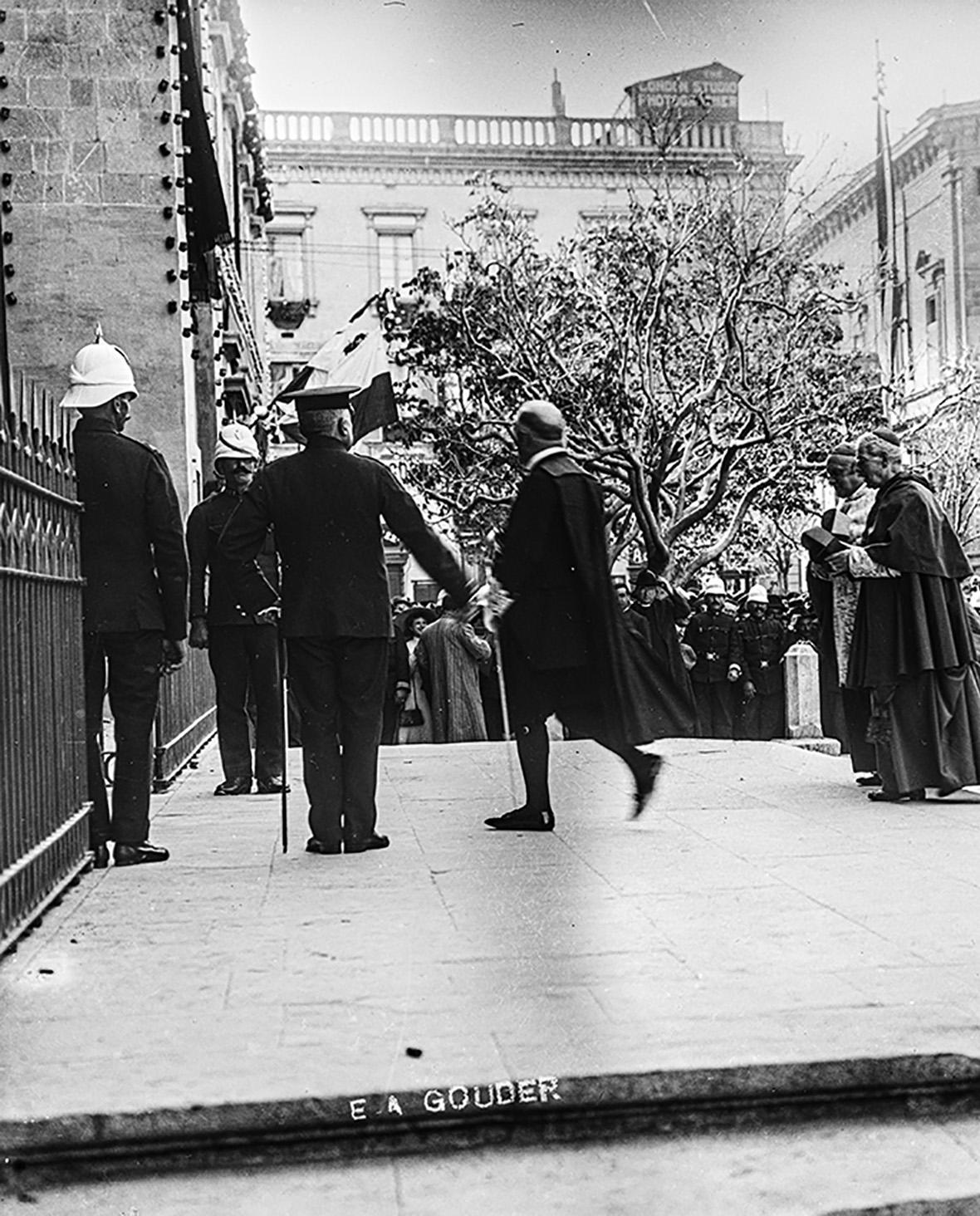
The wooden barracca of the studio atop the roof, with a glass topped hut is visible in an image by Edward Alfred Gouder pre-1920.
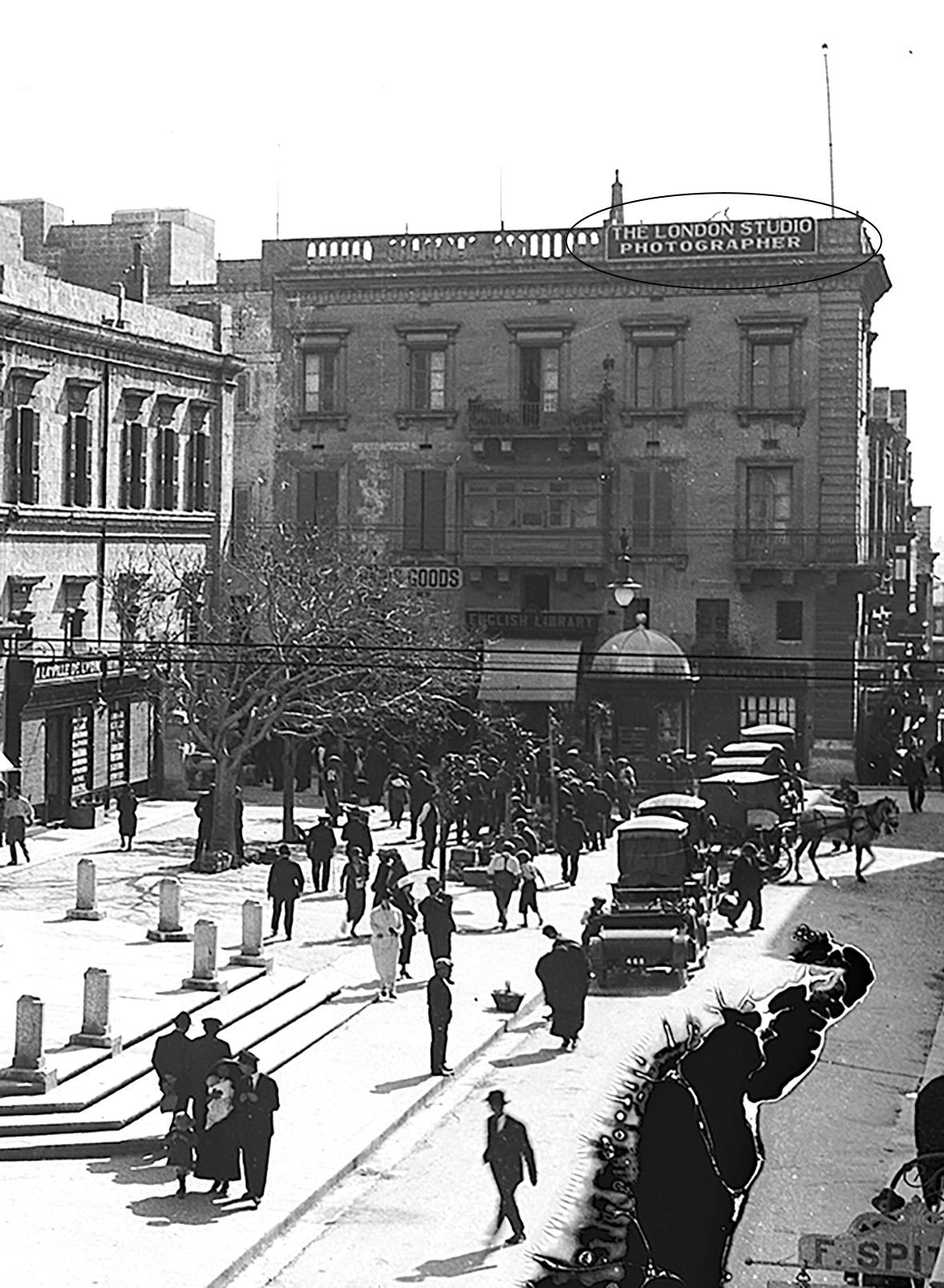
The signage of the studio is visible in an image of the Strada San Giovanni area by Richard Ellis post-1920.
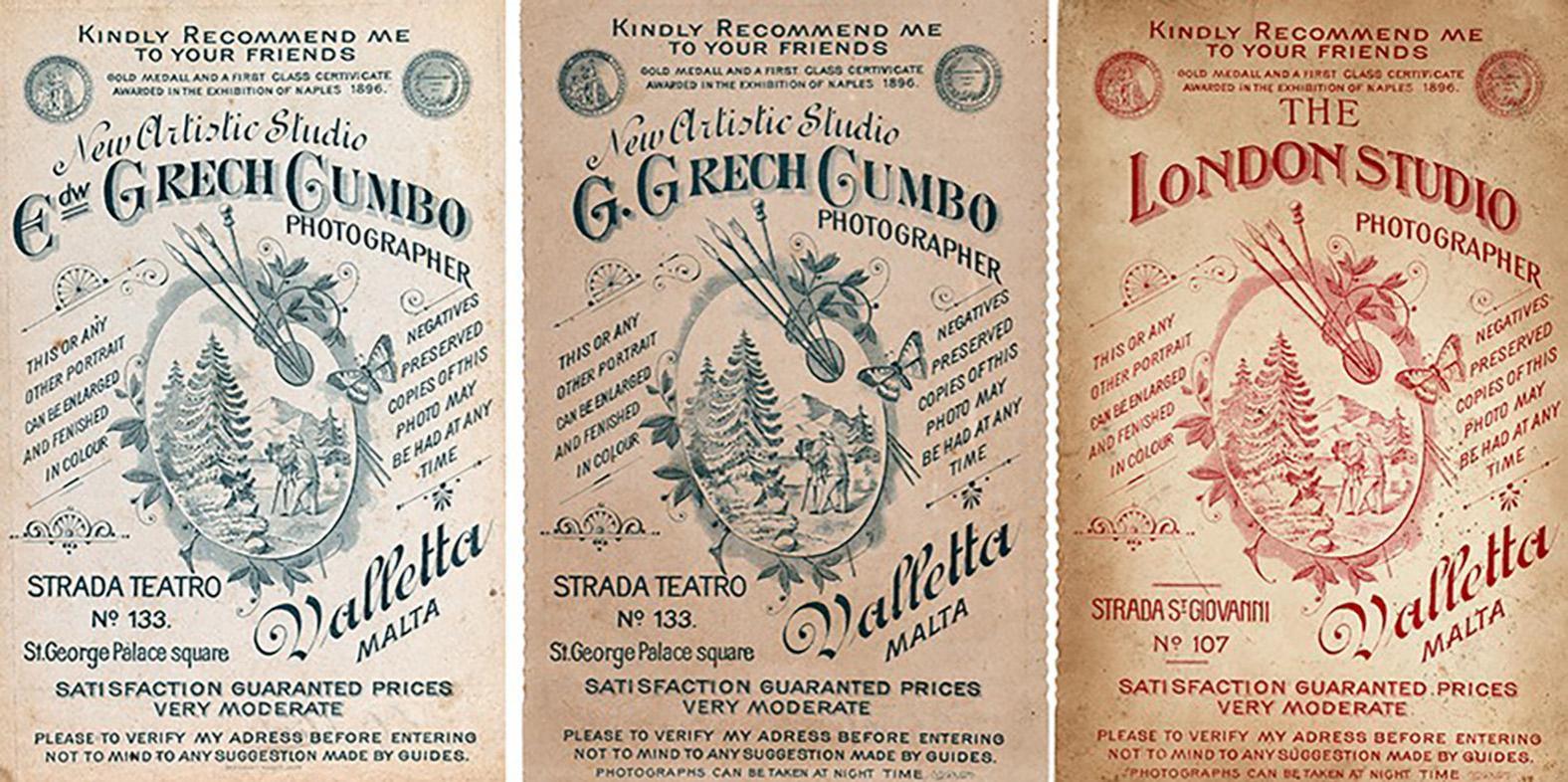
An advert showing a second London Studio operated by Edoardo Grech Cumbo.
The 107, Strada San Giovanni studio would remain named “The London Studio” but pass under a new proprietor after 1920, Giuseppe (Joseph) Pavia, which will be designated as the London Studio III. The signage of the studio is visible in an image of the Strada San Giovanni area by Richard Ellis post-1920.
The 133, Strada Teatro location would be passed to two names synonymous with Maltese photography, first to Anthony Lewis Blackman, between 1918 and 1922 (a previously undocumented location of the first Blackman studio, thus making the Strada Reale, Ħamrun, studio outlet not the first Blackman studio as previously thought, but the second), and then to John Ciancio, the site of his Royal Studio from 1922 onwards.
Thus we can ascertain that the three London Studios in Valletta were: The London Studio I, owned by Saverio Ciantar Preziosi & H.J. Davison between 1878 and 1881, and by Ciantar Preziosi alone till 1899; the London Studio II, owned by Edoardo & Matteo Grech Cumbo between 1906 and 1912, and by Matteo Grech Cumbo alone till 1919; and the London Studio III, owned by Joseph Pavia between 1920 and 1940.