Explainer: What does Robert Abela want to change about human rights?
PM caused a furore last week when he claimed, together with EU leaders, that he is keen on amending human rights conventions
Robert Abela caused a furore last week when he claimed that he, together with several other European leaders, are keen on amending long-standing human rights conventions.
Abela suggested that many of these unnamed conventions do not reflect today’s realities, drawing condemnation in some circles and leading to confusion in others.
Exactly which conventions Abela hopes to change remains unclear but he made it clear that he is unhappy about two issues in particular, namely a European Court’s decision to freeze Italy’s attempt to move asylum seekers to Albania while their claims are being processed and the difficulty in deporting migrants who have committed a crime in Malta.
This isn’t the first time that Abela expressed his unhappiness over the matter.
Last November, he told Times of Malta that “European courts sometimes fail to consider the realities we politicians face” and that the European Convention “needs to adapt to today’s realities”.
What is the Italy issue about?
Abela is talking about the return hub mechanism, a system that he has frequently described as having been developed by Malta, only to be put into action by Italy.
In practice, the idea behind this mechanism is to create hubs outside the EU where asylum seekers would be temporarily placed while their claims to asylum were being screened or while awaiting deportation to their home country.
Discussions over this kind of model have been a long time in the making across Europe, partly inspired by the highly-controversial Australian model of intercepting boats trying to make their way into the country and transferring them to facilities in Papua New Guinea and Nauru, among other places.
Australia’s policy has frequently been described as inhumane and both legally and morally dubious by human rights activists but that hasn’t stopped the EU from toying with similar ideas.
Regional disembarkation platforms
In 2018, the European Council floated the idea of “regional disembarkation platforms”, with the European Commission taking the idea on board.
It initially planned to work with UNHCR and the International Organisation for Migration to put the scheme into action, with each host country being given €6,000 for each person it takes in.
But the idea never got off the ground, mired in political divisions across the bloc, with even the Council of Europe describing it as a “quick-fix solution”.
The exception to the rule is Italy, which, in 2023, signed a five-year deal to transfer migrants intercepted at sea to two centres in Albania, where their asylum requests would be processed by Italian officials.
Italy’s system was somewhat reminiscent of the UK’s controversial Rwanda bill that had made it through parliament just months earlier, directing asylum seekers across the UK to Rwanda for processing.
What is a safe country?
While EU chief Ursula von der Leyen praised Italy’s scheme as an example of “out-of-the-box thinking”, the initiative has floundered, halted by questions over its legality.
Italian courts referred the matter to the European courts to decide whether the scheme violates EU law, meanwhile ordering migrants housed in the Albanian centres to be returned to Italy.
The legal dispute revolves around how to define a “safe country of origin”, or countries to which migrants can be returned. Last October, EU courts ruled that the designation can only be applied to an entire country, not a territory within a country.
Designating a country as safe makes it much easier (and quicker) to return migrants, with authorities able to process asylum applications from that country in shorter times, but this designation remains a contentious issue.
Malta has already had its definition of a safe country of origin challenged in the past.
In a landmark 2022 decision, the European Court of Human Rights argued that Malta had failed to take a young Bangladeshi journalist’s individual circumstances into account when turning down his asylum application and returning him to Bangladesh because it is deemed a safe country.
“If 95% of the country of origin is deemed safe and 5% isn’t, the European Court of Justice’s interpretation is that the entirety of that country is not safe,” Abela told journalists last week, saying that Malta was backing Italy’s objection to this interpretation.
Abela’s figures are fictional, since the ECJ doesn’t specifically speak of percentages but his broader point stands. The court’s decision effectively rules out the prospect of returning migrants to a country unless its entire territory can be deemed safe.
Malta isn’t alone in backing Italy over the issue. The European Commission has also taken Italy’s side, as have several other EU member states.
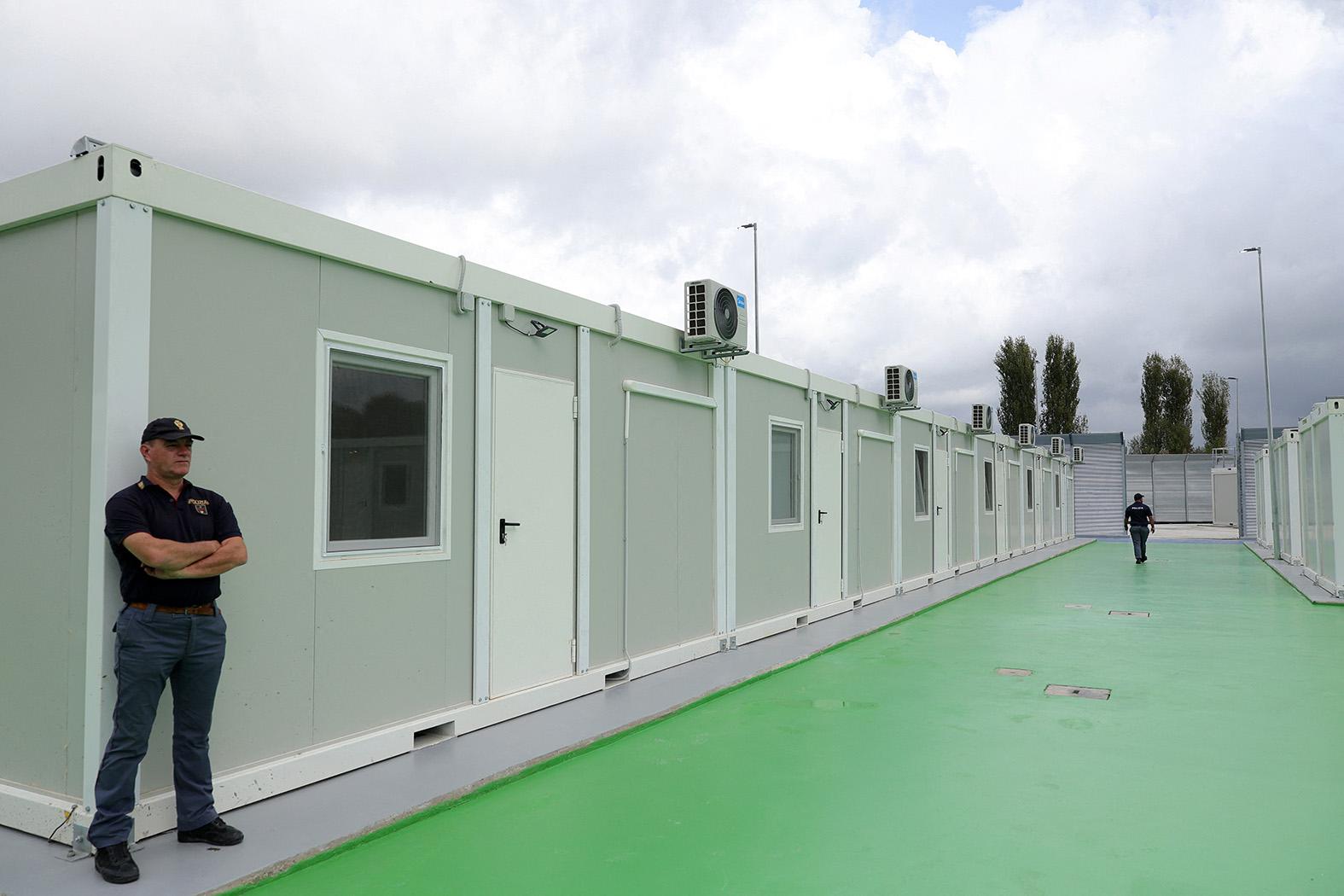 Italy's government agreed on March 28 to change who will be held in its migrant centres in Albania, but experts warned the legal challenges that have effectively frozen the scheme until now remain. File photo: AFP
Can Malta deport migrants who have committed a crime?
Although not quite impossible, human rights conventions make it particularly tricky to do so, understandably concerned over the implications of returning persecuted migrants to their persecutors.
The greatest barrier to this is the non-refoulement principle, enshrined in the 1951 Refugee Convention and the EU Charter of Fundamental Rights, which says it is illegal to return someone to a country if they face the risk of torture or persecution, even if they have committed a crime.
This principle has also been backed by EU courts.
In 2019, courts ruled that migrants found guilty of serious crimes in Belgium and the Czech Republic couldn’t be returned to their home countries, even if their refugee status were to be revoked.
Earlier still, in 1996, the European Court of Human Rights blocked the UK’s attempt to deport an Indian man, Karamjit Singh Chahal, on grounds of national security. Chahal was believed to be involved in Sikh separatist activities.
Other EU countries have faced similar challenges.
France saw its hopes of expelling convicted terrorist Chellali Benchellali dashed, while the Netherlands was not allowed to deport Mohammed Ramzy, an Algerian national suspected of having links to terrorist cells.
Malta faces a similar quandary in some high-profile cases. Arguably the most well-known is that of Lilu King, a Libyan national granted refugee status in 2015.
Although his refugee status was revoked in 2023 after being accused of money laundering, tax evasion and participating in organised crime, international conventions mean that authorities are likely to face an uphill battle if they were to try deport him to Libya.