Exploitation of migrants is 'the rule, not the exception' - JRS report
JRS Malta calls for a more human-rights-focused way of dealing with migrant workers
A migrant worker, who believed his employment was above board, discovered that the tax number on his payslip was fake and that his employer was pocketing the money - an abusive manoeuvre that cost him his documentation at a time when he tried to access healthcare.
Because of the greed of his employer, the worker lost his Specific Residence Authorisation (SRA), which had allowed him to regularise himself years back when it was still being issued.
“But who is facing the consequences? Not the employer but me?” the migrant told researchers.
His story emerged as part of a project that sought to highlight the realities of legal precarity and labour exploitation among migrant workers, with the aim of influencing policies that are denying or limiting access to the labour market for undocumented migrants.
Titled 'Forced to Hide: The Human Cost of Legal Precarity and Labour', the research was carried out by Jesuit Refugee Services (JRS) Malta with the support of the Platform for International Cooperation on Undocumented Migrants and the Robert Bosch Stiftung grant programme on labour rights and migration.
The project involved monthly outreach with local migrant communities, interviews with nine migrant workers of different legal statuses, and focus groups with NGOs, employers, trade unions, and government stakeholders.
Clear pathways needed
One of its key recommendations was the reintroduction of the SRA which offered a clear pathway that would allow migrant workers to regularise themselves.The SRA was first introduced by government in 2018, offering a route for undocumented, rejected asylum seekers who had been working regularly in Malta for five years, contributing to society and integrating.
Sometimes these workers became undocumented due to health reasons, that forced them to stop working, or as a result of employer negligence or abuse. In 2020, however, the government decided that no new applications would be accepted, though those who already had the permit could continue renewing it.
Beth Cachia, author of the research document, explained that the results revealed a range of challenges forming part of the daily realities of migrants, including asylum seekers and third-country nationals whose residence permits were tied to their employment.
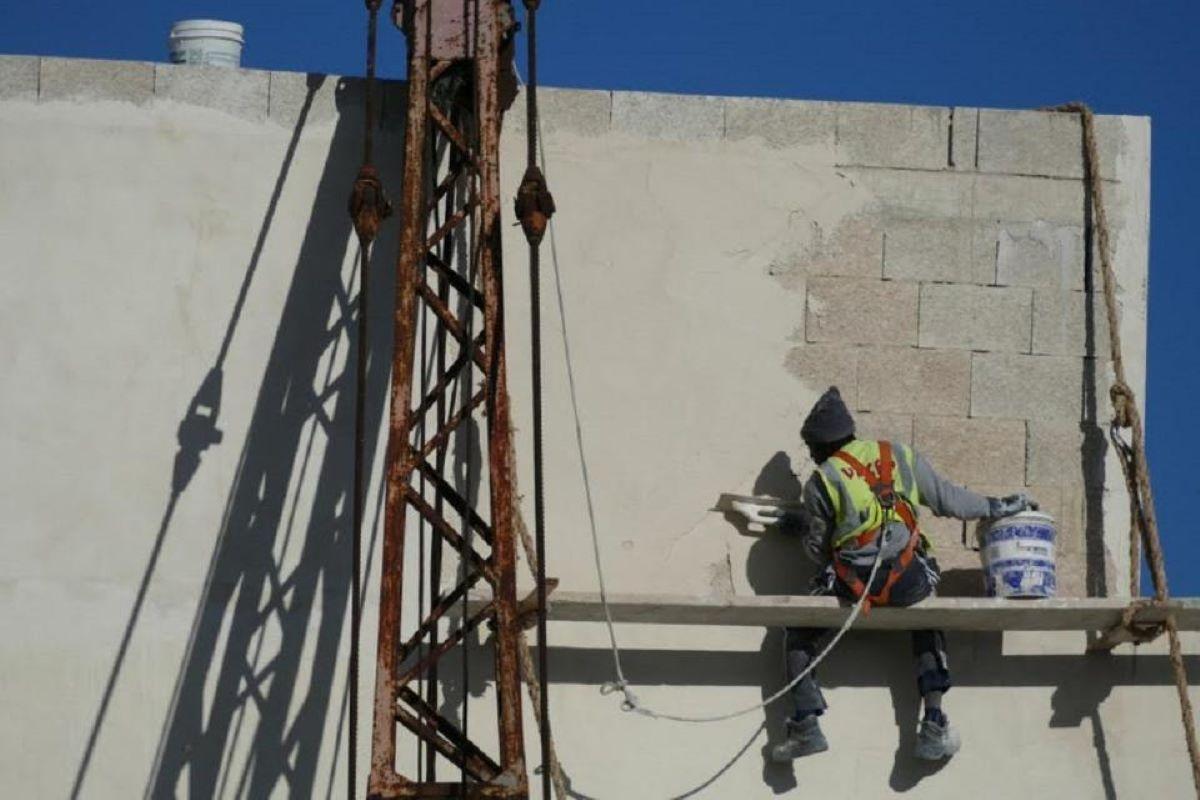 Migrants interviewed spoke about the lack of safety at work.
The research found that employment challenges often began with the search for work after release from detention, and it was even harder to find legal work. Access to services designed to facilitate employment was not straightforward.
Exploitation was a recurring theme. Migrants reported being underpaid and ill-treated, working long hours, being forced to work on trial only to be dismissed, being denied breaks or given only short ones, and avoiding leave or sick days out of fear of losing their jobs. Health and safety issues were also common.
Language barriers, as well as cultural and social obstacles, added to their struggles. Many lacked support systems, relying mostly on their own communities. Bureaucracy and confusion surrounding different work permits and migration statuses created additional difficulties, alongside problems opening bank accounts and being paid in cash.
Seen as 'workers' and not as 'people'
Many migrants expressed the belief that they were in Malta “only to work”, but once they could no longer work, they became undocumented. Family reunification was another significant challenge. All participants mentioned racism, discrimination, and bullying at work, which they said had worsened after policies became harsher and shifted public perception. Discrimination was particularly pronounced in public-facing jobs.
“Malta needs workers so why not me,” one migrant said. There was also a perception that asylum seekers could not be highly educated, forcing many to accept jobs out of necessity and agree to lower pay due to a lack of documents. The mental toll of living without documents was severe, with constant fear of losing work and growing anxiety about the future.
The report’s recommendations included reintroducing a regularisation pathway. The removal of SRA status had led to an increase in undocumented people, and its return, the report argued, would limit exploitation and recognise the contributions of those who live, work, and integrate in Malta.
There was also a call for the prioritisation of workers’ rights regardless of legal status and for creating spaces for dialogue and joint action to ensure effective protection of undocumented migrants.
JRS director Katine Camilleri said people are caught at the intersection of immigration rules and piecemeal enforcement of employment conditions and worker protections.
This, she argued, creates a "human rights vacuum where exploitation is tolerated and profitable". Because it fosters dependence on employers, migrants end up trapped. The employment of third-country nationals is seen as an immigration issue rather than a labour one. Violation of their rights, she said, is not the exception but the rule.
“We need to make it not profitable for employers to exploit workers. The aim is to shine a light on a hidden reality and start a dialogue,” Camilleri added.