Fewer gender mechanism seats may be needed after women perform well in election
A maximum of 12 seats, evenly divided between the two major parties, can be doled out to the best-performing women candidates across Malta.
One of the lead authors behind the gender-corrective mechanism suggested that the maximum 12 seats available to increase female representation in parliament might not be needed because of strong performances by women.
The gender mechanism takes effect if an under-represented sex, usually women, achieves less than 40 per cent of the seats in parliament. A maximum of 12 seats, evenly divided between the two major parties, can be doled out to the best-performing women candidates across Malta.
Carmen Sammut described the increase of women in parliament as “amazing news”.
“At first glance, I do not believe that the ‘under-represented sex’ obtained anywhere near the 40 per cent required. But we still need to calculate whether all 12 additional seats are required to approach that percentage,” she said.
Labour Party sources also said not all 12 seats may be needed to reach the 40 per cent mark.
Depending on how the PN's casual elections play out and the interpretation of the law, the mechanism could return 10 extra women to parliament instead of 12.
The mechanism was first used in the 2022 general election, a year after it was introduced to address the severe under-representation of women in parliament.
It was designed as a temporary measure and the law includes a susnet clause of 20 years, unless it is renewed or changed by parliament.
“I have a gut feeling that, in this election, women have reached the critical mass of 33 per cent before the mechanism takes effect, thanks to their incumbency gained in 2022,” Sammut said.
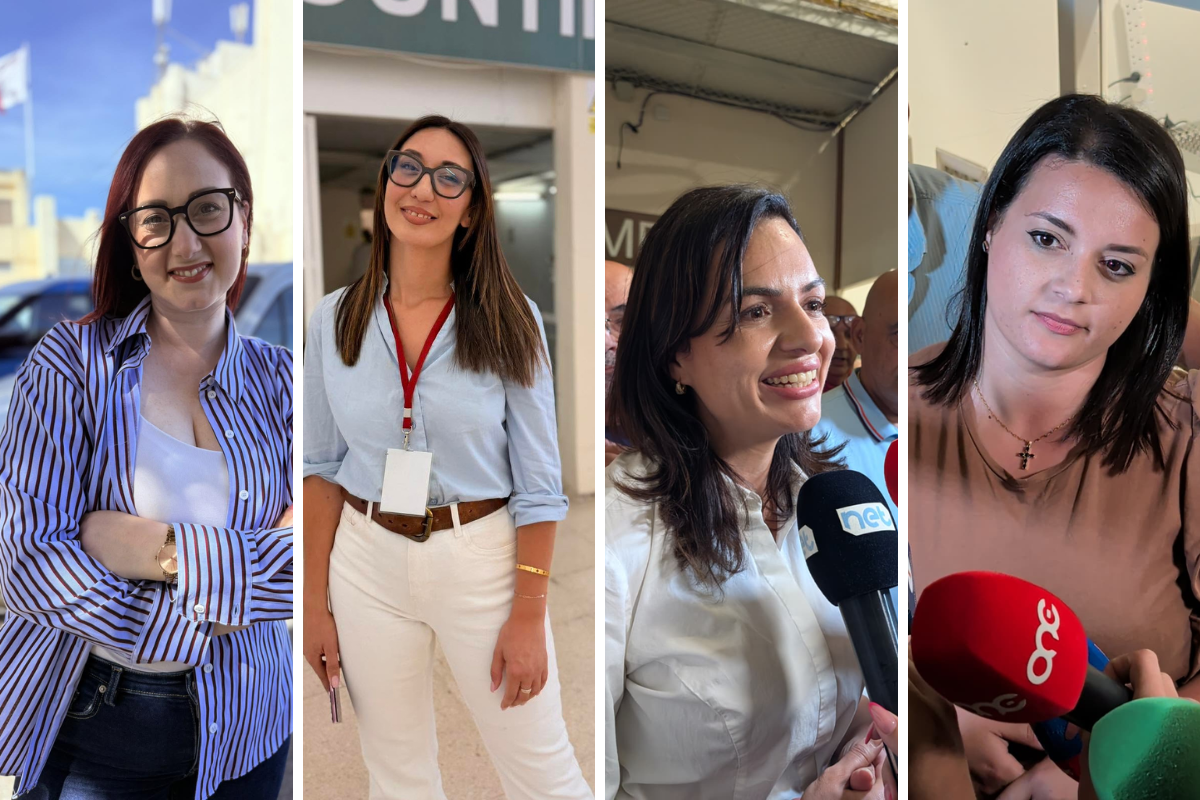 Rebecca Buttigieg, Naomi Cachia, Ramona Attard and Mariah Meli were all elected on casual elections on Friday. Photo: Chris Sant Fournier
Women have performed significantly better in the 2026 election, winning 12 seats in parliament, doubling their 2022 tally.
On Friday morning, four more women joined the parliamentary ranks during the Labour Party’s casual elections.
The final tally of women elected to parliament, before the gender mechanism, will be complete on Tuesday when the PN holds its casual elections.
Should parliament not need six additional seats from each party, some parliamentary hopefuls could be left out.
The PL’s top-performing women who have not received a seat so far are Cressida Galea, with 2,094 total votes from district 1, Animal Rights Commissioner Fleur Abela, with 1,520 votes from district 1, Francesca Zarb, with 1,331 votes from district 11, Deborah Schembri, with 847 votes from district 12, and Romilda Zarb, with 755 votes from district 11.
Romilda Zarb managed to get elected via casual election in 2022. This time around she failed on both her District 11 and 12 bids.
 Paula Mifsud Bonnici, Alicia Bugeja Said and Eve Borg Bonello were brought in to parliament through the gender mechanism in 2022 but were re-elected on their own steam in 2026
Several MPs elected on their own steam in 2026 were first introduced in parliament through the gender corrective mechanism.
They include Alicia Bugeja Said, now a parliamentary secretary in the Labour government and the PN's Eve Borg Bonello.
The PN's Paula Mifsud Bonnici was elected in 2013 to parliament, failed to be elected in 2017 and was brought in to parliament again in 2022 through the gender corrective mechanism.