De Vallete: A fighter and a builder
De Vallete's major claim to historical fame was his successful defence of the island during the five-month Ottoman siege of 1565
Grand Master Jehan De Vallete. Hero of the Ottoman Siege of Malta and Founder of Valletta
By Carmel Cassar
Published by Heritage Malta, 2025
Grand Master Jehan de Vallete is one of the iconic figures of Maltese history. He achieved legendary status when, as a septuagenarian, he successfully led the defence of the island against the mighty Ottoman forces that had been sent to exterminate the Order of St John. As soon as the siege was lifted, he tuned his indefatigable energy to the foundation of the proud city that bears his name. What has become of it today is better left unsaid.
Carmel Cassar’s recent biography, published quite elegantly by Heritage Malta, gives rounded assessment of this figure, justly celebrating his achievements but not ignoring his less than honourable deeds and peccadilloes. To this end, he makes use of the archival information that has emerged fairly recently. One very important aspect is that Cassar constantly places his account in a much wider Mediterranean and international stage.
Throughout, Cassar uses the name as used by de Vallete in one of his signatures, although ironically in the only instance actually shown in the book it is Jehan Vallete. He seems to have added the ‘de’ after he became grand master.
Born in 1494 in the commune of Parisot in Provence, France, a few miles north of Toulouse, Jehan joined the Order of St John in Rhodes in 1515, at the age of 20. For the next 53 years he would continue to serve the Order, defending Rhodes in 1522 (although his name does not feature in any record), following L’Isle Adam in the odyssey in search of a new home, and finally settling in Malta. As far as is known, he never once returned to his native Provence.
De Vallete’s career took off after the Order settled in Malta in 1530. Four years later, he was given his first appointment as commander of a galley. It was the start of rising through the ranks with a sequence of important posts and achievements, in spite of having twice, in 1538 and 1555, fallen foul of the Order’s laws due to his irascible nature.
In the meantime he had gained a solid reputation as a fearless fighter at sea and also as a wise and able administrator. His clashes with the law did not stop him from being nominated governor of Tripoli in 1546, the outpost in Muslim lands, the hot potato that Charles V had saddled the Order with as the added cost of accepting Malta.
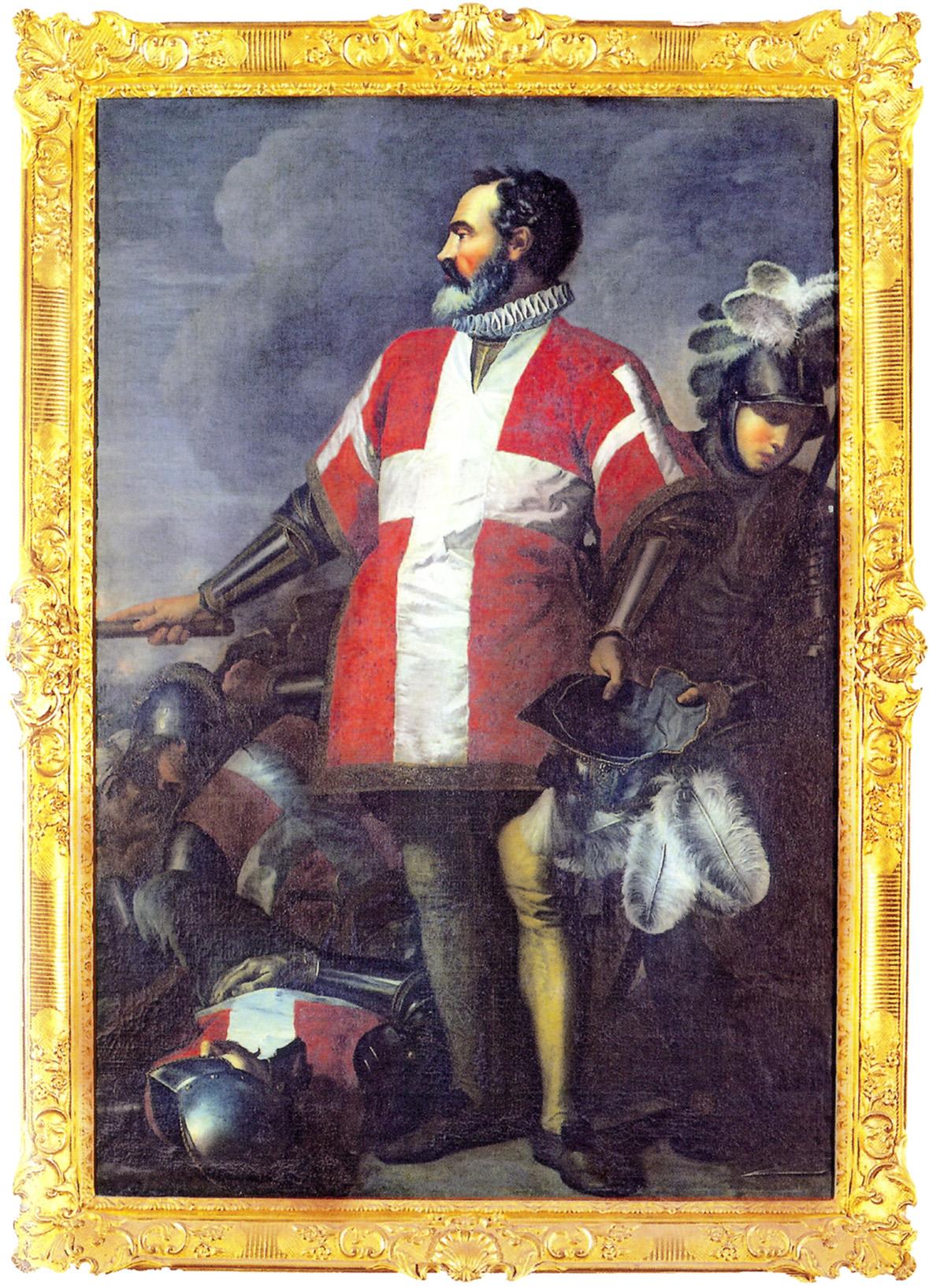 Portrait of Jehan de Vallete by Antoine Favray
In his three years a governor, de Vallete reinforced the city and played political cards to try and block the Barbary corsairs. Still, a month after he had left, the Order’s doomed African foothold fell to Turgut Reis – a tightening of the Islamic belt that greatly increased the parlous state of Malta’s security.
Back in the convent, de Vallete’s qualities ensued an irresistible rise in the Order’s hierarchy, although his fiery character landed him in legal problems once again. Still, when Grand Master Claude de la Sengle died, he was very much the obvious choice to succeed him as the 49th grand master of the Order on August 21, 1557.
Most conscious that the Ottoman bell was tolling for Malta, de Vallete’s overwhelming concerns were the strengthening of the fairly primitive fortifications of the island and the weaving and reinforcing relations with potential allies who could be expected to come to the island’s defence when the need would eventually arise.
Rightly, de Vallete’s major claim to historical fame is his successful defence of the island during the five-month Ottoman siege of 1565. Not only did this provide a great setback for Islamic penetration into the western Mediterranean, which was rounded off with the great naval victory at Lepanto six years later, but for little Malta it also finally led to the decision that the Order would make the island its permanent home. Most of what we brag about today would not be here had the siege had another outcome.
De Vallete’s other great achievement was the building of a fortified city on Mount Sceberras, which had long been the Order’s cherished idea
De Vallete’s strategic sense and organisation played no small part in the Ottomans’ defeat, as did his personal bravery, that saw him throwing himself into the thick of the fighting when Vittoriosa had almost fallen. He also managed to win the loyalty of the Maltese, without which the 500 brethren of the Order could not dream of withstanding the massive besieging force. This in spite of the fact that he, during the early days of the siege, had described the Maltese as “a population of little courage and little love for the Religion” in a letter to the viceroy of Sicily.
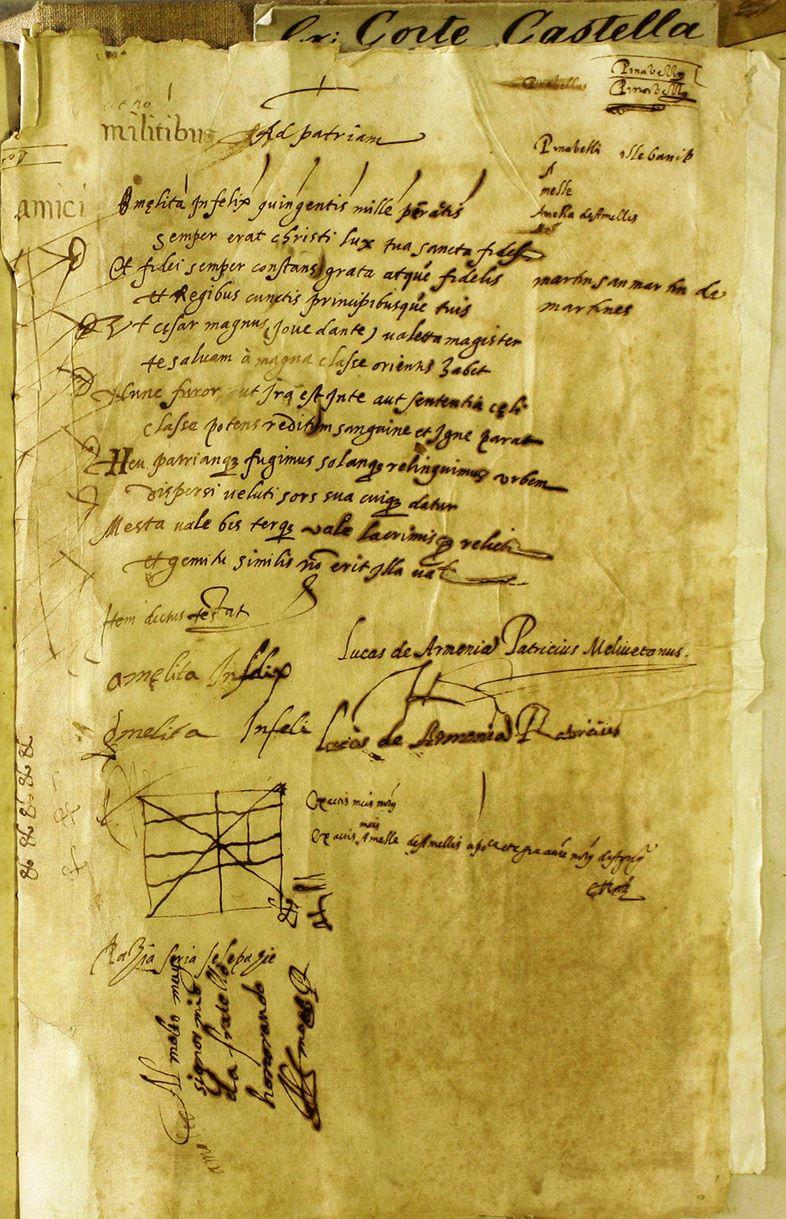 Luca d’Armenia’s poem
But the Turks themselves contributed in no small way for their own defeat with several pathetic strategic decisions, most probably the result of sheer arrogance. Sending an armada without a clear leader was the height of madness in strategic planning.
Cassar gives an account of the events of the siege, very often making use of primary sources. Cassar himself was responsible for the serendipitous discovery in 1981 of a unique contemporary poem attributed to Luca d’Armenia. Probably written after the Muslim armada had landed, the poet expresses his great fear that Mdina be abandoned. D’Armenia was an important influential citizen of Malta’s old capital.
Cassar quotes from a recently discovered anonymous report at the Vatican Apostolic Archives that condemns de Vallete for blunders and miscalculations as well as seeking to attribute all the glory to his personal self. And yet he refused the pope’s offer of a cardinal’s hat, asking it to be bestowed to his brother, the bishop of Vabres instead.
De Vallete’s other great achievement was the building of a fortified city on Mount Sceberras, which had long been the Order’s cherished idea. Literally as soon as the siege as lifted, the grand master turned his attention and all his energy to the strategic heights that could very well have cost him the siege.
By December, the pope’s engineer Francesco Laparelli was already on the island and he set to work immediately. Time was of the essence since another Ottoman attack was expected soon.
The major problems faced where those concerning the financing of this huge project and also the finding of enough workers. De Vallete wisely capitalised on the great enthusiasm that swept Christendom and successfully pleaded with several Christian kings and princes for funds. In this sense, Valletta may be seen as the first pan-European project.
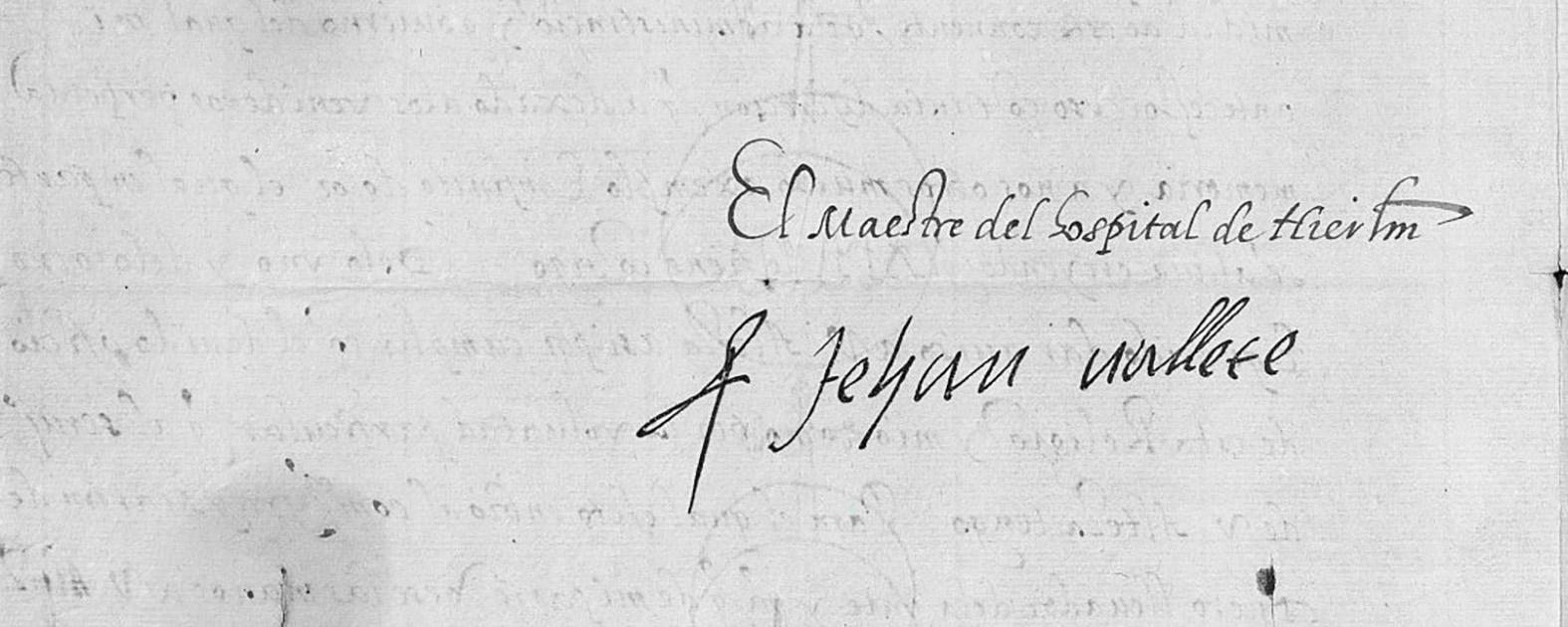 Signature of de Vallete
The workforce necessary was another headache. Laparelli had thought of needing 4,000 men toiling day and night to have the basic fortifications erected in case of an early invasion, a number which the local male populace, decimated by the siege, simply could not supply. For the first time in its history, the island had to import workers in their thousands.
Cassar goes into some details about the vicissitudes the Order had to face until the foundation stone of “the most humble” city of Valletta was laid on March 28, 1566, less than six months after the Ottomans had sailed back home.
De Vallete’s autocratic character brooked no dissent. While this characteristic must have proved decisive in organising the defences of the siege, it was less positive when it came to treating with the populace, especially when it came to anybody daring to question the Order’s rights and privileges. The sad story of Giuseppe (Mattew) Callus – one of the island’s quasi-forgotten heroes – is a case in point.
De Vallete also seems to have had quite elastic interpretations of the Order’s vow of chastity. One son was legitimised by the king of France in 1568. He also seems to have fathered a daughter of exceptional beauty who was murdered by her husband on July 31, 1568, a death that threw the ageing grand master into fits of profound melancholy, which did no good to his health. Three weeks later, de Vallete, who had actually been struck by a terrible illness on July 25, 1568, was dead.