Five takeaways from a rowdy University leaders' debate
Five of Malta's party leaders faced off for the first time this campaign at university
Monday's long-awaited debate between five party leaders, the first of its kind throughout this campaign, was a rowdy affair, with each leader seeking to rile up the crowd while pitching their party's vision.
While the leaders' frequent jibes at one another meant the debate may have made up in entertainment value what it lacked in sombre detail, casual viewers are unlikely to have learnt much new information about either of the five leaders on stage.
However, the debate did reveal contrasting strategies at times, with each respective leader leaning on their party's strengths when faced with questions about the environment, construction and education.
Here are five key takeaways from the debate:
- PN has a long pro-EU track record, lest we forget
Throughout the debate, Borg frequently leaned on the PN’s pro-EU credentials, a topic likely to appeal to younger voters, gladly seizing every possible opportunity to remind the audience that it was PN that steered Malta into Europe.
In his very first intervention, Borg said the recent appointment of debate moderator Chloe Cauchi as vice president of the European Youth Forum was “a clear signal of what a success EU membership has been”.
Borg repeatedly pitched PN as the party that “has the strongest legacy in the EU,” frequently adding that that PN “forms part of the largest political grouping, the EPP,” in an effort to convince the audience that PN would help young people meet their European aspirations.
On several occasions, he also leaned on the party’s star MEP Roberta Metsola.
“If I’m elected Prime Minister I would be sitting in the European Council with Roberta Metsola,” he said, of the sitting European Parliament president, whose current term ends next year.
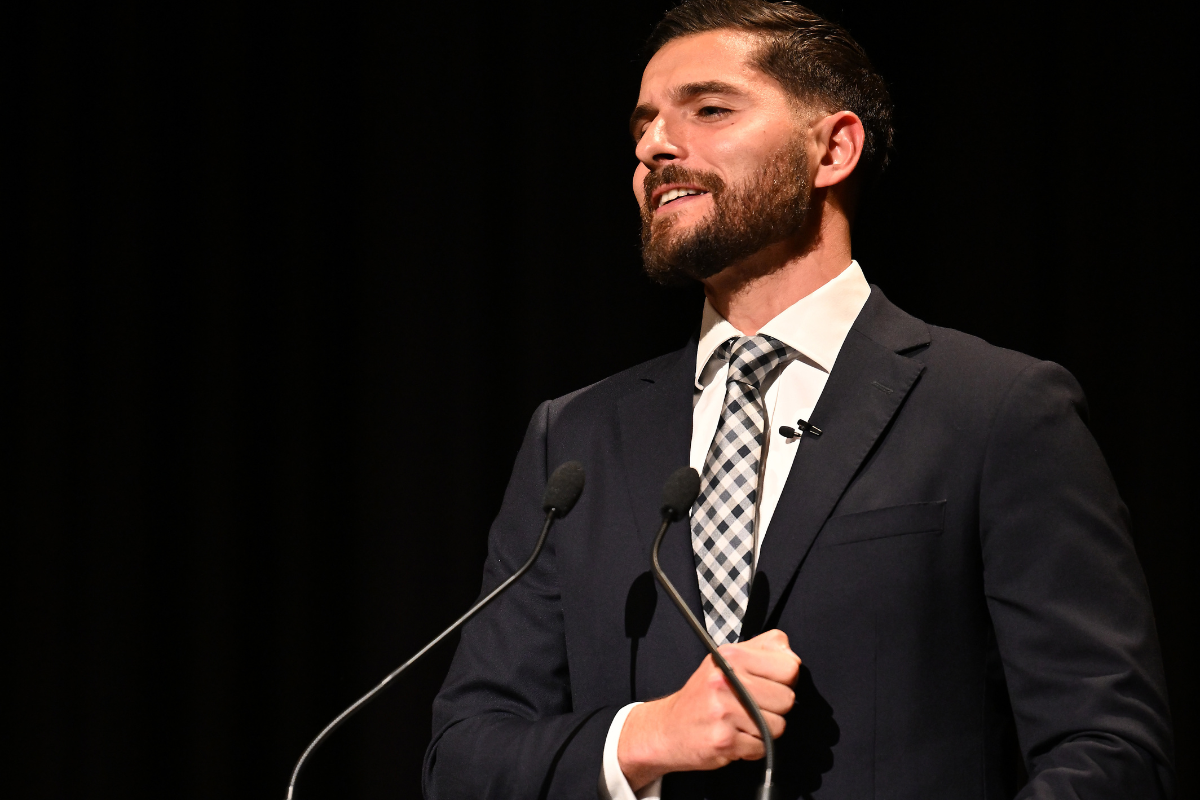 Alex Borg frequently pitched the PN as a party with a strong track record of supporting the EU. Photo: Matthew Mirabelli
- 'My team is more credible than yours'
Abela, too, leaned on his peers at times, frequently citing the “competence and credibility” of several of his fellow cabinet members.
He argued the proposals being put forward by the party in its manifesto were the work of the party’s entire team, naming several of his top cabinet ministers as key influences.
Pointing to ministers Clyde Caruana, Miriam Dalli and Ian Borg, Abela said “we can boast so many competent people, compared to the nothing (baħħ) that the others have”.
Abela pointed to several blunders he said PN carried out when costing its own proposals, including a claim, later reversed, that a first-time buyers’ pledge will cost €2.8 million.
He said ministers had successfully poked holes in many of PN’s proposals, with the pledge seemingly not tallying with its costings in each case.
“PN first says our proposals cannot be done, then they copy them and because they copy them they can’t explain how they work or are costed,” he said.
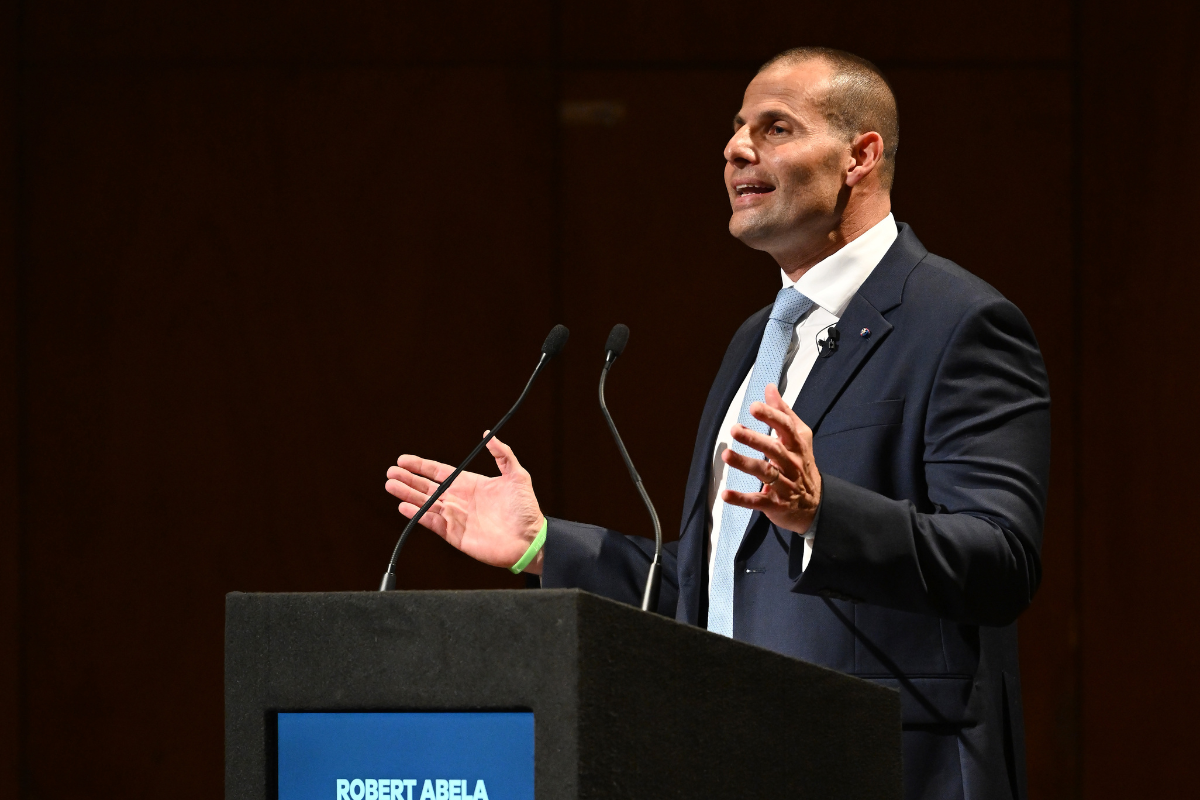 Labour leader Robert Abela put the focus on his team of ministers during the debate. Photo: Matthew Mirabelli
- A new mosque? God forbid.
Abela and Borg may have clashed on almost every topic under the sun throughout the debate, but quickly found themselves on the same page when asked whether they would support a new mosque in Malta.
“I do not see the need for a new mosque,” Abela said, pointing out that an application to build a mosque in Luqa was recently withdrawn.
He also said he “does not agree” with the prospect of the Quran being introduced to Maltese classrooms.
Borg was similarly adamant.
“Definitely not, we are a Catholic country,” he said. “There is no place for a mosque,” Borg added.
“We want to strengthen what makes us Maltese,” he said, pointing to his party’s pledge for migrants in certain jobs to learn Maltese within a year of their arrival.
Both statements were greeted by wild cheers from their respective supporters in the hall.
- A mass meeting disguised as a debate
Much of the debate took place in a raucous atmosphere that would have put last weekend’s crowd at the Floriana vs Marsaxlokk title-deciding match to shame.
The chants began well before the debate had kicked off.
Labour supporters were first to celebrate, greeting the arrival of Ian Borg, Alex Agius Saliba and Lydia Abela with cheers.
PN supporters were soon to follow, rising to their feet, arms aloft, as leader Alex Borg made his way to the podium.
At times, the leaders struggled to raise their voices above the frequent chants of “Robert, Robert” and “Alex, Alex,” much to the dismay of the increasingly exasperated moderator.
“We are in the country’s highest educational institution, let’s maintain some decorum,” moderator Chloe Cauchi told the crowd early in the debate.
Her plea was short-lived.
“I cannot understand how I have to keep repeating this, we're in Malta's highest educational institution,” she said after the very next round of questions.
Cauchi may not have received much sympathy from PN and Labour supporters in the crowd, but she found an unlikely ally in the shape of Momentum candidate Pierre Schembri Wismayer, who was accused of making an obscene gesture after growing frustrated at “vociferous party supporters”.
Schembri Wismayer later apologised for having lost his cool, saying he left the debate voluntarily.
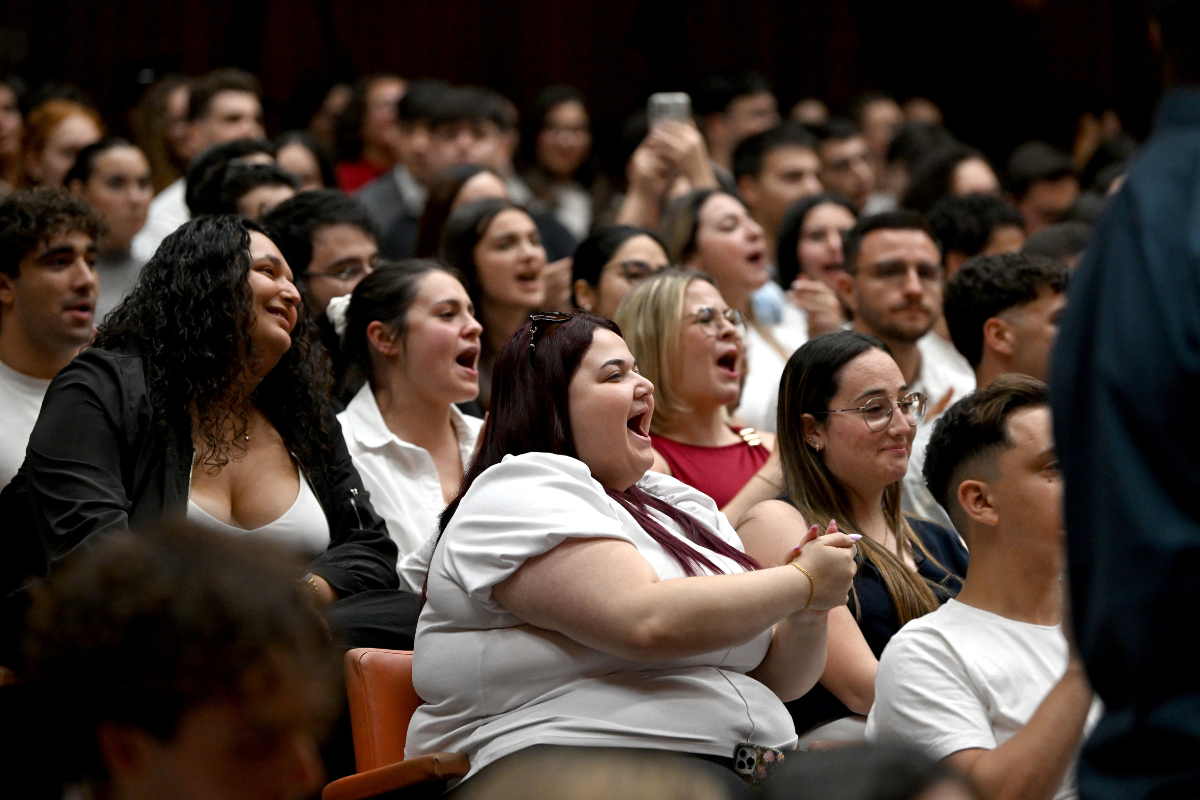 Some of the audience at the lively debate. Photo: Matthew Mirabelli
- PN and PL in developers' pockets, small parties say
Throughout much of the debate, Momentum and ADPD leaders Arnold Cassola and Sandra Gauci took the large parties to task for pandering to the construction industry, accusing them of failing to meaningfully address Malta’s overconstruction and environmental degradation.
“Labour does not have much to teach us when it comes to the environment,” Gauci drily said, in response to Abela reeling off a list of open spaces inaugurated in recent years.
She also turned her eye to the controversial planning bills 143 and 144, which she said “have to be scrapped at all costs”.
And a Labour pledge to refund people for damages to their property caused by neighbouring construction was an “obscene” indictment of the state of affairs, she said.
Cassola held a similar view, repeating a Momentum pledge for a two-year moratorium on large-scale development. This will allow the country to take stock of the situation and bring its house in order, he said.
He had harsh words for both Abela, who he accused of being in the pocket of developers and businesses, including Joseph Portelli and Bonnici Brothers, and Alex Borg.
“Do you agree with the Calypso high rise?” Cassola asked Borg, harking back to controversial comments made early in his tenure about high-rises in Gozo.
Aħwa Maltin’s Paul Salomone had a somewhat different take on construction, pointing to land reclamation as a potential avenue for construction without further takeup of land.
Reclaimed land could be used for large-scale projects, he said, such as a Formula One track, one of the party’s flagship pledges.
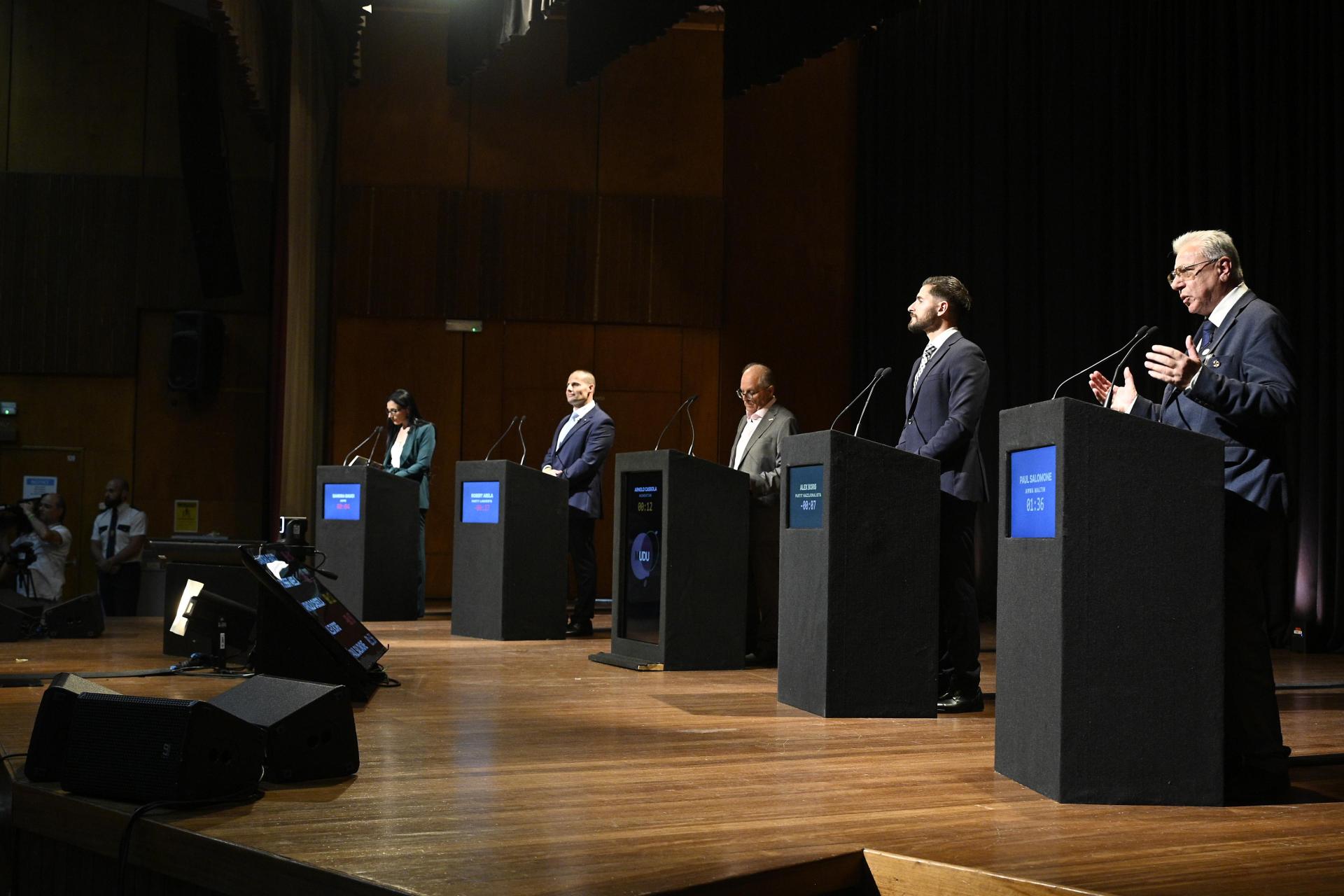 The full line-up: Sandra Gauci, Robert Abela, Arnold Cassola, Alex Borg, and Paul Salomone. Photo: Matthew Mirabelli