Why Floriana festa enthusiasts throw floaties not confetti
The floaties have replaced crowns made up mostly of green and white flowers made from kite paper
A curious Floriana feast tradition sees participants vying for a lilo, a beach ball or even a gigantic banana.
The feast of St Publius, held annually on the second Sunday after Easter, marks the traditional start of the village festa season but stands out for its unusual customs.
As well as the fireworks, liturgical celebrations in the parish church, the band march in the afternoon and confetti thrown from balconies during the street celebrations, floaties are launched into the crowd. The items can include pink flamingos, inflatable palm trees and even dinghies.
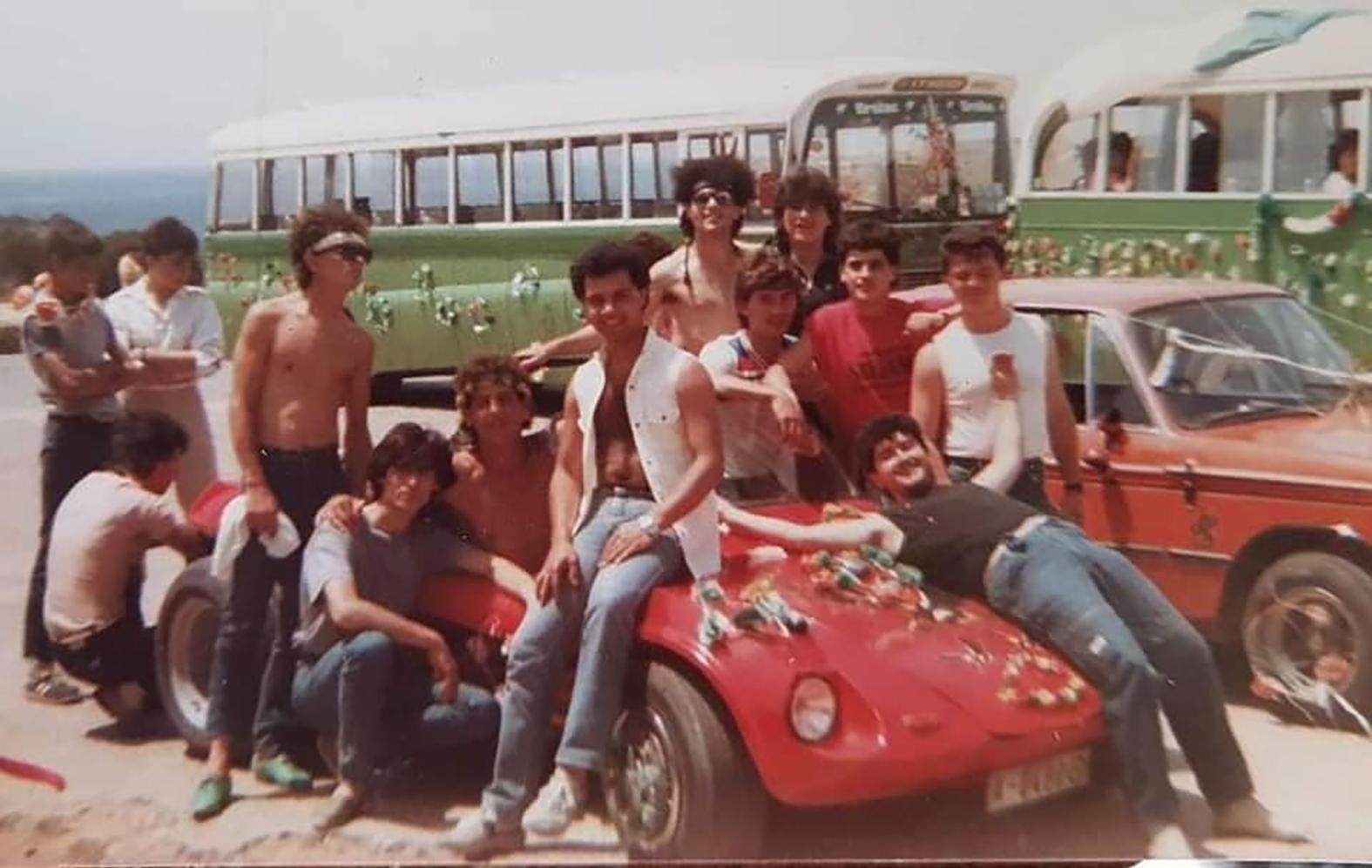 Flowers used to be thrown to decorate the vehicles travelling to the xalata. PHOTO: Floriana Old and New Facebook page
Floriana mayor Nigel Holland traces the roots of the outlandish tradition back about 80 years, when crowns made mostly of green and white flowers, crafted from kite paper and wrapped around thin metal wire, were hurled from windows. These would then be used to decorate the vehicles taking residents to the following day’s xalata, a collective town picnic to the beach. “That event is also still in our veins,” he said.
Floriana is a ghost town after the feast, the mayor said, adding that, even though everyone took the Monday off, he never got into it because, from childhood, he would always be dismantling decorations that day.
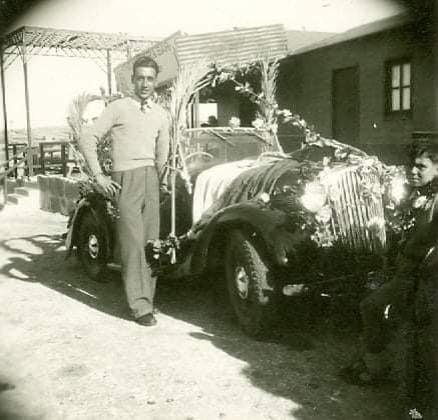 A classic car decorated for the feast.
Virility
In a show of “virility”, the males – the women would not get involved in the friendly fray – would use force to catch as many crowns as they could, wearing them piled up on their heads as proof of machismo and victory.
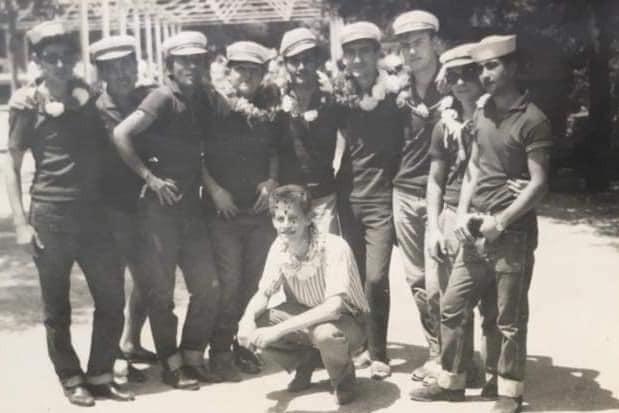 A group of men with crowns around their necks.
Eventually, someone had the bright idea of throwing something else from the balcony as the band passed below and the idea caught on, Holland said, describing the spontaneous shift to floaties a couple of decades ago.
“A bit of intentional elbowing does go on,” he said. The scene can resemble a game of basketball, as people in the crowd jostle and leap for the same lilo.
The strewn items are, at least, soft, bouncy and less harmful than the thin wire of the flower garlands that could leave a scratch across the neck when accidentally yanked off someone’s head, he said.
“Things were rougher when I was young,” Holland recalled, noting that the floaties have grown fancier over time, adding to the lively, colourful and chaotic atmosphere.
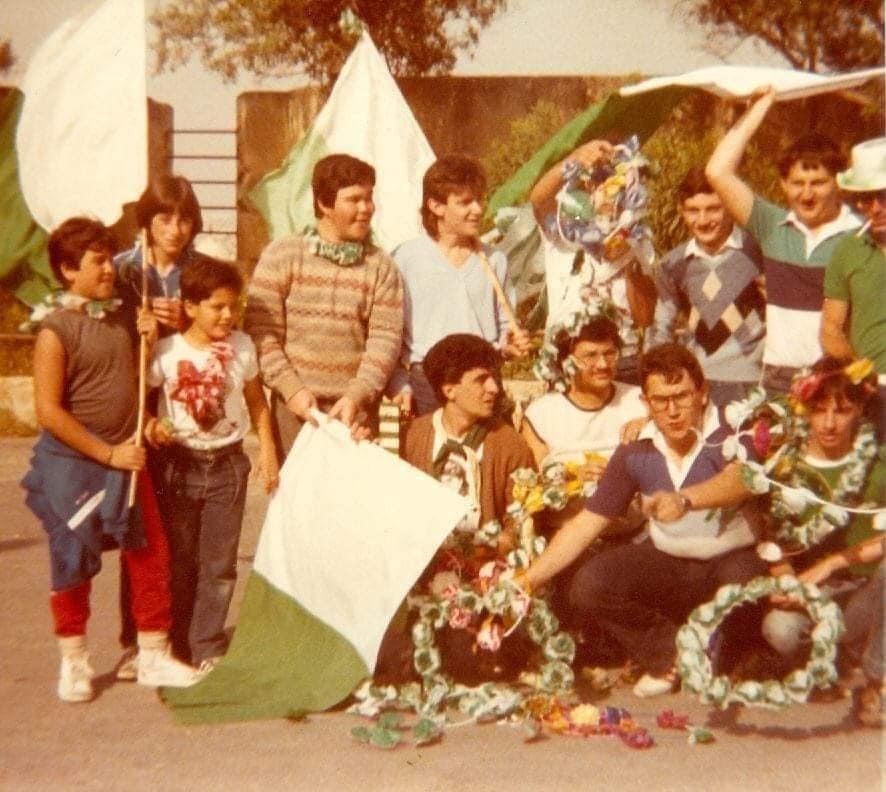 Men and boys carrying crowns and flags in the Floriana colours.
The band march is becoming a draw for outsiders and tourists too, said 82-year-old Victor Ciangura, a self-proclaimed “Furjaniż pur”, with a “big proud Floriana heart”, who would not miss the festa for the world and attends it every year with his family.
Cheap gift
“I may have left Floriana in 1975 but, in the 50 years that I have lived elsewhere, I have not missed a single one,” he said. The weekend the feast was held this year was doubly special because his beloved football team, Floriana FC, had just beaten Valletta, so there was plenty to celebrate.
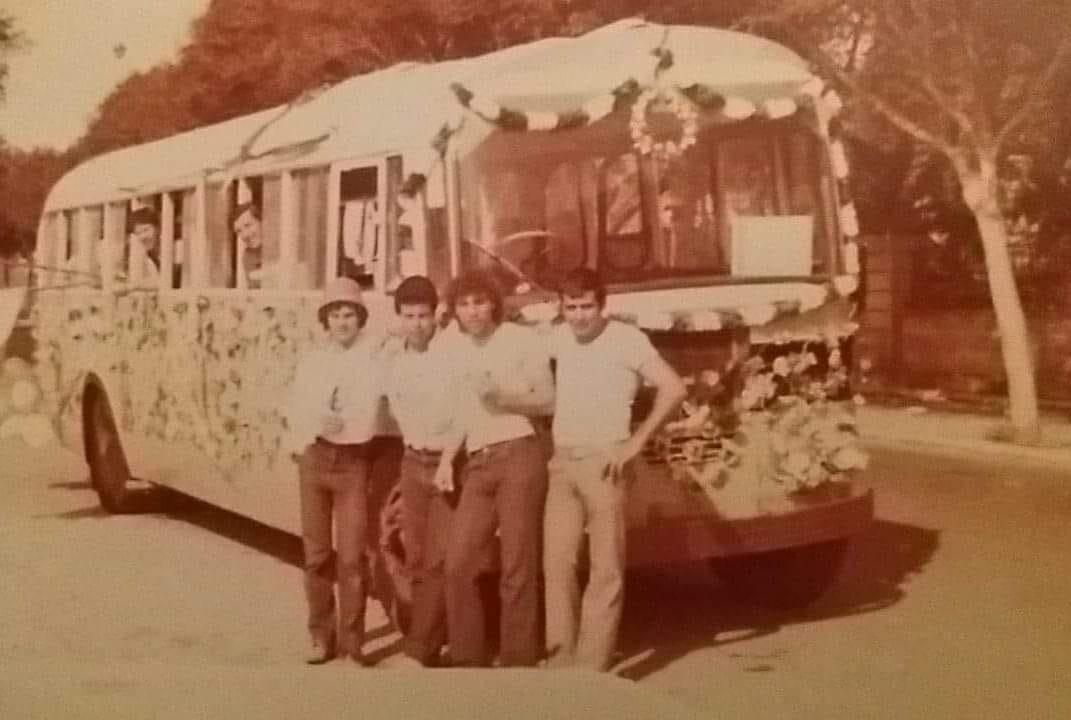 A bus decorated for the Floriana feast.
Ciangura, too, recalls the tradition of the paper crowns in his childhood and says it “died out” for several reasons: Floriana’s population had decreased, he said, with thousands of residents moving away, emigrating or passing away, even though “its festa – and football team – remain in our hearts”.
This meant, however, that the tradition of making the crowns was abandoned.
“They would start patiently working on them a week after the feast to have hundreds ready for the next,” Ciangura said. “Now, there is no patience and craftsmanship, just online payment for a cheap gift that they can buy and throw to the crowds.”
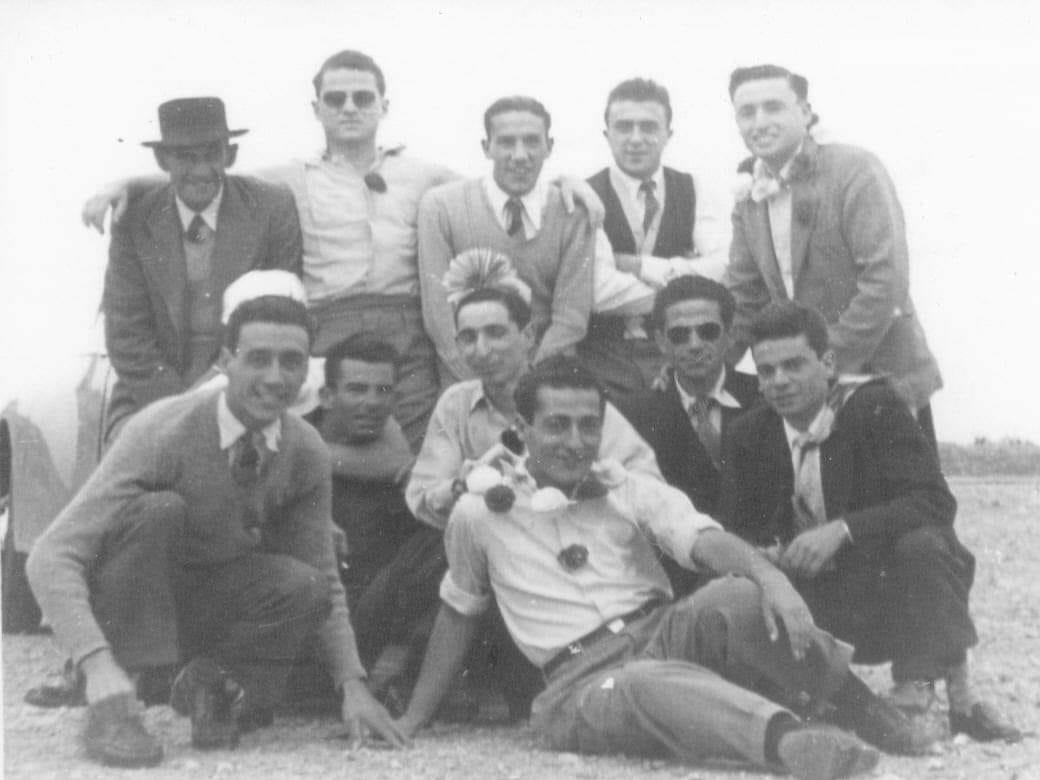 Men used force to catch as many crowns as possible.
St Publius, the first bishop of Malta and the island’s first convert to Christianity, may be baffled by the form his celebration has taken. But Ciangura believes he would be saying: “How my children like to have fun without offending anyone!”