Fort Delimara: its birth, growth, death and rebirth
This prime example of the island’s British military architecture was abandoned, vandalised and used as a farm before being restored to its former glory
December 15, 1875, was the date when authorisation was given to start constructing Fort Delimara after the required land was acquired by the War Department at a cost of £1,282. Work started immediately in January, with appreciable progress having been made by early 1878, as Sir John Lintorn Simmons, a future governor of Malta (1884-8), recorded in his report on the island’s fortifications. The fort was certified as complete on December 31, 1884.
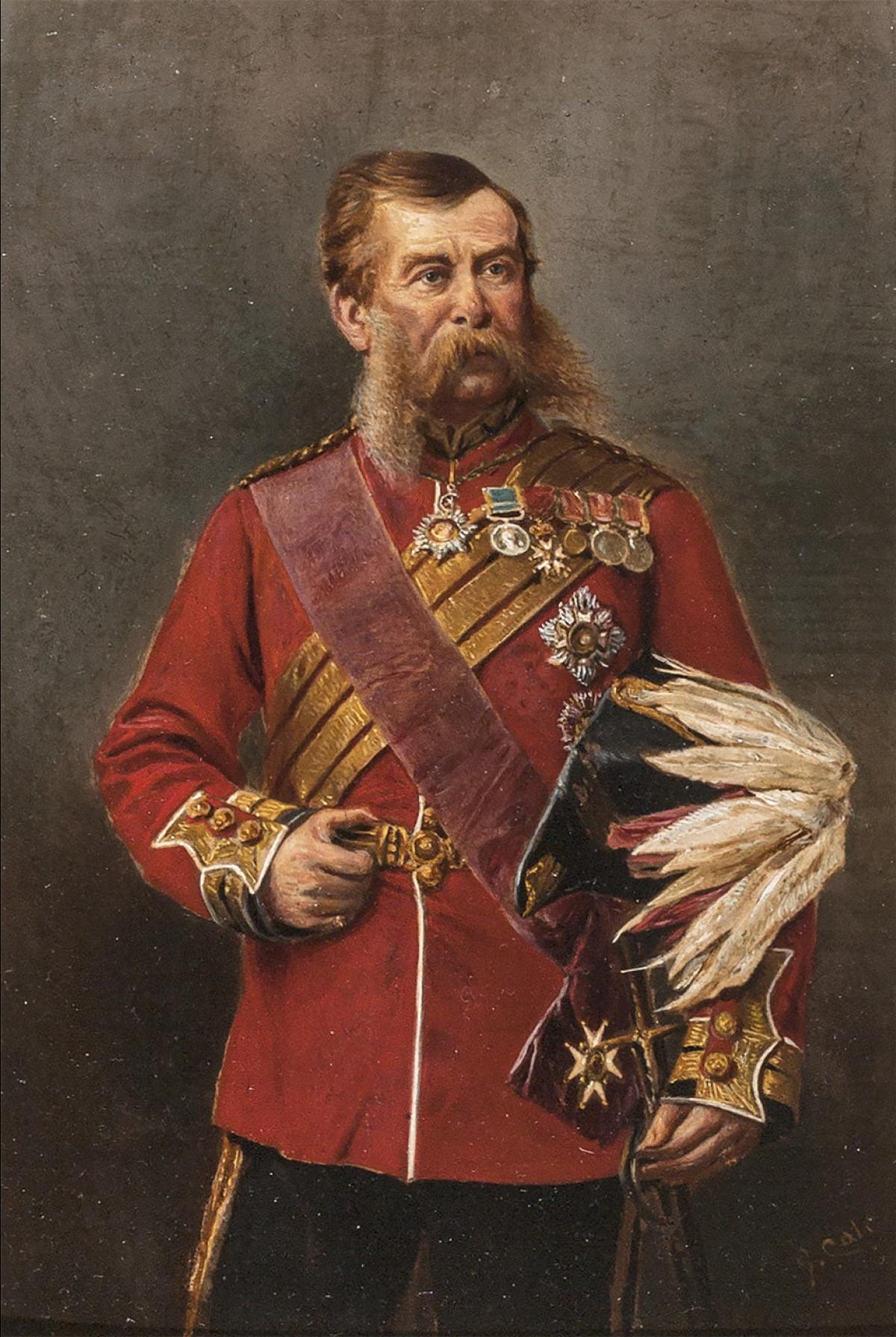 Field Marshall Sir John Lintorn Simmons (1821-1903), Governor of Malta from 1884 till 1888 in a portrait by Giuseppe Calì (1846-1930). Photo: Christopher Grech Collection, photographed by Peter Bartolo Parnis
Time always brings changes in its wake, and the art of fortification was no exception to this norm. We still admire the massive fortifications constructed by the Order of St John prior to and during the 18th century but they were obsolete by the second half of the 19th century. Rapid advances in the field of war technology – a prime example being the advent of ironclad warships in 1859 – and tactics necessitated a complete rethinking of coastal defence.
Add to these the international political changes brought about by the unifications of Italy in 1861 and Germany in 1871, together with the opening of the Suez Canal in 1869, which, on its own, placed Malta on the highway connecting Britain with India, its very important possession. The maritime routes had to be protected against possible threats by emerging and existent European powers, which meant Malta’s defences had to be extensively strengthened and modernised.
After 1866, the major forts in Grand Harbour received new gun emplacements, with rifle muzzle loading (RML) guns ranging from seven to 38 tons in weight.
 Lieutenant-General Sir Henry Storks (1811-74), Governor of Malta from 1864 till 1867. He was in complete favour of the fortification of Marsaxlokk Bay. Photo: Wikipedia Commons
But the coastal defences also needed bolstering, especially the large sprawling bay at Marsaxlokk, whose occupation had to be denied to a possible enemy. This was pointed out by Colonel William Jervois to the Defence Committee, with Governor Sir Henry Storks actively sharing the same sentiment.
Marsaxlokk could no longer depend for its defence on Fort St Lucian, even though its defences had been augmented by RML ordnance by 1875. This brought about the construction of Fort Tas-Silġ between 1879 and 1883 on the highest point of the Delimara peninsula, just over a mile north of Fort Delimara that was projected to defend the maritime approaches to Marsaxlokk Bay.
Sir John Lintorn Simmons in 1878 commented that “Fort Delimara, near the entrance of the bay, is a self-defensible work which will be armed with six 38-ton guns protected by iron shields”. Unfortunately, the original plans and name of their architect – from the Royal Engineers – have remained missing.
However, the fort’s original configuration followed the standard of late 19th- century fortifications: low-lying and blending as much as possible with the natural surroundings. Its polygonal form was in the shape of an irregular pentagon, having four of its sides fashioned out of bedrock and the fifth underground in the natural cliff face. It was flankless, as was customary at the time.
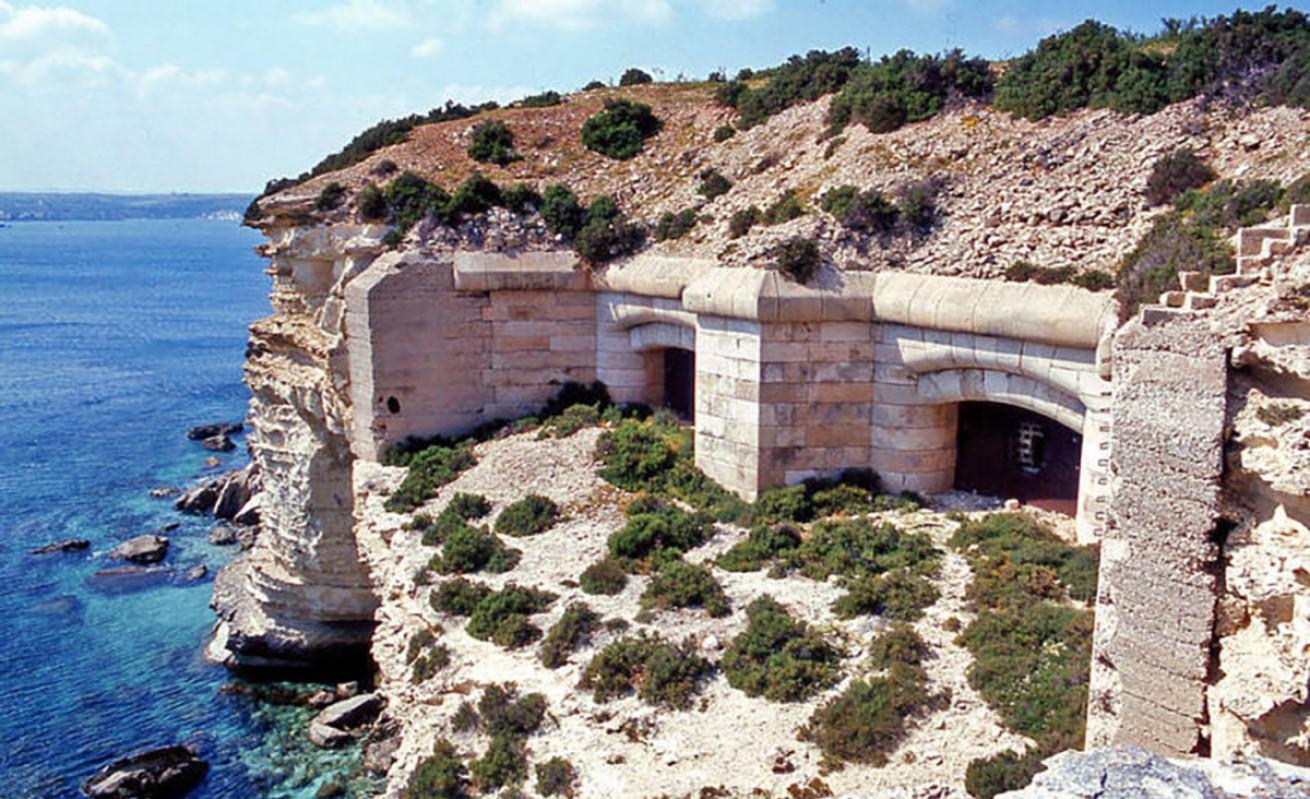 Fort Delimara: external view of two of the six casemates in the cliff-face. Photo: Heritage Malta
The guns were placed in enclosed casemates deemed to be a better safeguard against enemy bombardment
The abovementioned four sides were surrounded by a dry ditch and the counterscarps were defended by a steel palisade. Counterscarp galleries cut in the outer face of the ditch were to be used by the defending garrison firing rifles at enemy soldiers who may have managed to get in the ditch.
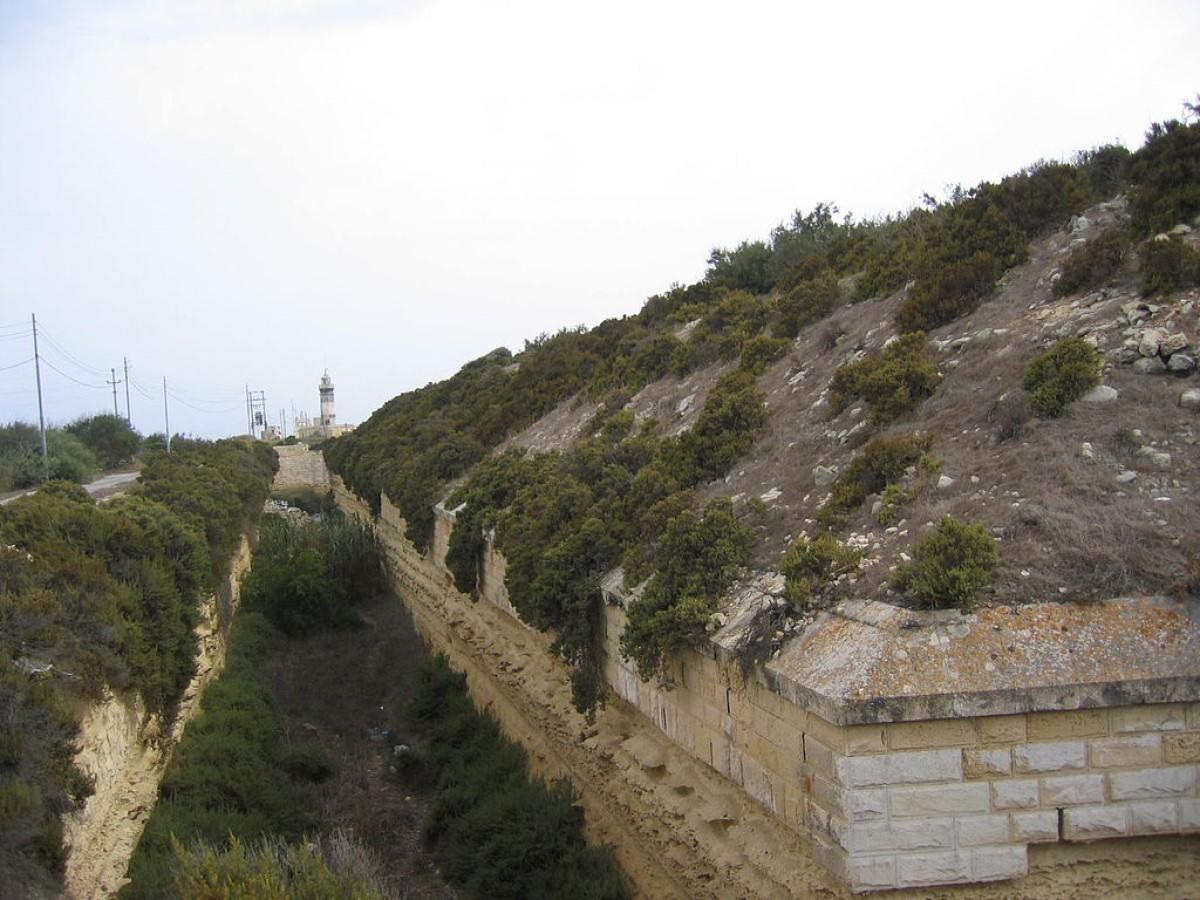 Part of the ditch at Fort Delimara, before its restoration and the clearance of the accumulated debris. Photo: Heritage Malta
The most vulnerable side was the part near the main gate, which was protected by a musketry parapet. The still-existent main gate, dated 1881, was protected by musketry holes, including two flanking rooms. A Guthrie rolling bridge allowed access into the fort over the ditch but it was eventually replaced by the present stone bridge in the early 1940s.
The internal ground level of the fort was occupied by an unusually large parade ground but did not include a ‘keep’ whose role was carried out by the nearby Fort tas-Silġ that was situated on higher ground in accordance with the 1876 views of The Defence Committee.
The northeast of the parade ground was occupied by a barrack block that could accommodate 36 soldiers. For sanitation purposes, the barrack block was not underground but situated in the open air and fronted by a huge blast wall to provide shelter from possible falling enemy shells. Latrines were provided within this wall.
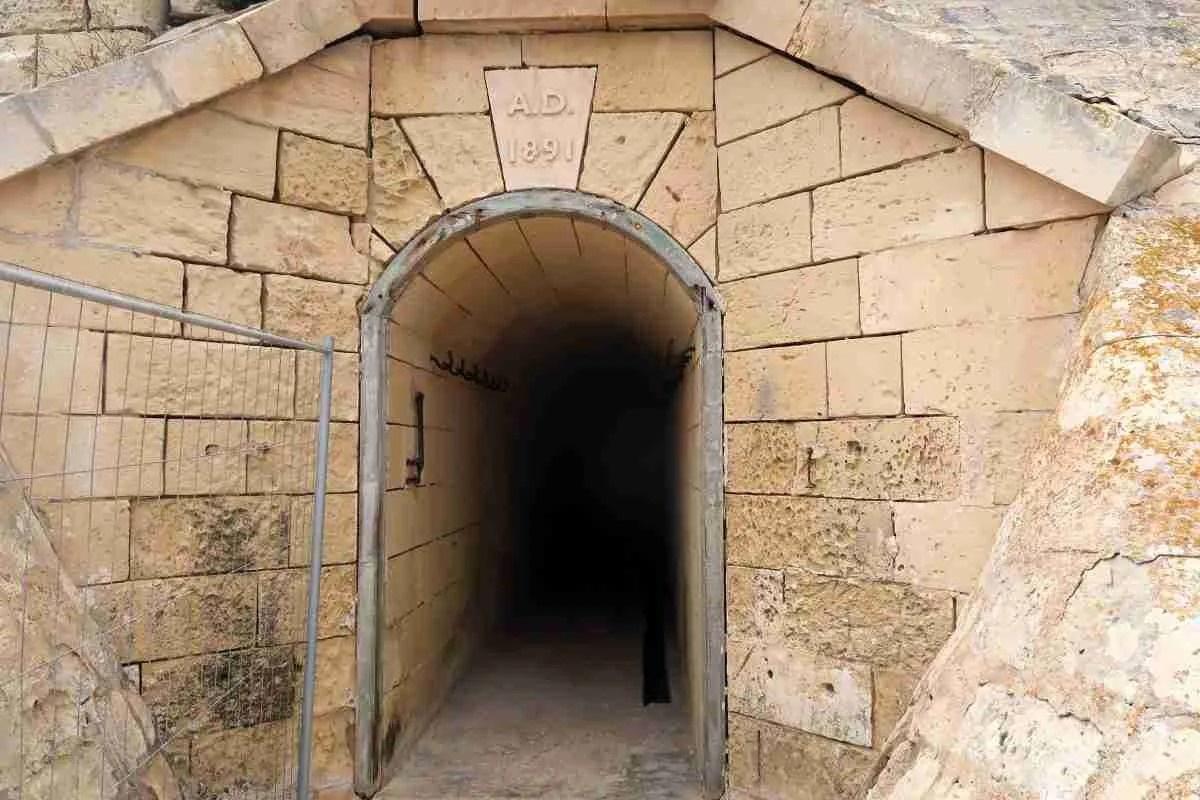 The entrance to one of the underground tunnels at Fort Delimara, dated 1891. Photo: Heritage Malta
Under the parade ground, two huge water cisterns were dug, having a combined capacity of 241,000 gallons of water. From the barrack block, two tunnels led to the main entrance, the ditch and to the casemates. Both tunnels offered covered protection to the garrison when accessing the ditch, the fort’s entrance and the guns.
Most of the underground parts within the casemated tunnel were occupied by six 38-ton guns and, naturally, their powder magazines. Incidentally, these guns were the largest in Malta, and were only superseded later on in the century by two 100-ton guns placed at the Rinella and Cambridge forts (one each).
The guns were split up into three pairs and not placed en barbette (in the open air) for technical reasons but in enclosed casemates deemed to be a better safeguard against enemy bombardment.
Such casemates were considered to be bomb-proof in the 1870s. The only defect was that the greyish coralline limestone and concrete was a great contrast to the yellowish globigerina limestone cliffs. This could be mitigated by scene-painting the casemates’ exterior but whether this was ever carried out is unknown.
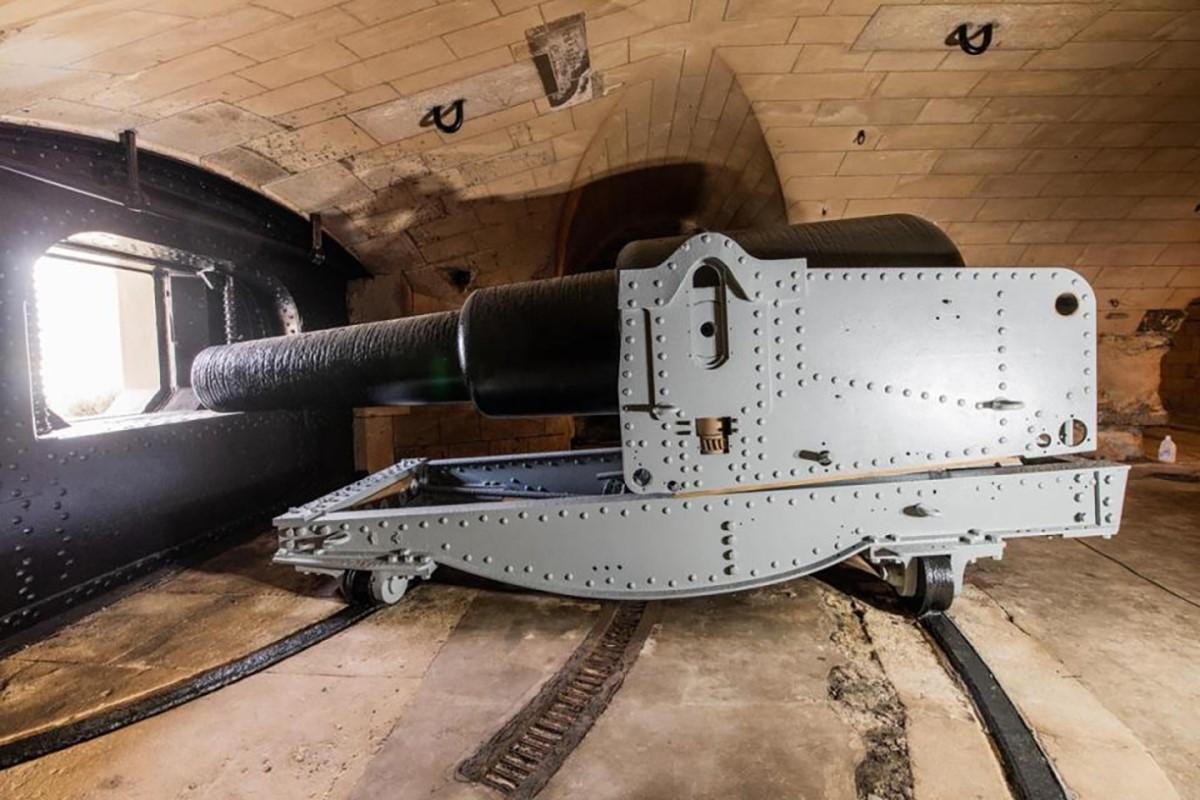 One of the restored 38-ton guns in situ at Fort Delimara. Photo: Heritage Malta
The six 38-ton guns (four of which have survived) were installed by April 1880 and were the first ordnance to be placed in Fort Delimara. These three pairs of guns were oriented at different angles: to cover (1) the inner parts of Marsaxlokk Bay, (2) the southwest and western approaches, and (3) the open sea towards the south and southeast. Installing the guns was a massive effort and necessitated leaving the entrance gate not being constructed till the guns were in place, hence the year 1881 found etched over the gate.
In total, each gun weighed just over 56 tons each, with 38 tons being the weight of the barrel that was made up of a solid internal steel tube stiffened by wrought iron coils round it. The full name of the guns was 38-ton, 12.5 inch, Mk 1 rifled muzzle loaders, with 12.5-inch referring to the calibre of the projectiles fired.
Loading the guns was a complex procedure, involving an officer and a crew of 16 soldiers for each gun.
The fort’s armament included other types of artillery: two 64-pounder RMLs, eight 32-pounder smooth bore breech loaders, four 40-pounder rifled breech loaders (probably for Fort Tas-Silġ), four field guns and two heavy smooth-bore mortars.
Technological advances meant the need for a more modern rearmament with new artillery which, however, became obsolete by 1906, and new artillery was approved in 1910. However, these guns were never fired during World War I because Malta was never a direct target.
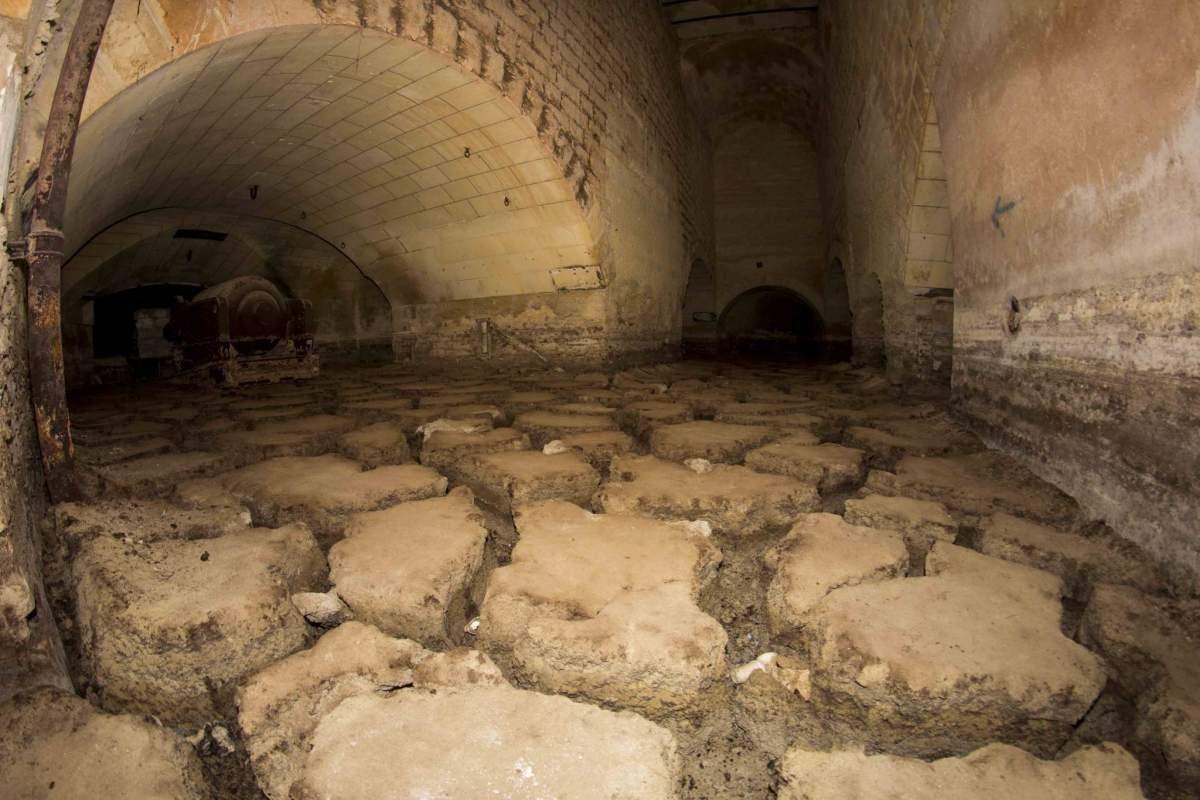
Part of the many tons of accumulated animal manure left at Fort Delimara before being carted away in the clean-up carried out by Heritage Malta. Photo: Heritage Malta
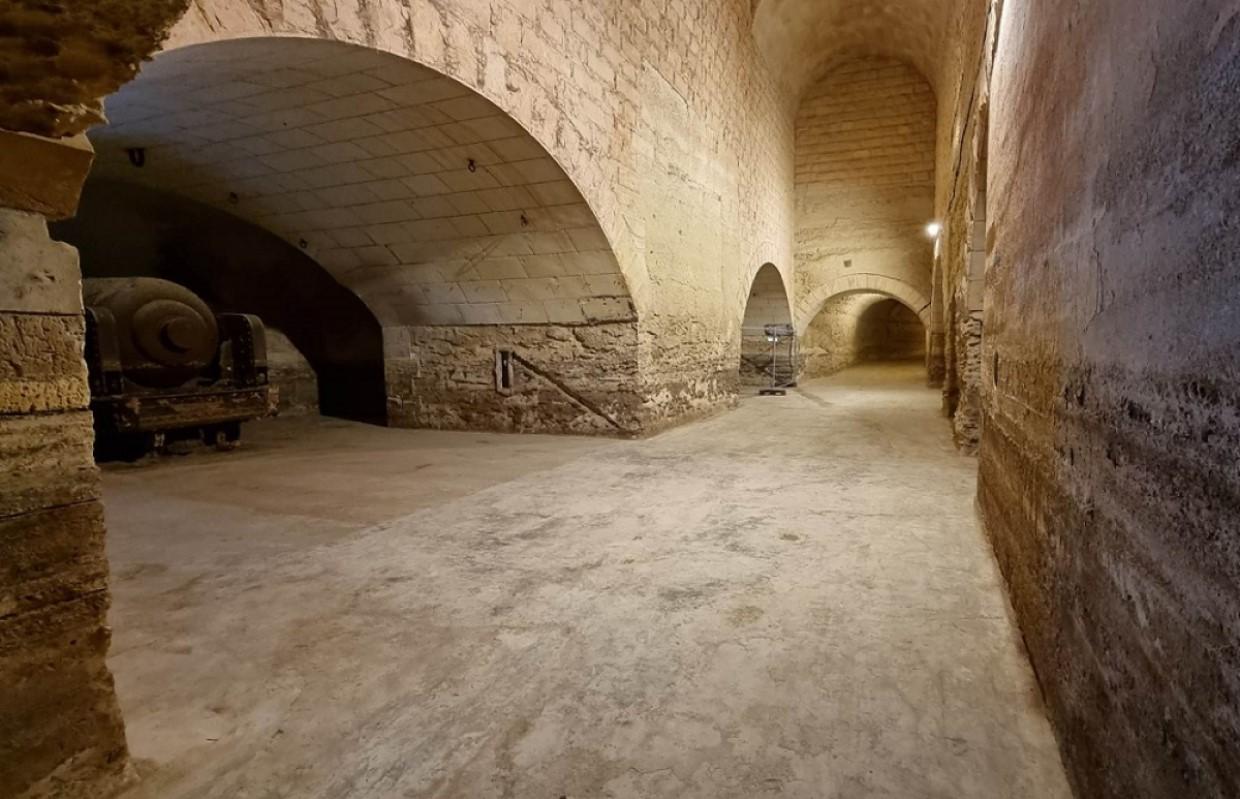
Part of one of the underground tunnels leading to the casemates at Fort Delimara. Photo: Heritage Malta
In 1937, it was decided that Fort Delimara would revert to close defence duties and armed with new six-inch breech-loading (BL) guns. In World War II, the fort hardly saw any action, though it was hit by enemy aerial action in September 1940 and April 1942. The fort was also used as a kerosene depot from 1941 till 1942. In 1956, all coastal defences in the British Empire were abolished.
Fort Delimara reverted to the Maltese government on the attainment of independence in 1964 but it was abandoned and became a prime a target for vandals, who made off with the brass equipment of the guns, among other objects. In the late 1970s, the fort was inadvisedly and inexplicably rented out to be used as a farm. The result was that various modifications were carried out – including pens for the animals mainly pigs – and that sections of the fort and the ditch became a convenient dumping ground for tons of waste, garbage and animal manure. This unfortunate state of affairs lasted till the early years of the 2000s.
In 2005, Heritage Malta was entrusted with the care of the fort, and years of cleaning, clearance and restoration ensued. After 2019, hundreds of truckloads of waste were removed, followed in 2022 by the removal of farm accretions, including hundreds of tons of animal manure.
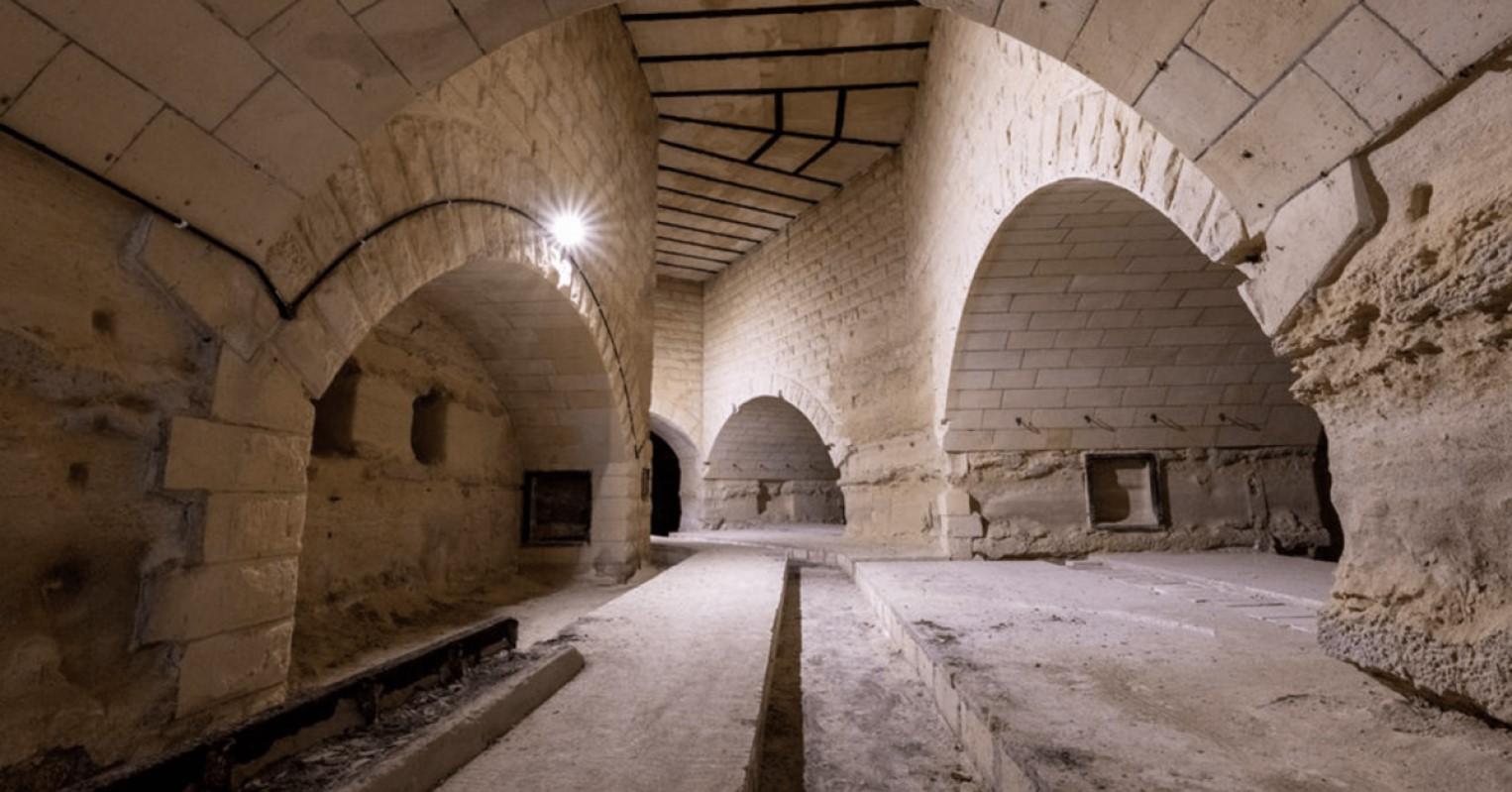 Another view of the underground tunnels leading to the casemates at Fort Delimara. Photo: Heritage Malta
This painstaking undertaking was followed in 2023-24 by the restoration of the four remaining 38-ton guns. Heritage Malta is to be warmly congratulated for having restored Fort Delimara to its former pristine glory to be enjoyed by the public at large, it being a prime example of British military architecture in Malta.