Fort Manoel, ‘a model of fortification’
This 18th century, strong, well-built small fortress is considered the epitome of the delicate marriage between baroque military engineering and architecture
The islet in the middle of Marsamxett Harbour was formerly known as l’Isola del Vescovo (the Bishop’s Island) since it formed part of the holdings of the Maltese diocese.
After Valletta was built, the so-called l’Isolotto was recognised as being a menace to the safety of the city but nothing was done to allay the danger. In the middle of the 17th century, it was acquired by the Order of St John after an exchange of land, but this transaction was only carried out to construct a lazzaretto.
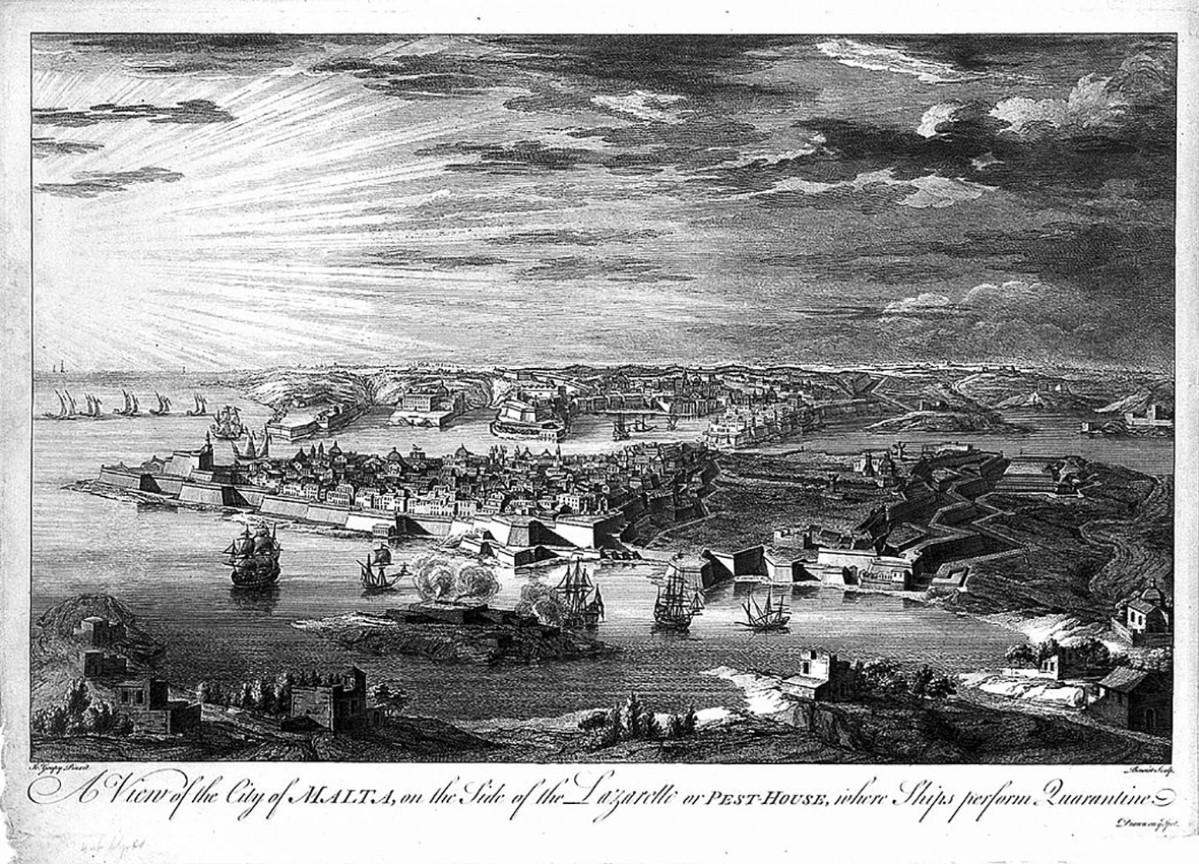 An etching by M.A. Benoist (1784-1820) showing the quarantine harbour before Fort Manoel was built. Photo: Wikimedia Commons
The threat to the city – an invader could use it as a base to bombard and enfilade Valletta and Floriana – had been highlighted by the military engineer Scipione Campi (d.1579) from as far back as 1577, but nothing was done.
Proposals to fortify the islet were formulated on a number of occasions, including by Antonio Maurizio Valperga (1606-88) in 1670, Carlos de Grunenbergh (d. 1696) in 1687, and René Jacob de Tigné (1664-1730), as well as by a team of French engineers in 1715, who proposed a four-bastioned fort combined with a battery and a redoubt. Eventually, agreement on the islet’s fortification was reached in 1723.
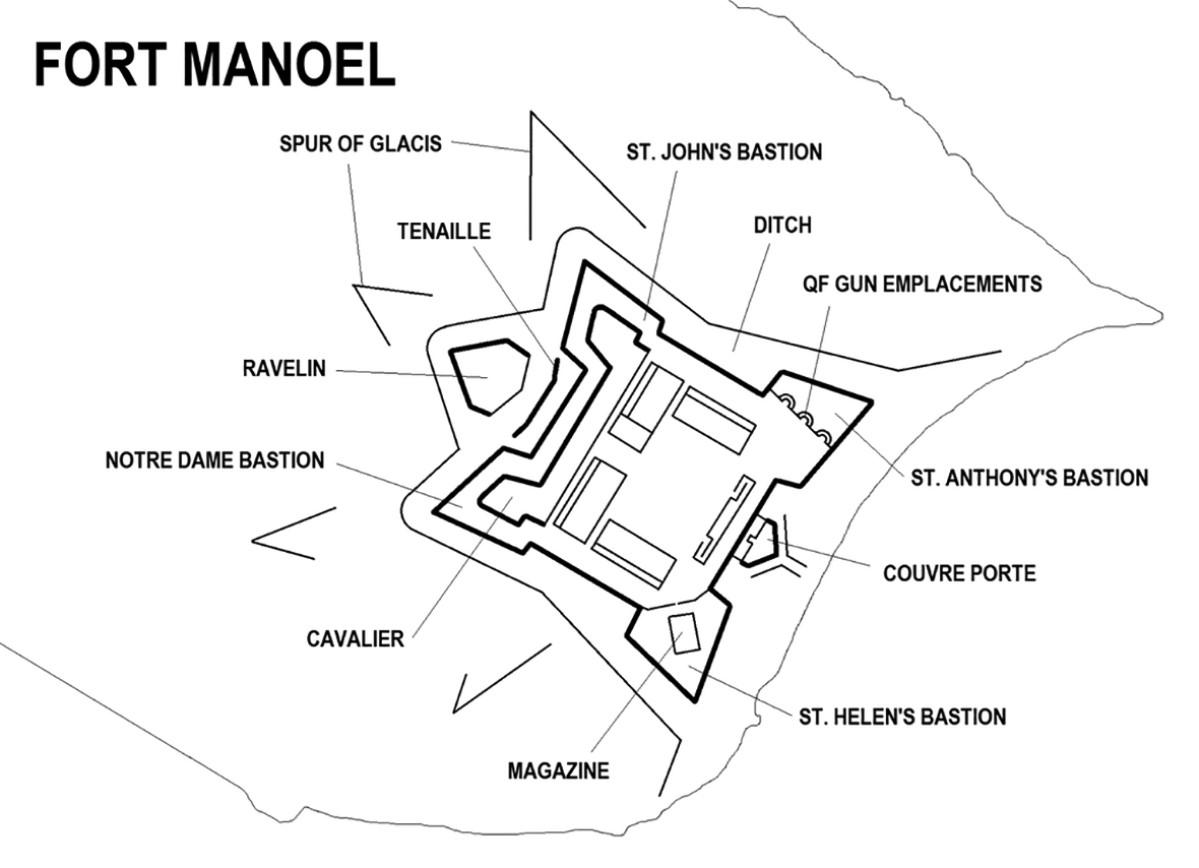 An outline map of Fort Manoel. Photo: Wikipedia.com
The final accepted design incorporated the proposals of de Tigné and the Order’s resident military engineer Charles François de Mondion (1681-1733), who supervised the work till his death when the fort’s construction had been almost completed.
The fort was financed by Grand Master Antonio Manoel de Vilhena (1723-36), whose munificence included the setting up of the Fondazione Manoel, which was responsible for the maintenance of the fort and its outworks, together with its garrison.
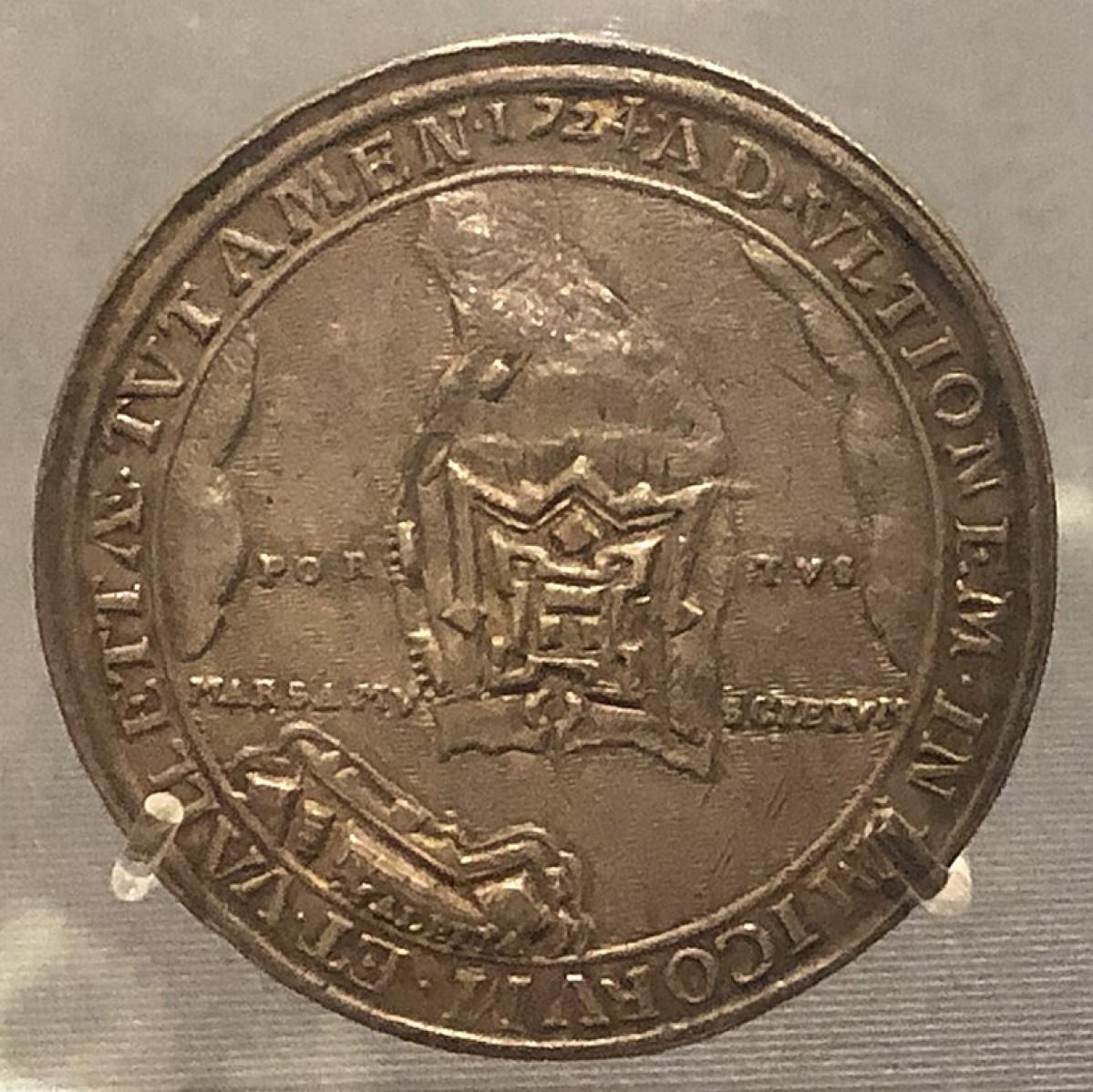 Medal commemorating the construction of Fort Manoel, cast in 1724 by Pietro Paolo Troisi (1686-1750). Photo: En.Wikipedia.org
The income from this foundation, which was as high as 10,000 scudi annually in the 1780s, also enabled the purchase of a new gun every three years, thus helping to keep the fort well-armed over the years.
Naturally, as one would expect, the fort was named after the grand master, Fort Manoel, which, in turn, gave a new name to the islet, Manoel Island, the name it bears to the present day.
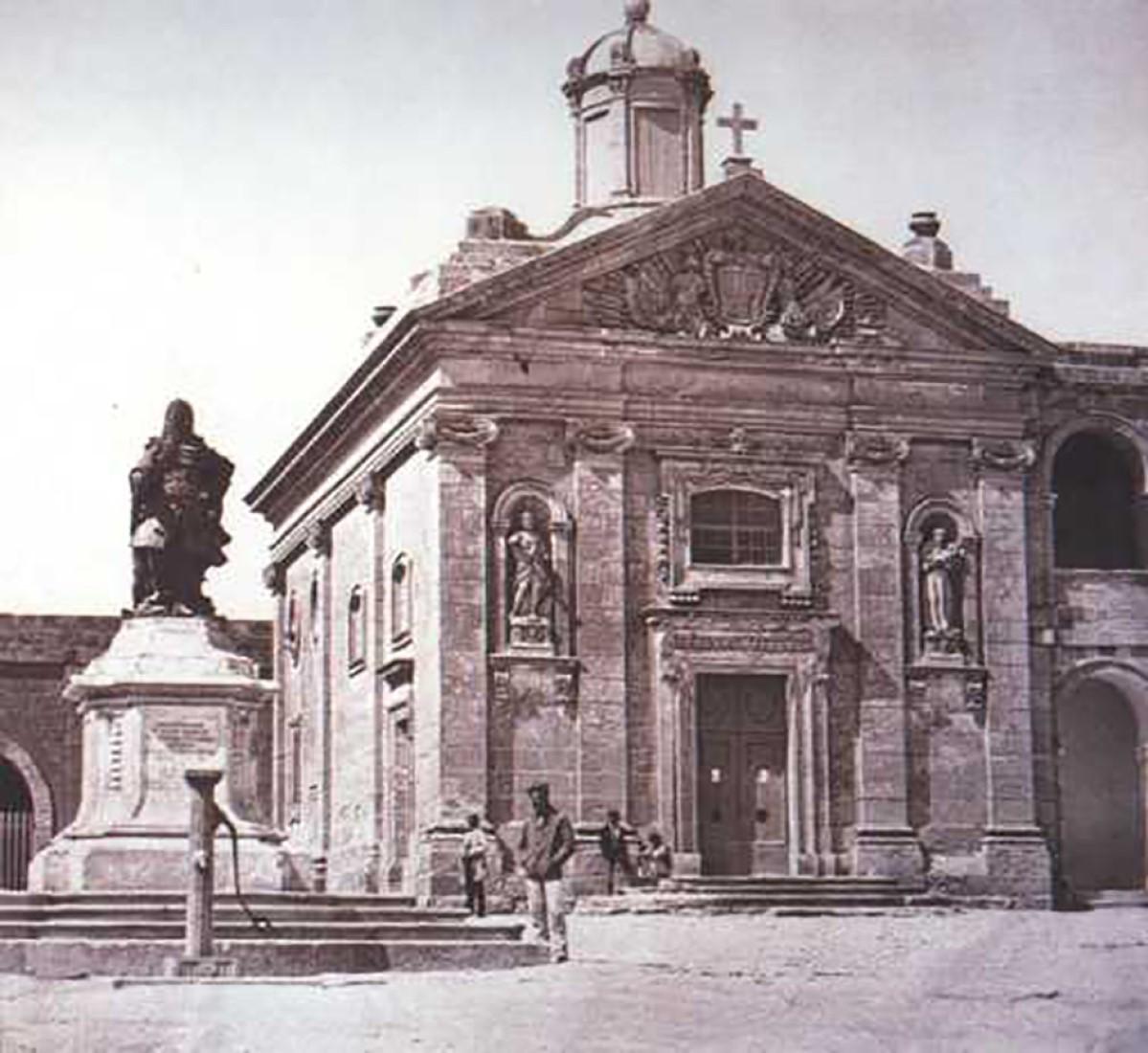
One of Malta’s oldest known photographs – c. 1860? – is of St Anthony of Padua chapel at Fort Manoel with the bronze statue of Grand Master Vilhena, now at Floriana, beside it.
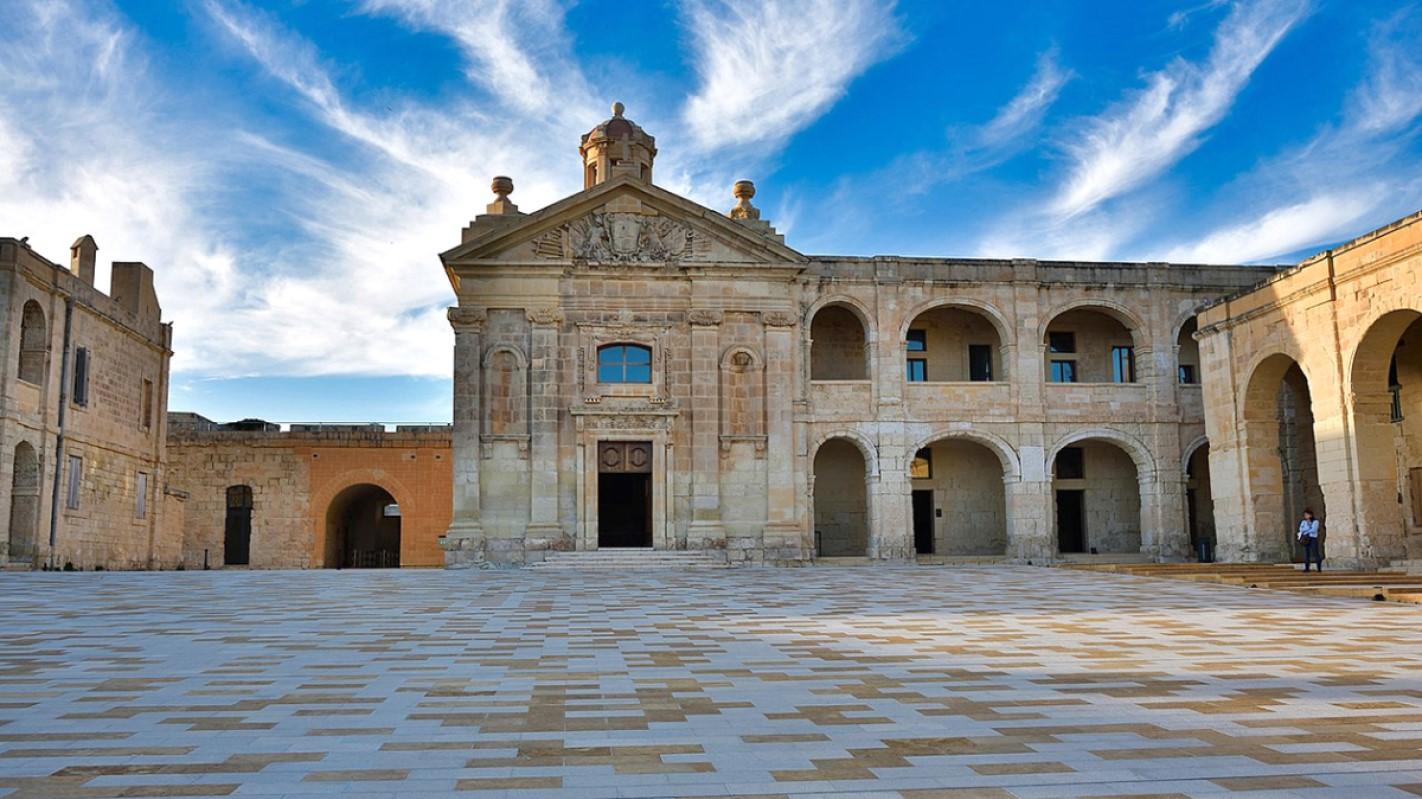
St Anthony of Padua chapel and part of the barracks after restoration. Photo: MIDI
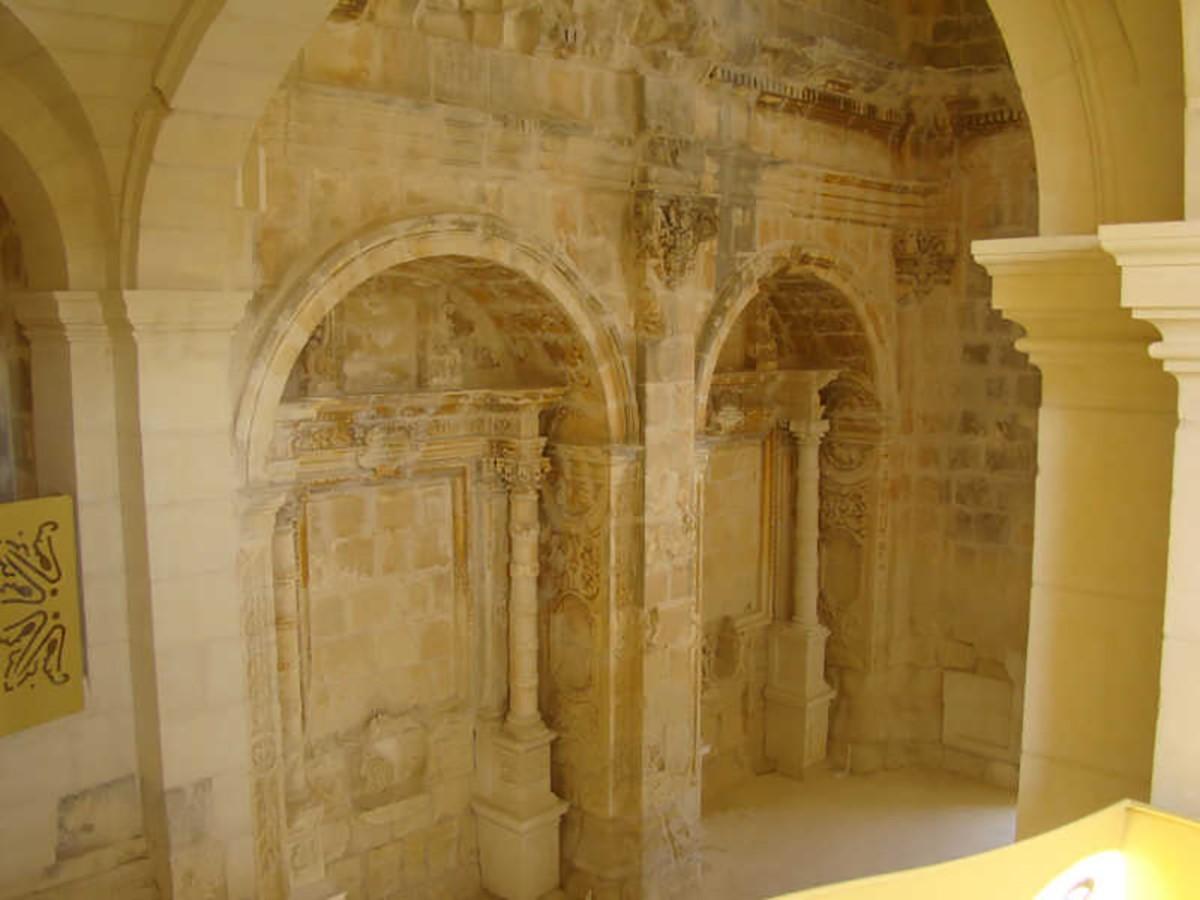
Fort Manoel: parts of the interior of St Anthony of Padua chapel after restoration and reconstruction. Photo: MIDI
Actually, de Tigné and a visiting French engineer, Philippe Maigret, had classified the work to be carried out on the isolotto as “non-urgent” and placed it well down on their list of priorities.
Mondion had strongly disagreed, and argued that the fort should be constructed without delay because the Marsamxett flank of Valletta and Floriana was the weakest spot in the defences of the harbours. He had considered three possible sites for a fort: Dragut Point (now known as Tigné Point), Ta’ Xbiex Point, and the isolotto. Mondion preferred the isolotto, although its smaller size limited the design of the fort proposed by de Tigné.
Bomb-proof accommodation for over 500 soldiers was provided
One can describe the fort as having four bastions with a mezzaluna facing the mainland to the northwest, surrounded by a dry ditch with a covert-way that included places of arms connected to the fort by caponiers (protected passage ways) together with a tenaille (a detached outwork in the ditch parallel to a curtain), a large elevated piazza (parade ground) on the level of the ramparts in the centre of the fort, and two cavaliers (raised artillery platforms) on the two landward bastions linked by an internal curtain wall.
Bomb-proof accommodation for over 500 soldiers was provided beneath the platforms of the cavaliers and the curtain. The fort had a low silhouette and was provided with the widest use of crossfire to sweep the approaches, in keeping with the latest developments in the art of fortifications.
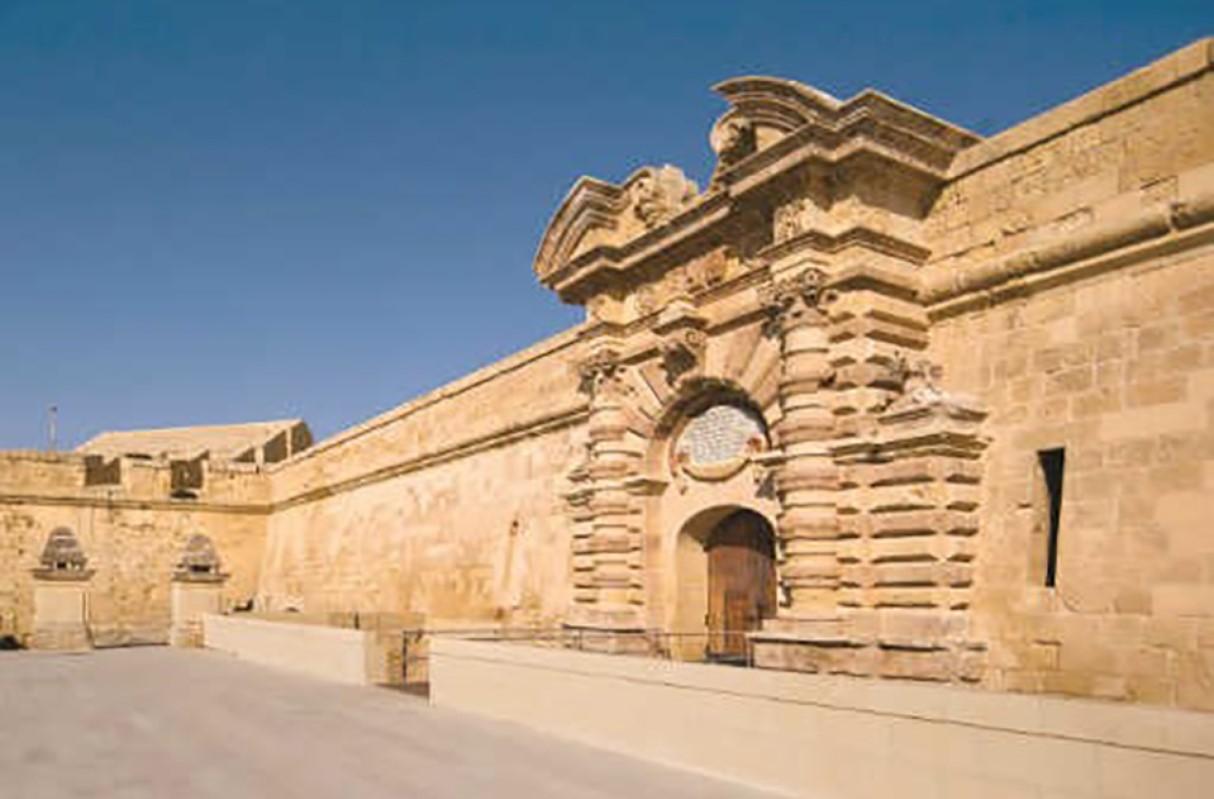
The Couvre Porte on Fort Manoel’s seaward-facing flank, after it was restored. Photo: MIDI
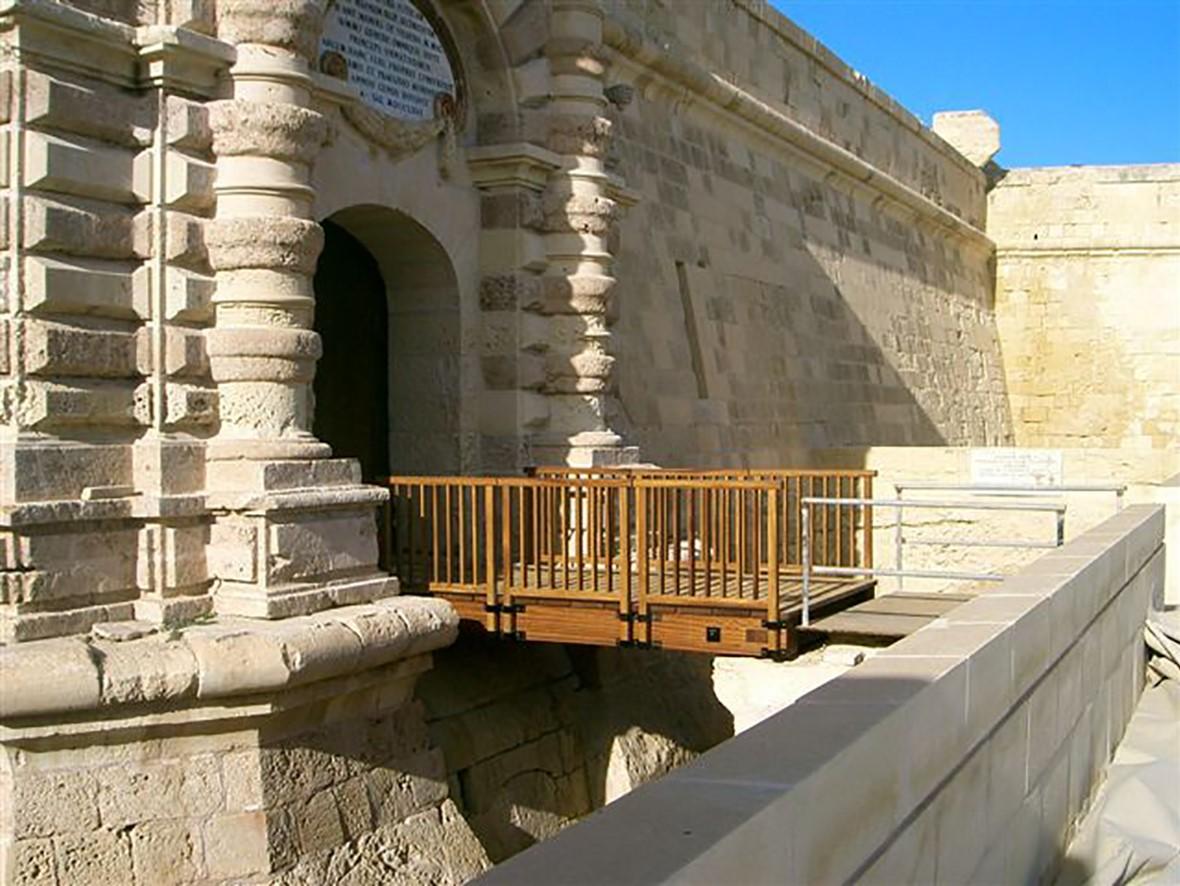
The restored Couvre Porte of Fort Manoel. Photo: MIDI
An inscription over the gate of the Couvre Porte facing Valletta is dated 1726 and may convey the false impression that the fort was built on that date. In fact, it has been quoted as such in some publications. But the actual date of the laying of the first stone was September 14, 1723, as testified by documentation in the archives of the Order of St John.
Construction work began immediately and was carried out in earnest, but it was not completed until well into the 1730s. By 1727, the enceinte (the principal continuous perimeter of the fort), cavaliers (raised artillery platforms within the main perimeter walls) and the gateway were complete, while the ditch had been excavated by 1732.
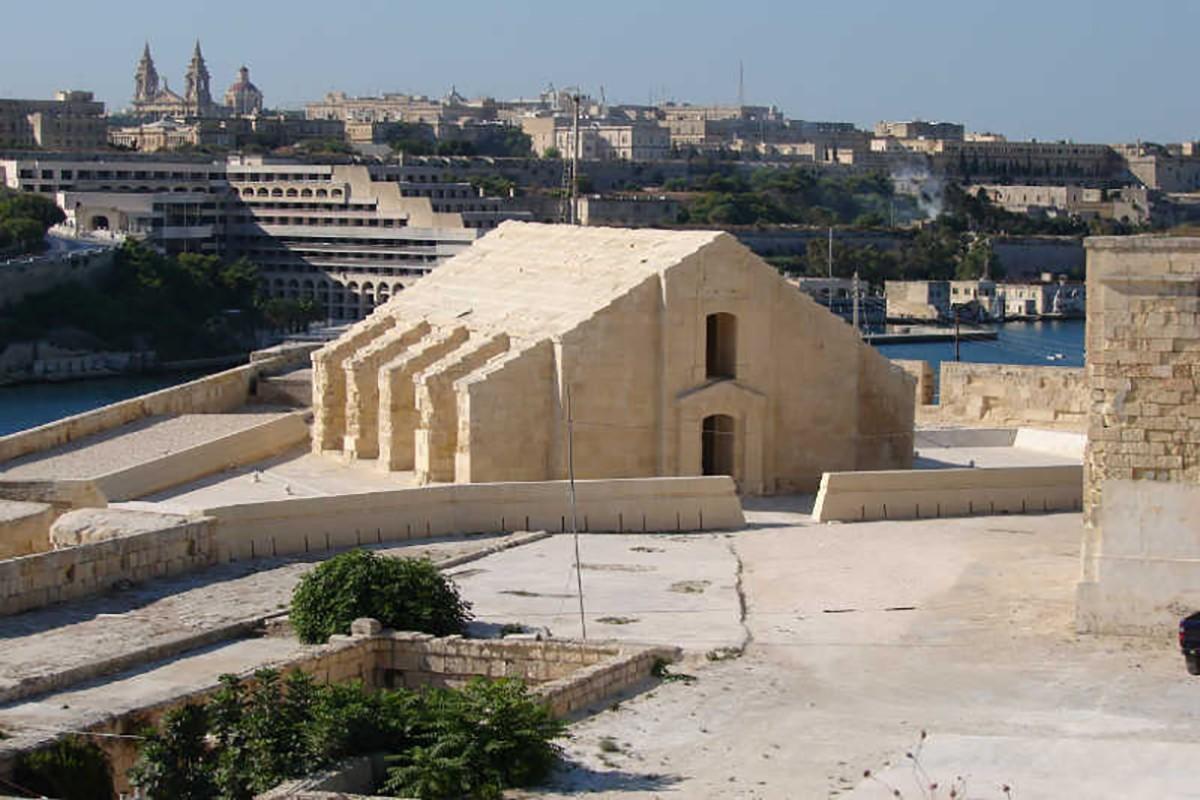 The restored Polverista on Fort Manoel’s St Helen’s Bastion. Photo: MIDI
In 1733, the chapel, the chaplain’s house, the governor’s residence, the barracks, the two polveristi (magazines – one of which is still standing) and the countermines were completed. On Christmas Day, 1733, Mondion passed away and, in accordance with his wish, was buried in the crypt under the fort’s chapel, which was dedicated to St Anthony of Padua, Grand Master Vilhena’s patron saint.
All the fortifications erected by the Order of St John attracted criticism of sorts. Fort Manoel’s design was never criticised, and even after a number of years had gone by, it was still considered as a good example of a strong, well-constructed small fortress.
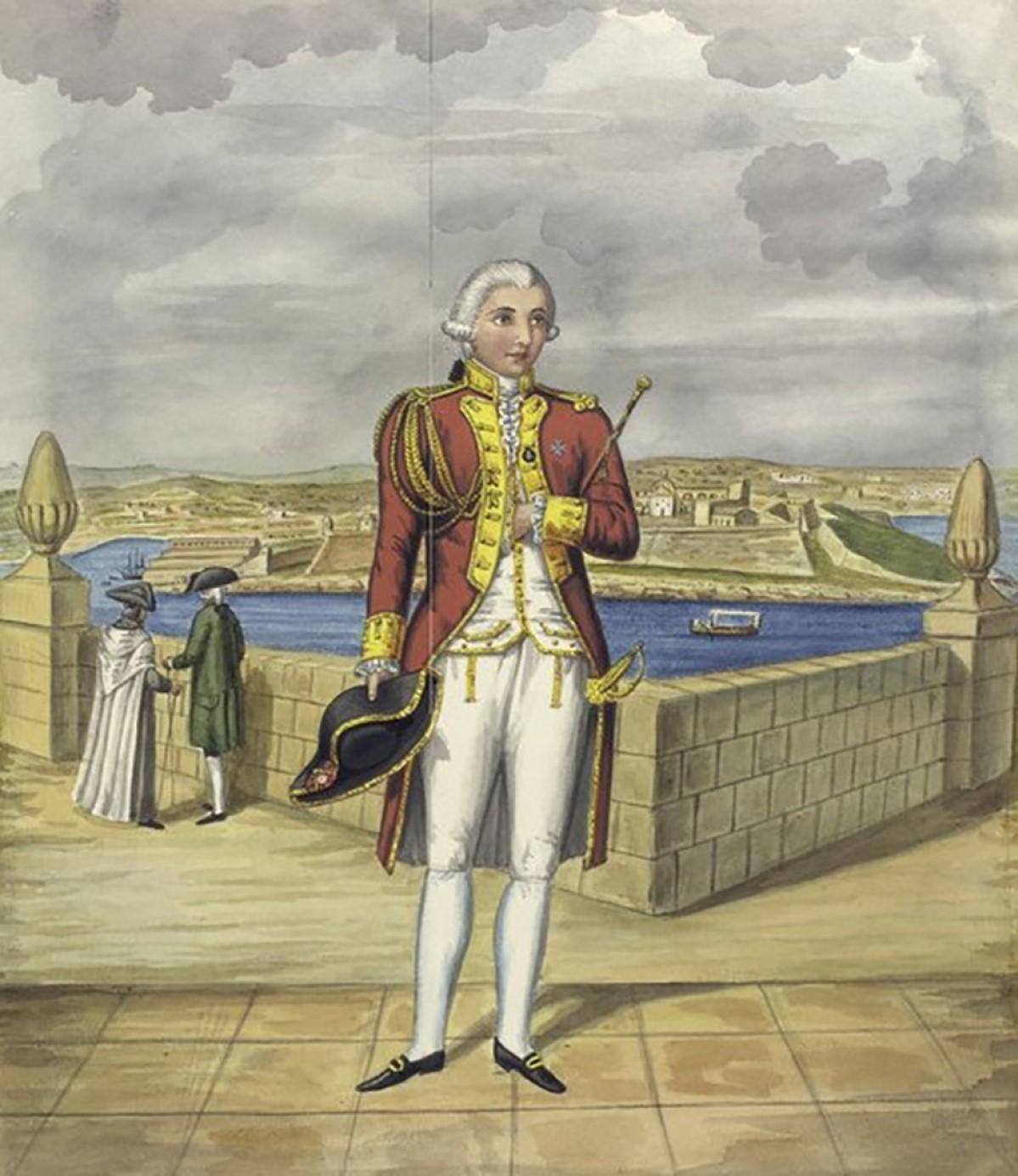 An 18th-century painting of a governor of Malta in Valletta showing Fort Manoel in the background. Photo: Wikipedia.com
In 1761, the respected Comte François-Charles de Bourlamaque – who had served France with distinction in Canada during the Seven Years’ War (1756-63) – described Fort Manoel as “a model of fortification built with care and complete in all parts”. He did, however, recommend measures to make it more secure, such as the demolition of all houses and barns on the islet and the removal of earth that could be used as cover for an attacker.
He also advised that a redoubt (a field work enclosed by a defensible parapet providing fire all around) should be built to obstruct access from the mainland. But these recommendations were not carried out.
In 1757, a triangular battery was built at Qala Lembi, close to Dragut Point, funded by the Manoel Foundation, perhaps as an outwork to Fort Manoel, to prevent a possible enemy bombardment of the fort’s northern flank. It was demolished in 1795 when Fort Tigné was constructed.
The French garrisoned Fort Manoel from 1798 to 1800 and the British followed suit. In the late 19th century, the echaugettes facing Valletta were dismantled and replaced by gun emplacements. Later alterations, on St Anthony Bastion, saw the demolition of its polverista to make way for a three-gun battery.
All the fort’s guns were decommissioned in 1906, but a battery of 3.7-inch heavy anti-aircraft guns was deployed in and round the fort in World War II when the fort suffered considerable damage to the ramparts, the barracks and the chapel due to aerial attacks.
The fort was decommissioned in 1964. The area was abandoned and it was only in 2001 that restoration and partial reconstruction of the fort was begun by the development company MIDI. It has now been completed and the fort has been restored to its former glory.
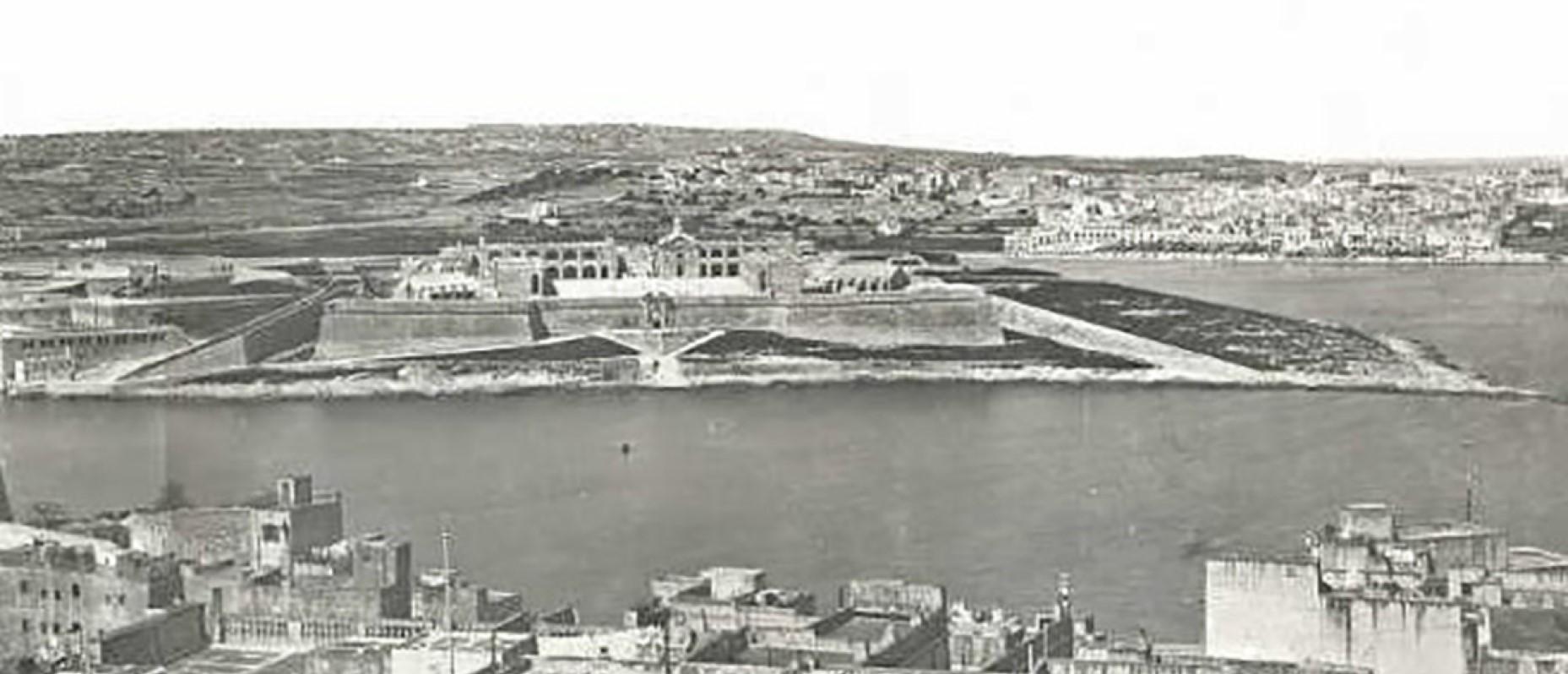 An old 19th-century photograph showing Fort Manoel as viewed from Valletta.
In 1801, at the initiation of the British occupation, when ideas on defence had progressed towards new methods of fortifications, Lieutenant A. E. Anderson, who inspected Fort Manoel, remarked that the fort was “less remarkable perhaps for its defensive utility, than the beauty of its construction”.
Fort Manoel certainly fits the description of a baroque fortress because it successfully brings together the different aspects of engineering, architecture and art to create a functional and beautiful work of fortification. Indeed, modern researchers regard Fort Manoel as the epitome of the delicate marriage between baroque military engineering and architecture.