'Foundations of Stivala hotel, nearby buildings being stabilised' - BCA
The authority was responding to footage showing water-logged foundations and water being ejected from the site
Updated 5.58pm
Works are underway at the site of a controversial hotel development on the Sliema front to stabilise its foundations and those of surrounding properties, according to the Building and Construction Authority (BCA).
The authority was responding to a Times of Malta article published earlier on Friday featuring video footage showing workers appearing to excavate in seawater-logged foundations at Carlo Stivala’s hotel project on Triq San Vincenz.
Other clips showed large volumes of water from the foundations being ejected from the site by two pipes sticking out of the construction site. The project architect said earlier this week that workers were “battling” water repeatedly filling the site.
The BCA said in a statement Friday afternoon that ongoing works were being carried out “below sea level, as part of efforts to stabilise the foundations of both the development itself and the adjoining properties.”
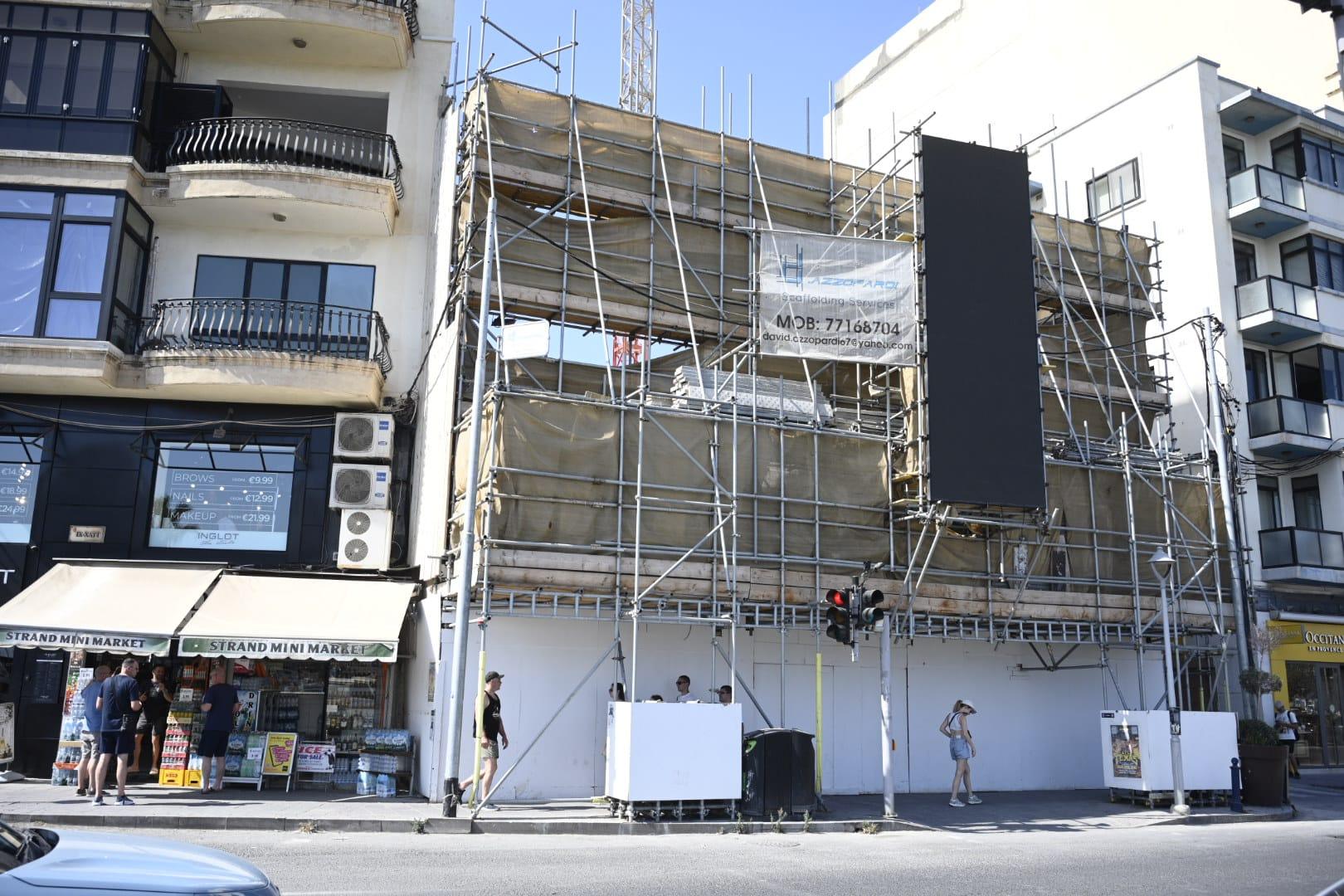 Carlo Stivala's hotel development on Triq San Vincenz has been dogged by controversies. Photo: Matthew Mirabelli.
It said it was “closely monitoring the situation, engaging affected third parties and their appointed experts who are assisting in the technical assessment and oversight of the works”.
“Furthermore, the BCA is imposing additional conditions on the site, including the mandatory use of specialised machinery and equipment, to ensure that the works are carried out safely and in full compliance with regulatory standards.”
The authority said it “took immediate action” following reports of water being discharged from the site and had “intervened to halt works on site” while it investigates the incident, including reviewing the published video footage.
A stop work order was issued earlier on Friday by the Occupational Health and Safety Authority (OHSA), which had ordered all workers to leave the site.
The OHSA told Times of Malta earlier on Friday that initial investigations indicated that a pump used to remove seawater from the foundations – excavated to below sea level – had broken down, leading to seawater filling the site.
Talks were ongoing between safety officials and the project supervisor on how best to deal with the issues.
Residents reject stabilisation claims
Responding to the statement, the Sliema Residents Association (SRA) rejected claims that works were being carried out to stabilise foundations of nearby properties.
Speaking on behalf of affected residents, the association said that, "in fact, as they pointed out repeatedly to BCA, the excavations being carried out were nowhere near their foundations and the sole purpose of the works was to continue Stivala's project".
The SRA said excavations had continued "illegally before the planning application has started to be processed, still less does it have a permit or method statement.
"The residents ask BCA why they steadfastly refused to reply to them over months of protests about hydraulic drilling continuing illegally until 7pm. The BCA also failed to back up claims that Stivala had been accorded a daily extension", it said.
The group also rejected "spurious claims" that a water pump broke down at the site, saying the site had been "filling with seawater every day for months, ever since excavations dug below sea level".
"In fact the deeper Stivala dug, the more water pressure built up, leading to the sinking of the excavators, placing the worker in danger as he continued to operate the digger as it sank down", the SRA said.
"The residents ask what steps OHSA intends taking over such dangerous practices, including a total lack of safety gear, all of which the developer is aware of, since he visits the site several times a day."
In February, Times of Malta reported resident complaints to the BCA of “illegal” works underway, “in spite of the fact that the site has been constantly flooding with seawater”.
Residents have also complained of works extending out of permitted working hours and leading to excessive noise and dust.