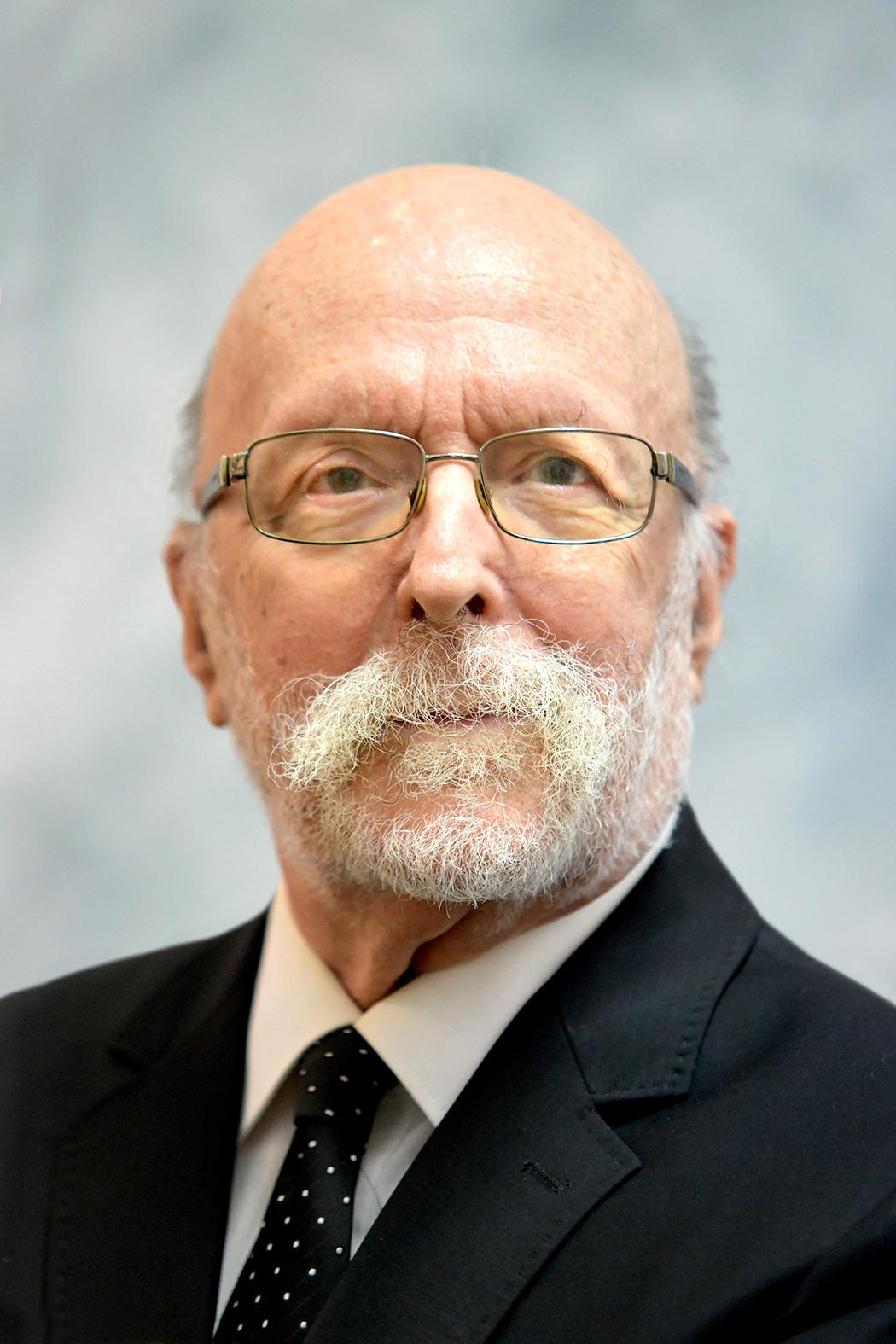
Fr Manuel Magri and the birth of an archaeological museum
A pious and erudite Jesuit, Magri's passion for archaeology led to a permanent museum
The longing for Malta to have its dedicated archaeological museum had long been simmering. Like many other European princes, the grand masters of the Order of St John, who concurrently also served as princes of the Maltese Islands, had their own Cabinetto delle Curiosità, housed in the Palace, where they displayed – showed off – smaller, more precious items, usually artistic and historical artefacts or unusual specimens of natural interest. No self-respecting monarch would want to be accused of not having his own Wunderkammer to amaze his guests or visitors with.
Private collectors, too, sometimes created their personal museums or galleries. In Malta, the nobleman Gio Francesco Abela (1582-1655) not only pioneered history-writing but also museum-building. In his country villa in Marsa, he amassed a collection of important archaeological and historical findings.
In 1637, Abela formally bequeathed his villa, his library and his private museum to the Jesuit fathers for safekeeping and by title of perpetual usufruct, in gratitude for having fostered his education. One of the conditions: that his collections were to remain accessible a beneficio de curiosi antiquari.
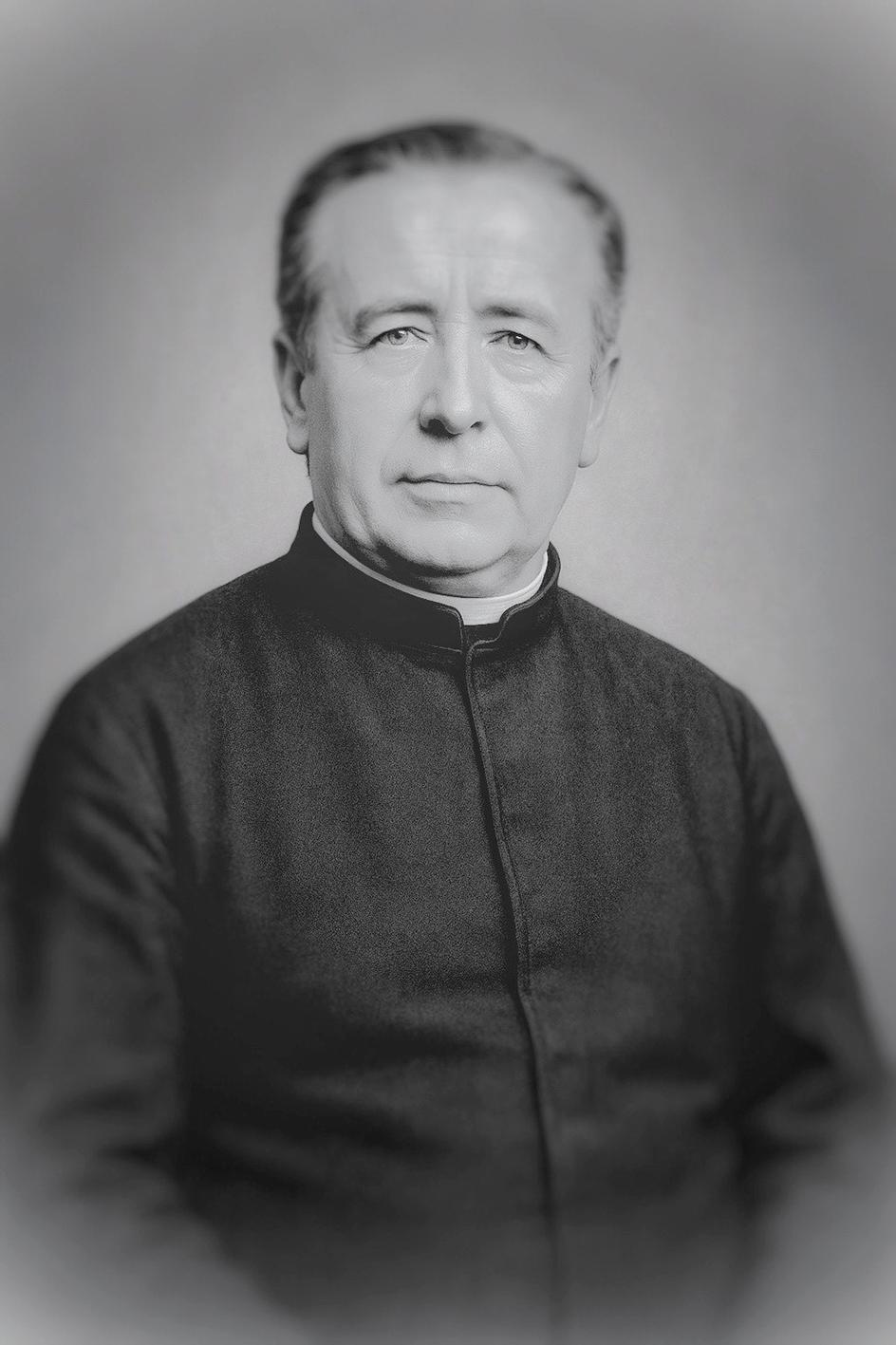 Portrait of Fr Manuel Magri, SJ
And Abela had every reason to be grateful to the Jesuits. They had established the very first institute of higher learning in Malta in 1592, the Collegium Melitense, when he was 10 years old. The site in Marsa where Abela’s villa stood still retains memories of its Jesuit association – Jesuits’ Hill.
The Jesuits administered the Abela museum until their expulsion from the island by Grandmaster Pinto in 1768, when all their properties devolved in favour of the Order. After the new public library was inaugurated in 1812, Abela’s collections, or what was left of them, were put on display there, presumably in haphazard bazaar fashion. That marks another step in the life of a public archaeological museum in Malta.
And that is where Padre Manuel Magri comes into the picture. Magri, a pious and erudite Jesuit, spent his life studying, writing and performing his pastoral duties. He also dedicated himself to his consuming cultural passions – folklore and archaeology.
In 1901, he took the initiative to challenge the colonial authorities to get moving on an archaeological museum. He could not stand seeing Malta’s mysterious and unique prehistoric heritage being dismissed with a yawn and a shrug.
At birth in 1851, Magri faced life gifted with extravagantly generous genetic assets. Sir Antonio Micallef, later chief justice, one of the very few truly outstanding giants ever in the Maltese legal profession, had fathered his mother, Maria. Not surprisingly, the young Manuel joined the university to study law, but early on, a religious call smote him and he abandoned the law course to join the Jesuit order.
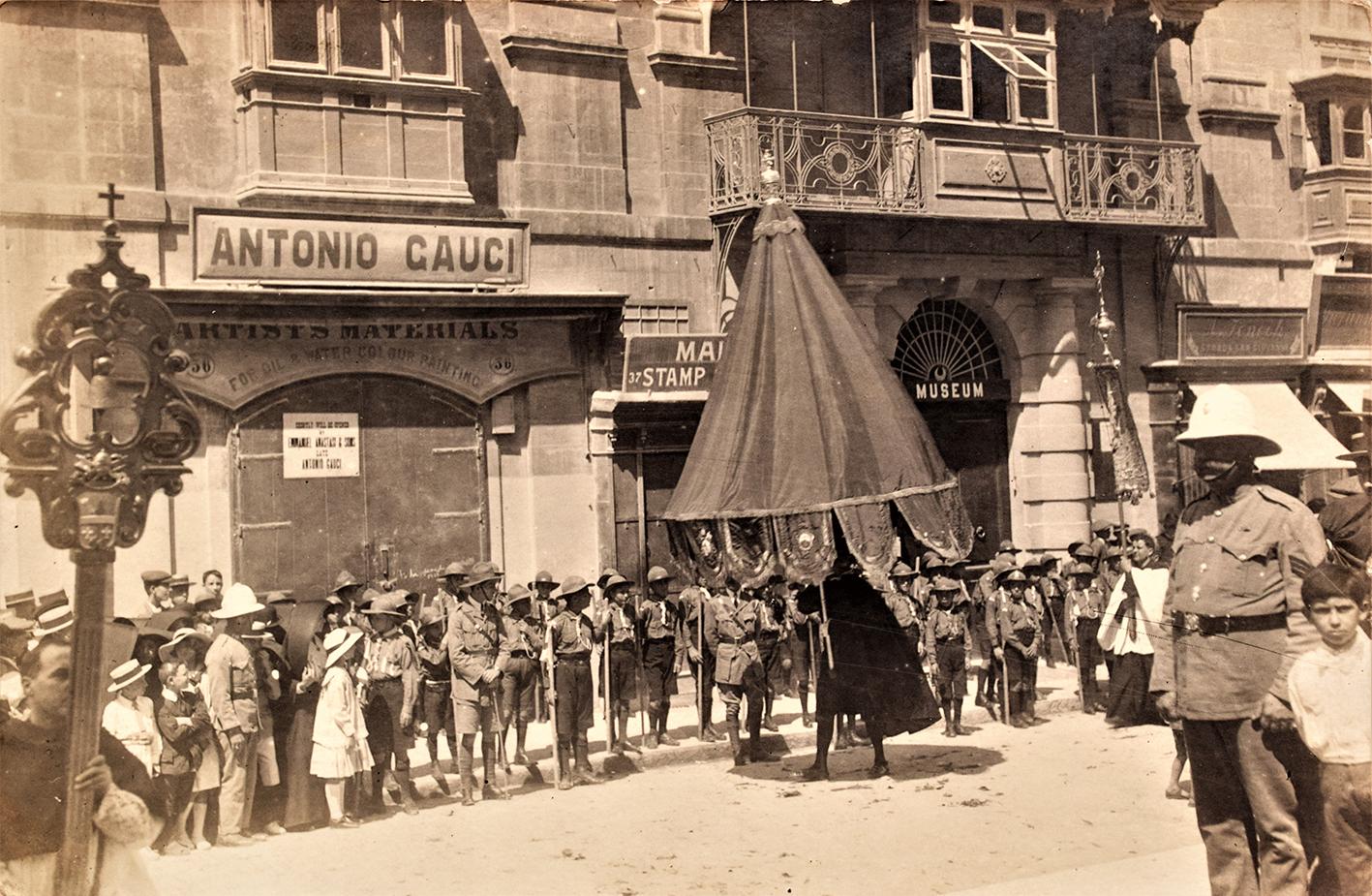 Façade of Xara Palace, opposite St John’s, which housed the first Museum of Archaeology.
He perfected his studies in Ireland, England, France and Spain where, in 1881, he ordained in Tortosa. From then onwards, he taught and preached in Malta, Gozo, Catania, Istanbul and Susa.
As a passionate archaeologist, he had been involved, among others, in the excavation of the Tarxien Hypogeum discovered in 1902, of Xewkija and Floriana, supporting his data-recording by the use of photography. While on mission in Sfax, a violent attack of nephritis caused his sudden death on Good Friday of 1907.
A mysterious full-figure portrait in oils of Justin Alvarez, a consul general, hangs in the National Library with those of other benefactors. In 1907, Alvarez, as British Consul to Tripoli, was asked to greet Fr Magri on his arrival there but never managed to welcome him.
Sadly, the Jesuit died before reaching Tripoli. Alvarez later unsuccessfully contested the 1921 self-government elections as an independent, and donated his archaeological findings to the Malta museum and an important collection of books on history and prehistory to the National Library.
Rumours of a planned museum of archaeology had again been wearily making the rounds at the turn of the century but the colonial authorities were taking it easy with some civil servants, excelling in what they did best – finding good reasons why not to do something. Padre Magri started losing his patience.
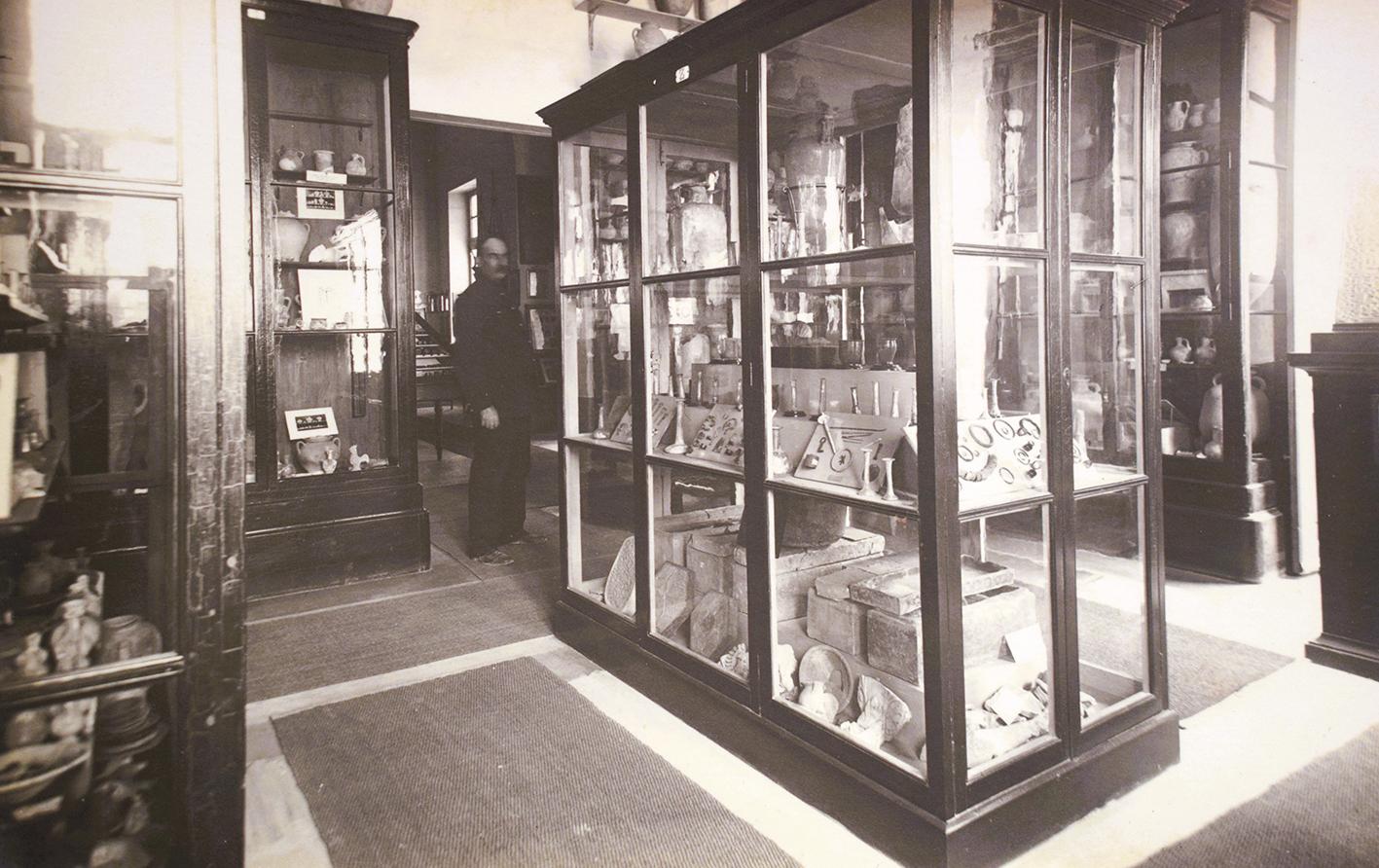 Display of archaeological findings at the Xara Museum.
On April 4, 1901, he penned a four-page personal letter in excellent English to the governor, with practical suggestions. He recommended his proposal “as it could be carried out at once” and, more attractively to the thrifty colonial rulers, “without entailing any expenses”.
The Malta Society of Arts, Manufacture and Commerce had a large industrial hall in its headquarters then in Palazzo Xara in St John Street, almost opposite the Co-Cathedral. This hall “could be easily favoured by the society for the keeping of antiquities.
“The property of the said antiquities would be handed over to the said society. A joint committee chosen by the members of the Society of Arts etc and the Malta Archaeological Society would appoint the manager of the museum. I have proposed this plan to Dr T(hemistocles) Zammit, Sec. of this Soc. of Arts and he thinks there will be no objection on the part of his society.”
Magri dedicated himself to his cultural passions – folklore and archaeology
Magri remarks: “I know people in Malta who would willingly part with their curios in favour of an institution of this kind.” He adds wistfully: “I am sorry to record that within the past year two cases of antiquities found on these islands have been presented to private institutions in two foreign countries of Europe.”
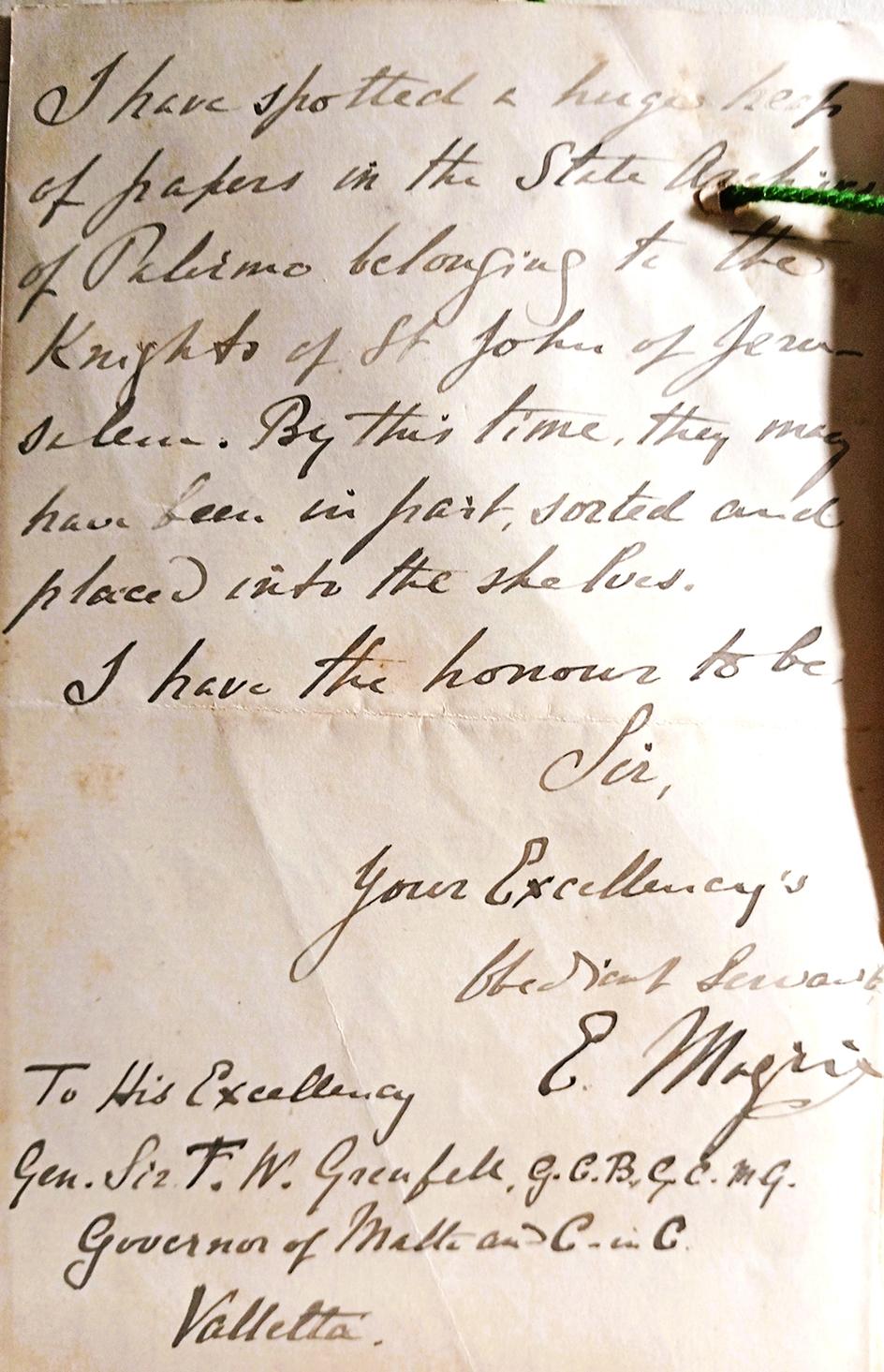 Last page of letter with signature of Fr Manuel Magri SJ to Governor Grenfell, urging the establishment of an archaeological display.
The Jesuit then informs the governor that he would be in Sicily for six months, returning in October and expressing his conviction that he would bring back with him “fresh historical documents bearing on the history of Malta. I have spotted huge heaps of papers in the state archives of Palermo belonging to the Knights of St John of Jerusalem. By this time, they may have been, in part, sorted and placed into the shelves.”
That the state archives of Palermo housed unique documentation which throws unparalleled light on the medieval, pre-Order of St John rule over Malta was well known.
The historian Roberto Valentini worked diligently on them before World War II and, after the war, Stanley Fiorini transcribed, indexed and published them. But that Palermo also has large founts of documentation relating to the Hospitaller history of our island comes as surprising, though welcome, news. In 1943, those archives suffered tragic losses at the hands of Allied bombers.
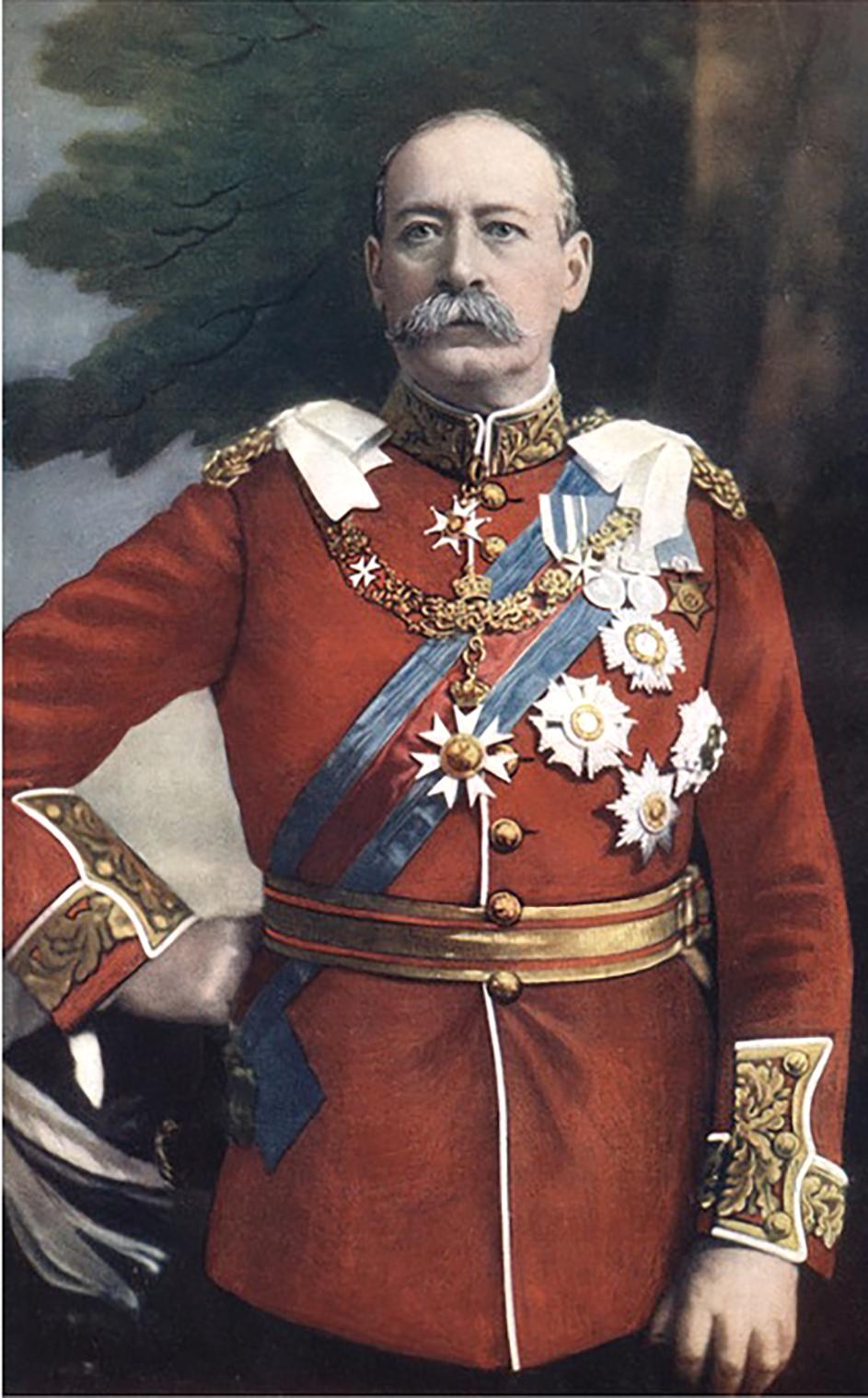 Governor of Malta Francis Wallace Grenfell
Now I am not aware whether Fr Magri considered himself lucky or jinxed. He addressed his letter to Governor Francis Grenfell. Unlike some previous colonial military top dogs, he did not behave like a primordial philistine showing off his aversion to history.
Grenfell cultivated cultural interests and failed to dismiss the natives as pawns only useful to promote pre-set imperial agendas. Of course, this always remained his primary job, but, when compatible with his overriding duty, Grenfell found it possible to sympathise with the cultural aspirations of those Maltese who cared. On the minus side: he forbade the playing of a Maltese national anthem in public.
Grenfell’s pastime throughout his governorship of Malta remained painting – the honest, not ungifted Sunday painter. He had founded a horticultural society for flower exhibitions and competitions, and the Archaeology Society of Malta, “there being a great number of objects of interest in the island which were not properly described and in which not sufficient interest was taken”.
He published his memoirs and kept a diary, parts of which Henry Frendo transcribed. This contains some curious insights into what a foreign man of culture would find intriguing in the colony he lorded over.
On learning that his next posting would be Malta, Grenfell started taking Italian lessons from a Mr Sciortino. He hesitated whether he should accept the office, as his adored wife was experiencing serious health problems. And she died soon after reaching Malta. To his unbearable grief, he buried her at Ta’ Braxja.
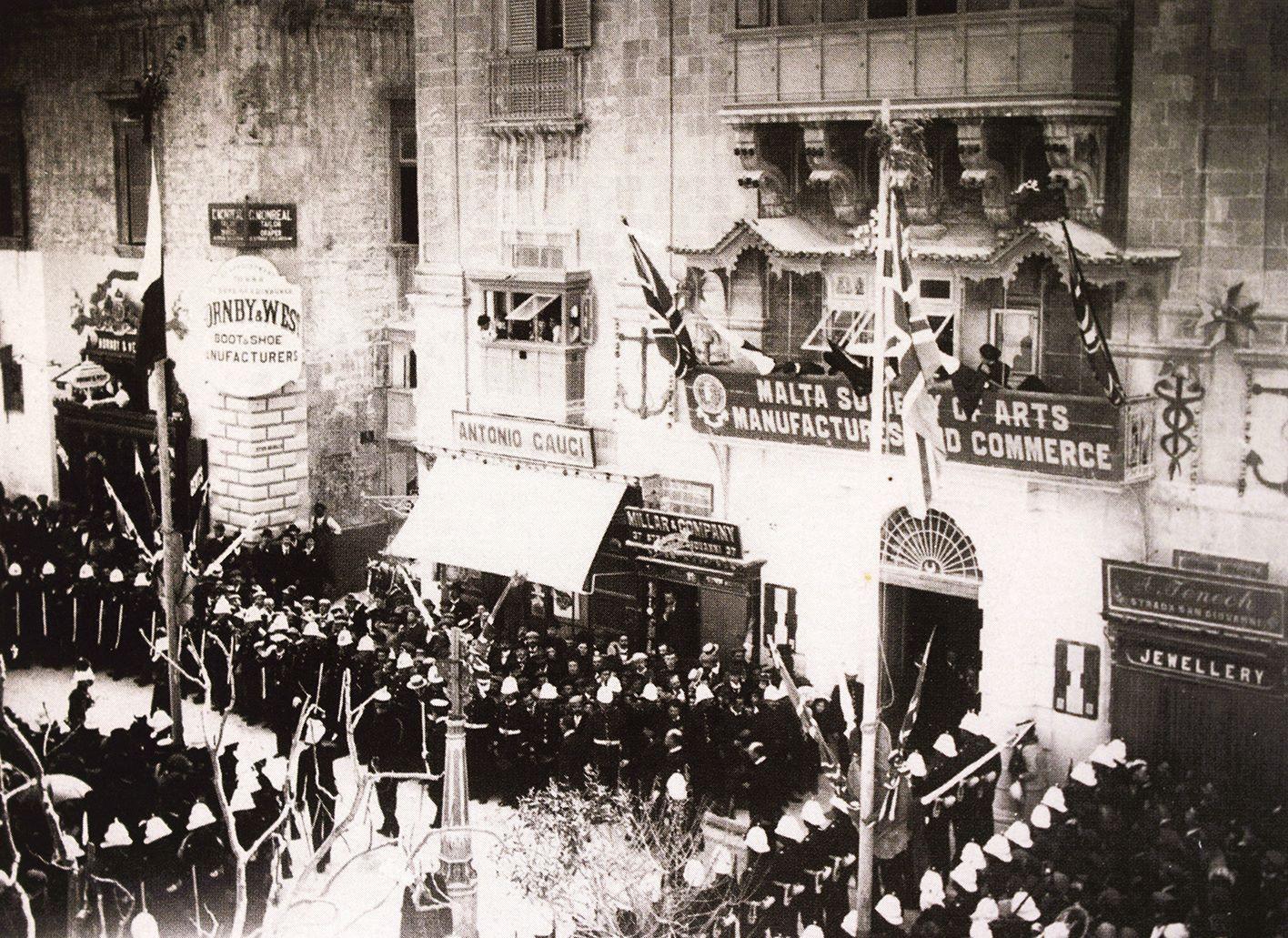 Headquarters of the Society of Arts, Manufacture and Commerce in Xara Palace, where the first archaeological display was held.
The first thing Grenfell did the day he arrived in Malta to take up office: after having tea, he walked round Valletta’s old curiosity shops – antikwarji and rigettjiera – “buying various antikas”.
He did this incognito, taking care that no one recognised him, being “fully aware that to the Governor of the island, prices would be prohibitive as soon as his identity was known… I think the dealers never quite forgave me”. Before his retirement, he bequeathed part of his collections, mostly of ancient Egyptian artefacts, to the people of Malta.
Less auspiciously, Grenfell Tower in London, named after him, burnt down in 2017, leaving 72 dead.
The seed Fr Magri sowed with his April 1901 letter to Grenfell fell on fertile ground. The governor adopted the proposal, and with his enthusiastic fiat, the main hall of Palazzo Xara turned into a substantial exhibition of Neolithic and prehistoric artefacts and remains.
The organisers planned the event to coincide with the royal visit of the duke and duchess of Cornwall in 1901. But such was its popular success that a temporary exhibition eventually morphed into a permanent Museum of Archaeology, formally inaugurated in 1905. Thank you, Fr Magri and Governor Grenfell.
I find it fitting that a learned Jesuit should have been at the forefront of the struggles to found a new archaeological museum, as the first one had also identified closely with the Jesuits.
And I am also somewhat gratified that recently I donated to the university the original hardwood seal of the 1592 Jesuit Collegium Melitense, almost certainly bequeathed to my family by Fr Magri over a 100 years ago.
Acknowledgments
Thanks to Anthony Mifsud for his constant help in the National Archives on my behalf and to Theresa Vella.