From building a school in the jungle to rethinking education in Malta
Architect returns home from Indonesia to create 'desperately needed project'
When architect Jonathan Mizzi decided to pack his bags for Indonesia and take his young family to attend Green School Bali in the heart of the jungle, little did he know he would go on to form part of the innovative educational project and lead the student-driven design of a community learning centre on campus.
Now, following the recent opening of the school’s Living Bridge project, he wants to bring to Malta this pioneering educational model of holistic, experiential learning, which blends academic rigour with sustainability, creativity and real-world impact. And he feels it is “desperately” needed.
“I will be turning my focus on creating a Green School Malta, coupled with a village, elderly care home, animal sanctuary and gardens – a living campus; community.
Three years ago, post-COVID and “disheartened by the rampant destruction back in Malta, I moved my family to Bali, deeply inspired by the philosophy of Green School there, a model for regenerative, student-centred learning,” said the director of Mizzi Studio, the award-winning international interdisciplinary design and architecture practice based in London and Valletta.
The school, with its sustainability-focused curriculum, is described as a “global beacon for regenerative education, design and hope”, and the Living Bridge project, which Mizzi co-led, echoes its founding ethos that “education should not just take place in nature, but with it”.
Beyond the traffic and construction, there is a hunger to reconnect – with nature, with each other
What began as a personal journey soon evolved into something more as he embarked on the design collaboration with over 100 teenage students to conceive and create the Living Bridge building.
Recently entrusted by the government to overhaul Blue Lagoon and draw up a comprehensive strategic plan for the bay and area, Mizzi, who has worked on several prominent parks in London, said the Green School project was “very close to my heart”.
It was a good fit for Mizzi Studio, which is founded on the belief that architecture can be a force for positive social and environmental change.
 Bamboo pure heat bending. Photo: Eden Rice
Mizzi took his family to bamboo-built Green School Bali because of the climate crisis and because he wanted to be “part of something actively shaping a better future for my children”.
That grew into a two-year collaborative journey, which brought together students, educators, professionals and families to participate in the hands-on process.
“I had the privilege of co-leading a course that empowered students to reimagine not just a space, but the future they want to live in. Along the way, they became the teachers,” he said about the educational model.
“Their clarity, creativity and purpose restored my belief in what is possible when we trust young people to lead.”
 The Living Bridge interior entrance. Photo: Mizzi Studio
Paving the way for Green School Malta
Green School Bali aims to nurture not only children’s intellect, but also their “connection to nature, community and purpose”.
Asked how this concept fitted into the local scene, Mizzi believes Malta could “lead again by reimagining education for the future”.
With the government’s recent green initiative for Church and state schools, there was already momentum, and the Green School would build on that shift, he said.
Children would learn by doing, surrounded by life in all its forms.
“They grow food, build with natural materials and connect with people across generations.
“We often say it takes a village to raise a child, but it also takes children to keep that village alive. This school complements – not replaces – existing systems.
“With a strong scholarship programme, it will be open to all: Maltese, African and European children, learning side by side.”
The government’s decision to act on overtourism was a powerful seed of hope. And the Green School was another, according to Mizzi.
“Together, they show that Malta can become a true lighthouse in the Mediterranean, leading with care, creativity and courage.
“Malta may be small and vulnerable, but it is also agile. We adapted quickly during COVID. We can do the same with climate, inclusion and education,” he maintained, adding that the Green School nurtures resilience, compassion and leadership, qualities Malta will urgently need in the years to come”.
Mizzi is now seeking partners, educators, funders, landowners and institutions, who share this vision.
‘I won’t give up’
Next up for Mizzi’s team is the imminent launch of the Carbon Garden Pavilion for the Royal Botanic Gardens, Kew, which explores regenerative architecture and nature-based solutions, and the Blue Lagoon project.
The Royal Parks projects were not theories – they were tested, built and thriving, the architect said. “And Malta is ready for its own step forward.”
Referring to this latest commission, he said he would not allow himself to give up on Malta.
“I have seen what is at stake – and what is possible… I have seen whole communities come alive when given space to breathe. Malta is aching for something deeper.
“Beyond the traffic and construction, there is a hunger to reconnect – with nature, with each other and with what makes this island special.
“I know how deeply people care, from the activists cleaning our beaches to the civil servants working behind the scenes for change.”
Born into the family that founded Din l-Art Ħelwa, Mizzi said that legacy has instilled in him a “duty to protect what’s sacred, our landscapes, our cultural heritage and the values that bind us”.
When he lived in Bali, he saw another island buckling under pressure from overtourism, traffic and waste.
“It reminded me that the grass isn’t greener on the other side. It’s greenest where you water it. And our home, Malta, is worth watering!”
 The Living Bridge construction. Photo: Eden Rice
Building a Living Bridge
Constructed using over 300 pieces of locally harvested bamboo, the Living Bridge structure at Green School Bali features heat-bent arches, shaped using advanced techniques that make it “one of the first of its kind in Bali”.
They support a sweeping cantilevered roof, clad using the traditional Indonesian pelupuh system of flattened bamboo shingles.
The idea was to build in harmony with nature and local craftsmanship, using innovative and sustainable materials, Mizzi said.
The Living Bridge interior entrance. Photo: Mizzi Studio
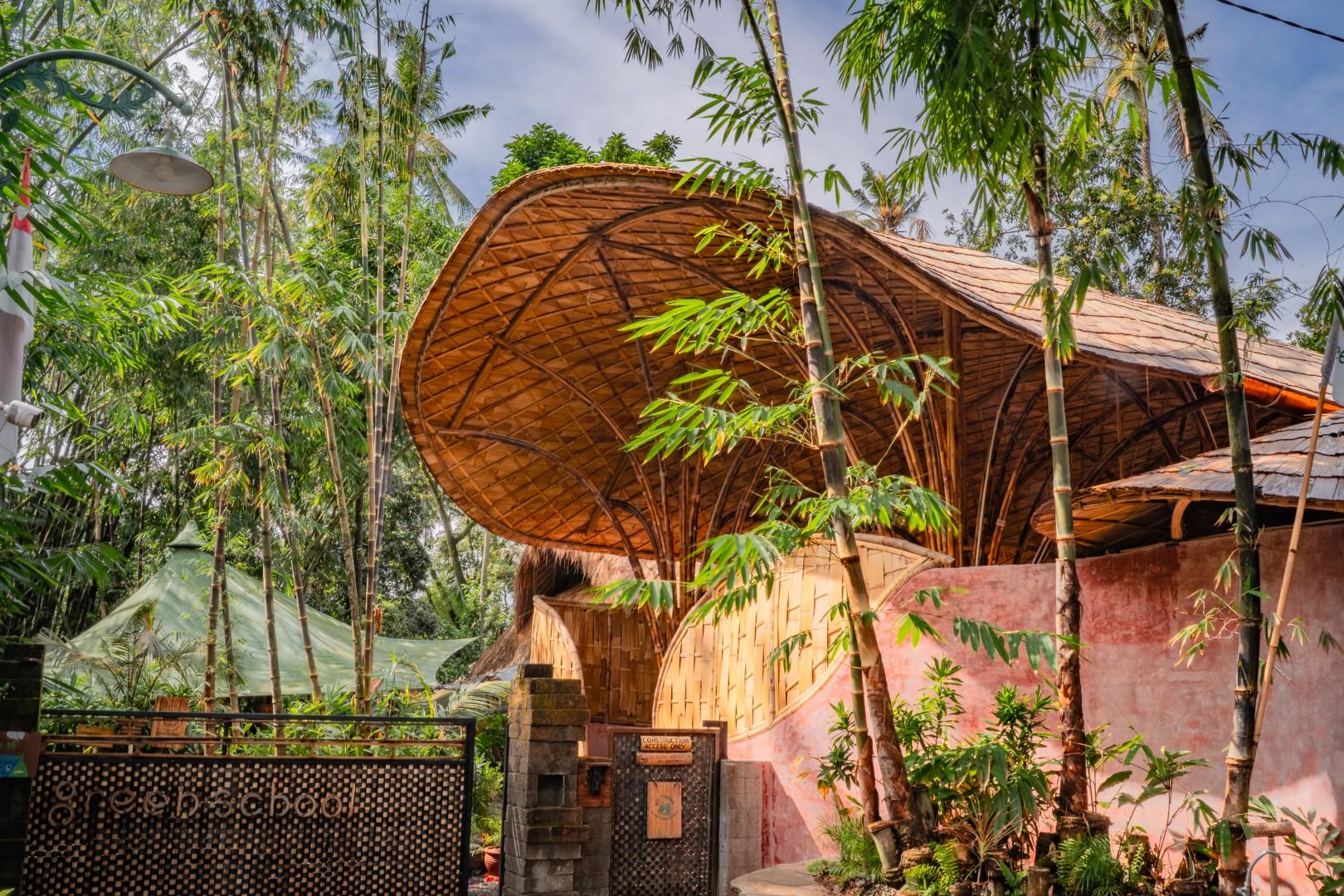
The Living Bridge exterior Green School entrance. Photo: Mizzi Studio
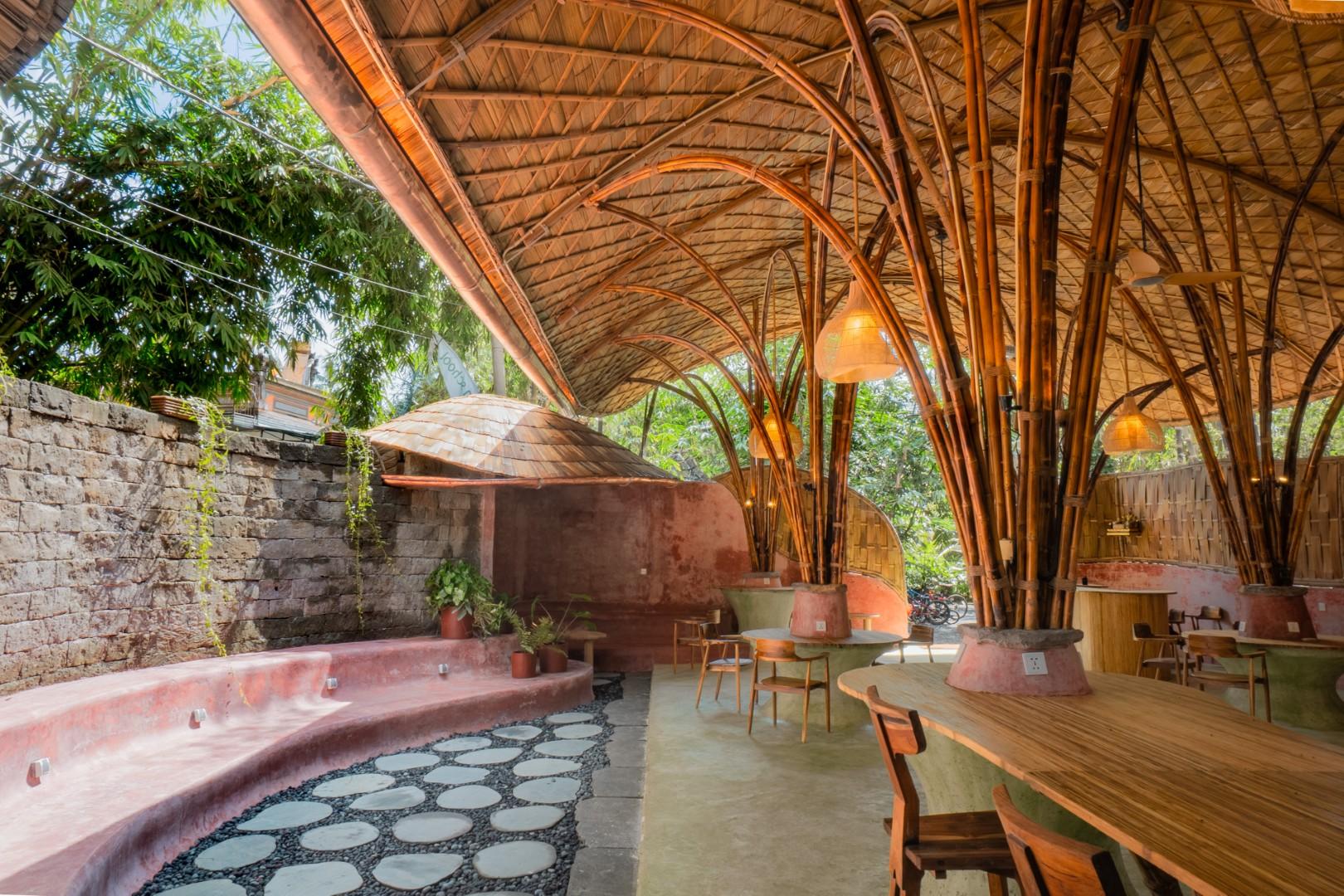
The Living Bridge interior seating. Photo: Mizzi Studio
Materials such as terrazzo, made from glass crushed by the students, lime plaster, which captures carbon as it cures, and eco-crete bricks, made from industrial waste ash, were used.
“The building blends advanced fabrication with local craft to reflect a deep harmony between innovation and tradition, grounded in the belief that education and architecture can grow together,” the architect said.
Prior to its official opening, The Living Bridge was featured at ChangeNOW 2025, the world’s largest expo of solutions for the planet, “highlighting the project’s significance and its role in advancing regenerative education and design on an international stage”.
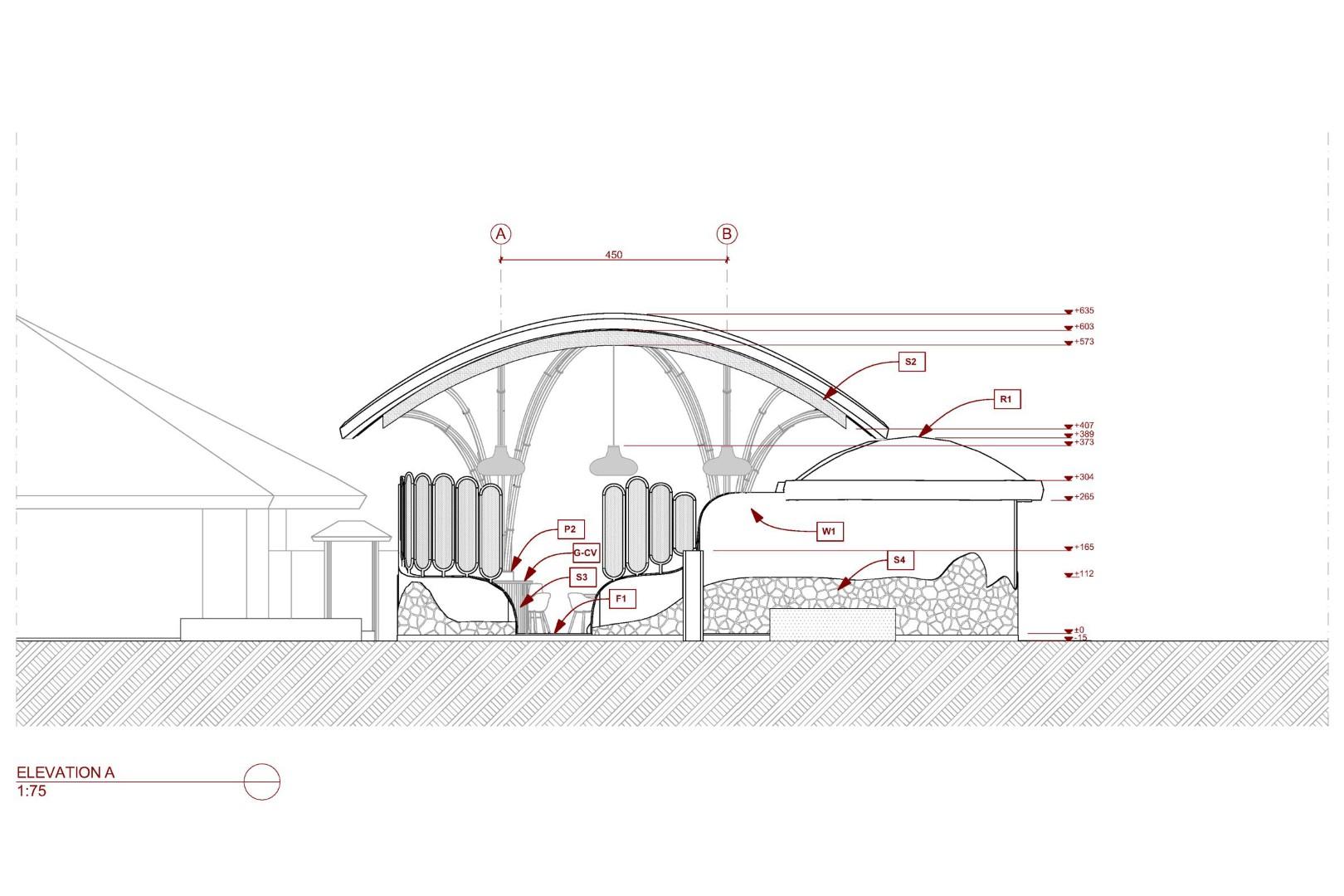
The Living Bridge elevation technical drawing. Credit: BambooPure
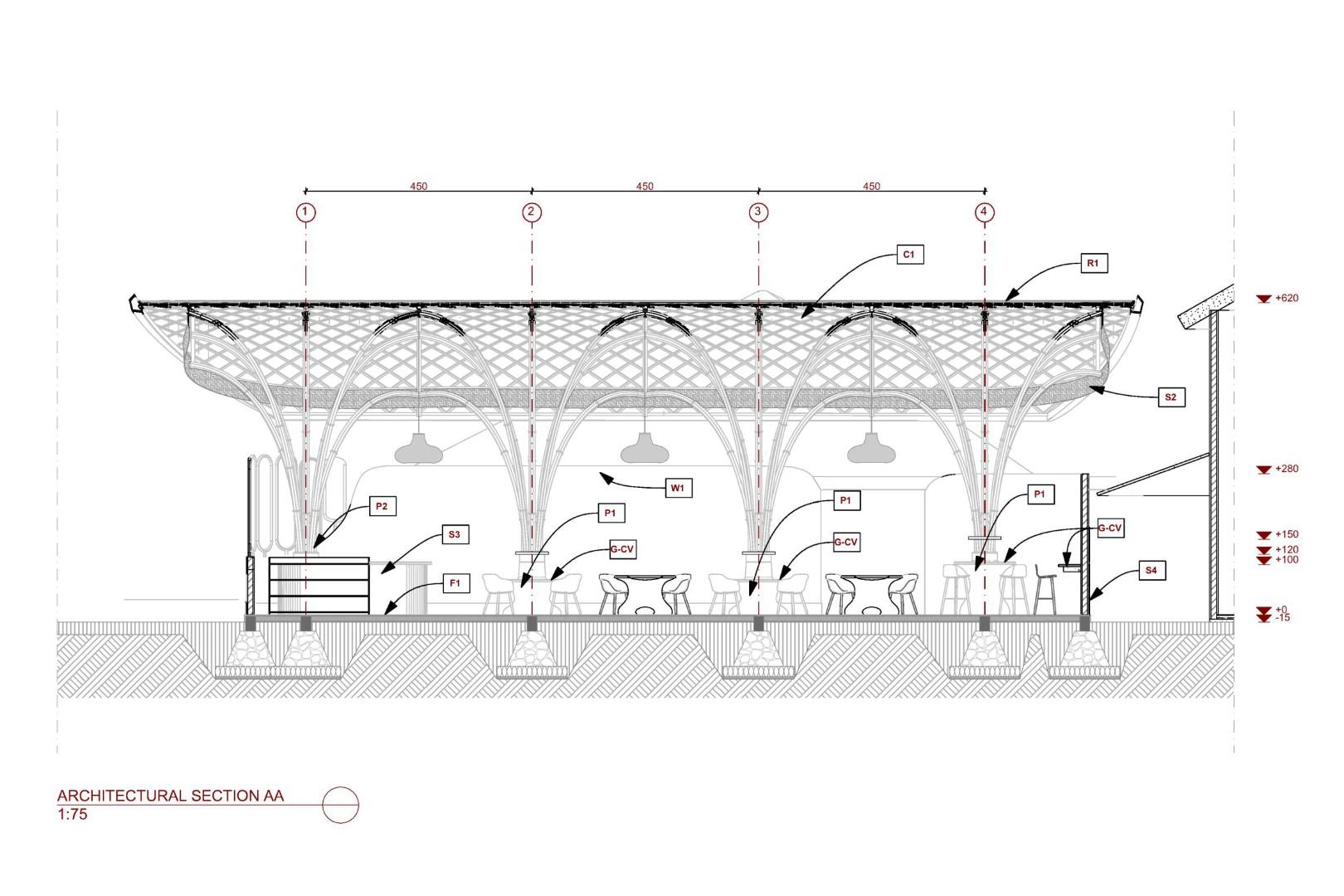
The Living Bridge section technical drawing. Credit: BambooPure
The stand even drew the interest of actress and activist Natalie Portman, who engaged with the students leading the project.
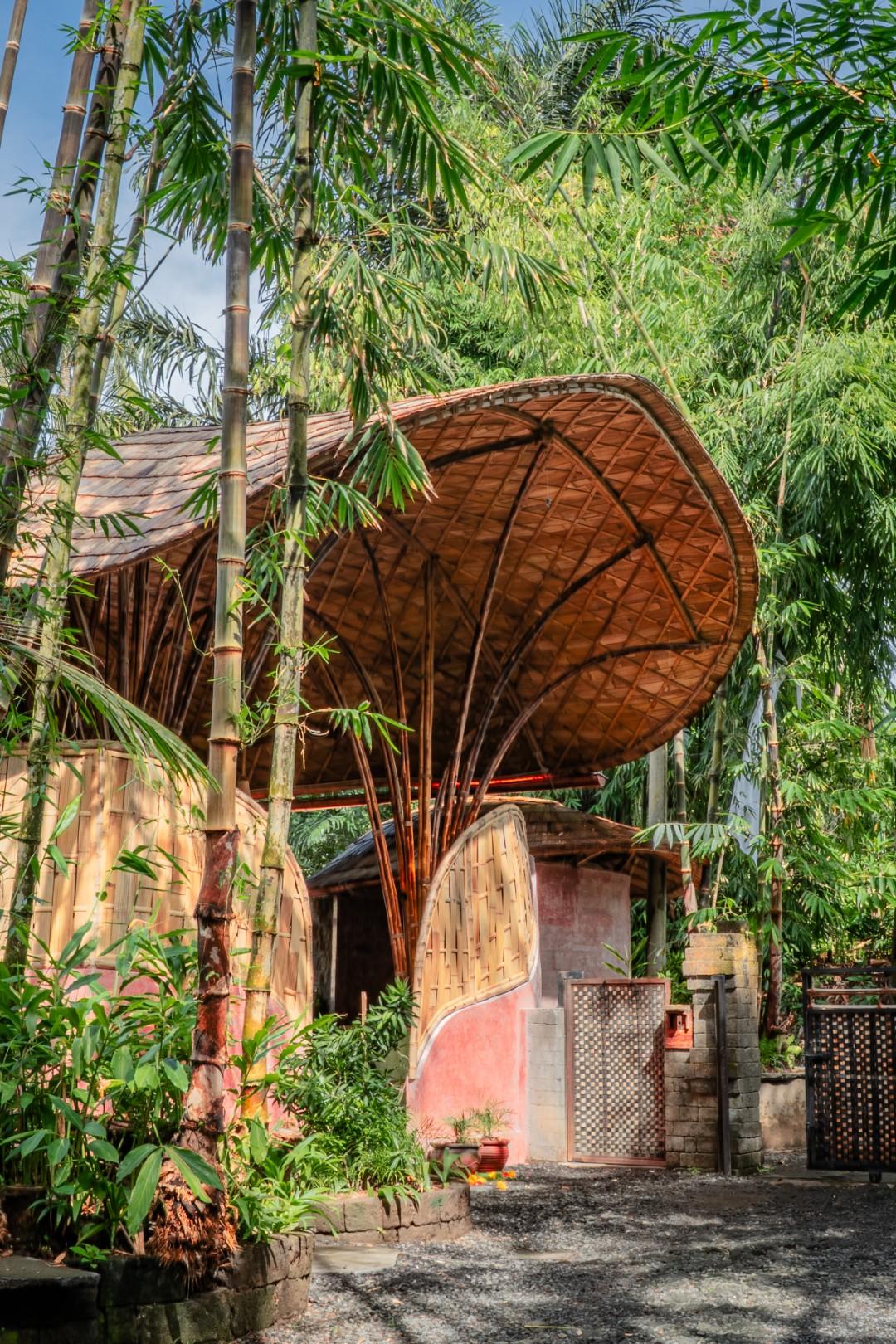 The Living Bridge exterior Green School entrance. Photo:Mizzi Studio