Malta's food security is under pressure. This is how we're shielding it
The future of food in Malta depends on confronting structural weaknesses, reforming markets, and putting producers and communities at the heart of the system, says Brian Vella
The COVID-19 pandemic exposed a reality Malta can no longer ignore. As a small island state that depends heavily on imported food and external supply chains, Malta is structurally vulnerable to disruption. At the same time, the response of local farmers, fishers, food producers and key stakeholders within the food sector showed that domestic capacity still exists. That capacity, however, remains fragile, under-supported and often marginal in national planning.
Malta is increasingly recognising that long-term resilience requires food policy to be treated as a strategic national priority. Food influences economic stability, land use, environmental protection, public health and social cohesion. Important steps are already being taken and Vision 2050 is a clear step in the right direction. At the same time, continued investment and stronger coordination are essential to secure a resilient, productive and more sustainable food system for future generations.
Food sits at the centre of this challenge. Malta’s ability to maintain even a partial degree of food sovereignty depends on whether farming and livestock production remain economically viable. Today, these sectors face rising costs, limited land availability, climate pressures and market structures that consistently favour imported products.
Farmers are expected to operate as businesses, environmental stewards and providers of food security, yet, they do so within a system that offers low margins and limited access to markets. Without structural change, domestic production will continue to decline gradually and irreversibly.
Resilience requires intervention at the level of systems, not only at the level of messaging.
One of the central weaknesses of the current food system lies in how value is distributed. Long supply chains, dominant retail models and price-driven competition disconnect producers from consumers and compress returns at the production end. This discourages local production, contributes to waste and undermines efficiency.
Food waste remains a critical challenge and national initiatives spearheaded by the Malta Food Agency, such as Żomm! Tarmix, raise awareness and take practical steps to reduce waste across the supply chain.
These platforms connect surplus with demand, reduce losses at both production and retail levels and help producers recover value that would otherwise be lost. However, waste reduction alone will not correct a system in which production, distribution and pricing are structurally misaligned with local needs.
Strengthening domestic production must be matched by reforming how food reaches consumers. Awareness campaigns and producer support are necessary but insufficient if market access remains constrained. For this reason, the Malta Food Agency has invested in alternative markets, modernised trading spaces, digital platforms and new commercial channels that reduce dependence on intermediaries and provide producers with direct, transparent routes to consumers.
These initiatives are designed to improve price stability, expand visibility for local products and make market participation more viable for small- and medium-scale producers.
Strengthening domestic production must be matched by reforming how food reaches consumers- Brian Vella
This is where strategic change must occur.
Initiatives such as The Food Coop, developed by the Malta Food Agency in collaboration with Koperattivi Malta, demonstrate a different approach to distribution. The Food Coop provides a dedicated, community-based retail space for Maltese and Gozitan products. It shortens supply chains, improves price transparency and gives small and artisanal producers direct access to consumers. It does not replace existing markets; rather, it addresses their structural limitations by rebalancing power within the food chain and strengthening the commercial position of local producers.
For participating producers, it creates a stable point of sale, greater product visibility,and a fairer commercial framework.
The importance of this model extends beyond a single outlet. It demonstrates how food policy can be translated into economic infrastructure. If replicated and adapted, similar community-based selling points could form part of a national framework that embeds agriculture within the domestic economy, rather than leaving it at its margins.
Alongside digital platforms, overseas promotion of Maltese products and partnerships with sector stakeholders, this approach forms part of the Malta Food Agency’s wider strategy to transform demand for local food into sustained economic opportunity for producers.
A resilient food system must deliver across economic, social and environmental priorities. It must provide viable livelihoods for farmers, guarantee access to safe and nutritious food and protect land and natural resources while adapting to climate pressures.
These outcomes depend on whether production, distribution and consumption are aligned with long-term national objectives rather than short-term market logic.
This transformation cannot be driven by one institution alone. Farmers, cooperatives, businesses, policymakers, educators and consumers all shape the system through daily decisions. The role of the Malta Food Agency is to coordinate this change, align policy with market practice and ensure that food remains a strategic national priority rather than a fragmented set of initiatives.
Malta faces a clear choice. Food can remain a secondary issue, addressed through isolated projects and market forces, or it can be treated as critical infrastructure. Choosing the second path requires sustained investment in agriculture, redesigned supply chains that favour local production, systematic waste reduction and the integration of food into economic, social and environmental planning.
The future of food in Malta will be determined by whether the country is prepared to confront structural weaknesses, reform how markets operate and place producers and communities at the centre of the system.
The task ahead is demanding but unavoidable. Building a resilient, sustainable and fair food system is a national necessity.
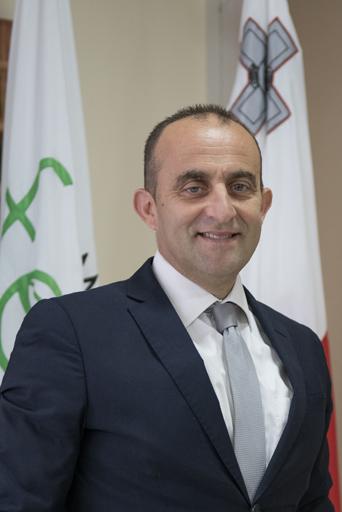
Brian Vella is chief executive officer of the Malta Food Agency.