Watch: Ġgantija Heights farmhouse destroyed to make way for apartments
Excavators roll into UNESCO buffer zone as works begin, days after PA clearance
Heavy machinery rolled into the Ġgantija Temples buffer zone on Saturday morning, as a developer began demolishing an old farmhouse to make way for new apartments.
Video sent to Times of Malta shows an excavator destroying the Ġgantija Heights farmhouse as workers - some standing alongside the machine and others on roofs of the historic building - look on.
None of those present appeared to be wearing personal protective equipment in the first clip, with two workers seen with high-visibility vests in a second one taken a short while later. Witnesses said there were no monitors overseeing the works though this could not be independently verified.
The developer, Emmanuel Farrugia, obtained clearance to begin works on Monday, public filings show.
According to the project's demolition method statement, the developer pledged to install formwork supported by scaffolding at first-floor level to create a temporary working platform.
Bricks above the roof stone slabs would then be demolished using a mini excavator to expose the top face of stone slabs.
The project (PA/00570/21) will see the farmhouse demolished - save for its facade, which must be dismantled and rebuilt - to make way for 22 apartments and 20 garages.
It was highly controversial in the main part due to its location just metres away from the historic Ġgantija Temples - the oldest freestanding structures in the world.
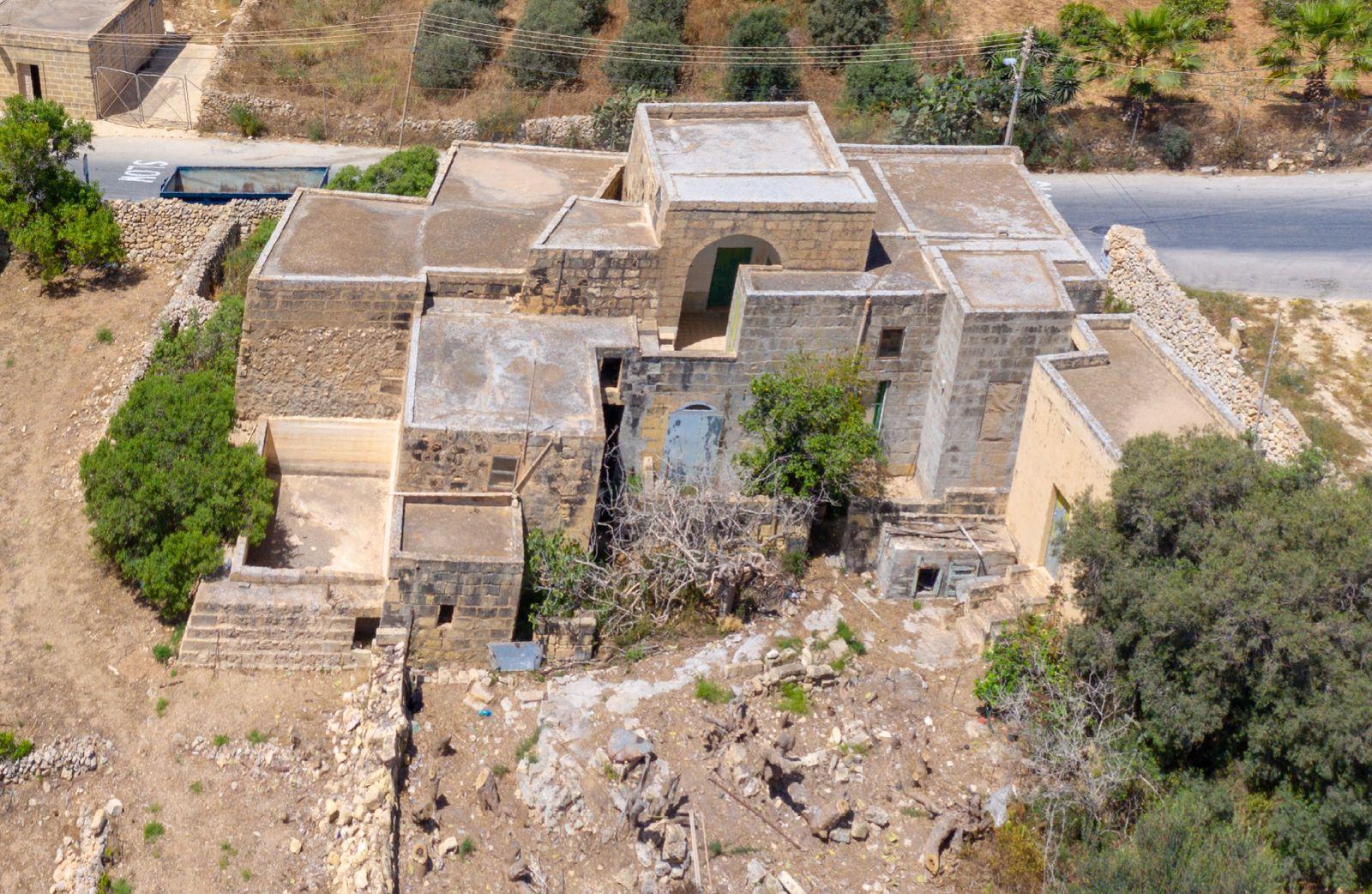 The farmhouse before it was destroyed. Photo: Din l-Art Ħelwa Għawdex
The developer's architects initially argued the project was outside a UNESCO-designated buffer zone for the temple site. The PA accepted that argument but a Times of Malta fact-check found that was false and the project was actually within the zone.
The Superintendence of Cultural Heritage initially accepted the project by citing UNESCO approval. When UNESCO intervened directly and said it insisted on a Heritage Impact Assessment being carried out, the superintendence changed tack and demanded one as well.
It ultimately backed the project, provided an archaeological monitor was present for all clearing or excavation works and no rock excavation work was carried out.
In late April, the Planning Authority approved the project by 10 votes to 1. An NGO representative on the PA board was the only one to object.