Giuseppe Calì mural masterpiece restored at Sacro Cuor, Sliema
‘The Triumph of the Immaculate Conception’ mural had darkened, in stark contrast with Calì’s typically clearer, more luminous palette
Sliema’s Sacro Cuor – officially the parish church of Our Lady of the Sacred Heart of Jesus – was built at a moment when the town was rapidly expanding and a new church was required for a growing congregation. Designed in a Roman-Ionic style, it was entrusted to the Franciscan Friars Minor in 1881 and elevated to parish status in 1918.
The building’s history is also a history of survival. Parish accounts record a bombardment on April 1, 1942, which devastated the neighbourhood around the church, destroyed the chapel of Our Lady of Pompeii, and severely damaged the chapel of St Lawrence, alongside heavy damage to the wider complex.
Also affected was the apse painting, The Triumph of the Immaculate Conception, that Giuseppe Calì (1846-1930) executed in 1892. Celebrated for his speed and assurance – and memorably nicknamed “the devil with the brush” – Calì could construct complex compositions with remarkably little preparatory work.
An inscription beside the painting records that he completed this ambitious mural in just 22 days. Conceived to be read from the nave below, it is only at scaffold level that one fully appreciates the decisiveness of the brushwork and the pronounced physicality of the paint surface.
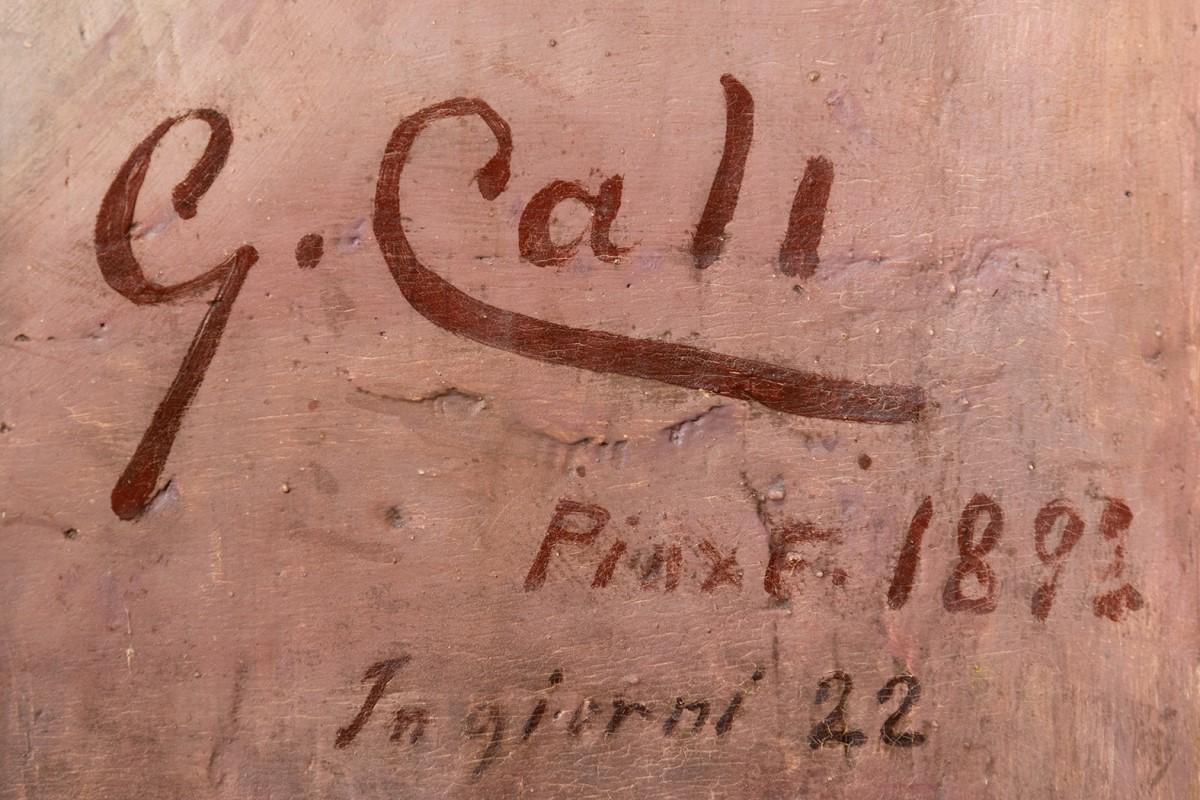 Signature of Giuseppe Calì, including the date of execution and the days it took to finish the artwork.
In an apse, movement and fissuring in the masonry can translate into cracking, detachment and voids within a mural’s layered structure – damage that may remain latent for decades before becoming visibly critical. The conservator’s first job is to consider the history of the artwork and understand how it affects its current state of conservation.
As with every artwork that enters a conservation programme, the first crucial step is understanding its material nature. Before any treatment could be contemplated, it was essential to establish what the mural is made of, how it was executed and how its complex, multi-layered structure behaves today. This phase combined close visual examination with scientific investigation, supported throughout by systematic photographic documentation. Such records not only informed the latest intervention but also became part of the artwork’s long-term history, assisting future custodians and conservators.
The conservation process began in March 2025. To allow close access to the apse, a two-level scaffolding system was erected in front of the mural. After scaffold access and high-resolution photography, a graphic condition map was produced to document both the painting’s deterioration and evidence of earlier interventions.
The photographic base was imported into a digital drawing environment and traced at true scale. Each type of condition was recorded on a separate layer and colour-coded for clarity: historic retouching (red), unstable or lifting paint (green) and fissures or detachments within the underlying stonework (blue). Mapping was carried out systematically across the entire apse, with every area checked by close inspection under raking and UV light. The final layered file provided a precise, updateable diagnostic record, supporting treatment decisions and long-term monitoring.
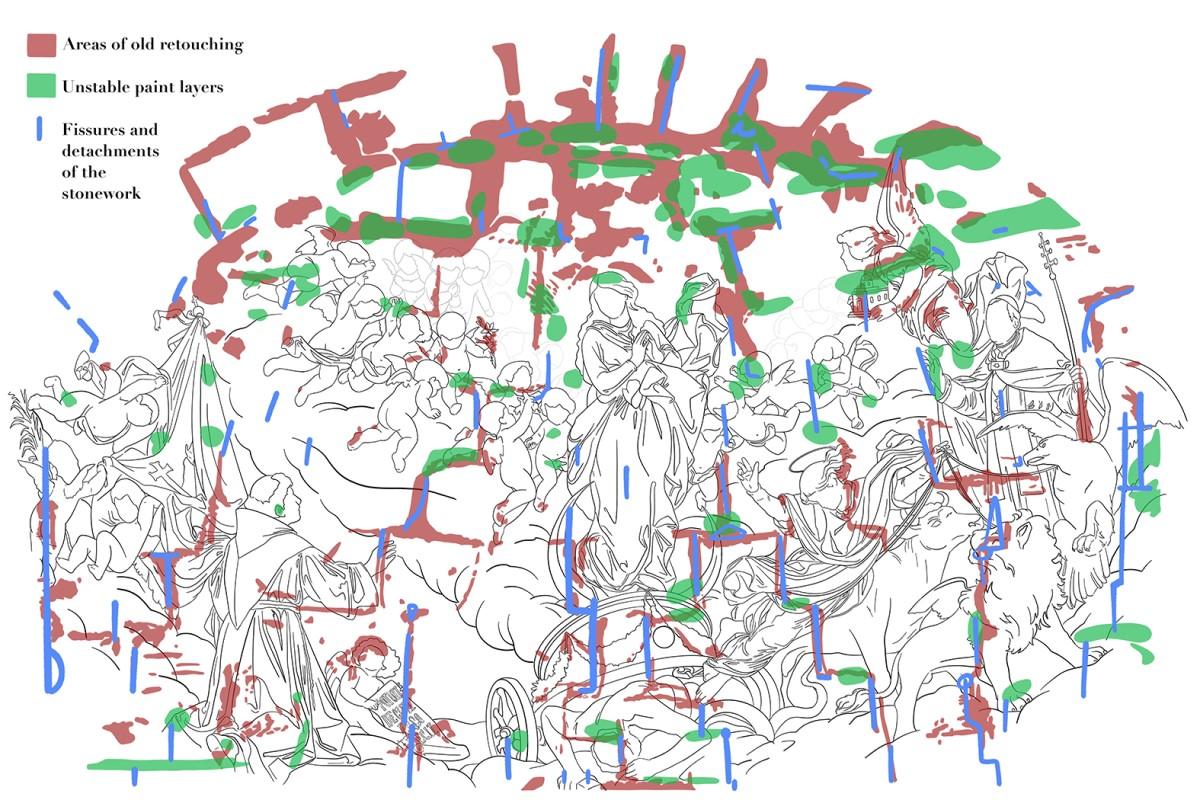 Digital condition mapping of the entire apse painting highlighting fissures, unstable paint layers and retouched areas.
Preliminary examination
Examination of the surface was carried out using controlled LED lighting under different conditions. Raking light – directed at a very oblique angle across the surface – was particularly informative. It accentuated surface relief and made visible Calì’s painterly handling, including extensive areas of impasto, especially in highlights. At the same time, raking light enhanced the legibility of deterioration phenomena: cracking, localised lifting, fragile edges and zones where the paint, preparatory layers, or the underlying support, exhibited powdering.
Ultraviolet (UV) radiation was also used as part of the diagnostic survey. Under UV, varnishes and some coatings fluoresce, while retouchings and overpaint often appear darker. In this case, UV examination clarified earlier interventions and suggested the presence of an additional surface material beyond scattered retouchings. This observation guided the sampling strategy for subsequent analysis.
Another issue was visually unmistakable: the mural had become markedly dark, in stark contrast with the clearer, more luminous palette typically associated with Calì. While surface dirt and soot were present, it was evident that more than superficial soiling was suppressing the image’s chromatic range and altering its overall reading.
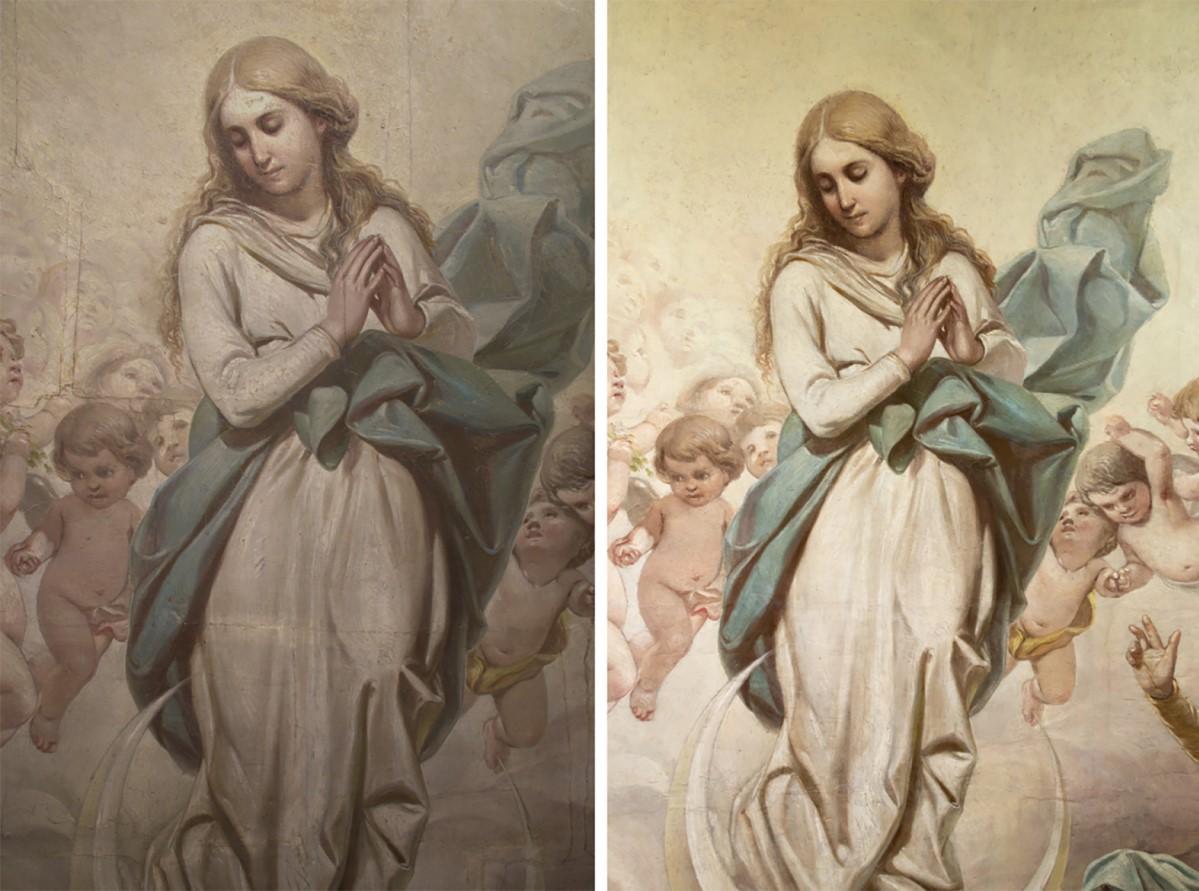
Before and after comparison of the cleaning process on the section of the Immaculate Conception.
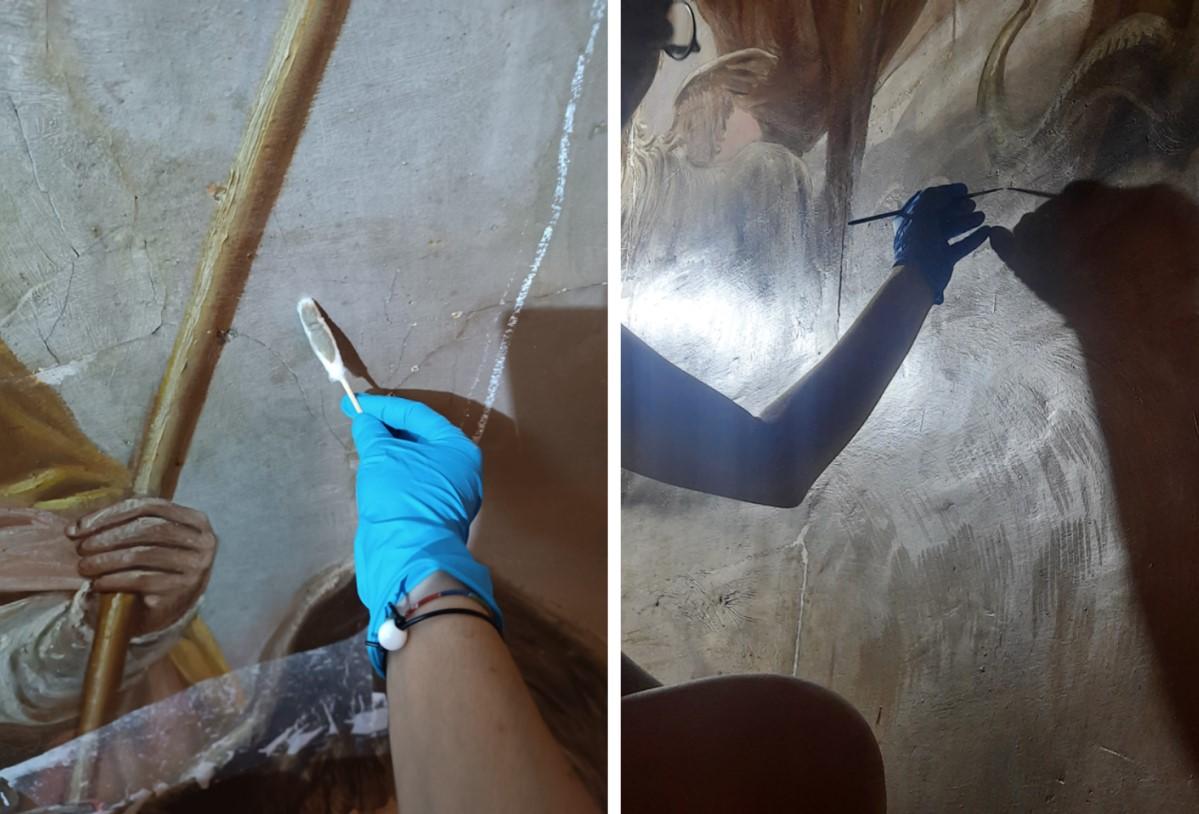
Details from cleaning and retouching processes.
Scientific and technical analysis
Targeted scientific analyses confirmed that the mural was executed in an oil-based method applied over a prepared support on the limestone (frequently described in shorthand as “oil on stone”). Stratigraphic examination of minute fragment samples prepared as cross-sections revealed a well-defined preparatory ground layer, above which multiple oil paint layers were applied. This stratification indicates a deliberate and controlled build-up of the pictorial surface.
The pigment palette corresponds closely with late 19th- and early 20th-century practice. Lead white was identified as the principal white pigment, frequently combined with extenders such as baryte, calcite and gypsum. Coloured passages were found to contain pigments including cinnabar, red ochre, red lead and small quantities of carbon-based blacks. Across all analysed samples, the binding medium was identified as a drying oil, which in several layers showed clear signs of ageing and deterioration.
Of particular significance was the identification of chemical alteration products within the paint layers. Lead and calcium metal soaps were detected, indicating long-term deteriorating interactions between certain pigments and the oil binder; oxalates were also identified, reflecting additional degradation pathways affecting the original materials.
Furthermore, a superficial wax layer was found on the surface. This coating is not part of the original technique and is attributable to a later maintenance or conservation application, which although protective in intention, contributed to optical dulling and the mural’s overall darkened appearance.
The analyses did not reveal widespread later overpainting in the sampled areas; however, repeated white layers suggest localised reworking or historical retouching interventions. Microscopic examination also documented biological colonisation by micro-fungi within some layers, highlighting active deterioration that required stabilisation.
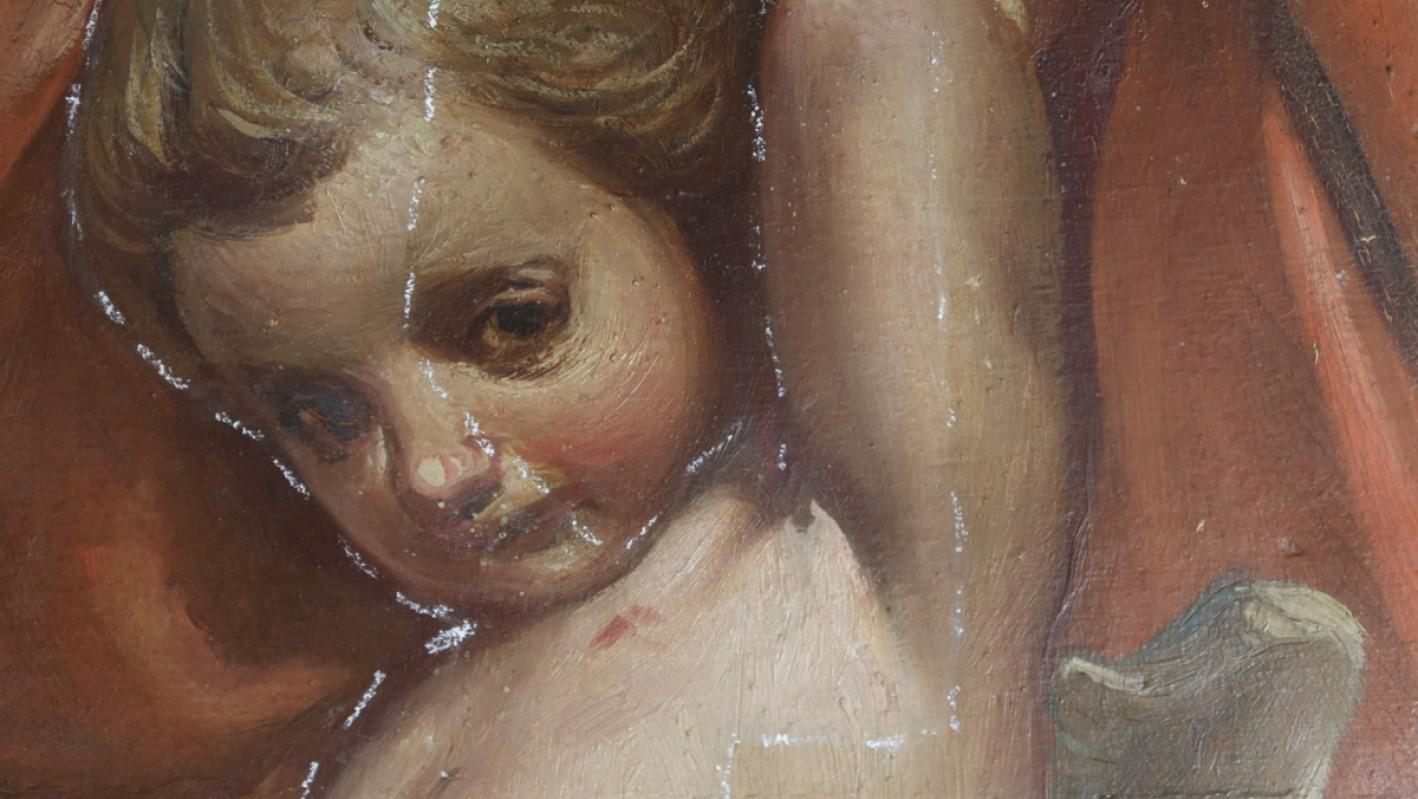
Detail of one of the angels, highlighting the effect of the cleaning process.
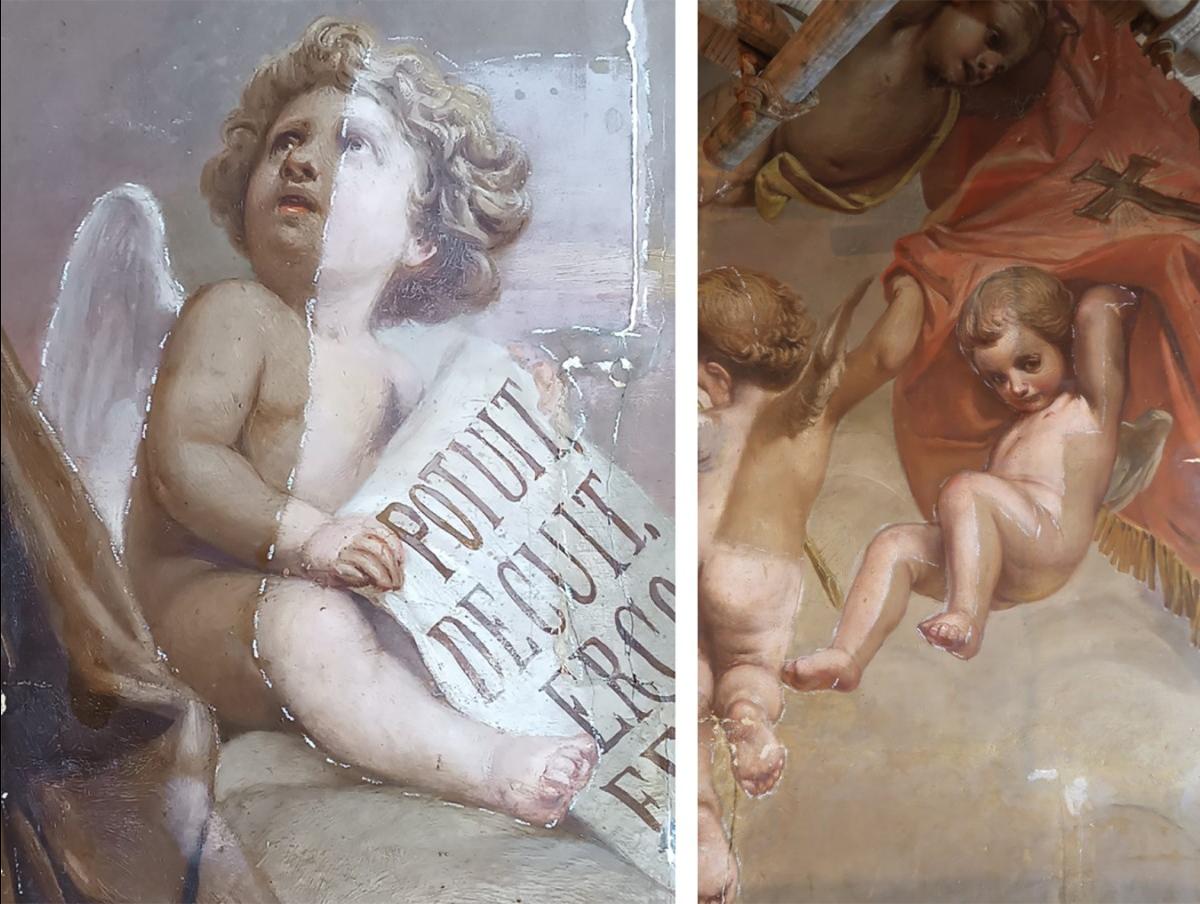
More detailed images of the effects of the cleaning process.
The conservation treatment
On the basis of the combined visual and scientific findings, an appropriate conservation strategy was developed. The first phase focused on consolidation, essential to stabilise the mural before cleaning could be attempted.
Where paint was lifting, it was carefully re-adhered using an adhesive introduced between strata by syringe and fine needle. Where the paint surface was powdering and particularly fragile, consolidation was carried out through permeable Japanese paper tissue. This method allows the consolidant to penetrate through paint and preparatory layers while avoiding direct mechanical action, thereby minimising stress on vulnerable areas.
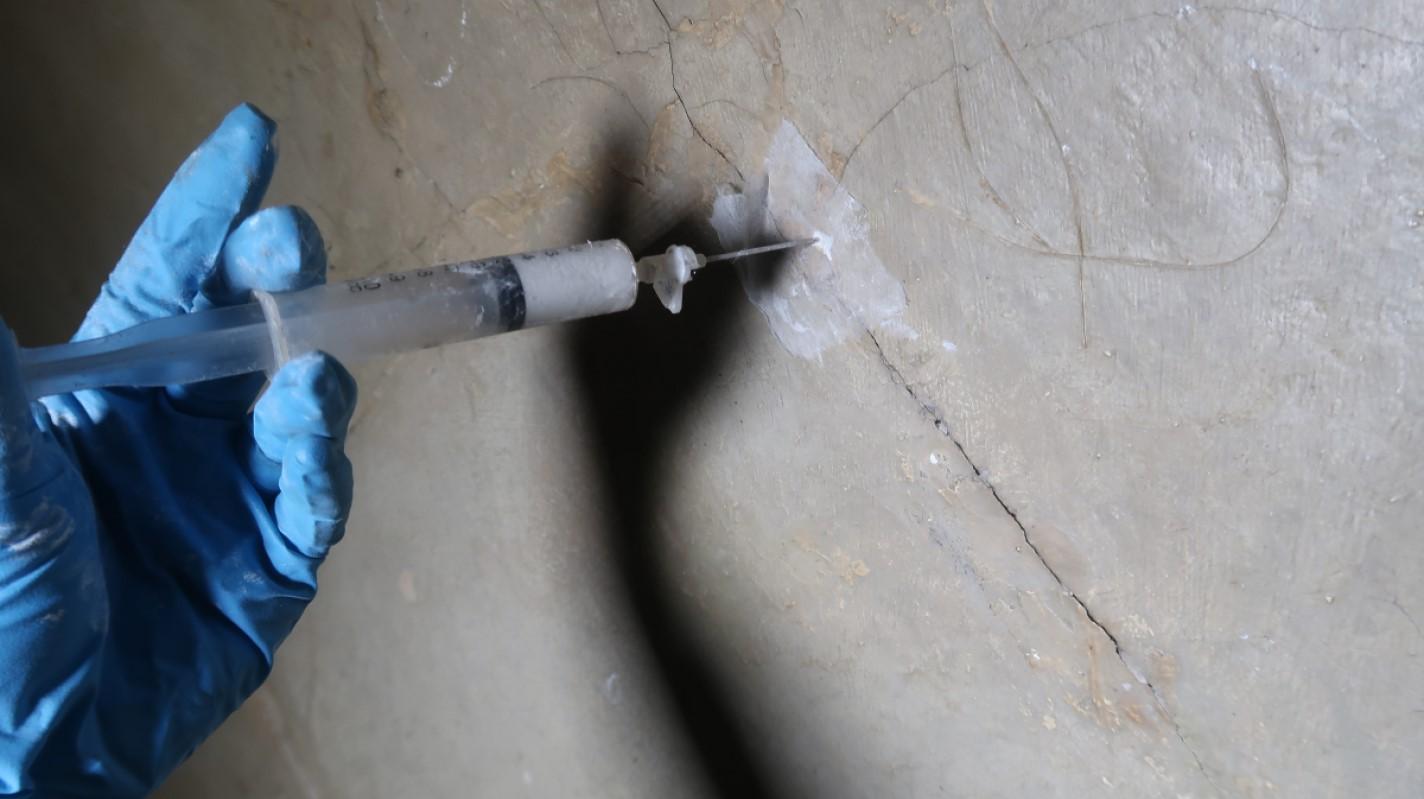 Compatible grouting material being injected into voids to re-establish adhesion and restore structural continuity.
A second consolidation process addressed voids – areas of detachment between the paint system and the support that can often be detected by gentle tapping. A compatible grouting material was injected into these voids to re-establish adhesion and restore structural continuity without forcing or deforming the surface.
Only after this stabilisation process was completed could cleaning the mural proceed. Cleaning was preceded by careful testing to select systems that were effective yet safe for aged oil paint layers and their alteration products. The treatment proceeded in controlled stages, enabling the gradual reduction of dust, dirt and soot, followed by the selective removal of degraded coatings – including the non-original wax layer – and certain earlier retouchings that interfered with the legibility of the painting.
As cleaning advanced, Calì’s original colour relationships and tonal structure re-emerged with increasing clarity.
Old grout or plaster pointing that was unstable or protruded beyond the painted surface was stabilised or reduced where necessary. Areas of loss were filled with compatible materials to ensure structural stability and a suitable surface for retouching.
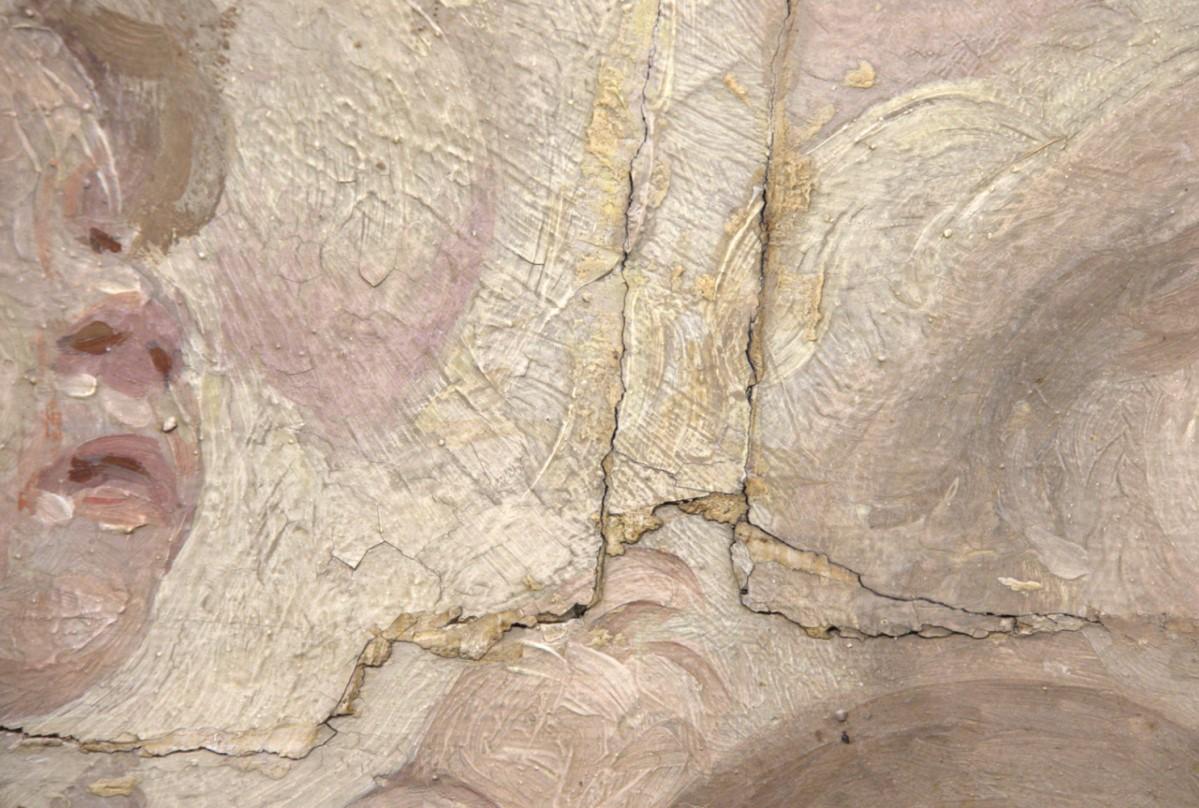 Detail of structural damage present in the stone support.
Aesthetic reintegration followed. Cracks, voids and losses were infilled and retouched using reversible materials and ethically sound methods: pigments bound in a medium designed to remain distinguishable at close range and removable without harm to the original. The objective was not to “repaint” Calì but to recover visual unity while preserving authenticity and ensuring accountability of the intervention.
Finally, the mural received a new protective coating. This varnish is reversible and formulated to avoid the yellowing associated with many historic coatings. It acts as both protection and a sacrificial layer, supporting future maintenance with minimal risk to the original paint.
Celebrated for his speed and assurance – and memorably nicknamed “the devil with the brush” – Calì could construct complex compositions with remarkably little preparatory work
Conserving a monumental apse mural is never only a technical exercise. It is an encounter with an artist’s decisions – materials chosen, strokes placed, risks taken – made tangible by proximity.
In a church that has witnessed both Sliema’s growth and the trauma of wartime destruction, Calì’s apse painting remains a focal point of devotion, artistry and communal memory.
The purpose of this intervention was clear: to stabilise original materials, remove what obscured the mural and accelerated its deterioration, and reinstate legibility through methods that remain reversible and fully transparent for future generations.
This conservation project was made possible through the generous sponsorship of Bank of Valletta and through the trust placed in PrevArti by the Franciscan community and the Sacro Cuor parish. It was therefore fitting that Calì’s restored apse mural was formally unveiled to the public at an official inauguration ceremony, to the evident joy of all those who call the Sacro Cuor parish church their home.
Pierre Bugeja is the lead conservator-restorer and founder of PrevArti.