From the Gospel: The final you’ll have to watch
The result of God’s verdict at the end of our lives is in our hands
16th Sunday in ordinary time. Today’s readings: Wisdom 12,13.16-19; Romans 8:26-27; Matthew 13:24-43.
In 1968, three astronauts circled the moon on Apollo 8. James Lovell was one of the first three human beings to see planet Earth, a white and blue ball, rising over the horizon of the moon. He looked at that ball, which was his home, with amazement, impressed that he could hide it – with over three billion people at the time – behind his thumb.
All around the Earth was the dark expanse of outer space, revealing how small our planet is compared to the universe. Yet, we often seem to think that life on this planet is all there is, such that, when things go wrong, we are completely thrown off balance. This is the issue that today’s main Gospel parable seeks to address.
Jesus recounts a parable about a man who sowed good seed in his field,but an enemy of his sowed weeds among the wheat. Contrary to his servants’ advice, the owner decided to let the two grow together, rather than have the weeds removed at once, directing the servants to separate the wheat from the weeds at the harvest.
In a world where injustices often prevail, where the presence of evil cannot be understood, and where people expect immediate remedies, the parable shows that the Creator’s strategy differs from ours. There is more to life than what we see on this white and blue ball called Earth and the Creator would have us wait until justice is served, every wrong is addressed and rewards are generously given.
What the Bible refers to as a reversal of fortunes is something God will surely bring about in his own time.
If one still expects to live on a planet free of adversity, one should ask oneself whether one is living on the right planet. The point of the parable is precisely the fact that the presence of evil is inescapable but that patience, faith and trust in God’s power and goodness will see us through.
The presence of evil is inescapable, but patience, faith, and trust in God’s power and goodness will see us through
On another occasion, Jesus said to his disciples: “I have told you these things, so that in me you may have peace. In this world you will have trouble. But take heart! I have overcome the world” (Jn 16,33). The assurance that he will have the final word is consoling, particularly if we are striving to live by his word.
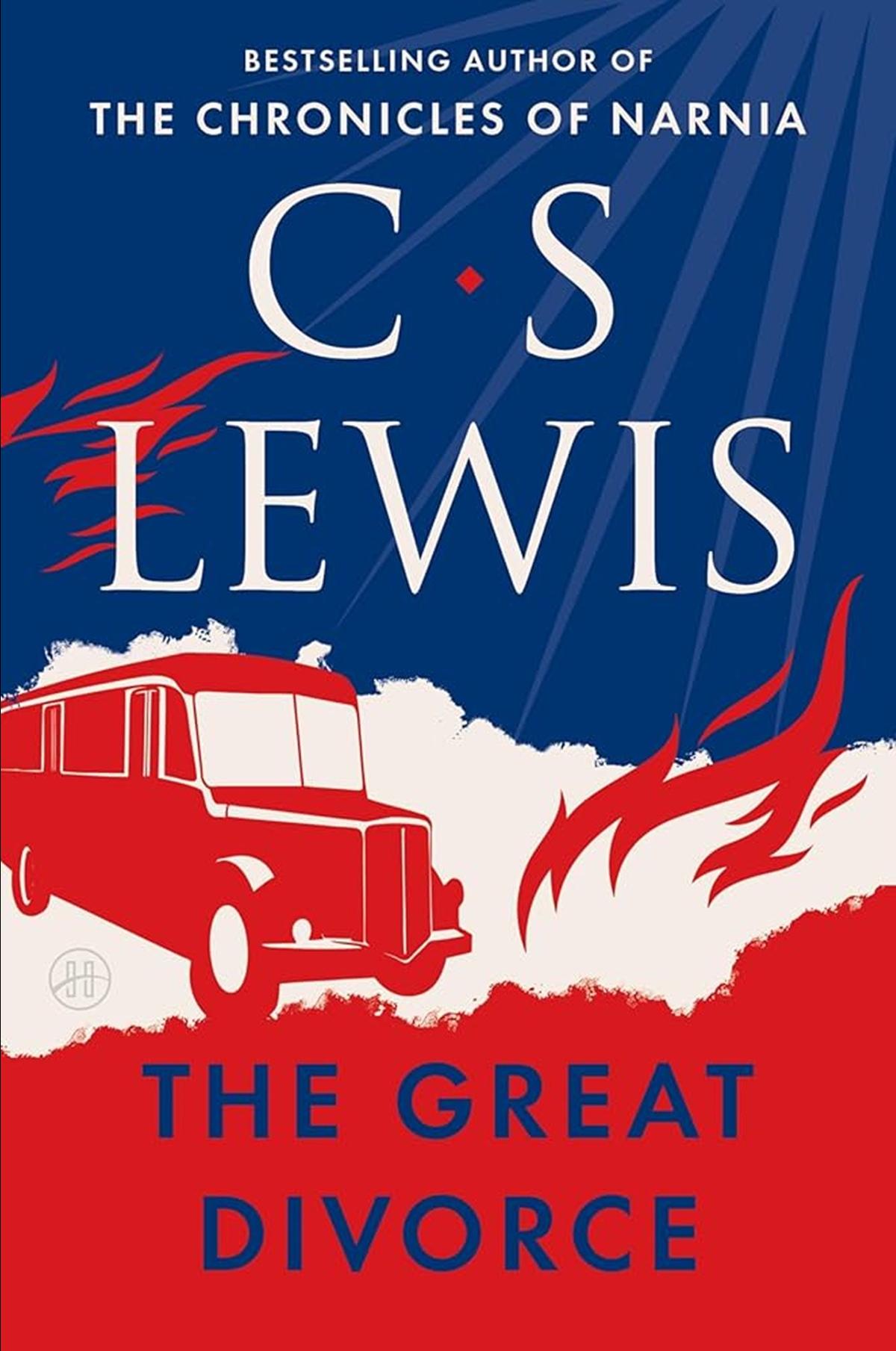 The Great Divorce, by C. S. Lewis.
The Great Divorce, C. S. Lewis’s novel published in 1945, connects to the end of today’s parable, plunging us into the reality of the separation between the evil and the good, who will dwell in the ghostly grey town (hell) and in heaven, respectively. Lewis points out that each person’s destiny is effectively based on their personal choice. He recounts a dream about the outcome of our lives on Earth, showing that things will fully make sense when viewed from the world beyond ours.
This Sunday evening, many will be glued to their TVs as the FIFA World Cup 2026 final game is played. The eyes of many aficionados will be on the timer on their screen, which will indicate the first 45 minutes, half-time, the next 45 minutes, added time, and possibly extra time. Indeed, time is of the essence. Goals scored in the last minutes could bring about an unexpected result, turning the losing team into winners and vice versa, thereby sealing their fate.
We are also to keep our eyes on the timer of our lives, acknowledging that every second is a gift from God, which we should wisely barter for what is truly profitable in view of eternity. God’s verdict at the end of our lives is the final we will all have to watch and what a blast it would be if the result of that verdict were in our favour. The result is in your hands.