Government urged to pause constitutional amendments debate for wider discussion
Opposition wants comprehensive constitutional reform
The Opposition on Tuesday urged the government to pause a parliamentary debate on a Bill on constitutional amendments affecting the judiciary so that a discussion could be held on wider reforms of the constitution.
The appeal was made by Karol Aquilina, the shadow minister for justice, after Justice Minister Jonathan Attard moved the Bill which provides for the appointment of a standards commissioner for members of the judiciary. It needs the approval of two-thirds of the members of the House to become law.
Attard told the House that the Bill was another step for more efficient and modern administration of justice.
Judges may be considered for appointment as President of Malta
Going over the provisions of the bill, he said, it removed the existing ban on judges being considered to become President of Malta. This, he stressed, did not mean that the government was ‘dangling a carrot’ before certain members of the judiciary, as the Opposition appeared to be implying in public remarks. Indeed, to think in that manner was insulting to judges. Furthermore, magistrates were already eligible to become President. And in any case, the appointment of the president needed the approval of two-thirds of the members of the House.
The Opposition, he said, was also unclear about its position on another amendment in this bill, which reformed the appeal courts. It was the Chief Justice who had lamented that constitutional cases currently could only be heard by a section of the appeals courts. Now three sections of the court would have a constitutional capacity and may hear constitutional cases.
In terms of this Bill, Attard said, a new procedure was also being introduced for the president and the chief justice to be consulted before the appointment of a new chief justice by parliament, with a two-thirds majority. This amendment, he said, followed a recommendation of the European Commission. Was the Opposition against this too?
 Justice Minister Jonathan Attard.
Maximum retirement age of judges being raised
The minister said that in terms of the bill, judges were also being given the option to work until they turned 70. This followed the views generally held by the members of the judiciary. Extending the maximum retirement age of judges to 70 from 68 would enable the country to continue to benefit from a wealth of experience, more so as a substantial number of judges were currently about to retire.
Standards Commissioner for the judiciary
The minister said the proposal to introduce a standards commissioner for the judiciary following a suggestion by the chief justice himself, followed by talks with the association representing the judiciary, with which an agreement had been reached. The minister tabled the agreement on the Table of the House, insisting this was not just a consultation, but an agreement. (See pdf below).
Importantly, the commissioner would be appointed by the Commission for the Administration of Justice – made up mostly of members of the judiciary. The incumbent would be a retired member of the judiciary or senior lawyer.
The public would be able to file complaints directly to the commissioner, who would investigate independently, without political influence. The commissioner would then report to the Justice Minister and the Chief Justice on whether further action was warranted. Ultimately disciplinary decisions would continue to be taken by the relevant committee within the Commission for the Administration of Justice, where the commissioner would act as prosecutor.
This amendment strengthened accountability and discipline, Attard said, overseeing the behaviour of members of the judiciary in cases such as unwarranted hearing postponements, delayed decisions, failing to explain sentences, failing to follow orders by the chief justice and behaviour which put the judiciary in a bad light.
“This is not an attack on the judiciary but a procedure against that small number whose behaviour can cast a shadow on the good name of the judiciary. Public confidence in the judiciary is essential in a democratic society,” Attard said.
The minister explained that in other provisions of the bill, the government would no longer publish the names of shortlisted nominees who were subsequently not picked by the President to be appointed judges or magistrates. The Chief Justice and the Chamber of Advocates had pointed out that the publication of the names of the shortlisted unsuccessful candidates had created an uncomfortable situation for those involved. The names would henceforth be recorded in a list available also to the leader of the opposition, to ensure transparency.
Concluding, the minister said this bill was built on respectful dialogue, and the government remained open for further discussion and reform in the interests of the country, the people, and the judiciary itself.
No government dialogue with the opposition
The shadow minister for justice, Karol Aquilina, noted that this bill needed a two-thirds vote to be approved. The practice for many years was that both sides of the House reached a fundamental agreement, before the parliamentary debate, on what changes were needed in the constitution, he said.
Unfortunately, this changed in the past few years, with the government moving Constitutional amendments without seeking dialogue with the Opposition. Such was also the case here.
Not only had the Opposition not been invited to dialogue with the government, but it was not given sufficient time to consult others for their views on the government’s proposals.
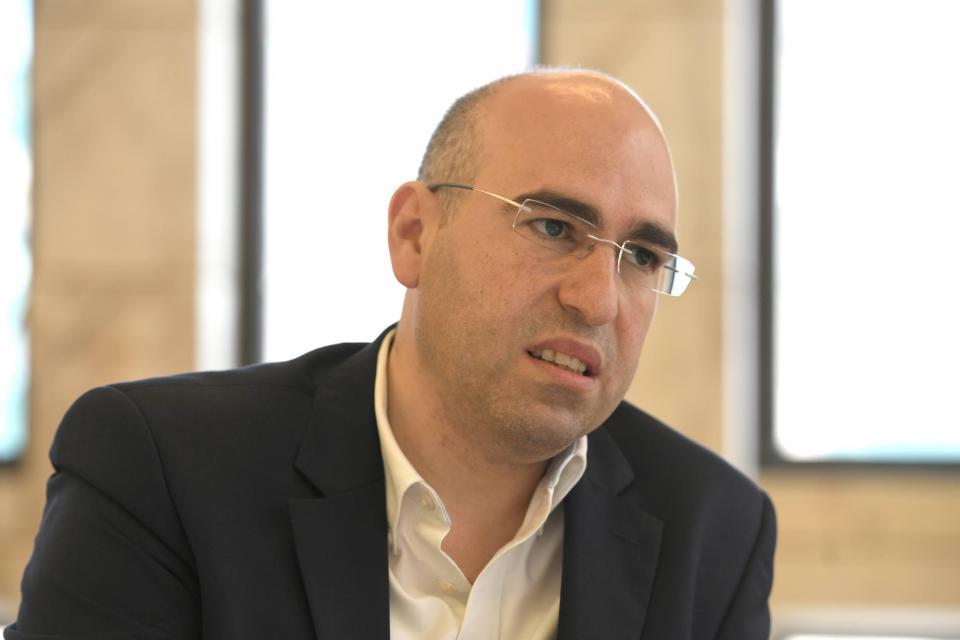 The shadow minister for justice, Karol Aquilina.
Going over the provisions of the bill, Aquilina said the Opposition had no objections to the reforms of the appeals court so that more sections of the court could hear constitutional cases.
The Opposition also generally agreed on the amendment for consultation with the outgoing chief justice, and the president, on the appointment of a new chief justice.
On publication of the names of nominees shortlisted for appointment to the judiciary, Aquilina suggested that the nominees could be given a choice as to whether their names could be published.
On the extension of the retirement age of judges, Aquilina said he could not understand why the government had delayed this amendment when it knew of the looming situation for a long time. He said further discussion was needed on this provision, particularly concerns raised in some quarters.
Standards Commissioner and independence of the judiciary
On the proposed appointment of the standards commissioner, Aquilina said he did not wish to express an opinion, preferring to leave the door open for dialogue. Some, he said, had expressed concern that as written, the amendment could impinge on the independence of the judiciary. Their concerns, he said, should be given serious consideration.
Furthermore, was what was being proposed also what the chief justice had proposed? In particular, the bill said that when the commissioner recommended disciplinary action, the chief justice of the justice minister could still decide on no further action. Did this mean the commissioner would not be trusted?
Also, what was in the bill was not an exact reflection of what was agreed between the minister and the association representing the judiciary. Again, there was a need for further discussion.
Need for comprehensive reform of the Constitution
Aquilina said that while the opposition may agree with some elements of the bill and disagree with others, it was against piecemeal amendments and wanted a comprehensive reform of the constitution.
This was, after all, something which the government had promised years ago, and which had not come about.
A constitutional reform committee, chaired by the president, was currently not meeting, and the Opposition wished to see it functioning.
The political parties, and other members of civil society, should be invited to make their own reform proposals.
Among other things, the Opposition wanted to see constitutional amendments on:
- The composition and functions of the Electoral Commission, with the chairman appointed by a two-thirds vote in the House;
- A reform of the Broadcasting Authority.
- Implementation of the Daphne Caruana Galizia inquiry findings;
- A reform of public broadcasting,
- Recognition of the right to a proper environment:
- Reform in the appointment of the Police Commissioner and the Attorney General;
- Setting up of a House committee on justice;
- A reform of parliamentary standing orders to give more rights to the Opposition.
His appeal, Aquilina said, was for the government to pause this bill for talks to be held under the guidance of the President to discuss wider reforms of the Constitution suggested by both the government and the opposition.