Watch: ‘Grass will grow back, give it time’- Micallef about Ta' Qali gravel plan
Head of Unit at Ta' Qali National Park appeals for critics to have patience
The controversial grass at the Ta’ Qali picnic area will definitely grow back, impatient critics just need to give it some more time, Jason Micallef has said.
There has simply not been enough rainfall yet and the grass will sprout closer to winter like it always does, he told Times of Malta on Wednesday.
“It’s the natural process. It will likely grow back by the beginning of winter, which is around mid-next month, but we need more rainfall because it has been quite dry so far,” he said.
“The more rain, the quicker it grows. But it has nothing to do with the gravel.”
Micallef, who is the Head of Unit at the Ta’ Qali National Park, agreed to join Times of Malta at the picnic area where controversy, unlike the grass, has yet again resurfaced.
Last summer, activists and politicians hit out at Micallef for covering large swathes of the picnic area with gravel, and, over the past week, they said that, despite his promises that the grass would grow back after the autumn rains, photos from the gravel-covered sections show it has remained largely barren.
Times of Malta presented Micallef with an aerial photo taken this week, showing lush greenery flourishing in the other areas around Ta’ Qali, but none on the sections that are covered in gravel in the picnic area.
Micallef refuted any claim that there was an issue with the gravel, arguing that even sections that had not been covered in gravel were showing minimal signs of sprouting.
“Look at this here,” he said as he squatted to pick up some soil from a patch that was not covered in gravel.
“It’s all soil on the surface, no gravel at all, and yet there’s no grass here either. How do you explain that? It’s clearly a matter of a lack of rainfall. It’s the natural process.”
Even a Times of Malta fact-check published in September confirmed the grass should be back, he argued.
That fact-check consulted five experts, all of whom concurred that the gravel is commonly used for such purposes and should not prevent grass regrowth.
The report also noted that attempts to obtain specific information about the gravel from Micallef’s office were unsuccessful. It concluded that the true test would come a few months later, in winter, when it would become clear whether or not the grass actually grew back.
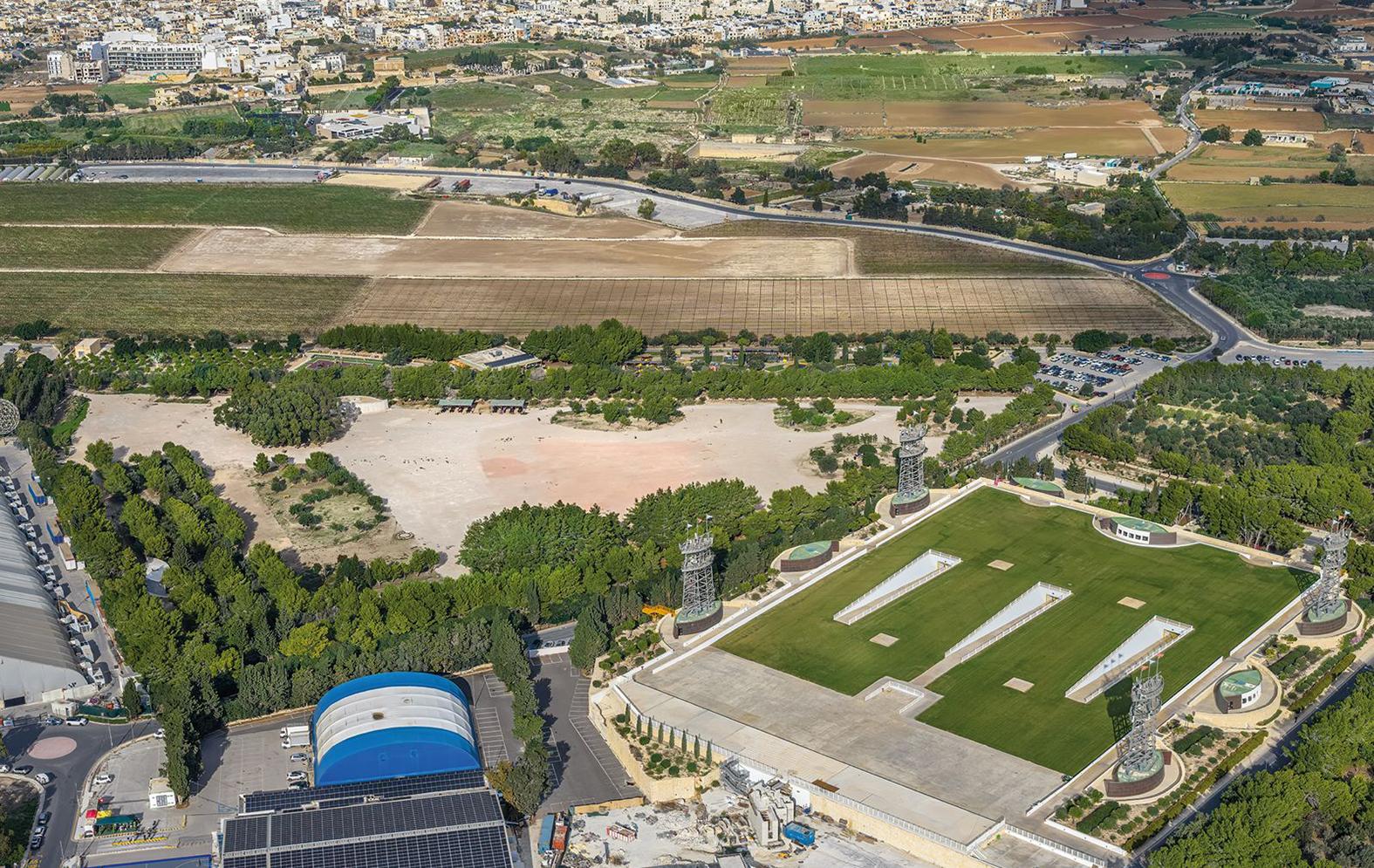 An aerial photo of the area taken earlier this week.
‘It was much worse before’
Micallef said the gravel and sand mixture – which he described as standard material used in parks globally – was applied primarily to level the ground and prevent flooding.
The picnic area was in a “much worse state” before his unit took responsibility for the Ta’ Qali National Park, he said as he fished out old photos of the area and compared them to current images.
It is always bone dry around this time of year, he said, but now the area is cleaner and much more pleasant for visitors, after the installation of picnic benches and other infrastructure.
And, now, his office is installing 32 new toilets, public lighting and a CCTV system so people can feel safe and enjoy the park after dark.
Bowsers after sunset
Micallef also addressed the bowsers watering the area after sunset, arguing it had nothing to do with the concern that the grass would not grow back. He said they have been watering the area with a bowser for three or four years as part of their maintenance works.
It is just that nobody bothered to film it until now.
“Do you know of anyone who has a field or a garden with vegetation and does not water it,” he asked as he confidently walked around the park.
He said they even bring in the bowser during summer to keep the dust down, making the area more enjoyable and reducing any health risks.
He hit back at the Żebbuġ mayor’s claim that only desert-friendly Bermuda grass is sprouting from beneath the gravel. He said there are several kinds of grass growing in different patches and, though Bermuda grass is there, it has always grown in the area after summer.
Micallef explained that, after a scorching summer and some mass events, all that stomping compacts the soil. It needs to soak up a lot of water before it can soften up again for the grass to take off.
He said that areas with more shade or water retention, such as patches under the trees, are already looking greener.
He also shut down the idea that the events ruined the soil, confirming the area has always been and should remain open for mass events.
‘More transparent than transparency’
Micallef was also criticised for withholding information, studies and specifications about the gravel project from activists, journalists and political party Momentum, but he insisted it was not because he had anything to hide.
“We are transparent more than transparency itself because we honestly have nothing to hide,” he said. However, he did not offer any studies or specifications.