Grief at high altitude: Air crashes with a Malta connection
A brief history of air tragedies and the lives lost in the decades after World War II
This week marks the 70th anniversary of the Avro York crash around Il-Ġibjun, Żurrieq in 1956. The technical causes and effects of this disaster have been narrated many times, in newspaper articles, books and online publications.
However, this article will also revisit various air incidents which involved Malta in the decades after World War II. There was a sizeable smattering of these in the 1950s, 1960s and 1970s and this seems to be as good a place as any to recollect them.
This piece is not meant to be a chronology of events but will reach more into the human element – the quirks of circumstances and their effects on our lives, which tend to reinforce our belief in individual destinies.
In the early afternoon of Saturday, February 18, 1956, Avro 685 York C.1 G-ANSY was on its way from Luqa to London Stansted Airport, carrying troops stationed in the Suez Canal Zone to the UK. Most of the young men were returning home after completing their national service, The plane had been manufactured in 1945 and was purchased by Scottish Airlines Limited from the RAF in the mid-1950s and converted by the company.
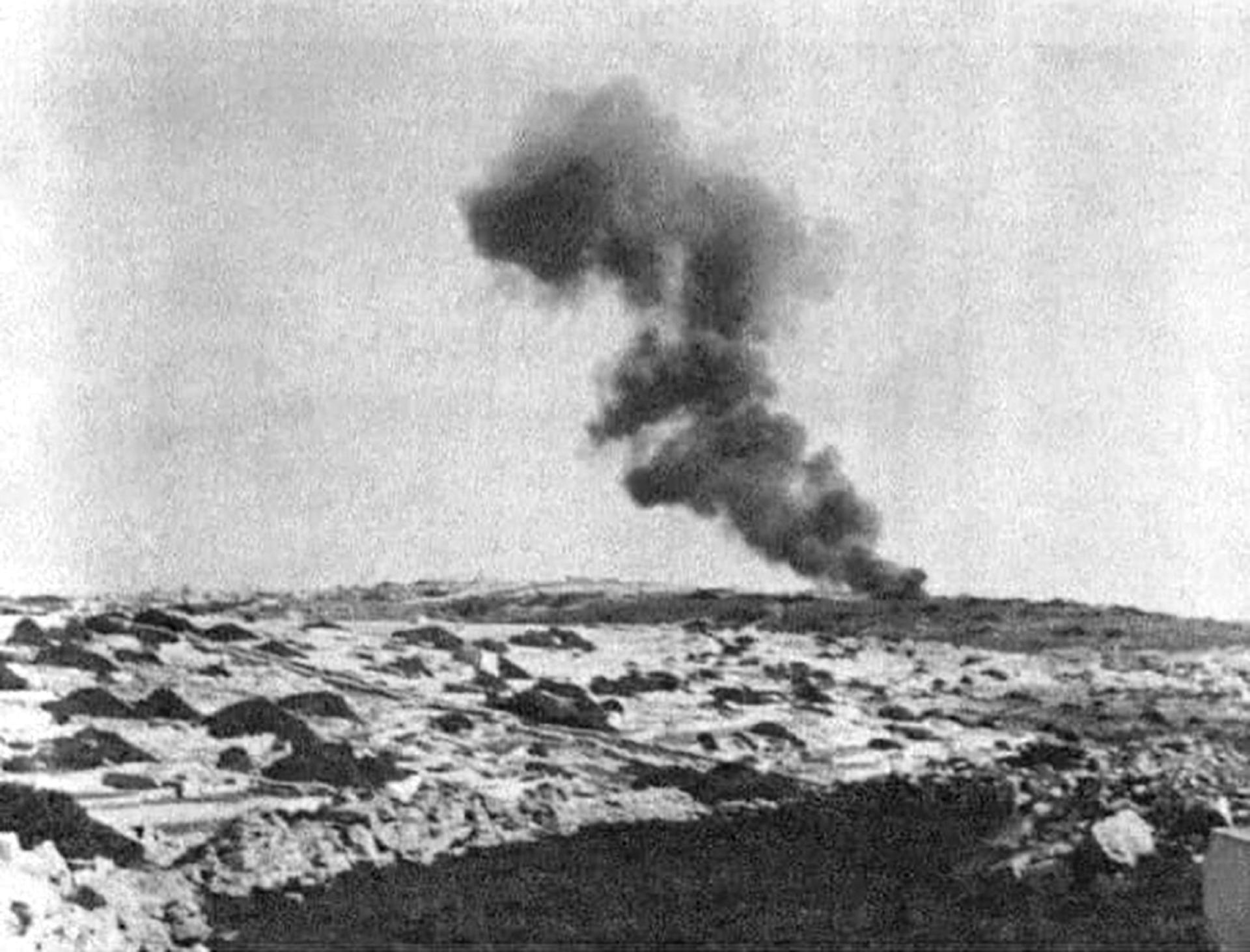 Smoke rising from the crash site shortly after impact. Photo: The Bureau of Aircraft Accidents Archive
In an age when voyages by sea were long and arduous, there had been a draw-out-of-a-hat of 12 names. These were to be the “lucky ones” who would arrive in England much more quickly by air. The passengers aboard the Avro comprised 44 airmen, one soldier from Glasgow and a crew of five: captain Frank Coker, first officer Robert Gorvin, navigator Reginald Beechey, radio officer John Hay and air hostess Jillian Upham. Gorvin and Upham were a couple and planned to marry two months from that dreadful day in February, at Eastertime.
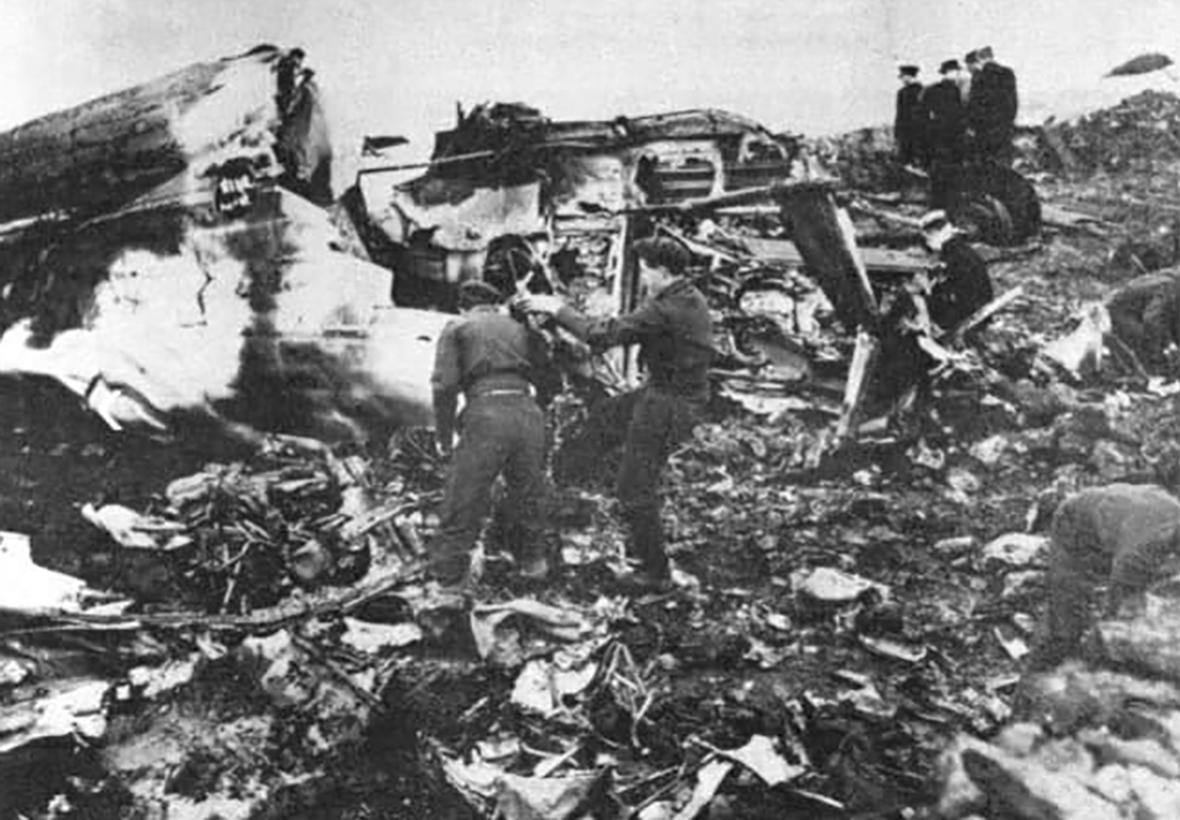 Men clearing debris at the crash site. Photo: The Bureau of Aircraft Accidents Archive
A member of the armed forces was a passenger on the outward flight of the Avro from Stansted to Malta, which took place on the same day. Post-disaster, he observed that he had pointed out to Ms Upham what seemed to him to be defects with the port wing of the plane. The flight, however, proceeded on its journey and, moments after taking off for the lap Luqa Airport to Stansted, it floundered, killing all 50 aboard.
Later that year, on April 30, a second incident unfolded, whose outcome could have easily been as grim as the February tragedy.
Avro 685 York C.1 G-AMUL crashed, close to take-off, outside London. It was manufactured in 1946 and like the G-ANSY, belonged to Scottish Airlines, which had overhauled it. The War Office had chartered the plane to transport RAF servicemen and their families from Stansted to Habbaniyah, Iraq.
Although the incident did not happen on Maltese territory, there is a connection as the stopover was meant to be at Luqa Airport. Fifty-four passengers were on board and, although a major catastrophe was averted, two died in the crash: an airman and a child.
Why should Malta not honour the events summarised in this article by way of memorials or street names?
Luqa 1952
Just over three years before the Avro York crashes, December 30, 1952, dawned a mild day without aggravating conditions, typical of many of our winter days in Malta.
Just before 11am, four flight sergeants were preparing for a routine training sortie in Avro Lancaster B Mk III GR SW344. Crewing the aircraft were captain John C.E. Smith, co-pilot Geoffrey Glanville, radio operator John Crawford Logan and flight engineer Wilfred Morris. Overall, they were a seasoned crew but for Glanville this was his first flight captaining an aircraft.
The aircraft lifted off runway 06 at Luqa Airport. Almost immediately, one of the engines of the four-engined plane started cutting and was soon ablaze. Captain Smith assumed the controls and attempted a turnaround to Luqa Airport on the remaining three engines. By this time, the plane was operating below the minimum altitude and minimum safety speed. The outcome was a careering trail of some 275 metres down a row of houses in St George’s Street, Luqa, ultimately igniting in a ball of fire on New Street.
The Zarb house in Luqa was situated on two streets: the front looking on St Andrew Street while the garden and garage backed on New Street. There were eight siblings in the household, all single.
Michael had recently returned from the US and was living in the garage. As the Lancaster crashed, part of its wing landed on the garage, destroying it, while the aviation fuel from the wing tanks caused a combustion which caught up his 60-year-old sister Maria, who was slowly descending an external flight of stairs leading from the roof to the garden.
The façade of the Seychells’ house in New Street collapsed, rendering the family homeless but, luckily, 10-year-old Charlie and his baby brother were unhurt. However, a young girl named Rita sustained burns as did an elderly gentleman, Andrew Zammit.
But a villager who rushed in the demolished garden, found two crew members, stricken and still strapped to their seats.
Crawford Logan died instantly, Glanville some hours after and Morris died the next day.
Maria Zarb died on the first day of January 1953 while Smith survived.
El Adem 1961
In mid-September 1961, a contingent of 210 Maltese soldiers was deployed in Libya, on a mission to construct a road leading to a new port. After four weeks of gruelling work, in the evening of October 10, the last group of some 42 was waiting to board the flight from El Adem to Malta.
The transport aircraft was a Handley Page H.P. 67 Hastings C.2. A particularly shaky take-off ensued, during which the plane crashed, broke in half and burst into a wall of flames. The back door of the plane was ripped away and the soldiers who followed their instinct to jump off from the inferno perished as they were engulfed in aviation fuel.
Survivor Carmelo Borg from Fgura, interviewed in January 2013, recounted how, while scurrying to escape from the plane’s back door, he heard a call for help from a fellow soldier whose legs were caught in a seat by the emergency exit. He turned back to help him and, together, they got off the aircraft through the emergency door, climbing onto the wing, where the heat was almost unbearable.
Fifteen Maltese men lost their lives – sappers, corporals and a sergeant hailing from different localities in Malta – along with two British servicemen. Twenty-two soldiers survived, among them Carmelo, although they several suffered serious injuries.
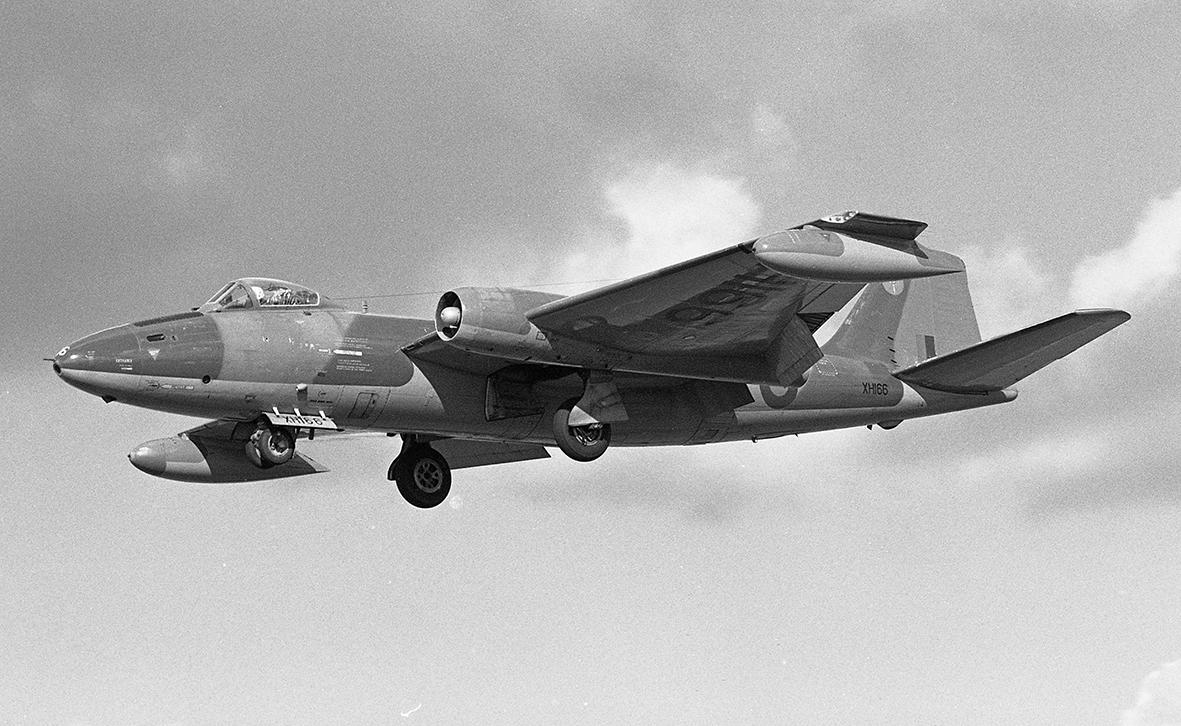 English Electric Canberra PR.9 XH166. Photographed by John Visanich on January 2, 1974.
Marsa and Safi 1969
The 1960s have been described as ‘swinging’ but the first quarter of 1969 was black as far as aviation accidents were concerned. The year opened with English Electric Canberra PR.9 XH164 carrying out a training exercise on January 7. While approaching Luqa Airport, passing over Grand Harbour, it suddenly rolled to port and plunged inverted to the ground, close to the Addolorata Cemetery.
Then, in March, another crash happened in near-identical circumstances. The protagonist this time was English Canberra PR.9 XH130. Having departed from Cyprus, the aircraft was preparing to land at Ħal Far when it rolled to port and, inverted, crashed in a field known as Ta’ Ħlantun, near Safi.
Four crew members died in the two incidents, as well as a horse when one of the crew came down through the stable roof. The young men – flight lieutenants Anthony Prowse, Peter Greenaway, Anthony Thomas and flying officer Robert Newton – are buried close to one another at the Mtarfa Military Cemetery.
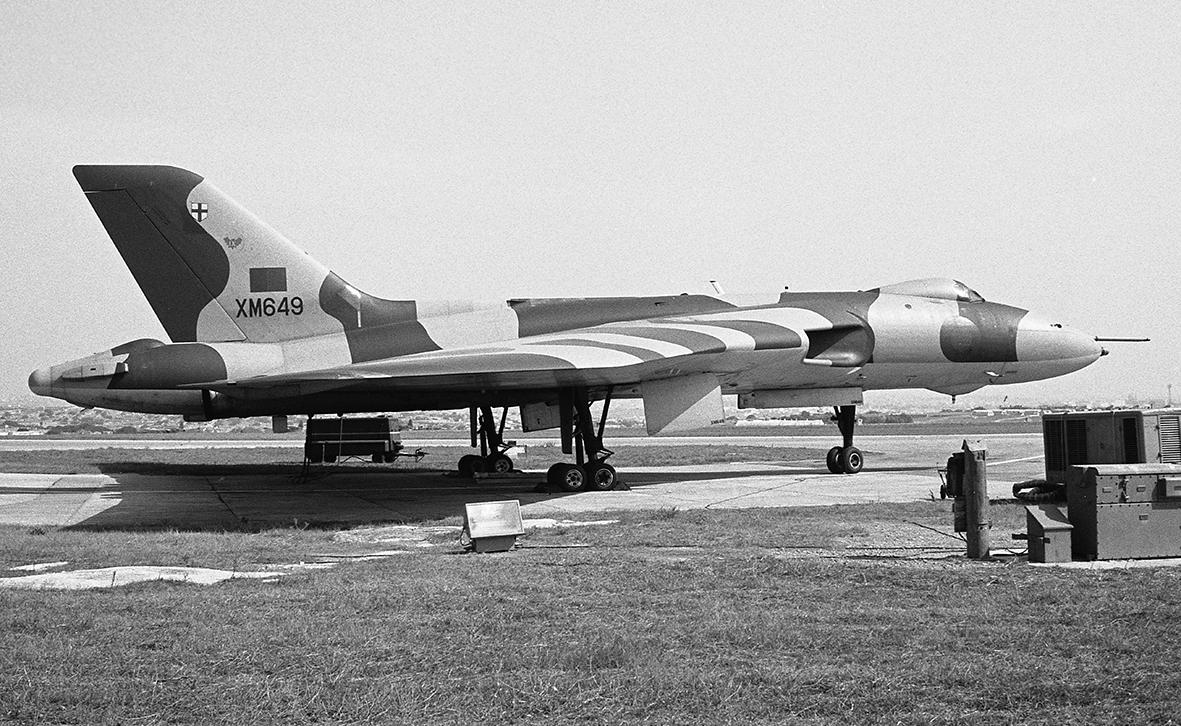 Avro Vulcan B.2 XM649 from No.9 Squadron, RAF Luqa. Photo taken at Luqa, by John Visanich, on August 15, 1976.
Żabbar 1975
In the early afternoon of October 14, 1975, Avro Vulcan B.2 XM645 crashed over Sanctuary Street, Żabbar and the adjoining fields. The co-pilot, flying officer E.G. Alexander, was piloting the plane in the approach stage to Luqa Airport runway 24. He was a replacement, the regular crew member being on leave. Moreover, the RAF report about the incident concluded that Alexander was not sufficiently trained in landing on a relatively short runway and one with a slope to it.
A spectator on the runway happened to be watching the Vulcan trying to land that fateful afternoon. He said that the plane made a hard landing, touching down 46 feet short of the runway and severely damaging the undercarriage which, ultimately, dropped out on the runway.
Captain Alcock took over the controls and, by putting the four engines on full power, he forced the damaged machine back up in the air. His plan was to attempt a turnaround to the runway and make a crash landing. But it was too late: while on the inbound track of the circuit, the aircraft exploded over Żabbar. The captain and co-pilot ejected an instant after the explosion.
The Vulcan was by now virtually out of control and the pilot had already ordered the crew to abandon the plane. When a pilot is ejected from an aircraft, it means he is ejected seat and all – a few seconds later, he and the seat separate, he descends to earth by parachute and the seat makes its own way down. But, in Alcock’s case, the seat failed to separate and he parachuted down still attached to his seat. He and Alexander landed in an area known as Tal-Plier, limits of Żabbar.
Flight lieutenants Stanley Lambert and Tony Pullman, squadron leader David Beeden, chief technician Gordon Barrow and sergeant Peter Atkins, who were seated at the back, did not have ejector seats. Normally, the entry and exit of a Vulcan is via a hatch with a ladder placed under the nose of the aircraft. The ladder is not stowed away in the hatch and, for obvious reasons, a ladder is not used in an emergency such as abandonment of the airplane.
For the rear crew that day, there just was no time to open the hatch door and slide off into the void, hence the crash claimed the lives of all five. The civilian lady killed was Vincenza Zammit, who was crossing the road when she was hit by a cable cut by the falling wreckage.
Conclusion
With its death toll of 50, the Avro York incident at Nigret, Żurrieq is considered the worst disaster in Maltese air history, that is, until The EgyptAir hijacking in 1985 − entirely different in nature – cast its long shadow over the island.
The incidents described here are long past but they are landmarks in Malta’s aviation story, albeit grim ones. As such, respect and commemoration are due in respect of the people and families that were impacted.
In London, the Bloomsbury/Russell Square district abounds with housefronts displaying blue plaques commemorating artists, authors, politicians, even minor ones. So why should Malta not honour the events summarised in this article by way of memorials or street names?
There is a beautiful memorial to the 1956 Avro York crash at Ġnien il-Ġibjun and the Sanctuary Museum in Żabbar preserves photographs and artefacts of the Avro Vulcan incident. I am not sure about the others but I sincerely hope they, too, are remembered. As the plaque in Sanctuary Street, corner with St Theresa Street, in Żabbar concludes “...the people of Żabbar set up this lasting memorial”.
Acknowledgements
This article would not have been possible without reference to many military, literary and oral sources which recorded and analysed the mentioned events over the years. The cooperation of the National Memorial Arboretum at Alrewas is acknowledged. The author is particularly grateful to John Visanich for reviewing the text, correcting inaccuracies and providing valuable insights, as well as most of the pictures. Any errors are the author’s.
Catherine Vella is a part-time parish researcher. She works in the private sector.