It happened in April: Destruction, death, resilience in the blitz
On April 2, 1942, Air Field Marshall Albert Kesselring ordered the Luftwaffe to begin its main attack to bomb Malta into submission
Between mid-June 1940, when Italy entered World War II on the Axis side, and around the middle of 1943, when war receded from the Maltese islands, Malta suffered over 3,000 air raids.
The worst certainly occurred in January 1941 (known as the HMS Illustrious blitz), and during the first months of 1942, particularly in March and April, when the Axis powers made an all-out effort to bomb Malta into submission with a veritable blitzkrieg.
In April 1942, together with other important buildings, two iconic buildings were hit by bombs, but with contrasting results.
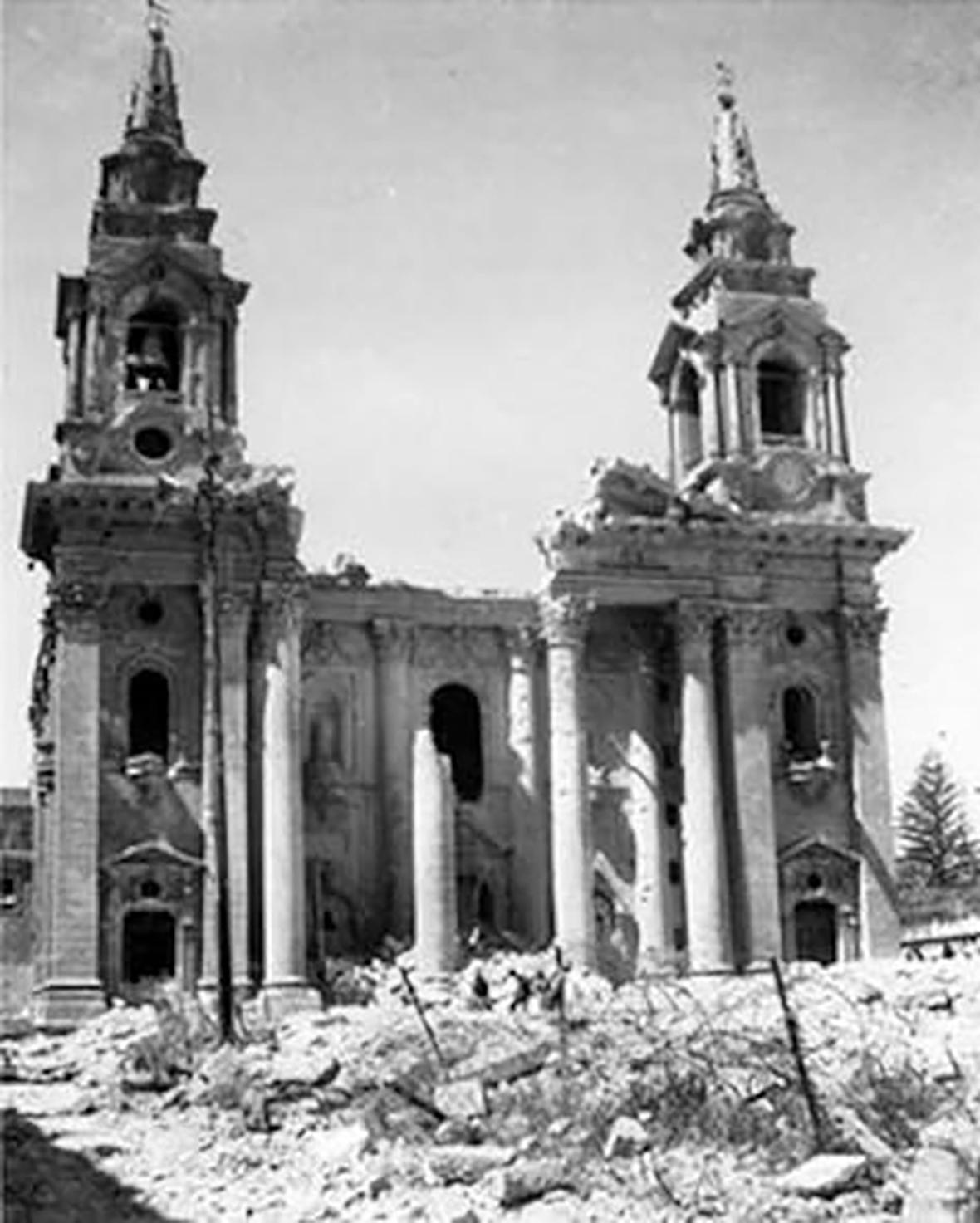 St Publius parish church, Floriana, after it was severely damaged during bombing in April 1942.
It is true that most attacks were directed against military objectives; the island being so small, populated areas could not escape destruction. The same holds true for churches and other buildings next to the targets, resulting in extensive areas at Cottonera and Valletta suffering damage.
These included several auberges that had been built by the Order of St John, and St John’s Co-Cathedral, which, fortunately, escaped with only slight damage to the German chapel (ironically), the belfries and the main portico.
Similarly, other localities suffered similar damage, two such cases being Luqa, whose parish church was completely destroyed, and Floriana, whose church suffered severe damage.
Air Field Marshall Albert Kesselring’s aim was to bomb Malta into submission, and he ordered the main attack to begin on April 2, which also happened to be Maundy Thursday. Malta was a thorn in Germany’s side by continually attacking the important Axis convoys to the Afrika Korps in North Africa; hence the need to neutralise the island.
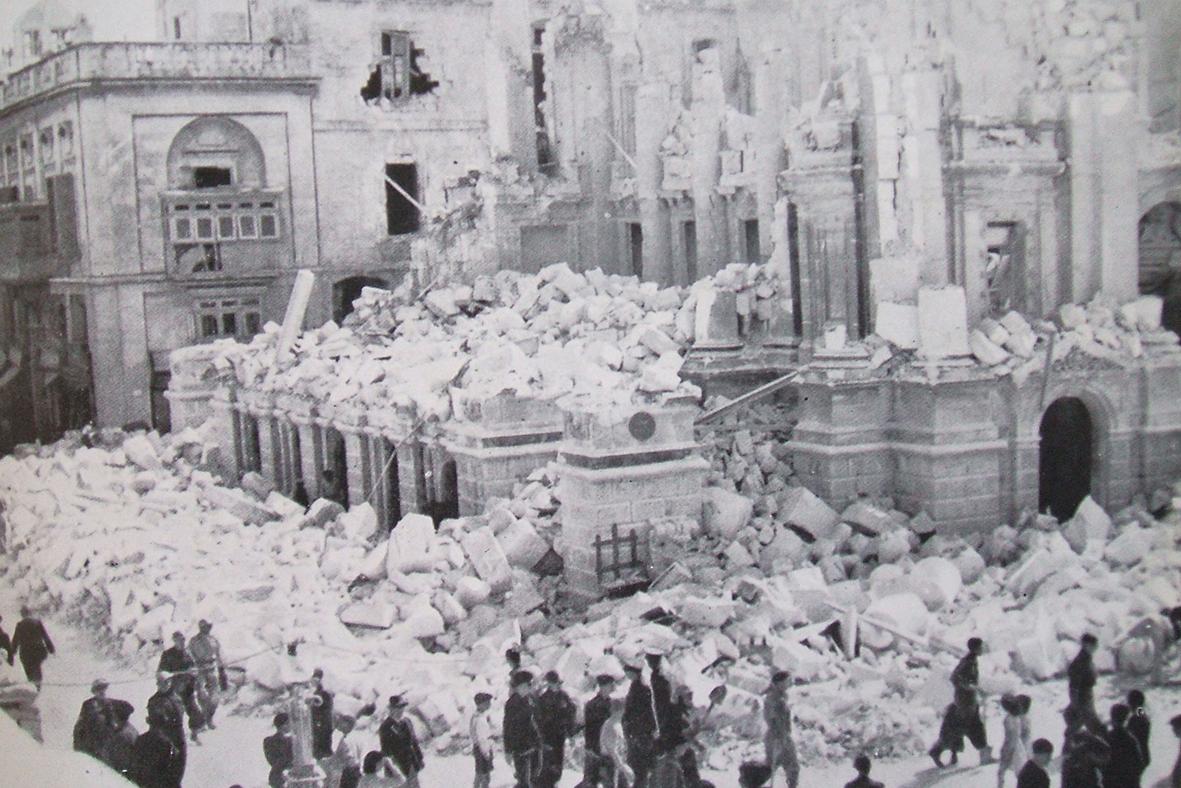 The devastated Royal Opera House shortly after it was bombed with direct hits on April 7, 1942.
It has been reckoned that August 1942 was the worst month Malta had to endure. Because of the raids, even the council of government did not meet between March 25 and April 28 after the governor’s palace in Valletta had received a direct hit on February 15.
Sliema resident Charles B. Grech published vivid recollections – in English and Maltese – in his wartime memoirs. He was a young man at the time. He remembered that, on April 1, Wednesday of Holy Week, “on arriving at the junction of St Mary Street, where there is a niche dedicated to St Mary, Fort Manoel’s guns engaged the enemy".
"I looked skywards to see whether anything was visible. I saw a Ju88 approaching from the direction of Valletta, at a height of about 3,000 feet.
"I wanted to run for cover, but I had no time [to do so], so I remained where I was, clinging to the wall. I did not dare move from where I was, lest I would be machine-gunned. I saw the aircraft releasing two bombs above the submarine base at Manoel Island.”
Cecil Bartoli, now a centenarian, some of whose recollections were the subject of an article by Emma Borg in the Times of Malta of February 22, 2026, recalls that in those days he had one persistent wish: “All I wanted was a camera to capture what I saw!”
He sought vantage points during air raids, including beneath the bells of the Floriana parish church. He recalls: “I was hiding beneath the Floriana church bells as protection from the bombs… I saw a bomb falling on Valletta, and it was only later that I learnt that it hit the opera house.”
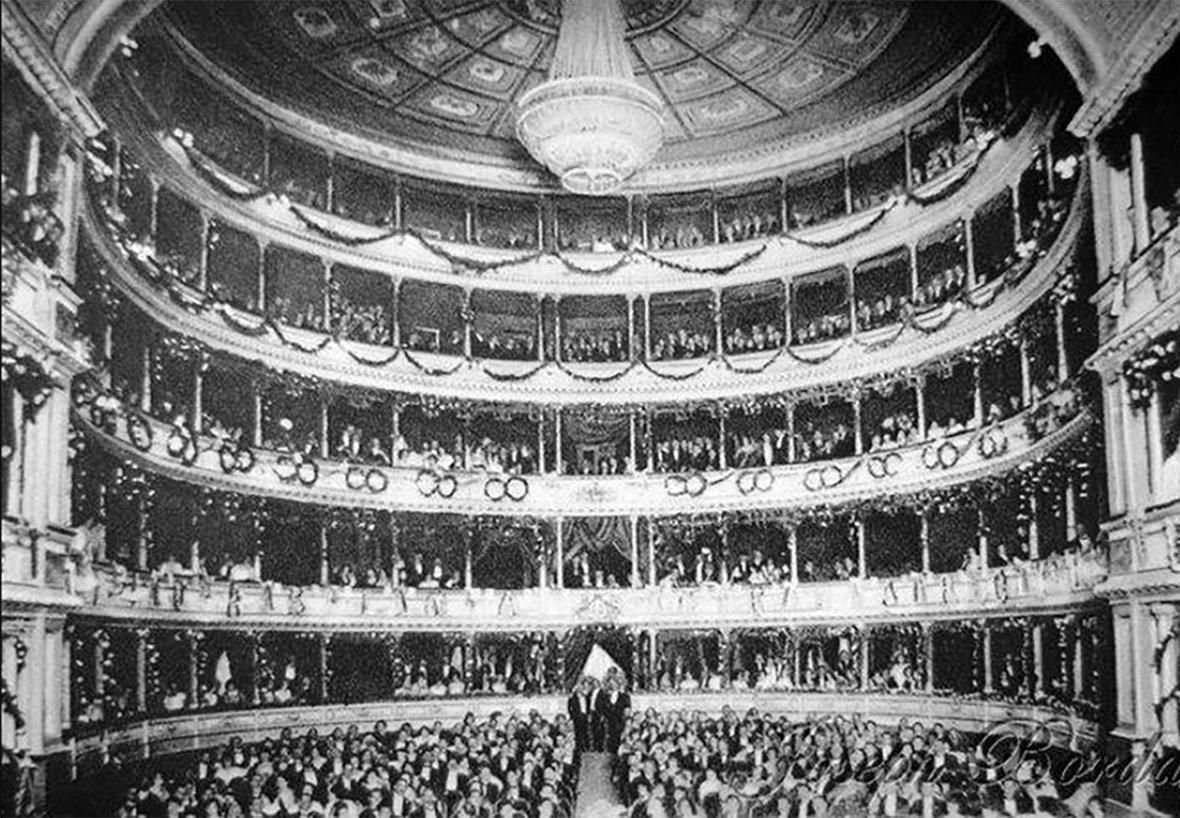 The Royal Opera House interior before the outbreak of the war.
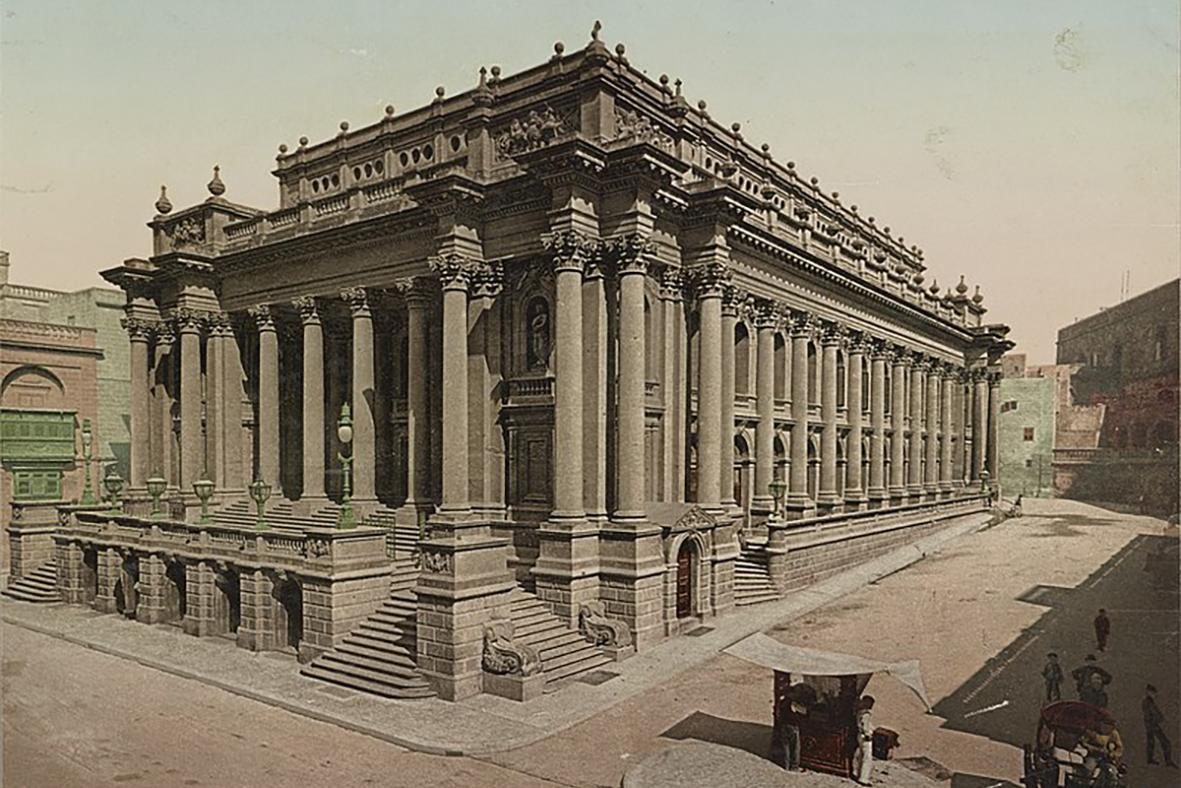 A colourised picture of the exterior of the Royal Opera House in all its glory in pre-war years.
On Easter Sunday, April 7, the Luftwaffe carried out no less than 10 air raids, one of which partly destroyed one of Malta’s architectural jewels, the Royal Opera House.
The fifth air raid of the day lasted from 5.55 to 7.18pm. During the course of the raid, a bomb hit the Opera House and partially destroyed it, with the resulting debris blocking the nearby railway tunnel shelter.
People could not believe their eyes, with one particular person recounting that “eventually the noise subsided and the ‘all clear’ rang out. As they clambered up the steps [of the shelter], their first sight was of the Royal Opera House – or rather, what remained of it.
“This magnificent theatre, considered by many to be the finest building in Valletta, now lies in ruins. It was just a heap of rubble, not one wall was standing – just a few arches left. I couldn’t believe it. The Royal Opera House was like Covent Garden to us.”
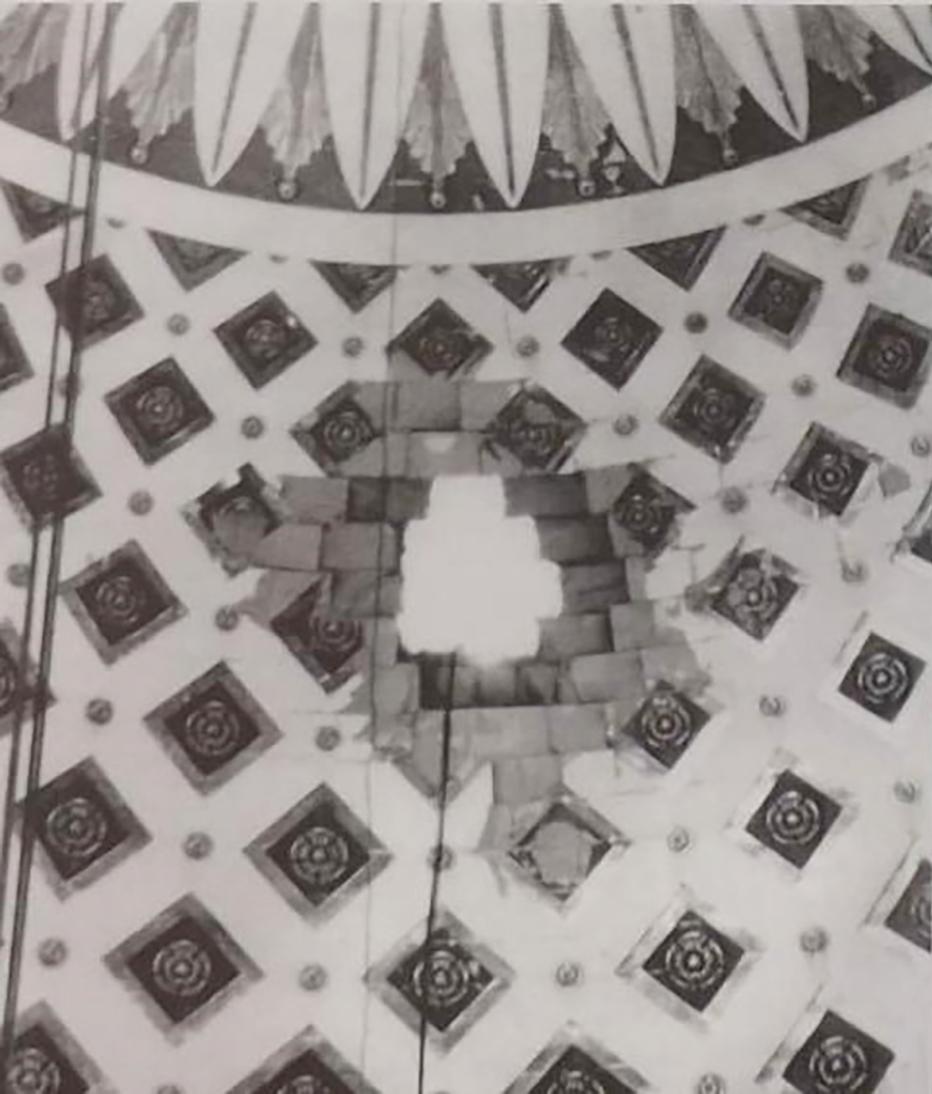 The hole left in the dome of the Mosta Rotunda church by the unexploded bomb on April 9, 1942.
Although the initial attacks on April 9 were relatively small, it was a different story in the afternoon and the evening.
The airfields were targeted by about 100 enemy aircraft, with about 75 of them attacking Luqa airfield; nine of them left the formation and bombed Luqa, destroying a large part of the parish church, which had to be completely rebuilt after the war was over, and devastating the village centre, with resultant heavy casualties.
Agnes Azzopardi, a future respected head of school and a colleague of the present author, recounted that “men suddenly seemed to spring from nowhere and rushed to the scene of the tragedy to render assistance. In the meantime, bombs began to rain down again, and those of us who had stayed behind in the shelter feared that the people who went to help, my father among them, would be killed too.
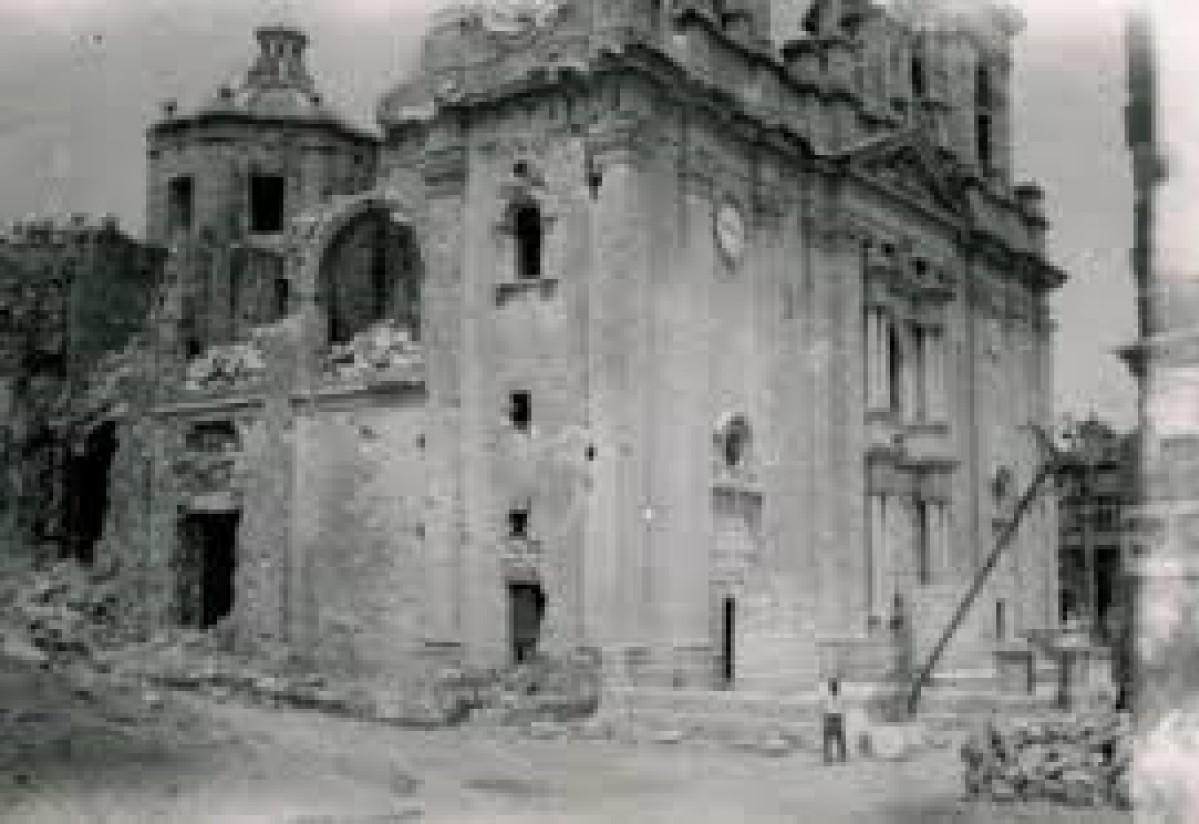 Luqa parish Church after it was hit by bombs in April 1942.
“None of the men seemed to care about the great risks they were taking as they struggled to save possible survivors. In fact, there were a few survivors, but 32 persons died on that unforgettably tragic day.”
Ms Azzopardi was referring to a shelter in Pope Innocent XII Street where 23 out of 32 persons were tragically killed.
On the same day, Ta’ Qali airfield was attacked by about 80 aircraft. A few of them also attacked the nearby village of Mosta.
At approximately 4.40pm, a bomb penetrated the dome of Mosta parish church and bounced on the floor below without exploding, luckily averting a tragedy, since there were many people in the church.
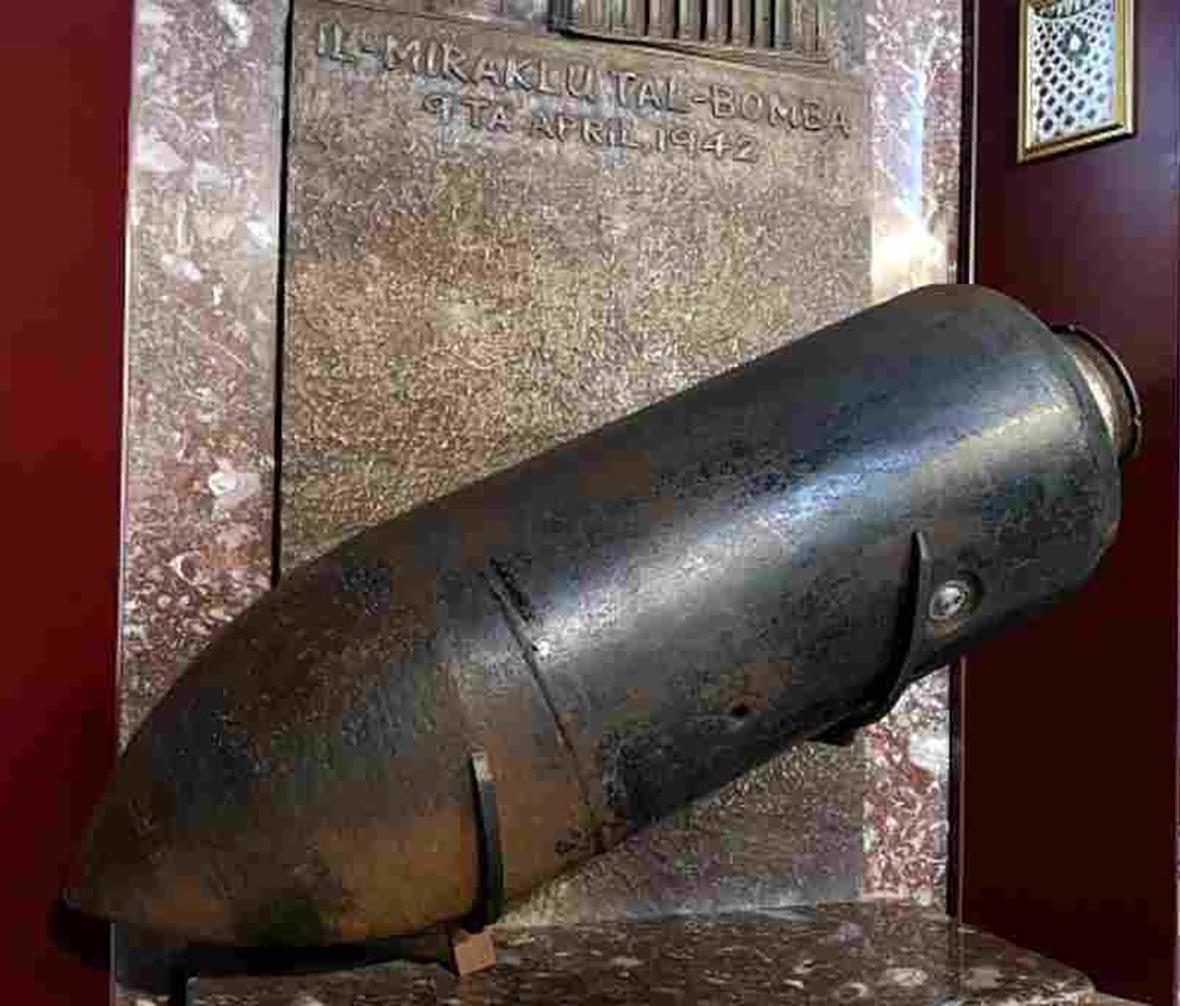 The replica of the bomb that pierced the Mosta dome, kept in the sacristy as a memorial to an event many people consider to have been a miracle.
Rev. Salvo Sammut later recalled that “there were about 300 parishioners inside the church, scattered around the church, with the majority having moved to the side walls as the attack intensified. At one stage, a woman picked up her chair and ran with it into the sacristy, and others followed her”.
As Fr Sammut left the confessional, several persons went up to him and asked him for absolution.
“At that moment, a bomb pierced the roof with a loud crash, grazed the corner of the lunette with the painting of Christ and the Apostles [by Giuseppe Calì], chipping part of the stonework, hit the ground with a bang, and rolled towards the pulpit, coming to rest beneath the 12th station of the Via Sacra. Several boulders rained down to reveal a large hole in the ceiling.”
The bomb was later taken out for a controlled explosion. After the war, the shell of a similar bomb, together with an inscription describing the event, was placed in the Mosta church sacristy to commemorate what many people are convinced was a miracle.
On Easter Sunday, the Luftwaffe carried out no less than 10 air raids, one of which partly destroyed one of Malta’s architectural jewels, the Royal Opera House
The bombing campaign brought mayhem to the island: electricity and water supplies were invariably cut off, telephone lines were down, and so was the Rediffusion system. Many roads were blocked with rubble and debris, and much of the island’s communication system was cut.
But the population’s resilience was the order of the day, and in a fitting recognition, on April 15, 1942, King George VI awarded the George Cross to the entire island of Malta “to bear witness to a heroism that will long be famous in history”.
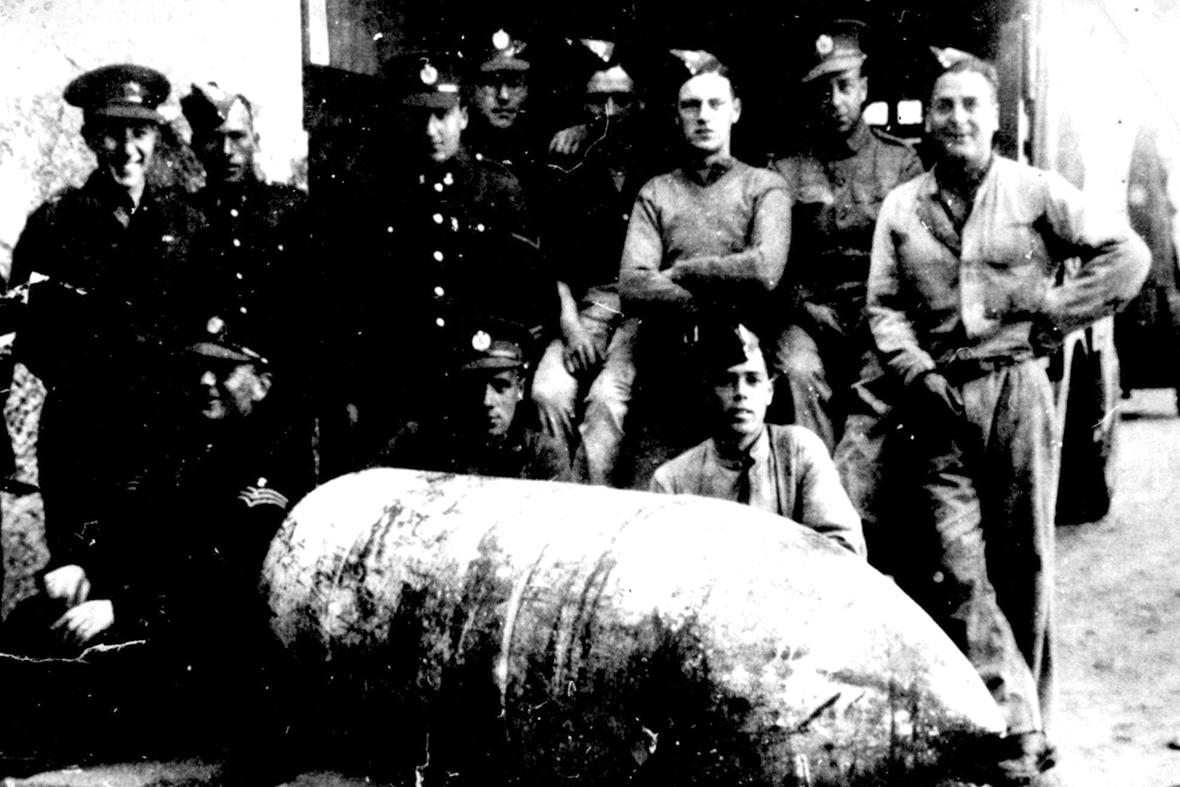 The actual bomb that penetrated the dome of the Mosta parish church but luckily did not explode. It was subsequently made safe in a controlled explosion.