Healing a wounded Libya
Libyans must overcome their narrow and divisive self-interests and agree on a unified vision for the country and its institutions to heal a deeply wounded country
At the Saudi-US Investment Forum on May 13, US President Donald Trump said: “Before our eyes, a new generation of leaders is transcending the ancient conflicts and tired divisions of the past, and forging a future where the Middle East is defined by commerce, not chaos; where it exports technology, not terrorism; and where people of different nations, religions and creeds are building cities together – not bombing each other out of existence.”
He specified that “this great transformation has not come from Western interventionists… giving you lectures on how to live or how to govern your own affairs”.
Reviewing US and NATO interventions in countries like Iraq, Afghanistan and Libya, President Trump said: “In the end, the so-called ‘nation-builders’ wrecked far more nations than they built – and the interventionists were intervening in complex societies that they did not even understand themselves.”
He also declared: “In recent years, far too many American presidents have been afflicted with the notion that it’s our job to look into the souls of foreign leaders and use US policy to dispense justice for their sins… I believe it is God’s job to sit in judgement…”
Libya’s failed and dysfunctional state stands as a monument to such US and NATO interventions when they attacked Libya in 2011 to remove Muammar Gaddafi from power. A book published in January 2022 by Ian Martin, the UN’s top man on the ground in Libya during the anti-Gaddafi uprising, shows that NATO indulged in “mission creep” and gave “unconvincing” arguments for promoting regime change in the name of protecting civilians.
Martin says that the US and NATO’s bombing of Libya exceeded the UN mandate. Their deployments of special forces were “deliberately concealed” from the UN Security Council. Martin also says that the UK and France were not interested in a negotiated outcome, which might have avoided the collapse of the Libyan state.
Four years ago, former European Commission president Romano Prodi told me that he had contacted NATO leaders with messages from Libya not to intervene militarily and work on a negotiated outcome but they went ahead and bombed Libya.
The US and NATO were only focused on removing Gaddafi without being at all interested in what would happen the day after to Libya and the Libyan people.
In its 2021 report, the United Nations Economic and Social Commission for Western Asia said: “In the absence of a peace agreement in the coming years, the cost of the conflict will rise sharply. According to our estimates, the cost of the conflict between 2021 and 2025 will be 628.2 billion Libyan dinars. This will take us to a total cost of the conflict since it broke out in 2011 to 2025 at 1,411.6 billion Libyan dinars.”
Libya for the Libyans
On October 21, 2021, addressing the Libya Stabilisation Conference in Tripoli, I said: “For nearly seven million Libyans, Libya is their shattered home where two-thirds live beneath the poverty line, a third are displaced, thousands of homes together with schools and hospitals destroyed and a consistent supply of electricity and water is lacking… although Libya is one of the wealthiest countries in the Mediterranean.
Libya’s failed and dysfunctional state stands as a monument to US and NATO interventions- Evarist Bartolo
“As the international community, the least we can do is assist the Libyans in rebuilding their home but without meddling and imposing solutions that create more problems. Libya cannot be rebuilt from on top and from outside: just like trying to build a house from the roof down ensures that it will collapse.
“Libya needs to be rebuilt from the ground up, by the Libyans and for the Libyans. But, to do that, Libyans must find ways of living and working together. The divisions of Libyans help those Libyans and outsiders who want Libya to remain ungovernable so that they can exploit it in their own interests. There needs to be reconciliation among Libyans and yesterday’s and today’s enemies must become tomorrow’s partners.
“An indispensable step is holding the presidential and parliamentary elections. On their own, they will solve very little. But, without them, the situation will get much worse as there will be no legitimate authority in Libya, ensuring it will become even more ungovernable, making it impossible to unite military, financial and national political institutions without which there will be no stability. We need to support the Libyan people in the difficult road ahead to regain control of Libya, to use Libya’s wealth for the benefit of all Libyans.
“May the spirit of teacher, leader and martyr Omar Mukhtar (1858-1931) prevail: he sacrificed his life for a free and united Libya. Within Libya and outside, there are those whose interest is for Libyan brothers to continue to kill and fight each other so that they can take for themselves the wealth that belongs to all the Libyan people. We must overcome those whose interest is for Libya to remain ungovernable.”
In Libya in transition: governance challenges and civil society’s prospects in political and economic reforms (January 3), Noureddie Selmi quotes a Libyan citizen: “There are certain political, economic, social, cultural and military figures who have a firm grip on entire cities and regions with a strong security presence… The legislative authorities, lacking legitimacy, seek to maintain power for personal and familial gains, with no interest in forming a sovereign state. Instead, many of these individuals are executing the agendas of foreign powers, and most of them are financially corrupt. In general, the population desires to rid itself of those currently in power and conduct fair elections.”
In 1946, Libyans adopted the Harabi Charter, in which they put aside their differences to move their country towards independence and consensus based on a shared national vision. Today, the country needs the Libyans to undertake a similar national dialogue, overcome their narrow and divisive self-interests and agree on a unified vision for the country and its institutions to heal a deeply wounded Libya.
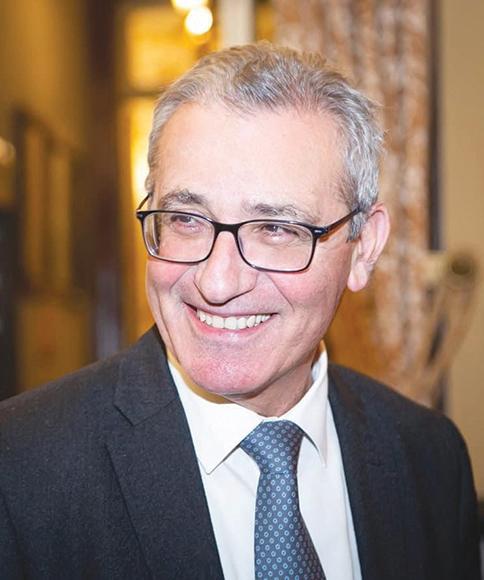
Evarist Bartolo is a former Labour foreign and education minister.