Helena Dalli: Could you hear our Amen?
In today’s political theatre, the language of Christian humility is being repurposed. It is wielded as spectacle, justification, and narrative control, says Helena Dalli
Start where White House Press Secretary Karoline Leavitt chose to start: with God. Just offstage, before stepping up to a press briefing dominated by talk of war with Iran, she and her staff reportedly paused for a solemn prayer.
As she walked out, she turned to the assembled journalists and asked, “Could you hear our amen in there?”, a question that lands strangely in a constitutional democracy, and even more so in a religious tradition that cautions against performing prayer for public approval. Moments later, she went on to boast openly about lethal actions, a spectacle that blends faith with force in a way no one would mistake for humility.
When asked about Pope Leo XIII’s warning, that God does not listen to the prayers of those who wage war – a rebuke to Defence Secretary Pete Hegseth who clearly thinks his actions are biblically sanctioned – Leavitt brushed it aside. She spoke instead about America’s long history and how troops appreciate being prayed for. The message was clear: whether those prayers are heard is irrelevant. What matters is the comfort they provide, prayer not as moral reckoning, but as a softener for violence.
On Maundy Thursday, the day Christians commemorate Jesus Christ stooping to wash the feet of his disciples, we are confronted not with self-emptying leadership, but with its inverse. Maundy Thursday invites reflection on power stripped of posturing and placed at the service of others. It draws its name from the Latin mandatum, the ‘command’ of Christ to love one another, an ethic rooted in humility and mutual care.
Yet in today’s political theatre, the language of Christian humility is being repurposed. It is wielded as spectacle, justification, and narrative control.
There is a long-standing ideal in democratic leadership: the willingness to be challenged. It is the principle behind Abraham Lincoln’s famed “team of rivals,” a cabinet composed not of loyalists but of critics, persons who questioned him, disagreed with him, and, in doing so, sharpened his judgment. It was a strategy rooted in humility: the recognition that no leader, however gifted, is sufficient unto himself (I suggest you read the book: Team of Rivals: The Political Genius of Abraham Lincoln, a Pulitzer Prize-winning biography by Doris Kearns Goodwin).
US President Donald Trump has taken a markedly different path, what Katty Kay and Anthony Scaramucci recently described in their talk ‘Why Trump will keep escalating the Iran war’, as not a team of rivals, but a team of mirrors: a circle that reflects power back to itself, where loyalty replaces scrutiny and agreement stands in for truth.
This model has, undeniably, got him where he is today. It preserves authority, solidifies a base, and enforces a style of leadership defined by clarity of voice and message discipline.
A team of mirrors does not correct; it confirms. It does not probe; it amplifies. Over time, such an environment can harden conviction into certainty and certainty into infallibility.
Where Lincoln cultivated tension to improve decisions, Trump often treats dissent as disloyalty. Critics are discredited, alternative viewpoints excluded. Humility, the capacity to accept that one might be wrong, that criticism can be a form of service, is largely absent.
Donald Trump often treats dissent as disloyalty- Helena Dalli
And yet, this very refusal has been part of his political strength. In an era that rewards certainty and punishes hesitation, unwavering self-belief resonates with millions. A team of mirrors reinforces that certainty, projecting confidence outward even when complexity demands reflection inward.
But governing is not campaigning.
The language of peace has been absorbed into the optics of power. Announcing peace initiatives on the brink of war is no longer a contradiction to be explained; it is a calculated move to control narrative. Hypocrisy need not even be avoided, it is operationalised. The ‘board of peace’ built on foundations of airstrikes was never meant to live up to its name.
The moral stakes are further compounded by reports that US military leaders have been framing the conflict in religious terms, suggesting it is part of a divine mission. One commander allegedly told troops that the war was “all part of God’s plan,” even citing passages from Revelation about Armageddon. Another reportedly claimed that Trump had been “anointed by Jesus to ignite a signal fire in Iran, trigger Armageddon, and herald his return to Earth.”
Faith folded into strategy, theology into narrative control. A team of rivals might challenge this thinking not least because such rhetoric could lead to battlefield failures by transforming a strategic conflict into a religious one. But a team of mirrors sustains it.
As it supports the reality that as missiles fly and oil routes choke, Washington speaks of negotiation, while preparing further deployments and setting conditions the other side cannot accept.
Maundy Thursday, in its original moral clarity, offers a radical contrast. Jesus Christ bent down to wash the feet of his followers, a simple act that made power look like service. A team of mirrors, by contrast, makes service look like power, amplifies spectacle, and shields the leader from accountability.
The significance of Maundy Thursday lies in moral reckoning: What does it mean to lead with humility in a world of power struggles? Can enemies be seen as fellow humans rather than targets? Is peace possible without sacrifice: not of lives, but of pride and hostility?
Lincoln understood that the presidency required more than conviction; it required contradiction. Trump has shown that, in the modern age, conviction alone can carry a leader very far.
But there is a different measure of success, one not rooted in dominance or endurance, but in humility. And by that measure, the difference between rivals and mirrors has never been clearer.
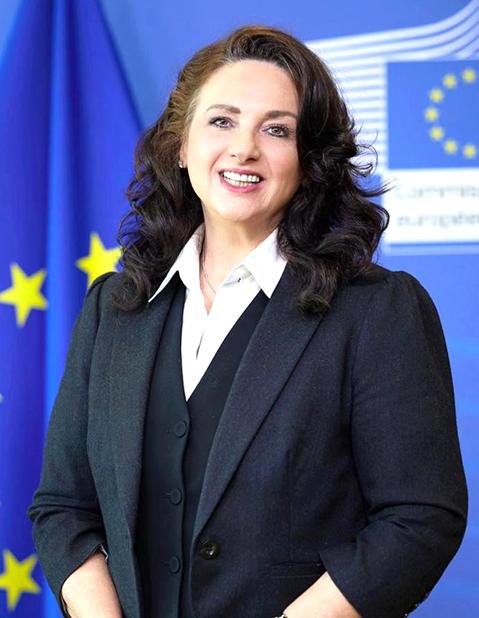
Helena Dalli is a former European Commissioner and Labour cabinet minister.