History: Alberto Magri – the consummate lawyer
He shone brightest in every area of jurisprudence – civil, criminal, constitutional and commercial
Malta rightly boasts of a long history of eminent jurists who excelled in one or another field of law. But I can recall only one who shone brightest in every area of jurisprudence – civil, criminal, constitutional and commercial. Alberto Magri (1896 – 1972) managed to be the best in each nook and cranny of domestic legislation. For years, the community acknowledged him as the unchallenged principe del foro, before he handed the criminal defender baton over to Guzè Flores, Vincent Scerri and eventually, Guido DeMarco.
At a time when the death penalty still cast its baleful shadow over the administration of criminal justice, capital trials riveted the nation, in a way unimaginable today. A good mix of theatre, morbid curiosity, speculation on the ultimate result, the possibility that it could be death, all conspired to stir judgemental emotions and manic interest. Queues of those unwilling to miss one iota of the unfolding, macabre drama, formed at the gates of the lawcourts. The newspapers found criminal trial reportages the most appetizing bait for readers. From the twenties to the middle forties, Magri stood at the centre of all this.
The advocate’s outstanding performances in the most complex civil and commercial litigation, his daring breakthroughs in constitutional protection of the liberties of the individual – no codified human rights in his times - all contributed to his reputation and could form the subject of an entire book. But it is his career as a criminal defender that gripped popular imagination. I have counted some twenty trials in which he defended suspects facing the death penalty.
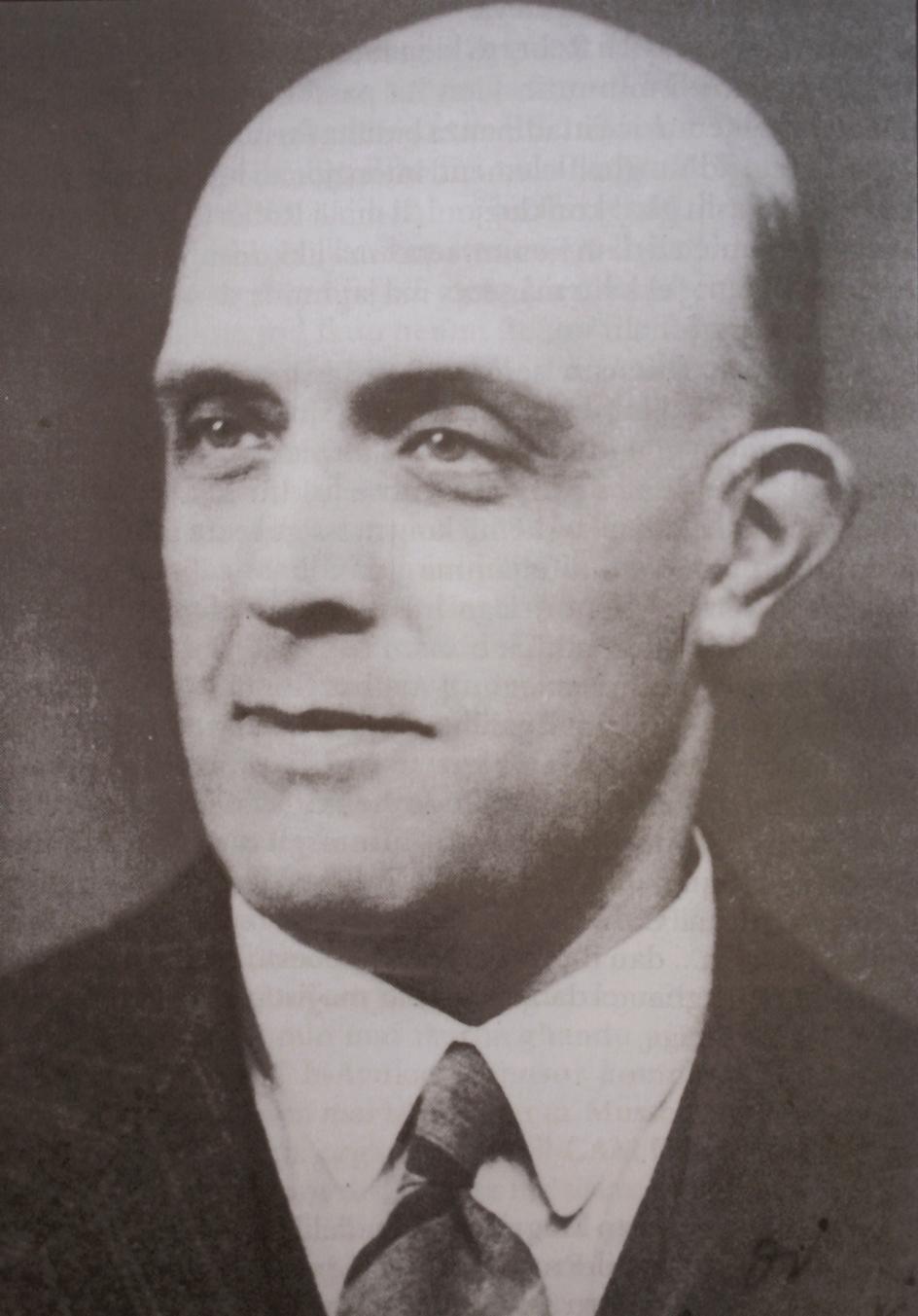 A 1950s portrait of Alberto Magri.
Personally, I only retain vague recollections of the last nine. I was then a toddler living with my mother and uncle Alberto in Rabat. He spent anxious nights studying the dossiers and we were all under draconian orders to observe perfect silence and not to interrupt him or disturb him in any way. Those were the sensational trials of Carmelo Borg Pisani, accused of treason and espionage in World War Two, and of the Zammit brothers. I, not yet seven years old, was infected by the unbearable angst oppressing everything around me at home.
His last ‘capital’ defences regarded the 1946/7 trials of Maltese citizens trapped by the outbreak of war in Italy and accused of treason and conspiracy with the enemy. Thankfully, by then I no longer shared a roof with uncle Alberto.
With generous help from crime chronicler Eddie Attard, I will cruise through some of Magri’s leading criminal cases, mostly voluntary homicides, some in which his clients ended embracing the gallows, and others in which they embraced freedom.
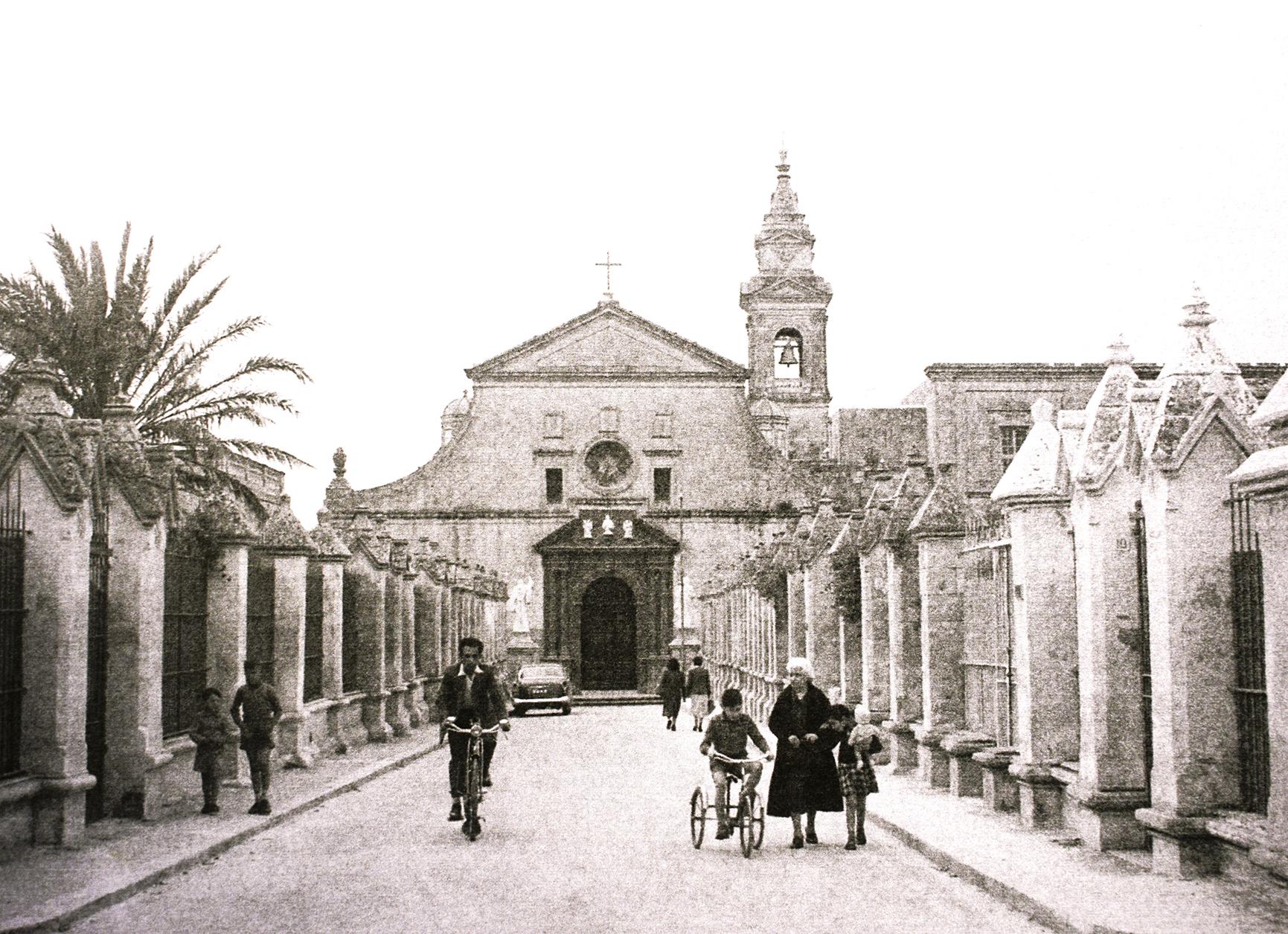 Magri lived in 5, St Augustine Avenue, Rabat, from 1940 to 1944. Photo: Guido Stilon, Magna Żmien
Probably his first brief came just three years after being warranted as a lawyer, in 1923. Frangisk Galea, an old man, was found dead with suspicious-looking wounds in Kercem, Gozo. Galea had just changed his will, leaving some property to his niece Marianna, wife of Giuseppi Tabone. The prosecution charged Giuseppi and his father Antonio with the murder. Magri defended both. The jurors acquitted Antonio, but found Giuseppi guilty and he was hanged three months after the homicide.
The next high-profile trial which consolidated Magri’s forensic reputation followed a crime of passion committed in 1925 in Hamrun. Constantino Sammut was found stabbed to death in his bedroom. Suspicion fell on his wife, the 22-year-old Tereza, and her lover, the super-wealthy businessman Antonio Bajada ‘tal-faham’ from Valletta. As the police were building up their case, the suspects blamed each other. Tereza admitted Bajada gave her expensive gifts but that she wanted to put an end to the liaison.
Bajada copied a key to their new Hamrun residence. Overcome by jealousy, he warned Tereza that if she left him, he would kill her – boasting that with his money he would buy his acquittal – jixtri l-forka. The prosecution charged Tereza with homicide. The police only carried out a perfunctory search in Bajada’s home - a fortnight after the crime, and ‘forgot’ to summon Bajada to give evidence and be cross-examined.
During his defence pleadings, Magri accused the police of outright corruption, of framing Tereza to get the millionaire killer off the hook – the calm, unostentatious boldness of a fledgeling advocate that never failed him. Against all odds, the jury acquitted Tereza – a professional triumph for the budding counsel.
Despite a previous nolle prosequi by the prosecution, following loud popular outcry, Bajada was later put on trial, found guilty and jailed for 20 years, reduced to twelve. He did not spend a single day in Corradino and went through his detention hosted in the Floriana Central Hospital, where he was showered “with every luxury money could buy”.
The criminal court annals of 1927 were animated by an armed robbery in Hal Far, limits of Zurrieq. The police charged five hooded hoodlums, all bearing firearms, with robbery of the bothers Giuseppe and Paolo Schembri and rape of their young niece Francesca. Magri defended Francesco Saliba who was acquitted. One of the other accused, Anglu Farrugia, turned ‘king’s evidence’ in return for a pardon. The court jailed three of the accused for long terms of detention. The rape victim, Francesca, suffered mental health problems through the rest of her life.
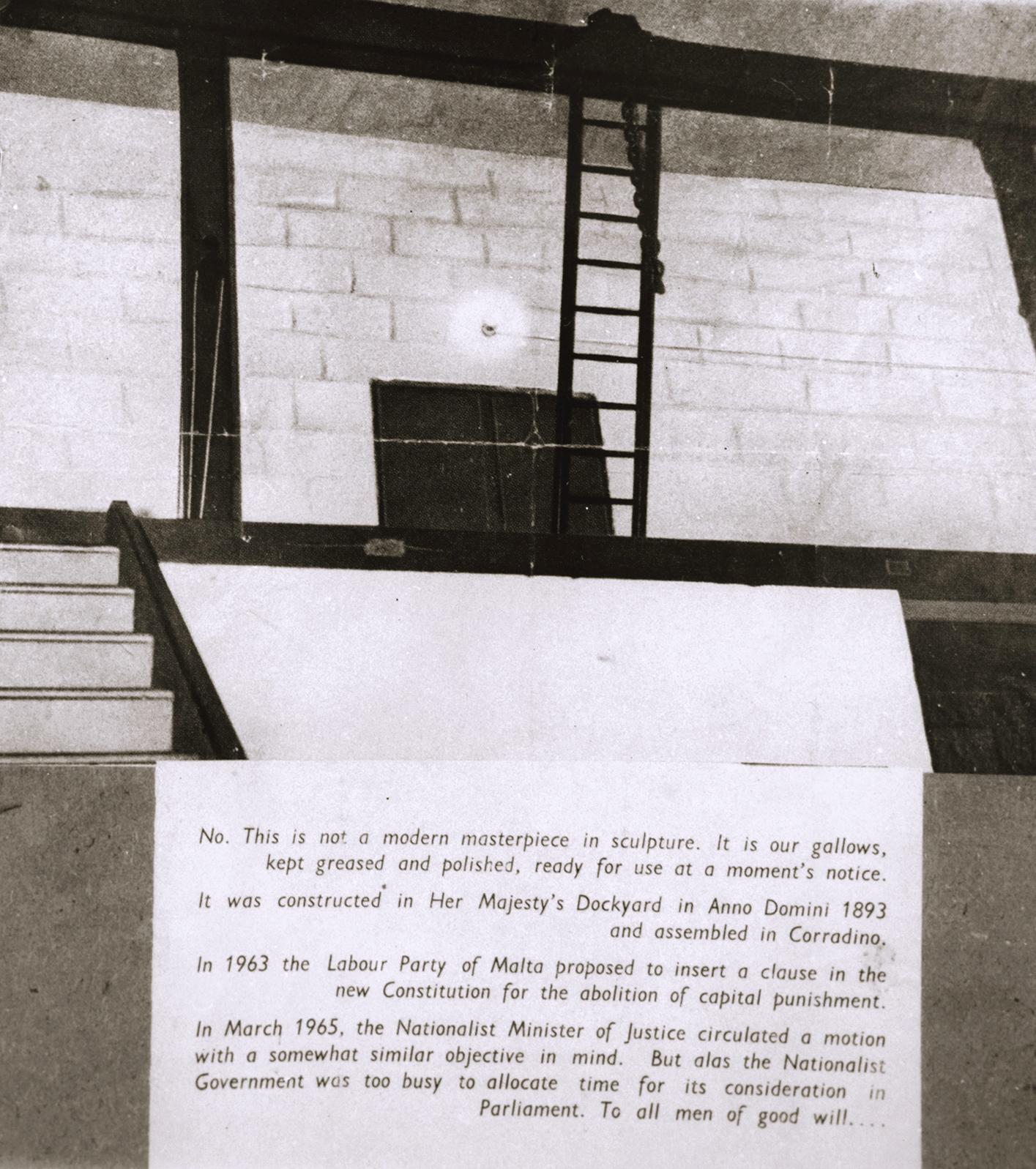 The gallows used in Corradino prisons. Magri defended at least 20 suspects facing the death penalty.
A double homicide of father and son, committed in 1911, remained a cold case for many years. Mikiel Camilleri and his son Carmelo, farmers from Zejtun, had a reputation of violence against their neighbours. The prosecution alleged that five of them ganged up to kill the two bullies and set fire to their farmhouse. The police only solved the crime eighteen years later, in 1929, and charged the three survivors with homicide. The defence team consisted of William Harding, Alberto Magri and Carmelo Mifsud Bonnici ‘il-Gross’. The court acquitted two of the accused and condemned one to life imprisonment.
In 1936, Magri defended Francesca Magro who had confessed to shooting her husband dead when he had smeared rat poison on her, and her daughter’s lips, in Fgura. She alleged a history of domestic violence which she regularly reported to the police but later quite as regularly forgave. She also believed he cheated on her with his previous fiancée. The jurors accepted Magri’s defence of provocation and of having acted in a state of excitement that prevented her from rational thought. The court let her off with two years’ jail.
Carmena Abdilla, a 30-year-old, stood charged with having in 1937 incited her 15-year-old son Victor to shoot Giuseppi Debattista, her current lover, in a dark alley in Hamrun. On his deathbed, the victim recounted the details of the shooting to the police. The prosecution charged the son with homicide and the mother with complicity. Alberto Magri’s defence centred on the poor medical care Debattista had received in hospital which, if adequate, would have saved his life. Chief Justice Sir Arturo Mercieca made short shrift of this defence, condemned the mother to death and jailed the son for twelve years. The Governor commuted the death sentence to life imprisonment.
 Carmelo Borg Pisani executed for espionage in 1942 and defended by Magri.
Ironical is the fact that, when Sir Arturo Mercieca was shortly later interned and served with a deportation order to Uganda, it is to Alberto Magri that he resorted to challenge in court the constitutionality of this order.
Perhaps the most high-profile defendant in Magri’s career as criminal defence counsel was Carmelo Borg Pisani, from a respectable middle-class family, a Maltese student at the Art Academy in Rome in the 1930s. He did not hide his pro-Italian ‘irredentist’ sympathies. At the outbreak of war, he formally renounced his British citizenship and handed over his passport to the American embassy, caretaker of British interests in Italy. In May 1942, he crossed over by submarine and landed covertly in Malta with radio equipment on an espionage mission. He was captured, recognized almost immediately and charged with treason.
During his high-security military trial held in camera without a jury, Alberto Magri pleaded eloquently and uselessly that Borg Pisani could not be charged with treason as he was not a British subject, but should be considered a prisoner of war. Legally, a watertight plea, but destined to be lost in the hot irrational smoke of war. The court condemned Borg Pisani to death, though apparently not unanimously. It is said that one of the three presiding judges voted against. To show his disagreement, when the Court rose to pronounce the death penalty, the dissenter turned his back to the audience.
The hangman executed him in November. A part of ziju Bertu must have died with his client that day. It took the blind daring or deliberate recklessness born of integrity to accept to be seen trying to save the life of a ‘traitor’ during those days of incandescent hate.
In 1942, Magri also defended one of the Zammit brothers, charged with the wilful homicide of Spiru Grech. They had lured the victim to bring £400 cash with him, on the pretext of concluding a clandestine deal to buy black-market wheat. In the vicinity of the Turkish Cemetery, Guzeppi and Karmenu pounced on their target, killed him and robbed him of the cash and his gold ring. The police found the victim’s corpse buried under a mound of animal manure in Guzeppi’s field near Hal Luqa.
The brothers made the prosecution case foolproof by blaming and snitching on each other. Despite Magri’s valiant and desperate defence of the elder brother Guzeppi, the five-judge court had little difficulty in finding both guilty and sending them to the gallows. Theirs were to be the very last executions carried out in Malta. Later Governors commuted the sentences of all other convicts condemned to death, before parliament abolished capital punishment entirely in the year 2000.
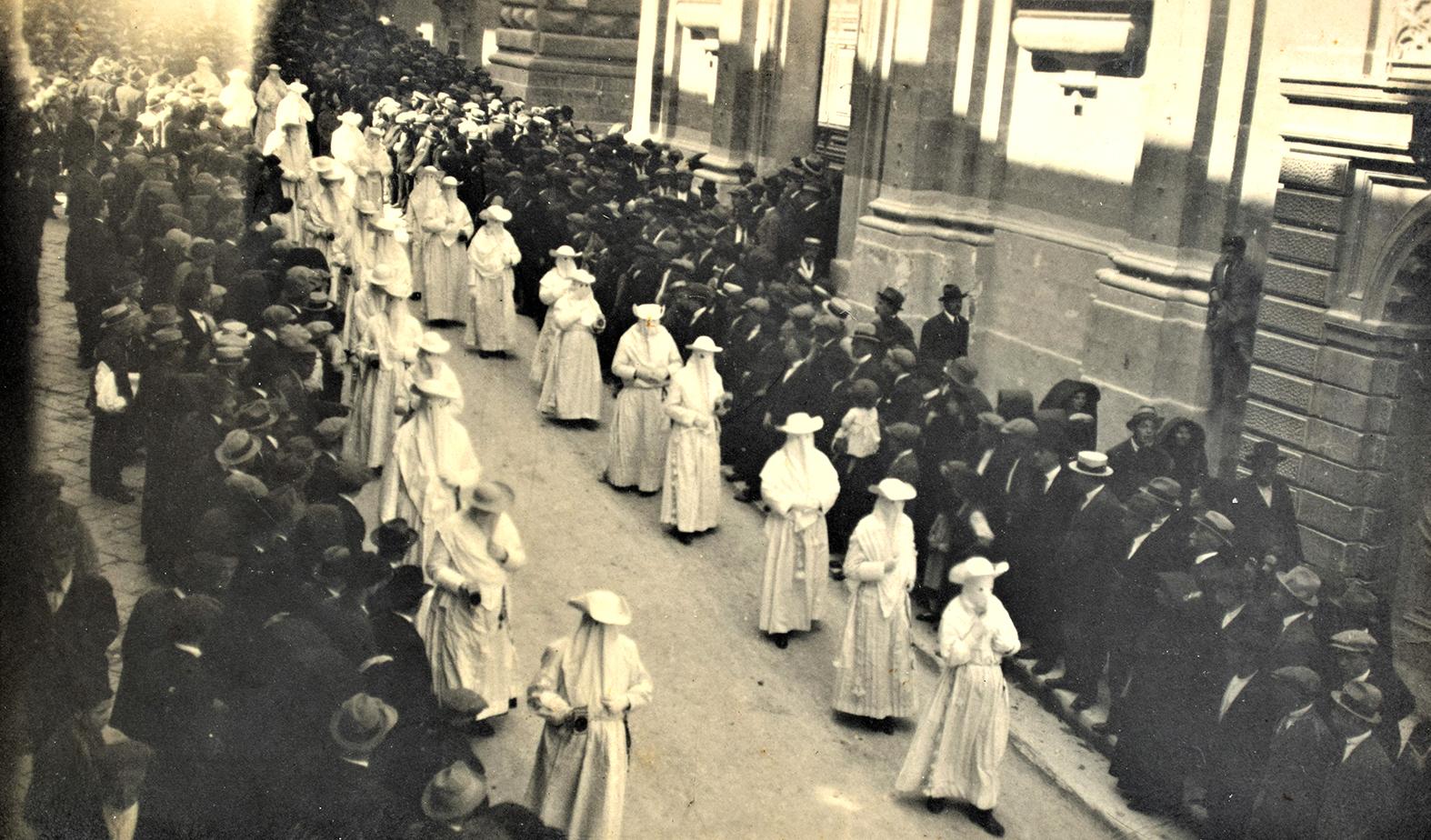 The procession of the Confraternity of the Rosarianti following the execution of Giuseppe Tabone in 1923.
Alberto Magri pulled the curtain down triumphantly as a criminal defence counsel in the sensational conspiracy and treason trials in 1946-7. A number of Maltese nationals had remained stuck in Italy when war broke out in June 1940. To varying degrees, many then collaborated with the Italian military, some even taking up arms and enrolling in the armed forces. When the tide turned and Italy surrendered, the Malta security officers arrested a number of them, charging them in Malta with the most repugnant crimes against the nation – conspiracy and treason. They were tried in four batches, many facing the death penalty.
Magri defended six of the accused – Ivo Leone Ganado, Antonio Cortis, Paolo Frendo, Antonio Vassallo, Edward Frendo and Paolo Pace. Notwithstanding the damning evidence, the skilful and relentless prosecution by Anthony Mamo, later Sir, and the hostile instructions by the President of the Court, the jurors acquitted all the accused. A triumph for the defence counsel, if not for justice.
Be it clear that the above only skims over a minimal part of Magri’s trajectory as an advocate - some highlights in his criminal career journey. Add to that, the scores of lesser-profile cases as a criminal counsel, and his civil, commercial and constitutional litigation. He defended virtually all Enrico Mizzi’s libel and political cases, both as plaintiff and defendant - and they were hardly few.
I believe politicians involved him in several leading lawsuits which marked the late twenties and middle thirties, each of which left indelible fingerprints on the political advancement of the nation. I don’t know of a single case in which he defended tyranny, abuse of power, political corruption or misgovernance. Though pressured to, he repeatedly refused to earn his living as a defender of the powerful. Giants do not whore their talents to those who pay them to justify abuse. An epitaph nobler than that I cannot think of.
Acknowledgement:
My gratitude to Eddie Attard who generously put his research freely at my disposal.