Planning Authority refusals drop sharply before the 2026 general election
A similar drop was also recorded in the months leading to election in 2022
The Planning Authority refused planning applications at a fraction of its usual rate in the weeks before Malta’s last general election, according to a Times of Malta analysis.
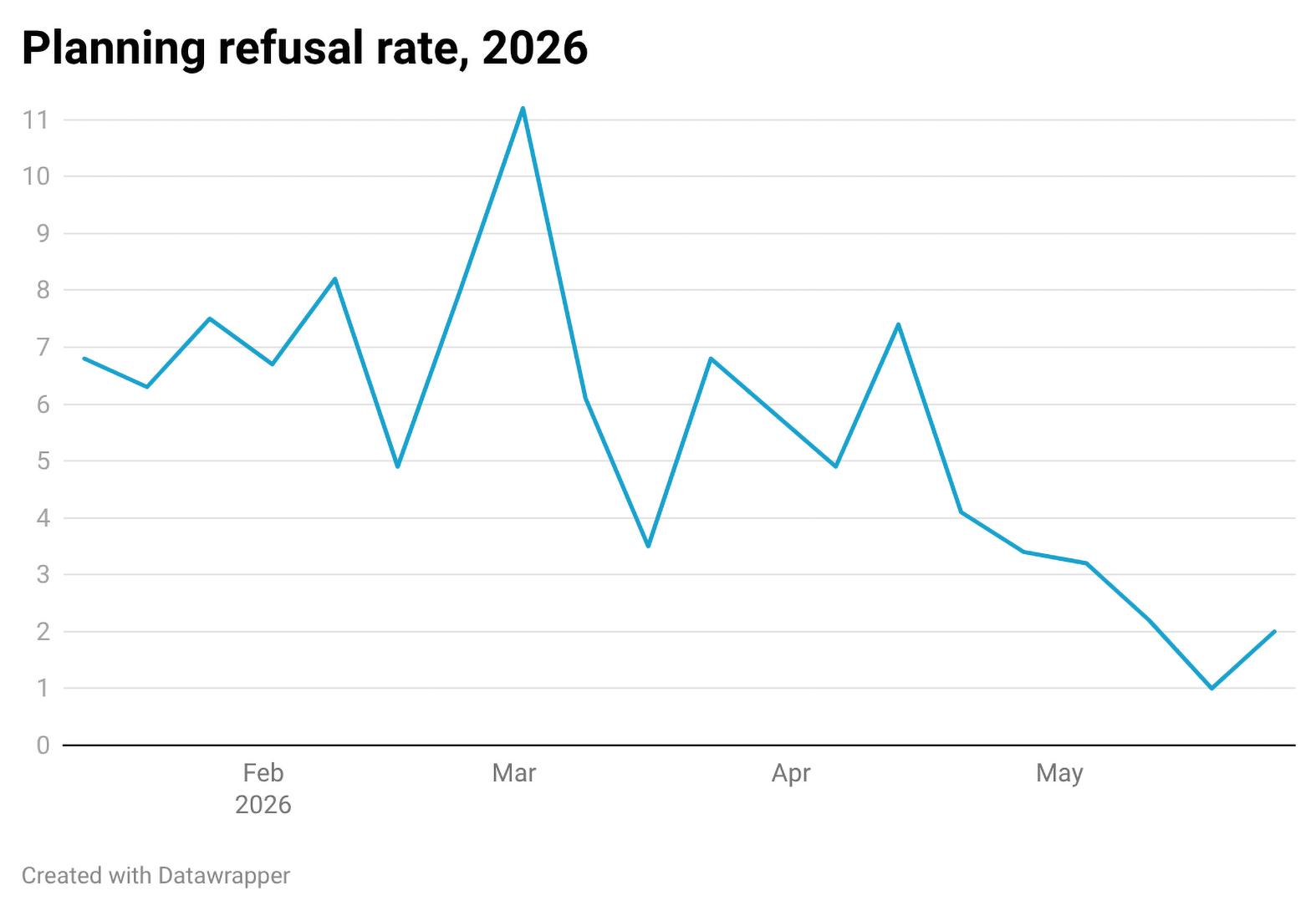
During the final two weeks of the 2026 election campaign, the PA approved 248 applications and refused just four, resulting in a refusal rate of 1.6% of all applications considered – including those withdrawn or dismissed.
 Refusals
Over the same two-week window last year, 33 applications were refused, producing a rate of 7.1%. The January-to-March average this year also stood at 7%, which is consistent with the five-year norm.
Sources familiar with the planning process said such patterns are often observed before elections because decision-makers seek to avoid alienating applicants and property owners who could otherwise become disgruntled voters.
“Refusing an application creates an unhappy applicant, while postponing or approving it creates fewer headaches, especially closer to the election,” one source said.
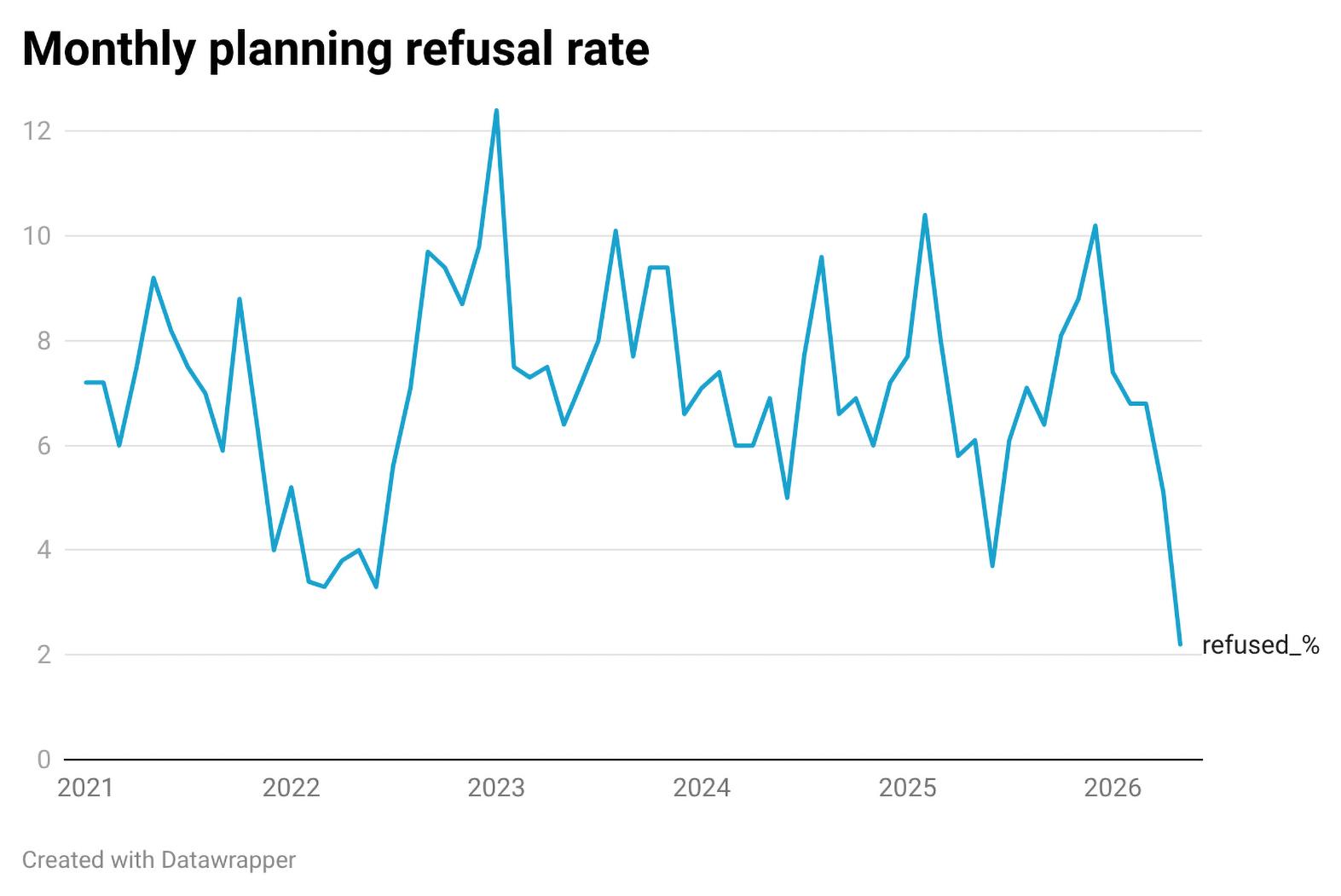
The pattern is not new. A similar drop was recorded in the months before the 2022 general election, when the refusal rate fell to 4.1% compared to 9.1% in the equivalent period the following year.
 Monthly refusals
Among the refused developments over the election period was an application for a residential dwelling and pool in Nadur, a rubble wall in Msida, a wind turbine in an Qala quarry and two semi-detached villas in San Ġwann.
A statistical analysis of the full dataset, which covers all PA decisions from January 2021 to June 2026, found the difference between pre-election and non-election periods to be highly significant.
However, the same pattern did not appear before the 2024 MEP and local council elections.
The PA publishes daily decisions taken by the Planning Commission. Times of Malta sifted through all decisions from January 2021 to date to calculate monthly refusal rates. According to the data, there is an average 7% refusal rate across the five-year period.
The analysis did not consider applications for regularisation, planning control or development notification orders.
Questions have been sent to the Planning Authority.
The PA’s most important decision-making body is the Planning Board, as it is responsible for deciding on major-scale development projects. However, a separate Planning Commission considers applications within the development zone.
The members of the commission are appointed by the minister responsible for planning.