In honour of Birkirkara and St Helen’s collegiate chapter
Soċjetà Dun Filippu Borgia celebrates 90 years of service
St Helen’s collegiate chapter in Birkirkara, dedicated to Empress St Helen, was founded on December 5, 1630, following the approval of Pope Urbanus VIII, through a civil contract requested by the main benefactor, Dun Filippu Borg. Over the years, a number of popes further endowed it with various rights, concessions and unique privileges.
In 1935, the Maltese and Gozitan dioceses held a regional council to decide on various ecclesial issues. Among the participants were the archbishop of Malta, Mgr Mauro Caruana OSB, and then bishop of Gozo Mgr Michael Gonzi. Among other issues, the council discussed a substantial increase of the prebend (stipend) granted to each canon, a reduction of privileges enjoyed by the members of the collegial chapters, and the right of the chapter to administer funds and property inherited through the founders’ will in favour of the collegiate, and the right to nominate new chapter members.
The decisions taken caused severe discord in Birkirkara; and even more so when they were rigorously enforced by archbishop Caruana through Circular No. 339 that he personally issued on September 25, 1935.
As a result of this discord, both musical bands in Birkirkara decided not to take part in any festivities organised in the parish, including the feast of the patron saint, until a consensus was reached on the issues.
Both parish fraternities abided by this decision and, for the following 14 years, no street decorations or any fireworks displays were organised in any of the feasts the locality usually celebrated.
For 14 years, no street decorations or any fireworks displays were organised in any of the feasts the locality usually celebrated
In view of these circumstances, on July 3, 1936, a cleric named Salvinu Borg Olivier, with the full support of the local musical associations and people of Birkirkara, founded Soċjetà Dun Filippu Borgia. The society’s aim was to cultivate and defend St Helen collegiate’s unique privileges and thus safeguard the will of the founders, Dun Filippu Borg and Dun Perin Borg, whose estates had been bequeathed to Birkirkara and its people. The new society’s statute and objectives were fully approved by the heads of all Birkirkara families.
The first undertaking of the society’s committee, led by Edgar Buhagiar, LLD, was to launch, in May 1937, a judicial case against the local ecclesial authorities at the Sacra Romana Rota, an ecclesial tribunal in Rome. The case was entrusted to Angelo D’Alessandri as the society’s legal representative.
Despite scepticism about the validity of the society’s request, on May 11, 1939, the Segnatura Apostolica tribunal granted Soċjetà Dun Filippu Borgia its official recognition as the voice of Birkirkara’s residents in matters pertaining to St Helen’s collegiate chapter. In a letter, the tribunal declared that no impediment can ever be set against members of the society intending to present their case to the tribunal. This declaration was a sound victory for both the society and the people of Birkirkara.
After a delay in the judicial case caused by World War II, on December 4, 1948, the Sacra Romana Rota tribunal declared that it was not within its remit to deliver judgment about the case.
When news of this decree reached the people of Birkirkara in the late afternoon of January 27, 1949, great protests arose, leading to the doors of the then St Helen’s parish church being barred with stones and slabs. At the time there were structural works taking place on the church parvis.
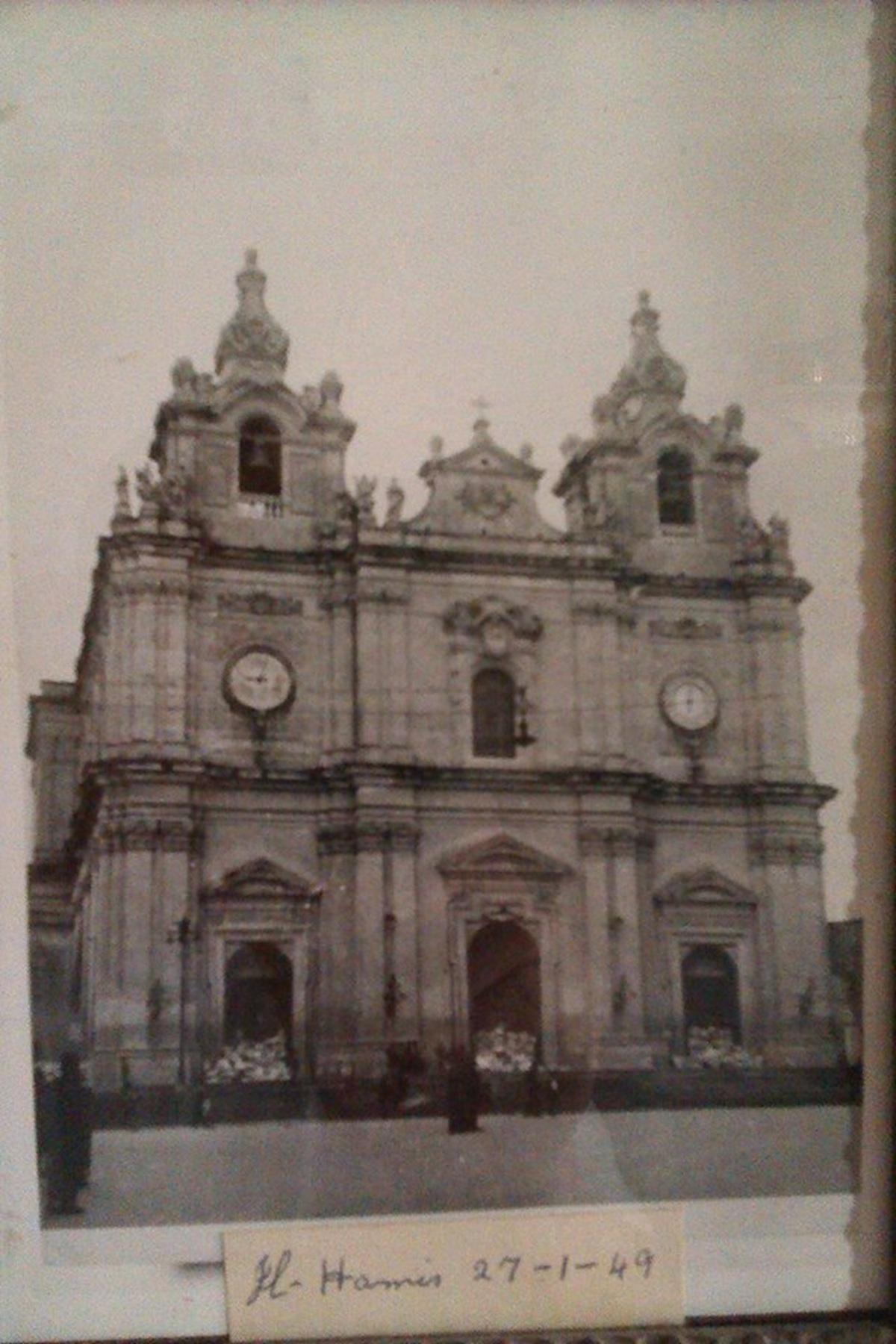 The doors of St Helen’s parish church barred with stones and slabs following a protest on January 27, 1949.
This situation created great distress to the collegiate chapter, at the time headed by Rev. Can. Emmanuel Vella, as well as to the society’s committee, led by Notary Giuseppe Gatt.
Mgr Gonzi, then archbishop of Malta, intervened to settle the problem. He publicly promised to try his utmost to reinstate all the previous rights and privileges of the collegiate chapter and of the Birkirkara people that had been lost in 1935.
Calm reigned once again, and the parish church reopened on February 4, 1949. On February 17, a delegation consisting of two members of the collegiate chapter and two members of the Soċjetà Dun Filippu Borgia travelled to Rome. There, they filed a request to suspend all procedures at the Sacra Romana Rota and asked that all contacts with the congregations involved in the matter be reset, so everything would be reversed to what had been in force prior to 1935. This actually happened in April 1955.
Joyous news reached the Birkirkara people on January 18, 1950, that, following a proposal submitted by the archbishop, Pope Pius XII had granted the status of minor basilica ‒ with all honours due to other Roman basilicas ‒ to St Helen’s Collegiate Church. It was actually affiliated to the basilica of Santa Maria Maggiore in Rome.
To the joy of all Birkirkara people, the statue of St Helen once again started its processional manifestations around the locality on May 3, 1950, marking the feast of the Finding of the Holy Cross, and on the feast of St Helen in August.
Past/ongoing activities and initiatives of the society
• In January 1962, the Soċjetà Dun Filippu Borgia donated two bronze lecterns, in the form of statues representing St Paul and St John the Evangelist, to the collegiate chapter. They are still in use adorning the basilica presbytery.
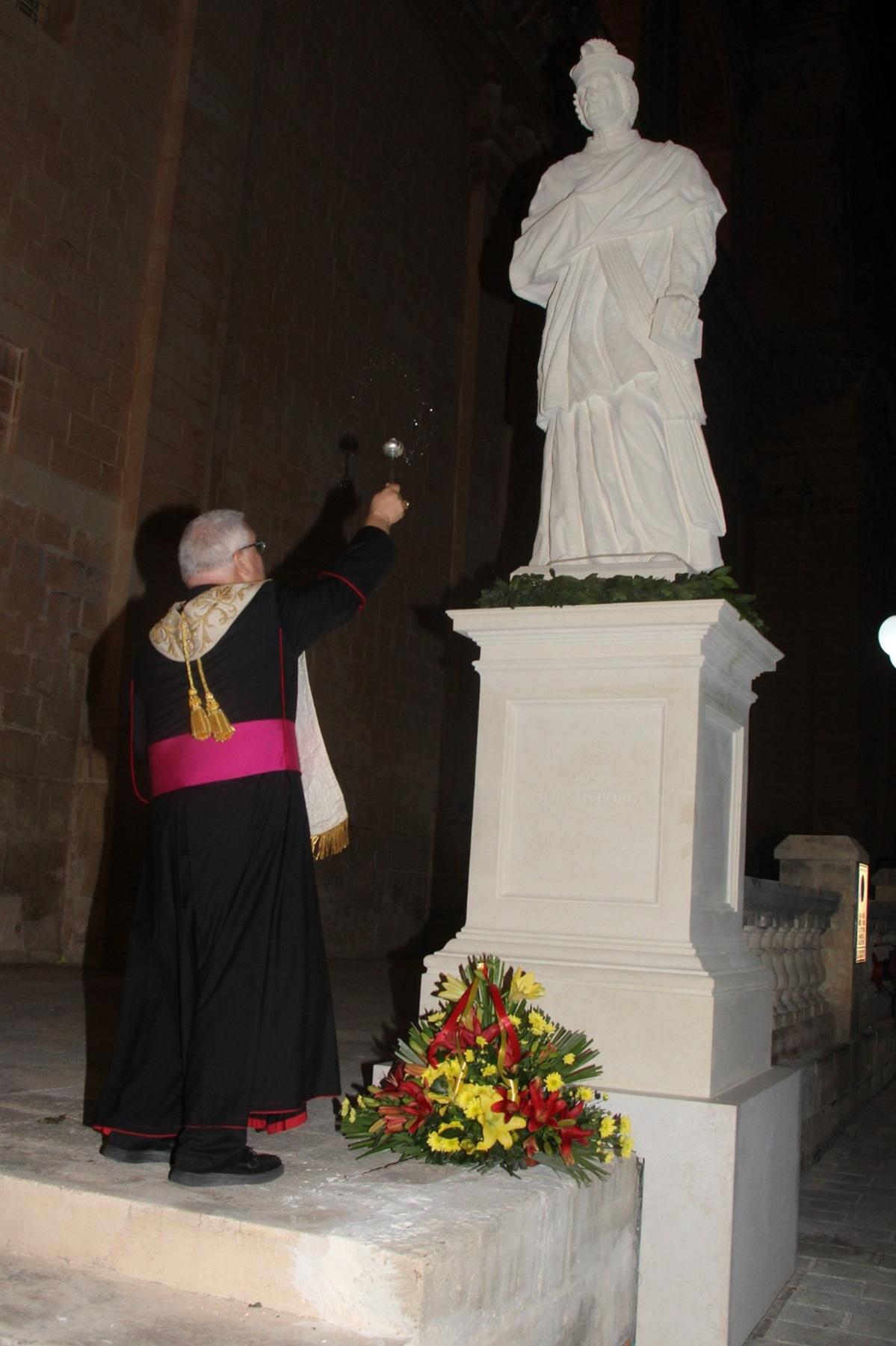
• In the 1970s, the society widened its perspective to socio-cultural issues and the original statute was amended to include a remit to protect and enhance the locality’s heritage. Through the society’s intervention, various items of historical value were restored, including the statues of Dun Filippu Borg and Dun Perin Borg; Torri tal-Wejter; the Vincenzo Borg Brared headquarters; Wignacourt acqueduct; the railway wagon in Ġnien tal-Istazzjon, the Tal-Infetti niche, and the façade of the church dedicated to the Conversion of St Paul, including the steeple clock, a masterpiece by Mikelanġ Sapiano. The society is currently seeking funds to restore the Madonna taċ-Ċintura painting in one of the basilica’s side chapels. The society is also seeking the necessary permits for a local cemetery.
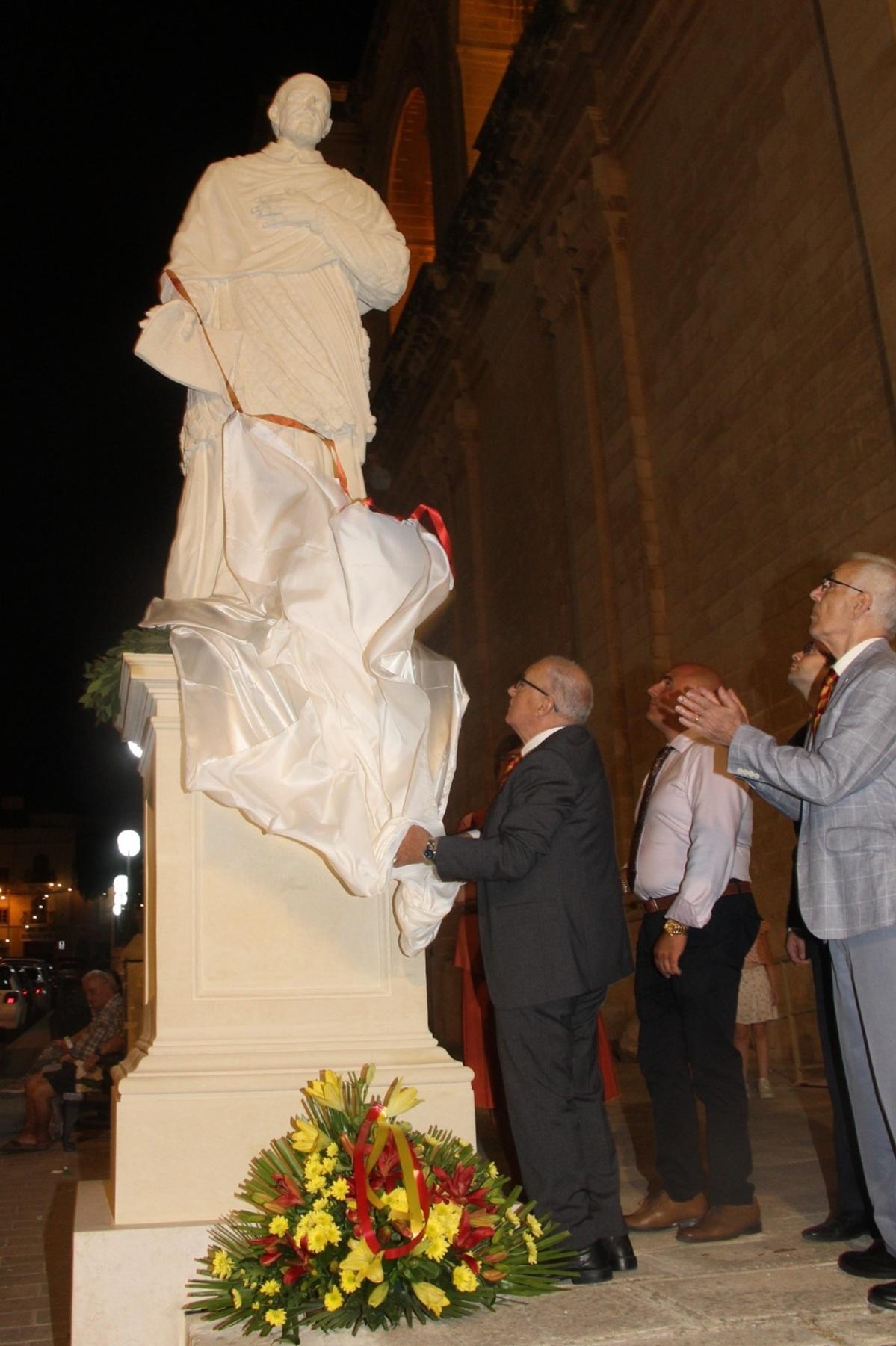
The unveiling of the restored statues of Dun Filippu Borg and Dun Perin Borg, a project completed last year after 31 years of work.
.
• The society pioneered in the organisation of a Holy Week exhibition in the locality.
• When the first Birkirkara local council was set up in 1993, the society successfully lobbied the council to set December 5, the date St Helen’s Collegiate Chapter was instituted, as the official date for the annual Jum Birkirkara.
• A symposium was held in November 2021 regarding sculptor Salvatore Psaila with the participation of local artists and art experts.
• The society diffuses knowledge regarding various aspects of the locality, its culture and its people through printed publications, cultural activities and broadcasts on BKR Radio. In January 2024, a new publication about Birkir-kara’s history was launched.
• The society intervenes whenever necessary in issues related to the collegiate, such as in vacancies for canons, the union of provost-archpriest status and the administration of the collegiate chapter’s property and assets, which were seized in an abusive manner. In fact, in 2009, a civil court case was filed against the ecclesial and civil authorities requesting the restoration of Dun Filippu Borg’s properties, which by right belong to the Birkirkara people who were declared as his sole beneficiary.
Conclusion
When our ancestors founded the society 90 years ago, they chose as its motto ‘Biex jibqgħu jiġu mħarsa d-drittijiet tal-poplu Elenjan’. This is what the Soċjetà Dun Filippu Borgia has been doing throughout these past years. We are committed to passing on these principles to generations to come, so that Birkirkara and its collegiate will continue to be granted the highest form of honour and esteem throughout the years.
Andrè Azzopardi is secretary of the Soċjetà Dun Filippu Borgia.