Stop dreaming that Maltese will fill low-level hospitality jobs, industry says
Worker retention is higher among TCN workers than among Maltese workers
Hospitality industry stakeholders have called for a cultural shift in mentality towards third-country national workers during a panel discussion about the sector's changing landscape.
Rather than fighting against frontline workers at hotels and restaurants coming from outside Europe, society should work to accept and better integrate non-EU workers into Maltese society, the panel argued.
"There needs to be a shift with society itself and its regard for being served by an Indian national... Where is society going? There needs to be cultural integration to help them feel accepted,” Hilton Malta director Annika Galea said.
The topic emerged on Thursday at the Malta Chamber of Commerce, during a panel discussion organised by Zampa Partners and VB Advocates, and moderated by VB Advocates Associate Julia Darmanin.
Prior to the panel discussion, Malta Hotels and Restaurants Association (MHRA) president Tony Zahra emphasised the importance of the workforce in hospitality.
He noted that many people who had left the industry during the pandemic had not returned after encountering better work conditions elsewhere.
Foreign workers were brought in to fill those gaps, Zahra explained, while noting the solution had brought new challenges, with some workers not understanding the sector or facing language issues.
“They come from a country where you'd be lucky to have a meal on your table, let alone experience good hospitality,” he said, adding that it was important to train new workers.
To tackle the boom in the number of TCN workers, the government introduced the Labour migration policy earlier this year.
The policy introduced measures obliging employers to favour Maltese and EU workers, retain their non-EU workers and encourage those already working in Malta to stay, upskill and integrate into Maltese communities.
Addressing the policy during the panel discussion, Identità CEO Eric Zahra said: “If we manage to keep workers in Malta automatically, they will become accustomed to our culture. Like this, the service and the experience [for the customer] will improve".
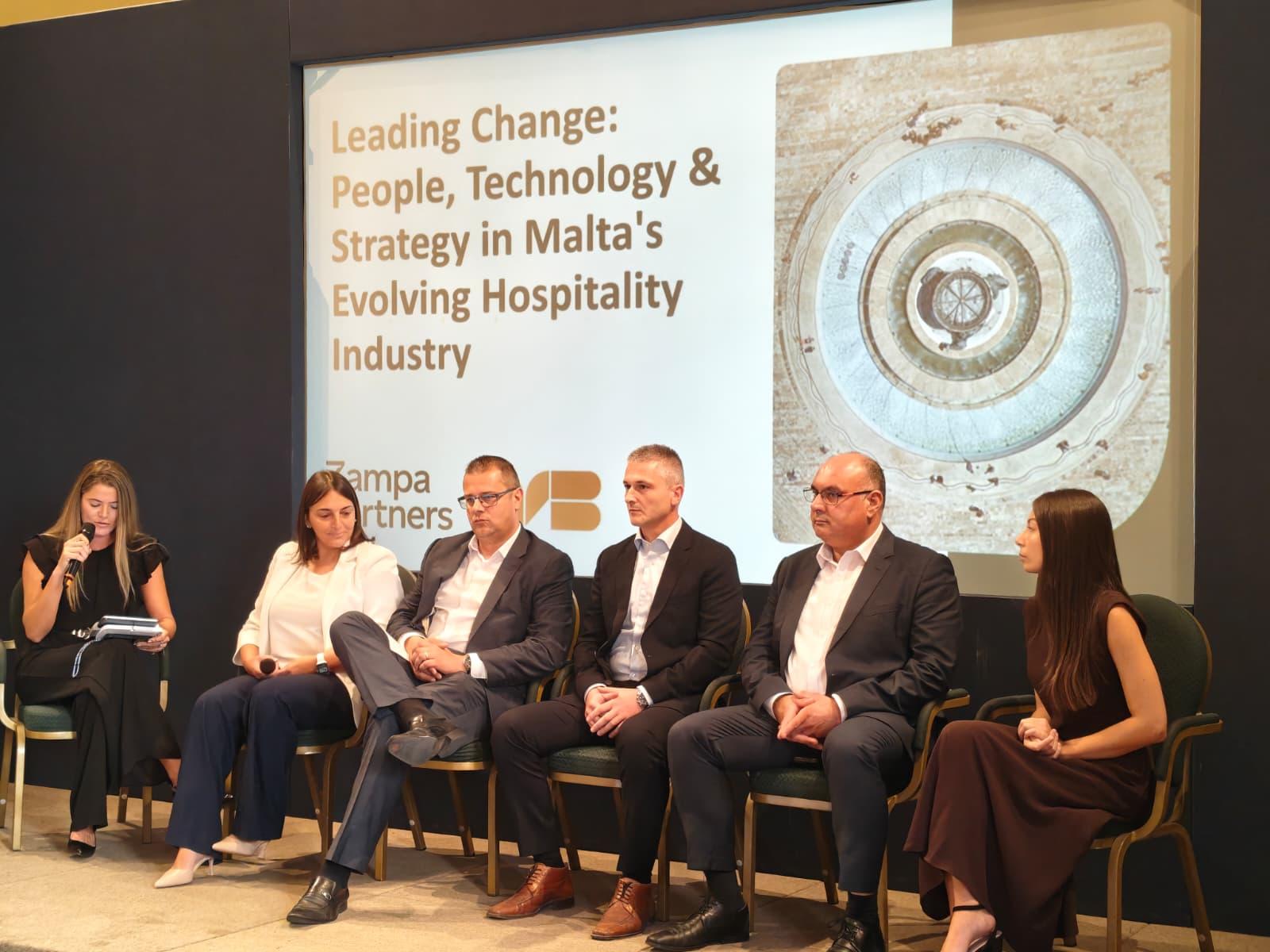 From left to right: Julia Darmanin, Annika Galea, Karl Schranz, Edric Zahra, Pierre Fenech, Michelle Buhagiar.
He said the agency was working to implement better technology to expedite the application process while also improving the vetting process.
“Few know the number of people that we have stopped as they had links to paedophilia. I’m sure no one wants these people. We have also stopped people who have connections with hooliganism,” he said.
Worker retention is higher with TCN workers
Galea said there was a higher retention of TCN workers than Maltese or EU workers, with the latter more prone to move around in search of new opportunities.
Working in a hotel requires people on shift all the time, which she said makes both frontline jobs — and sometimes even higher-paying positions — unattractive to Maltese who are actively seeking a better work-life balance.
Recruitment and Quality Talent Ltd general manager Karl Schranz agreed, adding: “There needs to be a shift in the mindset. There is still the impression that TCNs are here to take people’s jobs... They are here to offer a service to the industry, not to take our jobs.”
Institute of Tourism Studies (ITS) CEO Pierre Fenech said the country should “stop dreaming about having local people filling lower-level jobs. This is the reality. The important thing is that we get good TCNs and we keep them".
Malta had seen a significant shift in employment patterns since 1992, he noted: “Foreigners were running our industry, and the Maltese were the front liners. Nowadays, most of the industry is run by locals, and the frontliners are foreigners.” Italy was experiencing the same issue, he said.
“[To retain our workers] money is important, but training and continuous development give them a sense of belonging, tied to career progression,” he said, adding that the number of students enrolled in part-time courses at ITS had increased from 200 in 2013 to 1,500 last year.
Zahra stressed Malta was a "country of immigration. We are continuing the tradition. The difference is that although today’s reality calls for foreign workers, let’s enforce our Identity, let’s enforce our culture".
"Tourists who come to Malta want to see our culture, but they can still be served by foreigners,” he said.