How the Maksars amassed wealth and stayed one step ahead of the law
Family was 'well connected' within police, politics
- In secret testimony, ex-investigator admitted brothers had connections within police, politics;
- Internal ledger valued their assets at €9 million;
- Phone taps suggested criminal activities ranged from drugs to smuggling ‘gold from Uganda’;
- Europol urged parallel money-laundering probe to seize criminal assets.
A gang convicted of two murders had “connections” within the police force and politics, a high-ranking police officer admitted in secret testimony to a public inquiry.
Investigators have long suspected that brothers Adrian and Robert Agius, better known as Ta’ Maksar, together with associate Jamie Vella, ran the Maltese cell of a sophisticated criminal organisation that imported drugs from South America and distributed them in Europe.
However, investigating them appears to have been no easy task.
Ex-assistant police commissioner Ian Abdilla admitted to an inquiry that a decade's worth of investigations had repeatedly fallen apart due to the Maksar family’s connections.
“They are well-connected within the police to be honest. Well-connected within customs, and well connected with politicians from both sides,” Abdilla said in closed-door testimony to the Daphne Caruana Galizia public inquiry in 2020.
Caruana Galizia fell victim to the gang in a 2017 car bombing, while lawyer Carmel Chircop was shot dead in 2015.
The Maksars were only brought to justice after one of their own, Vince Muscat, turned on them in exchange for a reduced sentence in the Caruana Galizia murder and a pardon in Chircop’s.
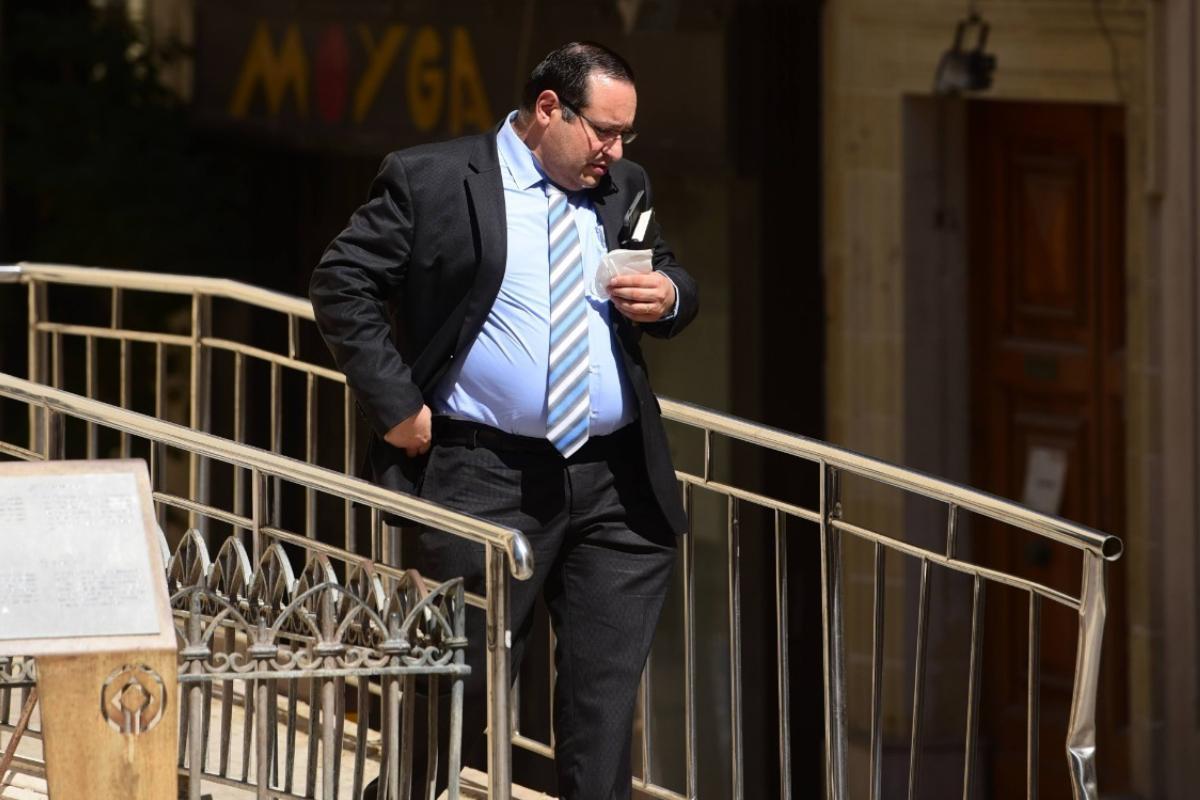 Ex-investigator Ian Abdilla testified about the Maskars' ties with the police and politics. File photo.
As a result of Muscat’s testimony, Robert Agius and Jamie Vella received life sentences this month for providing the bomb used to blow up Caruana Galizia. Vella was also convicted for Chircop’s murder, along with Adrian Agius and George Degiorgio.
Degiorgio was already serving a 40-year sentence after admitting to his role in the car bombing.
A multi-million euro empire
Police files, intelligence and other documents analysed by Times of Malta, OCCRP, IRPI and Amphora Media provide new insights into the gang’s suspected operations and wealth.
High-end properties, flashy cars and various enterprises appear to have lent a polished veneer to the Maksar brothers, who were named in a Europol report as the “main criminals” distributing cocaine and heroin in Malta.
The brothers, together with Vella, allegedly headed the Maltese cell of a crime group with tentacles in Europe and South America, according to intelligence files.
 Jamie Vella was convicted for complicity in the murders of Daphne Caruana Galizia and Carmel Chircop. Photo: Chris Sant Fournier.
This alleged multi-layered organisation is suspected to have moved drugs from South America to Europe via ports in the Netherlands, using a sophisticated network of couriers.
Summaries of phone intercepts between February and August 2017 suggested the Maksars may have even been involved in smuggling gold from Uganda, though further corroborating evidence was needed by investigators about their suspected smuggling activities.
The gang appeared to have wised up to the intercepts on their Blackberry devices and stopped using them after a drug seizure in Malta, according to reports by investigators.
The importance of cracking down on suspected criminal assets accumulated by the gang through this alleged criminal activity was not lost on Europol.
Notes from the investigation file show that apart from the drug trafficking probe, Europol pushed for a parallel money-laundering investigation to identify the gang’s assets and target the proceeds of their alleged crimes.
 Europol urged a parallel investigation into the Maksars' assets and wealth. File photo.
Internal ledgers linked to a company run by the Maksars valued their property wealth alone at €9 million, and claimed an annual account turnover of €1.7 million. The ledger was last updated in 2014.
Their father, Raymond Agius, was known to the police as a suspected smuggler. The brothers inherited his assets after he was shot twice in the head in a Birkirkara bar.
A preliminary analysis of the gang’s wealth in 2018 by the authorities indicated money may have been laundered through real estate purchases, luxury assets as well as the mingling of dirty money with legitimate business activities.
Abdilla claimed during his 2020 testimony that despite the police accumulating “a room full of documents”, their probe into the Maksars led nowhere.
To date, neither the brothers nor Vella have been prosecuted for financial crimes.
The police did not respond to a request for comment about the status of these investigations.
Asset freezes, property deals
When Robert Agius was arrested in 2021 on suspicion of murder, he was found with €55,000 in cash and eight vehicles worth between €184,000 and €213,000, according to court testimony.
Shortly after the arrest, he was hit with an asset freeze prohibiting him from transferring funds or selling properties.
It was the third time Agius had been hit with an asset freeze since 2013.
These freezes appear to have done little to stop his family from amassing wealth, even as the police investigated him for his role in Caruana Galizia’s murder, and for allegedly laundering drug proceeds through real estate.
The first freeze was put in place from 2013 to 2018, over cigarette smuggling charges, and the second from 2017 to 2020 over a heroin smuggling case. He was cleared in both cases.
These two freezes only referred to Agius personally, and not any specific companies linked to him.
 Robert Agius has long been the target of investigations. Photo: Chris Sant Fournier.
In 2017, five months after the second asset freeze, Robert’s wife Denise set up a property development company called Ages Investments Limited.
The company was not subject to any asset freezes, and went on to accumulate almost €2 million worth of assets in a span of a few years.
Between 2019 and 2021 the company purchased eight properties worth €1.7 million. Over the next few years, it also sold four apartments worth almost €1.1 million.
An Ages Investments financial statement shows the company had benefited from cash injections of €406,000 via shareholder loans.
Denise Agius was the company’s only shareholder, financial records show, and she has a formal separation of assets from her husband.
Her employment history varies from being a bingo hall cashier/receptionist, a hairdresser and working for TV production company We Media, according to various intelligence reports.
She is being investigated over suspicious “salary payments” and “loans” she received from the production company.
 Denise Agius coming out of court after one of the sittings in her husband's murder trial. Photo: Chris Sant Fournier.
While employed by We Media, she received a €1.3 million loan via Ages Investments from Finance House, which was founded by car dealer turned financier James Zammit.
Public records indicate the loan was used to buy a €190,000 high-performance Mercedes GTR track car from Zammit and also finance various property deals by Ages Investments.
Investigators note how Zammit appears to be “closely connected” to the Maksar family.
When contacted, Zammit strongly denied having ever engaged in any illicit arrangements with the family, or anyone else.
Zammit said the loan was purely a financial transaction and that does not mean he was closely connected to the Maksars.
He said he stopped the car dealing business years ago, and did not turn a financier.
Zammit added: “Finance House plc is licensed and is subject to rigorous requirements.”
'Never questioned by the police'
He said prior to successfully taking his companies public in 2024, the FIAU, MFSA, stock exchange and other bodies, who work in tandem with the police, carried out a “very meticulous” due diligence exercise over 14 months.
Zammit further emphasised that he is unaware of any police investigation in his regard, and has never been questioned by police.
The loan given by Zammit’s company to Ages Investments was meant to be repaid in February 2023, but to date, remains outstanding.
Replying to questions by reporters, Zammit said Ages Investments used €892,000 from the available loan balance, and interest has been accumulating at 8% annually.
He said the time has now come to discuss a settlement plan with Ages Investments for the outstanding amount, together with interest and charges.
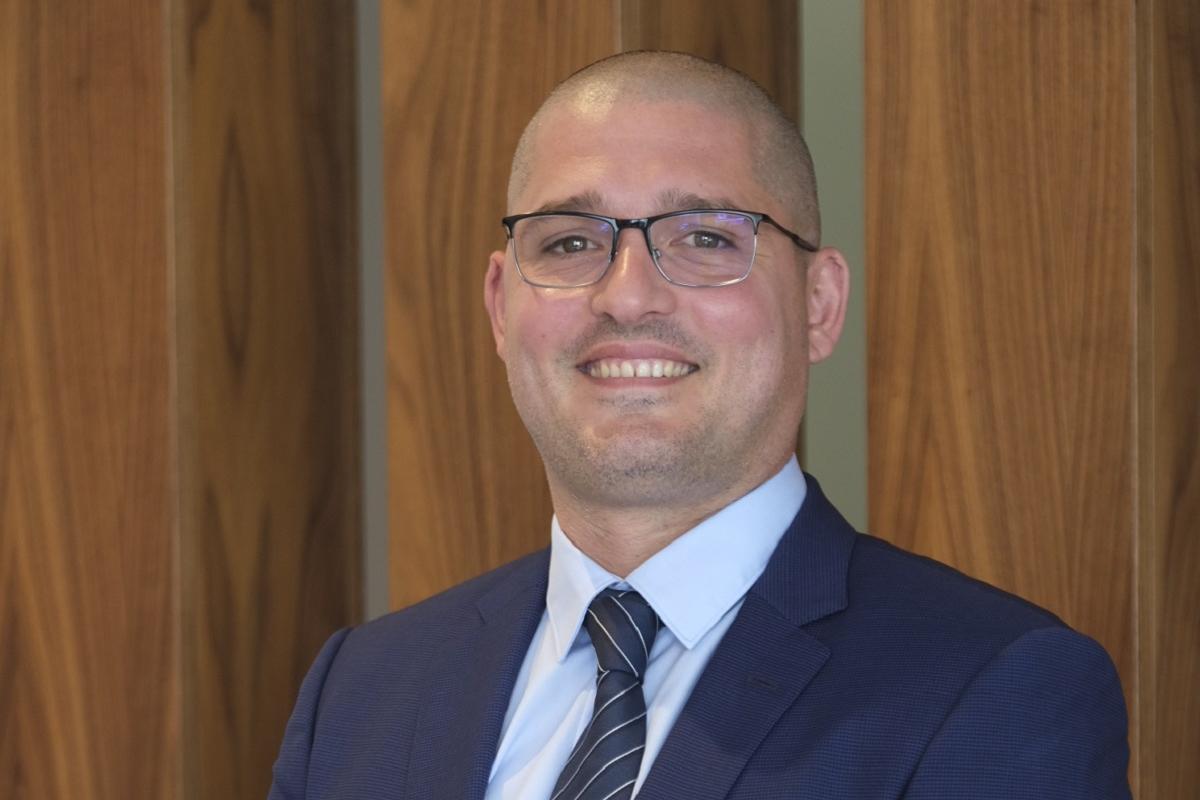 Businessman James Zammit's denies having any illicit links with the Maksars.
‘Le Chateau’
One of the properties Ages Investments purchased was Le Chateau, which Robert Agius used as his personal residence, records show.
The home was purchased in September 2019 for €470,000 from a company owned by Zammit.
To purchase Le Chateau, Ages Investment borrowed €270,000 interest-free from Zammit’s company J. Zammit Estates.
The debt was settled in August 2020, when Zammit’s other company, Finance House, extended the €1.3 million loan to Ages Investments.
Zammit said the €270,000 loan was “interest free” because it was part of a property acquisition deal and was meant to be repaid in a very short period of time.
Furthermore, he said “this is normal business practice and custom in property deals".
Apart from financing Le Chateau and the track car, the loan was to be used to fund other expenses and purchases.
These included repaying a €330,000 debt, money spent on several real estate acquisitions worth €250,000, and another €250,000 paid to Agius’s brother Adrian for a penthouse.
 Court imposed asset freezes have done little to stop the Maksars accumulating wealth.
According to notarised property records, the collateral for the €1.3 million loan from Zammit’s company was a property called Kingstone Garage, which is legally managed by Robert Agius’s mother.
While Agius was subject to the first asset freeze from 2013, a company he co-owned with his brother and mother was also able to sell a property called Vella Farm in 2014 for €700,000 to Paceville nightclub magnate Hugo Chetcuti.
The company, Ter-Nova Properties, was not subject to the freeze.
Were freezes effective?
A financial crime expert said the loans and spending indicate the asset freezes against Agius were not hugely effective, as he appears to have found a way to maintain his lifestyle while technically having his assets frozen.
Kathryn Westmore, who leads the financial crime policy work of the UK NGO Royal United Services Institute (RUSI), said the transactions should have attracted the scrutiny of banking compliance teams.
“If you are banking [Ages Investment], you need to ask what are the purposes of the loans and transactions, what is their commercial rationale. If you’re a bank that has that company as a client, you would hope that your [client] onboarding process would pick up the links to someone under an asset freeze, and then the transactions would merit further investigation; you need to check someone’s made sure they have a legitimate purpose,” she said.
Manfred Galdes, the former head of the Financial Intelligence Analysis Unit (FIAU), said freezing orders very often fail to identify the assets that might have already been transferred to third parties.
“If not preceded by a parallel financial investigation that traces the movement of assets, the effectiveness of the freezing order is extremely limited.”
Any failure to trace and target assets means that there would be “lots of gaps for people to transfer assets to companies,” he added.