How Ritmu Roots Festival is ensuring a folklore music icon is not forgotten
Through archives, concerts and more the memory of Il-Budaj remains alive
When the folklore music legend Frans Baldacchino, known as Il-Budaj, died in 2006, academics, musicians, and politicians lined up to praise him as a cult hero and an artist.
But decades later, the public memory of Il-Budaj has begun to wane, virtually confined to a bust in Mosta and a statue in Żejtun.
“Almost nothing was done after the bust, and he was tragically becoming forgotten,” said Andrew Alamango, the artistic director of the Ritmu Roots Festival, which celebrates music traditions, culture and community. But Alamango is determined not to let Il-Budaj and his talents be forgotten again.
He is making sure of this by dedicating this year’s edition of the Ritmu Roots Festival to him and creating a digital archive with forgotten or never-before-seen footage.
Il-Budaj was born in Zejtun in 1943. Even though he was never formally trained, he became a cult figure, famous for his witty, poetic lyrics and melodic voice. As well as being a famous Għana musician, he wrote poetry, painted, sculpted, and penned two books: Imrieżaq ta’ Moħħi in 1995 and Lejn l-Art u s-Sema in 2004.
He was posthumously awarded the National Order of Merit.
“Since it’s a marginal community, most people know nothing about Għana, but I am trying to create references for a new audience,” said Alamango. “Otherwise, there is a serious risk of losing it.”
Alamango believes he can help keep the memory of the għannejja alive by creating a digital archive. “Technology and traditional music always went hand in hand,” said Alamango, explaining how migrants like Il-Budaj, who moved to Australia in his youth, often took photos or recorded themselves singing or playing an instrument to send back home.
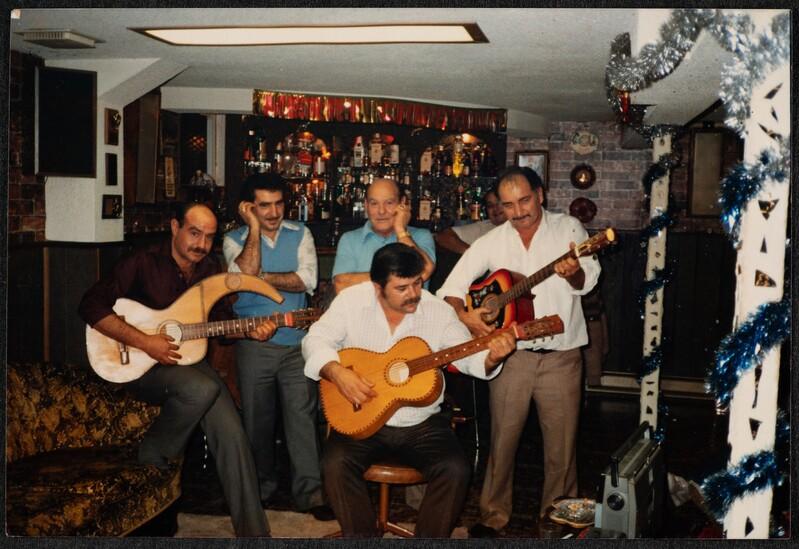 Il- Budaj performing with friends at a bar. Photo: The Frans Baldacchino 'Il-Budaj' Collection, courtesy of Magna Żmien.
Thanks to Magna Żmien, an organisation that digitises and archives Maltese memory, future generations can now experience and enjoy this footage, including that of Il-Budaj for the first time.
Alamango, who is also the Artistic Director of Magna Żmien, and his team have slowly been building an archive dedicated to Il Budaj. The family of Il-Budaj was able to preserve a series of reels, recordings, photos, and paintings of the artist, which they have now entrusted to the Magna Żmien team.
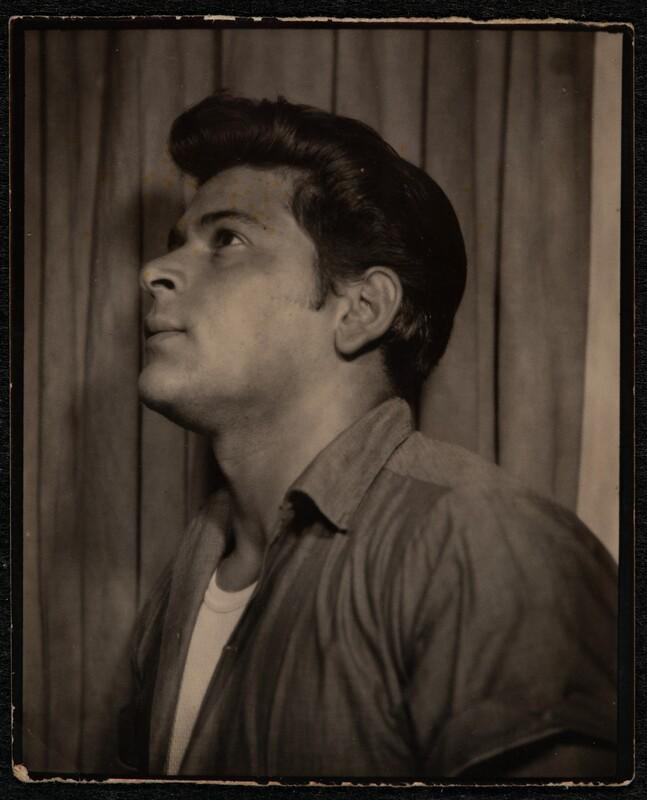 A young Frans Baldacchino, known as Il-Budaj. Photo: The Frans Baldacchino 'Il-Budaj' Collection, courtesy of Magna Żmien.
The footage can be experienced through several performances, workshops, and concerts throughout the Ritmu festival, including Il-Qagħda tal-Mument, a week-long audiovisual installation curated by Sarah Chircop, which reinterprets the material from the Il-Budaj archive.
The festival will take place in Żejtun, Valletta and the Argotti Gardens in Floriana between May 17 and 25.