How seaweed could become the new cling film
Material research start-up has been looking for sustainable alternatives for single-use plastics, packaging for last three years
Engineer Nicholas Zarb was dismayed by the sight of chopped fresh vegetables wrapped in cling film, which must be discarded after a single use.
So he and his team decided to find an eco-friendly alternative to the clear plastic wrap so ubiquitous in everyday life – and created one using seaweed.
They say their replacement wrapping prevents food from browning while being biodegradable and even heat sealable. And now they are looking for funding to mass produce it and have it on the market in the next two years.
“Our goal was to create a material that is not only organic, biodegradable and compostable but also food safe,” said Zarb, lead engineer and director of Natural Edge Ltd, a material research start-up.
With a small team of three – two engineers and a chemist – the company is among the pioneers of a global quest to replace petroleum-based plastic products with plant-based materials that work just as well.
They have been researching sustainable alternatives for single-use plastics and packaging for the last three years.
The result, SUSTAInPack – the Sustainable Utilisation of Seaweed for Transparent and Innovative Packaging, was the runner-up of the Technological Initiative Award at the Malta Intellectual Property Awards 2024.
Their prototype material is uniquely water resistant and has an oxygen barrier that helps preserve food in a similar way to cling film.
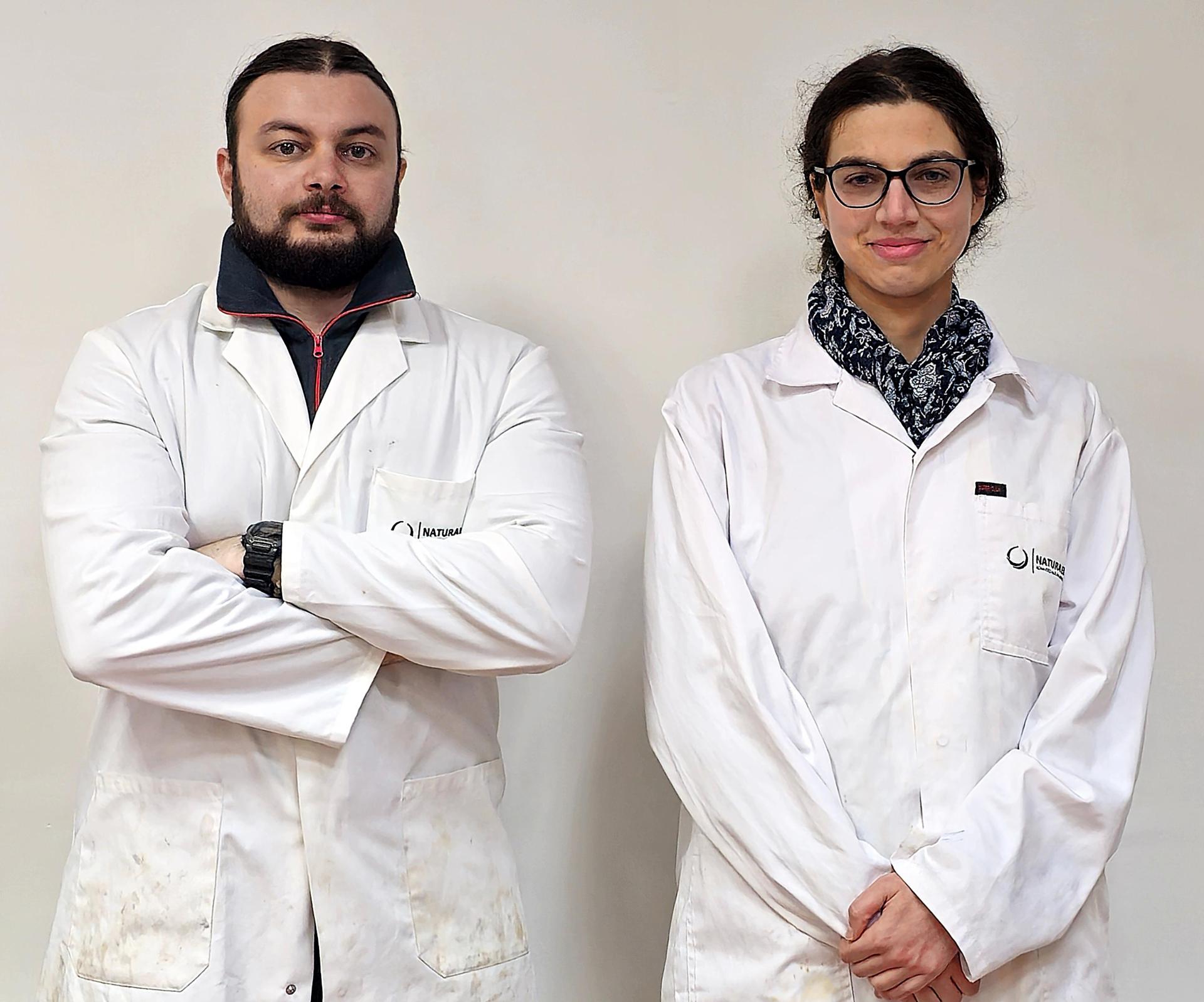 Engineer Nicholas Zarb and research chemist Noeleen Buttigieg say they could have their seaweed-based alternative to cling film on the market within two years.
Very good oxygen barrier properties
Senior research chemist Noeleen Buttigieg demonstrated the effectiveness of the material.
One half of a cut apple is left uncovered, while the other is wrapped in the innovative cling-film-like material, showing the former to have browned “way more” than the other.
“This shows that our material has very good oxygen barrier properties, significantly blocking the oxidation of the apple,” Buttigieg explained.
Another application involves replacing conventional plastic packaging for dry goods.
Buttigieg said the seaweed-based product behaves similarly to traditional packaging and is also heat sealable, meaning it could be adapted easily to existing machinery.
Pointing to two sandwiches wrapped in both plastic wrap and the seaweed-based alternative, which “when you unwrap, eat the sandwich and throw out the plastic, it does not harm the environment”.
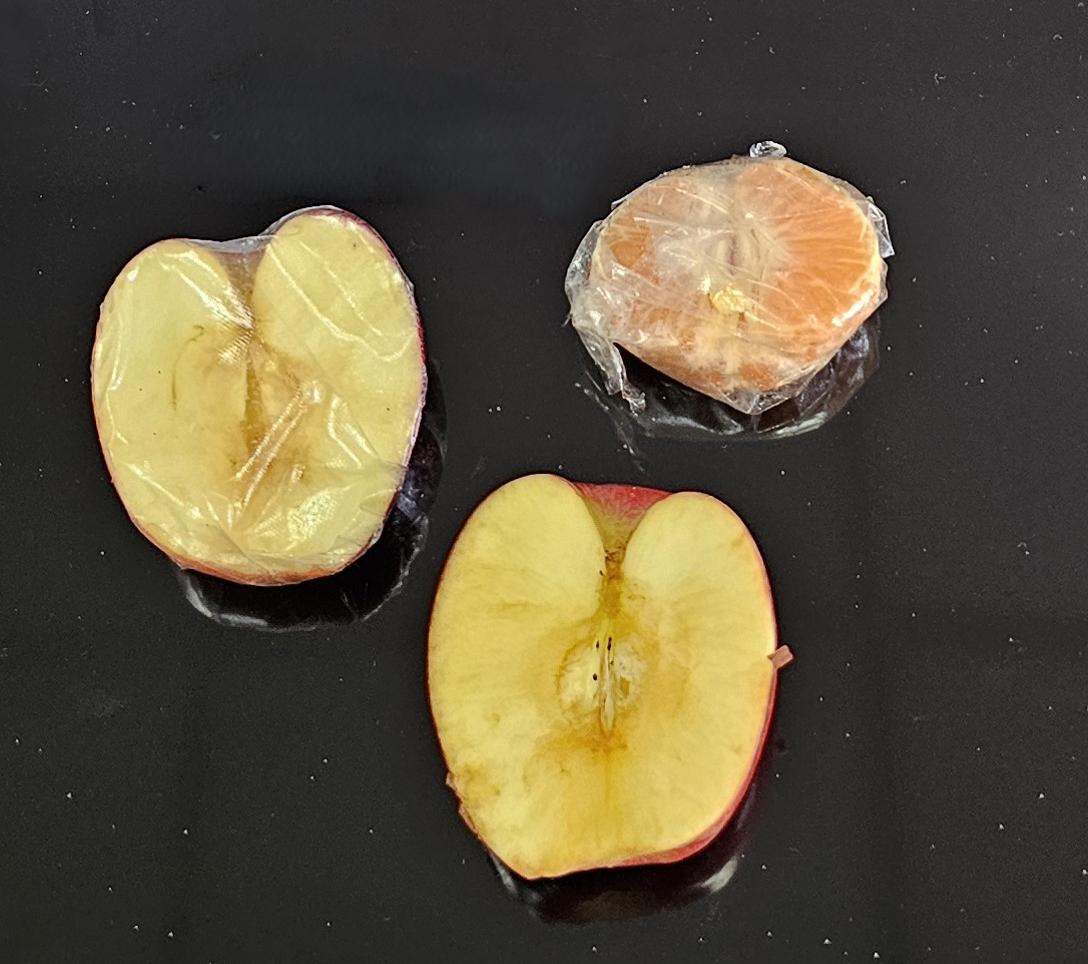 No browning on the wrapped fruit.
They also tried to keep the material simple for production equipment in the packaging industry. The idea is to be able to use existing machinery and not re-invent the wheel, they said.
“We will also strive to keep the prices economically competitive to encourage businesses to switch to our material.”
Research in the lab is now slowly coming to an end, and the team is looking at scaling up and mass producing the product.
“We are still in prototype phase, but the material functions mostly as intended, at least in the lab,” said Zarb.
The next steps involve further testing, refining the process and getting food-contact certification, which is expensive.
For now, the plan is to work on a small-scale pilot line, the engineer said. “We are going from a beaker in the lab to a larger batch of around 15kg of material, which will prove the concept further.
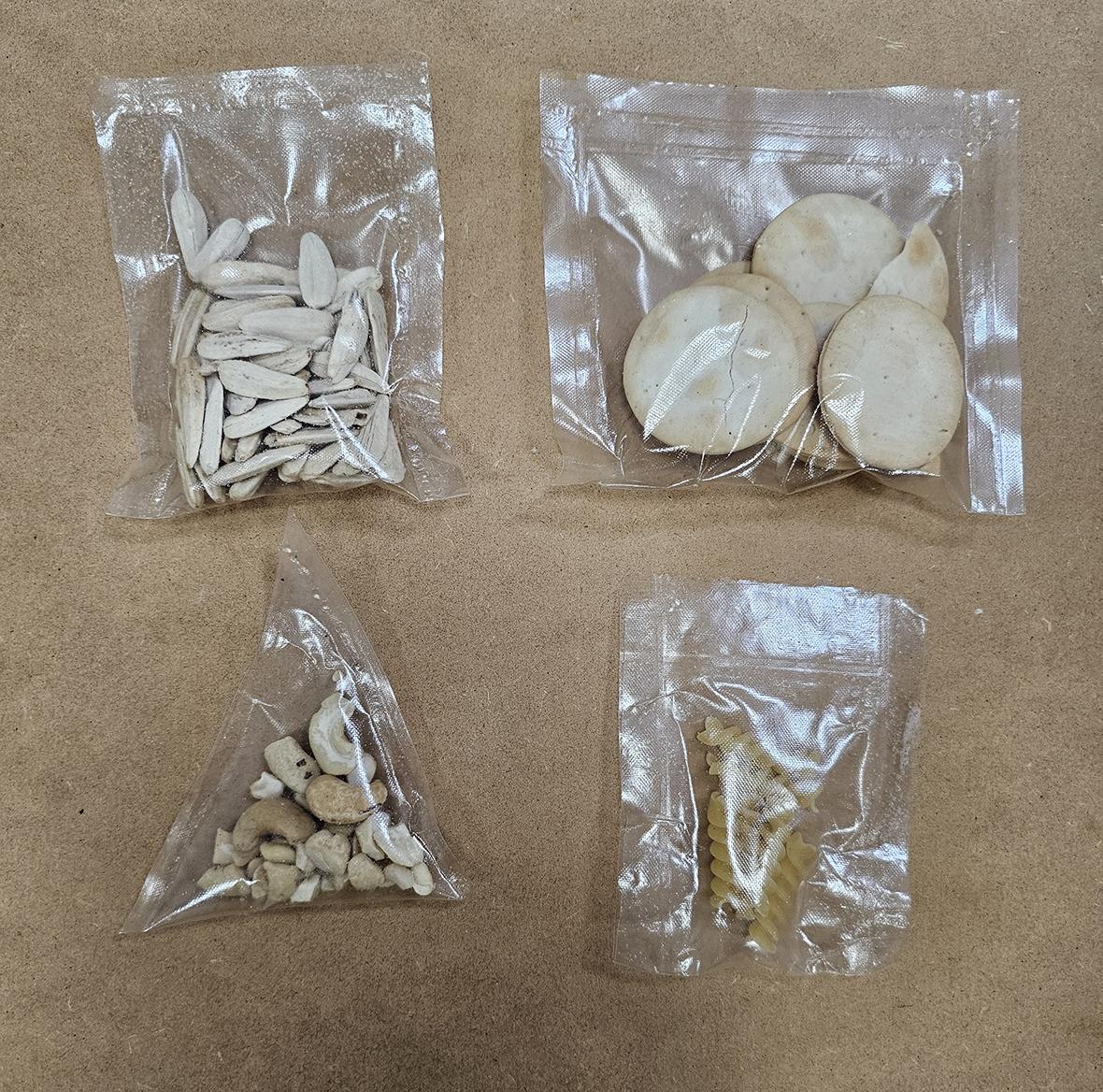 Dry food seaweed-based packaging.
“We need upscaling to refine the process and optimise for larger batch production,” he said, adding this required production equipment and premises – and maybe a partner.
The Research Excellence Programme (REP) funding Natural Edge got from Xjenza Malta helped it achieve a prototype. Now, it is actively looking for financing to get machinery and equipment for the upscaling and testing of larger batches.
This requires a significant investment – possibly from private sources – of upwards of €150,000, the researchers noted.
Natural Edge has now applied for Xjenza Technology Development Programme (TDP) funding, which, if successful, would “boost” it for another three years.
In the coming two, the researchers want to have a product on the market at least for one application, such as cling film to wrap fresh food and dry goods like crackers and snacks in grocery stores.
While it would appear the hardest part was finding a ‘seaweed’ replacement for plastic, the researchers stressed the product came with the “biggest difficulty” of changing how people think and act.
“We could not create a new material that requires special instructions to be used. This means it had to be similar, if not identical, in function and looks to conventional plastics, otherwise market adaptation would be slower,” they said.
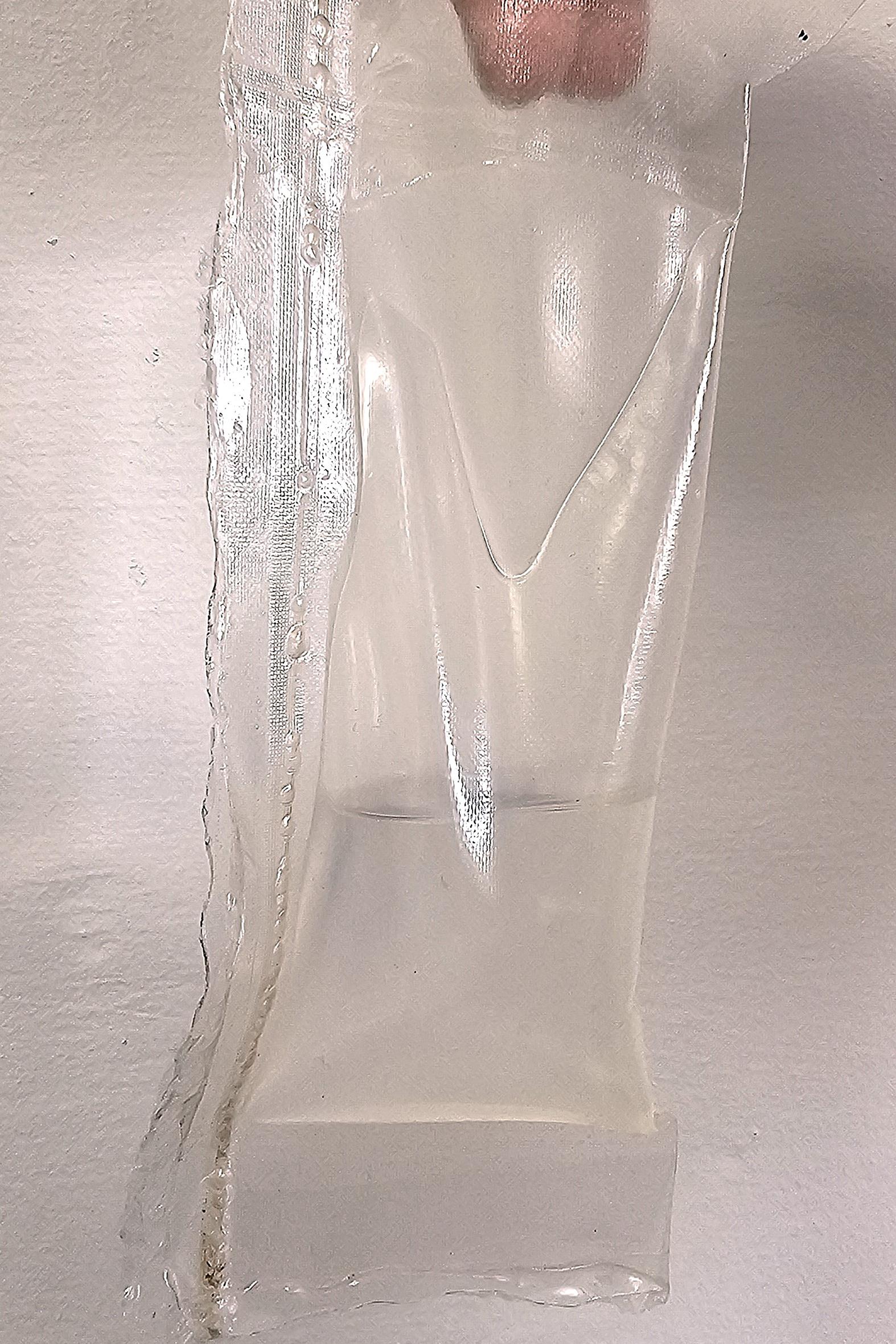 The innovative eco-friendly packaging holding liquid.
While they acknowledge the competition elsewhere in the EU and Asia, so far, to their knowledge, no one has managed to achieve water resistance – an important feature for the material – “with as much simplicity and efficiency as we did”.
The product can be made water resistant if required for specific applications, such as packaging of non-dry goods like sauces.
As for the key ingredient, seaweed, this is used because of the film-forming properties of a certain compound in specific species, giving the material a “good backbone”.
Asked about the potential impact, if the product were to be widely adopted, they said seaweed is a fast-growing aquatic plant that captures CO2 well and can be farmed without affecting ecosystems.
“It is important to note that the extracts we use are already in use by various industries, including food and cosmetics. The amounts we use are low compared to these,” Zarb explained.