Human dignity is your right
Severe human rights violations are only possible because of all those who, together and individually, look away and think that it does not concern them
Comparing today’s humanitarian crises with the Holocaust, symbolised by Auschwitz, is a sensitive matter and must be done with great respect for history. As a history teacher, I’ve taught social studies and World War II for many years, I write curricula for social studies for Norwegian teenagers and I have been to Auschwitz several times.
However, when I once again passed through the gate with the words Arbeit Macht Frei, it felt different from previous visits. It is painful in a different way. For while on earlier visits I have thought to myself, “How could this happen?”, I no longer have any doubt.
I will not compare any of today’s humanitarian crises with past brutal human rights violations. The severe humanitarian atrocities of our time can stand on their own. For posterity and for future curricula, they may symbolise how a collective ‘we’ allowed children to starve to death and how it was our generation that watched genocide unfold minute by minute without anyone with enough power stopping it. It will be up to future students to write a comparative analysis of two humanitarian crises with 80 years between them.
As a teacher, I would likely tell my future students that the common denominator in the war on human dignity is how the global community reacts (or does not react) when human dignity is violated. Severe human rights violations are only possible because of all those who, together and individually, look away and think that it does not concern them.
Auschwitz taught us what happens when people are reduced to numbers, threats, or burdens; when we stop seeing faces and only count pieces. As a Norwegian language teacher, I am especially concerned with the language we use and the narratives we create.
Language is the world’s most powerful weapon. Everything is about language – how some talk about, and see, other people as “the others” – how to genuinely believe that some lives are less valuable, thus reducing them to numbers. Allowing severe human rights violations is entirely about which lives are seen as valuable and which narratives we build around these lives.
When do we contribute financially to the suffering of others? When do we loudly call for sanctions and boycotts? When do we stay silent?
The loss of human lives becomes normalised when we stop seeing the individual in the crowd and the international community does nothing but discuss who started it. Protecting human dignity means refusing to accept that some people’s lives are worth less. It means listening, acting and never forgetting that, behind every number, there is a name, a story and a person.
As I walk between the barracks in Auschwitz, I am reminded that this did not start as a death camp. The world’s most famous extermination camp began as a labour camp. Intellectuals were sent here. Among them, teachers, artists, professors, doctors and lawyers – those people who were inconvenient for the authorities.
Auschwitz eventually became an industrial extermination camp based on ideological hatred, and, although Gaza is not a camp, it is an enclosed area surrounded by barbed wire where human beings are being starved to death. The sound of mothers’ screams as the last breath escapes their children and drones raining bombs over Palestinian refugee camps, likely sounds just like the desperate cries of Jewish mothers when they, often for as long as 15 minutes, realised they were being gassed to death along with their children.
In the darkness, I place my hand on the wall inside the gas chamber at Auschwitz and know that these marks are identical to those scratched inside the hulls of the massive ships that sink off our holiday paradises. After over 20 years of documenting the refugee crisis in the Mediterranean, I have seen these marks so many times before. They are also identical to the marks from broken nails made by people who, with the last of their strength, try to escape collapsing buildings in Gaza.
Auschwitz taught us what happens when people are reduced to numbers, threats or burdens- Kristina Quintano
Auschwitz was not just a place. It was a choice. Millions of people made that choice: to look away. It’s the same choice we make now, every time we stay silent, every time we turn people into numbers. Every time we say: “This doesn’t concern us.”
We are complicit when Norwegian and European weapons (or parts of weapons) end up in the hands of Israeli forces, and we are complicit when we do not shout with the last of our voices when humanitarian aid is blocked at borders and the most innocent children starve to death while meetings are held about possible sanctions, all the while children die.
It is, of course, about the fact that not all human lives are considered equal, and, as long as we continue to invest oil money and, with it, finance an occupation, we are all complicit in violations of human rights.
The shoes and glasses in Auschwitz give us a small glimpse of how many people passed through the gates of various death camps.
At the bottom of enormous ship hulls and under the ruins in Gaza, there are crushed glasses and children’s shoes that will never see a museum. In the sea and beneath concrete and rubble in Gaza, it is not just bodies that drown – but human dignity, and, with that, our own souls.
Along with us in Auschwitz on this trip were two young Palestinian men from the occupied West Bank. They walked there in an attempt to understand what their oppressors have been through.
“How can one repeat genocide when one has themselves been subjected to something like this,” said one young Palestinian man in horror when we came out of one of the gas chambers.
As long as children are starved and killed in Gaza, as long as people drown fleeing outside our holiday paradises, but also as long as we remain silent observers of the other forgotten crises of the world, we have learned nothing.
Human dignity is not something you must earn or deserve. It is not dependent on nation, religion, or politics.
Human dignity is your right – simply because you exist.
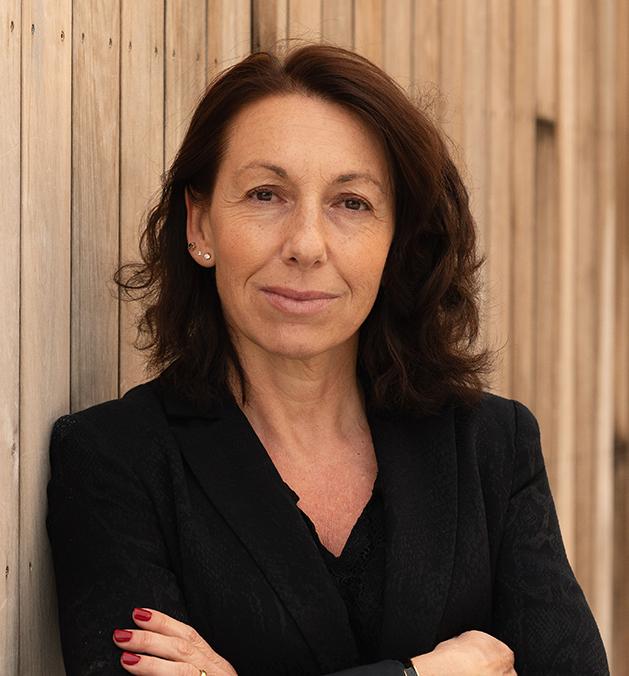
Kristina Quintano is a prize-winning author in Norway. She is a journalist, translator, publisher and teacher and provides daily updates for Norwegian readers from the refugee crisis around the Mediterranean.