In pictures: Early bathing and beaches in Malta
Early postcard publishers generally excluded images of bathers on beaches from the picture side. Scantily dressed women and men would have been deemed offensive to family decorum
Almost no evidence at all survives that the locals ever practised swimming as a leisure pastime or as sports before the end of the 19th century. If anything, what we know points in the opposite direction – the Maltese hated exposure to the sun.
 A 1930 beach scene by Geo Fürst
Till World War II, coming across a local, irrespective of class, sex or fashion, in the streets not wearing some head-covering, hat or a cap was almost impossible. De rigueur.
 Swimming in Tigné. A 1930s image by Richard Ellis
When leisure sea bathing started catching on at the beginning of last century, a compromise had to be reached – those who could afford it owned or hired a banju, carved out in the rocks adjacent the public shoreline, protected by walls and ceiling linked to the sea by a hollowed corridor through which water entered the cubicle.
 A Richard Ellis postcard of the Exiles beach in Sliema
 The author, aged 2 (left), bathing with his sisters and mother.
These banjijiet served multiple purposes – lust-blockers to defend modesty, they ensured privacy, protected decency while undressing and acted as impregnable barriers against UV radiation. I recall the remains of the excavated banjijiet of Santu Rokku and Marsamxett, Valletta and others in the Sliema area.
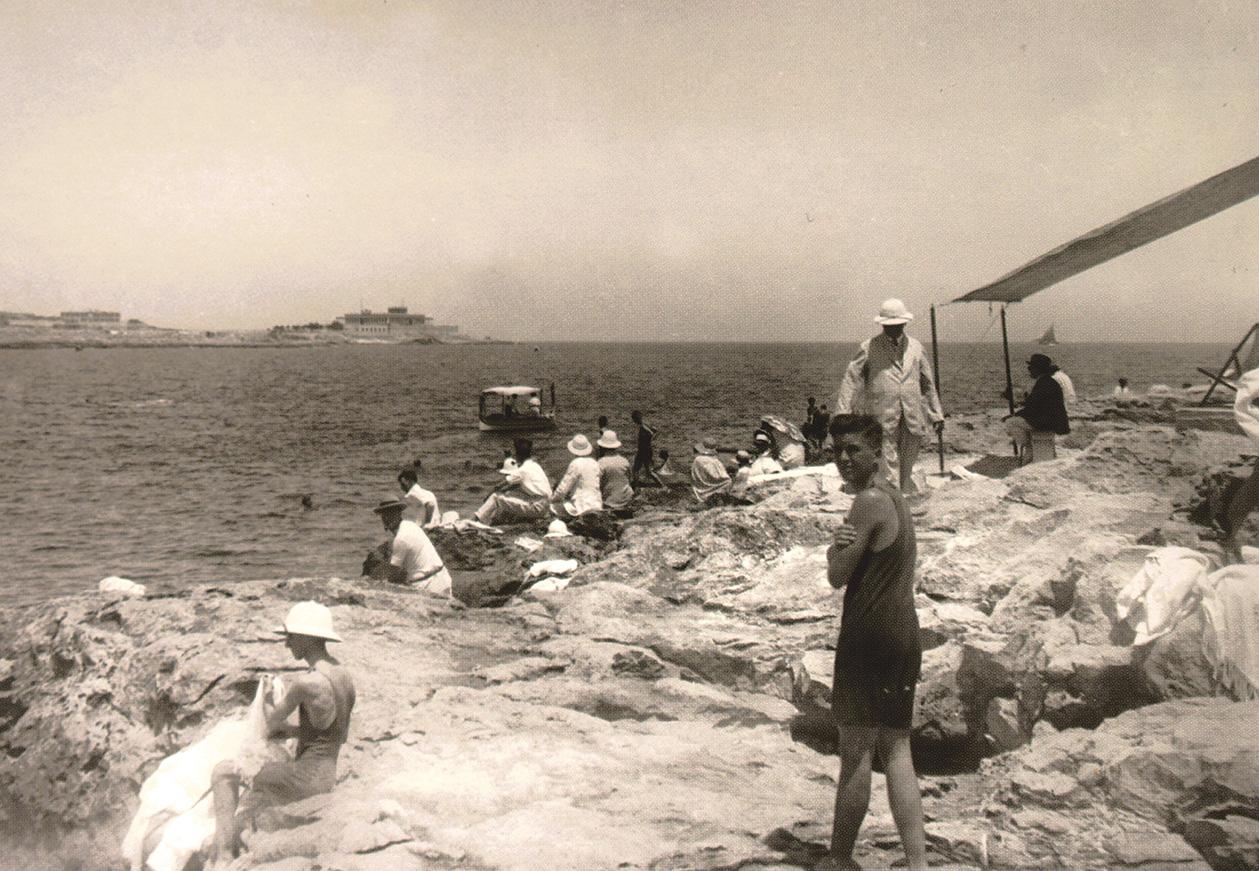 Another view of the Exiles beach, early 1930s
The evolution of bathing suits, both male and female, saw revolutionary changes, from ordinary maxi-dresses in cottons, flannels or wools, to swim-specific apparel, functionally fashioned in cut and fabric for the sea, the pool, seaside sports and sun-bathing. They progressed to less is more and nothing is almost better.
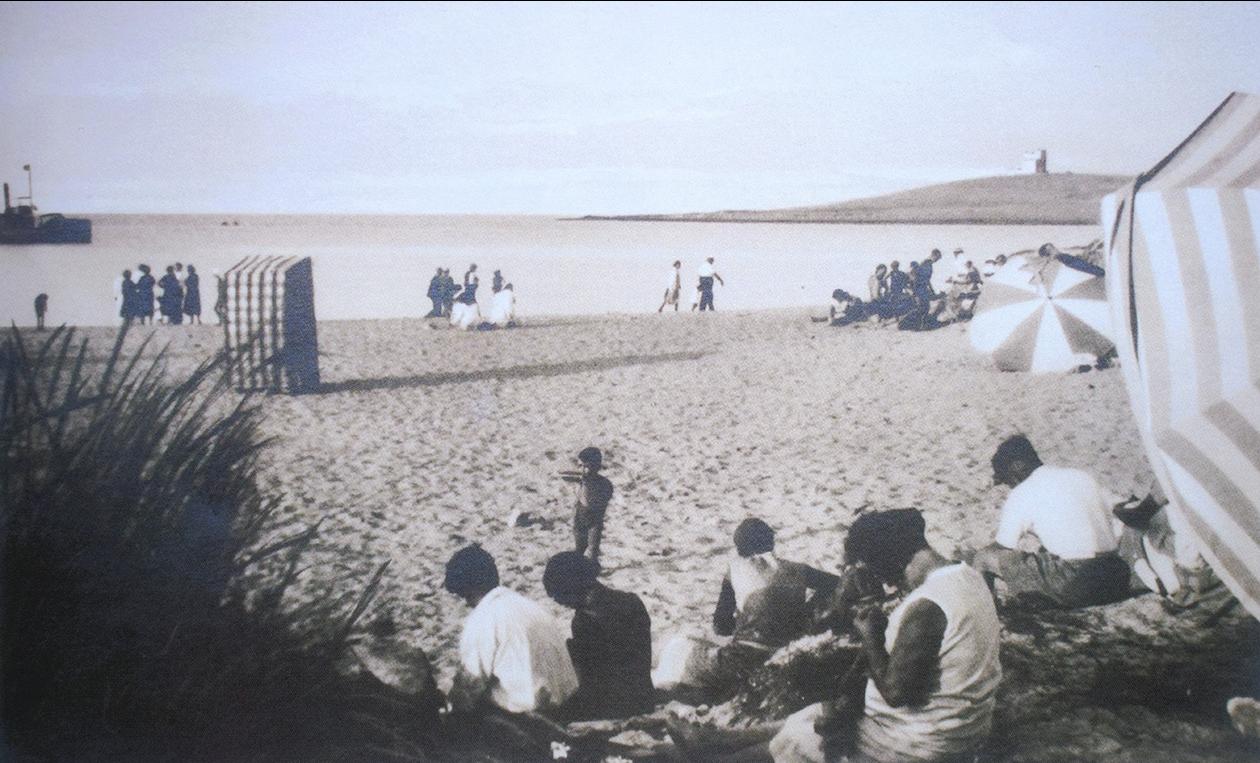
Armier Bay, 1930s, a postcard by Geo Fürst

The Manoel Island beach area in the 1930s, by Geo Fürst

The springboard. 1930s postcard by Geo Fürst
Early postcard publishers, differently from today’s, generally excluded images of bathers on beaches from the picture side. Scantily dressed women and men would have been deemed offensive to family decorum.
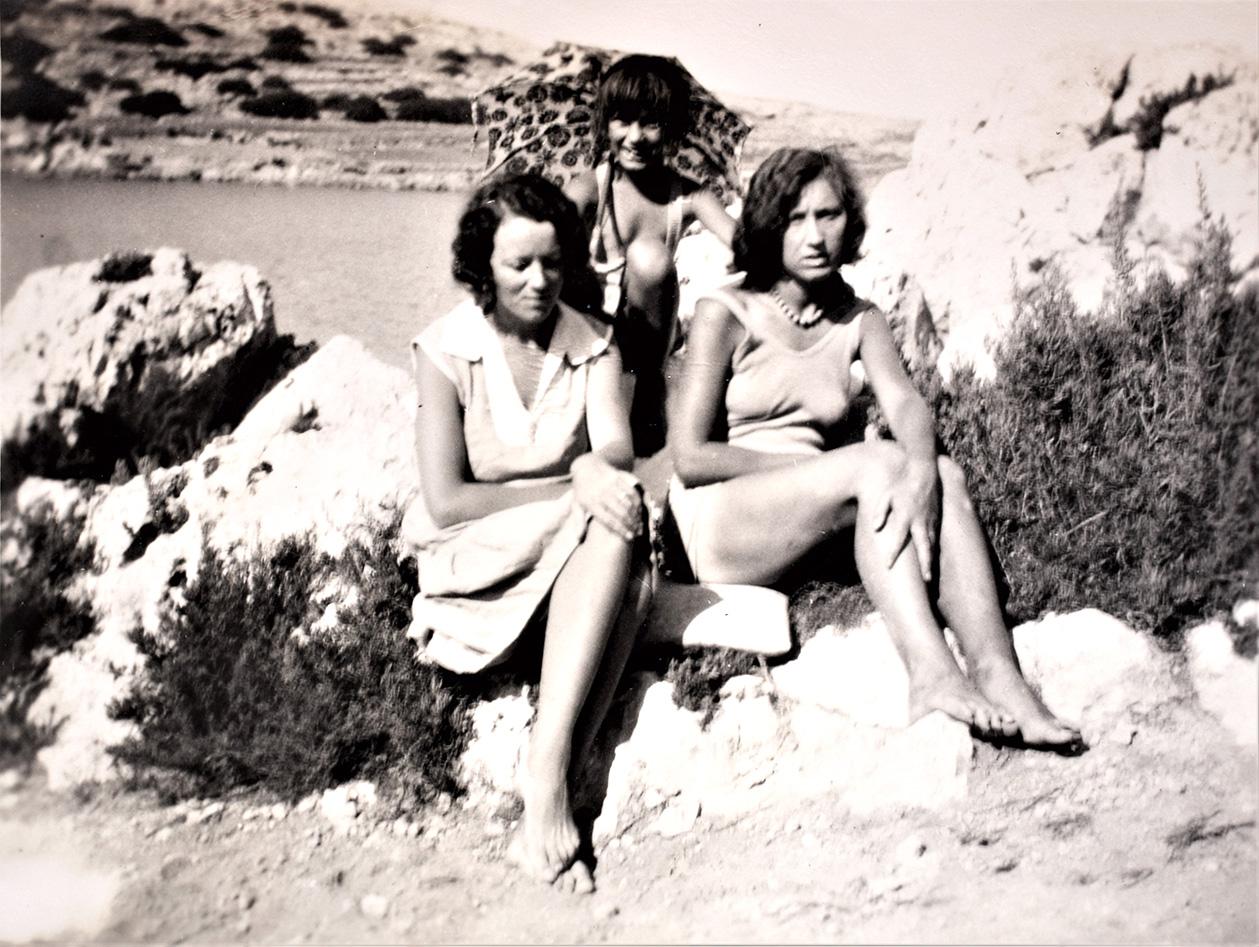
From a 1932 family album – three ladies bathing.

A 1930s snapshot of young people bathing.
That changed radically in post-war publishing – close-ups of ladies in two-pieces, bikinis, tangas and less became a selling point for postcards. I might put together a follow-up on beach postcards after independence.
 A pre-war bathing scene by Geo Fürst
Most images are from the author’s collections.
 Bathers in silhouette, a 1930s postcard by Geo Fürst