In pictures: Early carnival advertising floats
Using carnival floats to promote edibles and consumables seems to have caught on in Malta in the 1920s and 1930s, and had a second strong revival in the 1960s
Historians believed that carnival festivities were introduced in the island when the Order of St John took over in 1530 but more recent research pushes back these celebrations much earlier still.
Since those obscure origins, carnival has remained a period of collective merriment, sometimes punctuated by tragedy and upheaval, like the violent expulsion of the Jesuits in 1639, the massacre of over 100 children in 1823 and the anti-Sabbatarian disturbances of 1846.
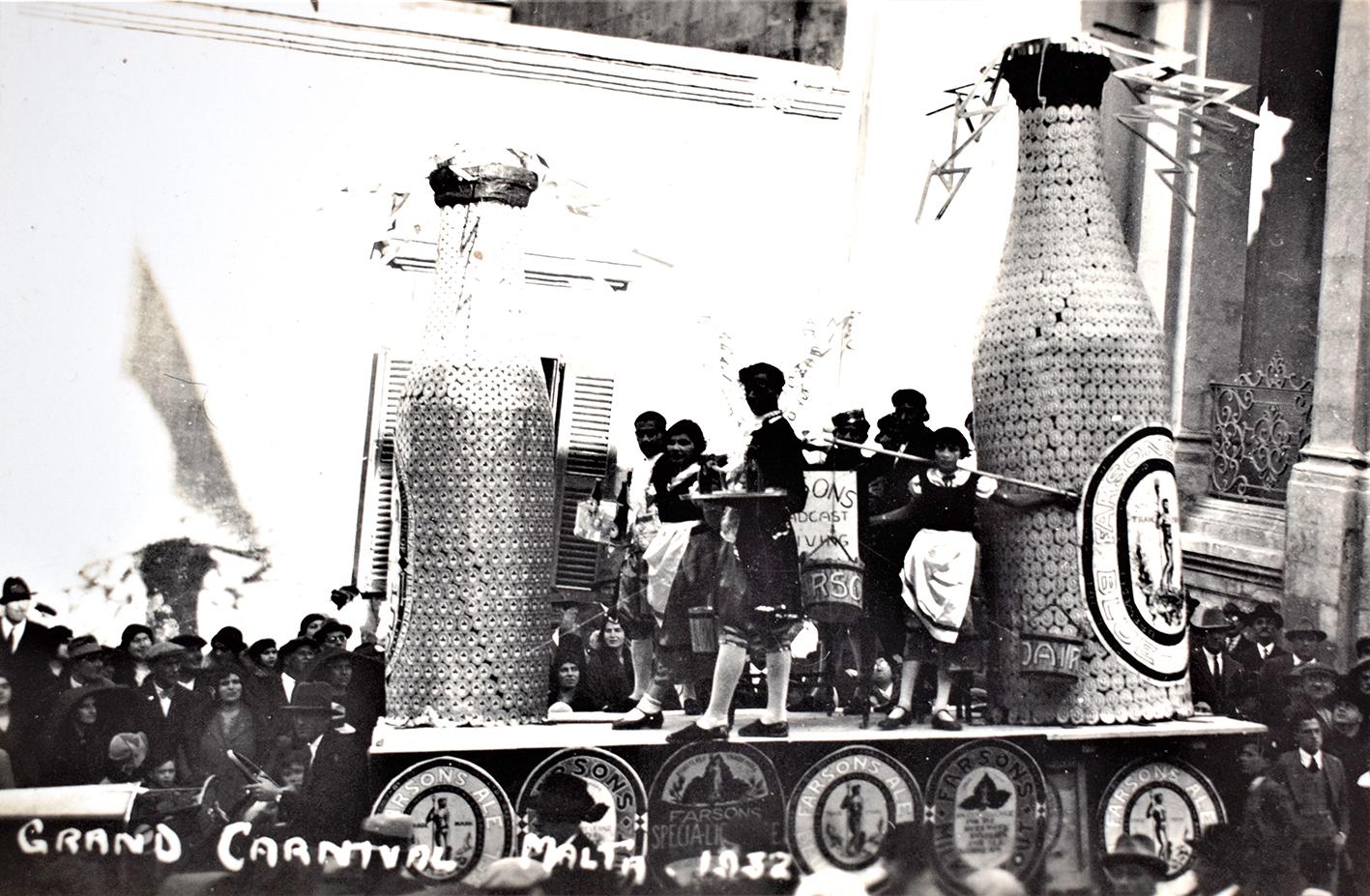 The Farsons float in the 1932 carnival parade postcard
The organised entertainments, especially the défilé floats, over time lost any connection with their religious origin.
They still remained multifunctional, pursuing several objectives – fun, satire and, why not, commercial promotion. Up to the 1930s, biting political caricature still claimed a robust share in a carnival freedom-of-expression bonanza.
Almost all the objects promoted were imports, with minimal, if any exceptions
But misinformation about police powers and toadying to the powerful put an end to that just before World War II, and making fun of august politicians became a self-imposed taboo.
Commercial advertising lingered on. It is difficult to establish when and who pioneered it but it seems to have caught on the 1920s and 1930s and had a second strong revival in the 1960s, especially where the marketing of alcohol and soft drinks was concerned.
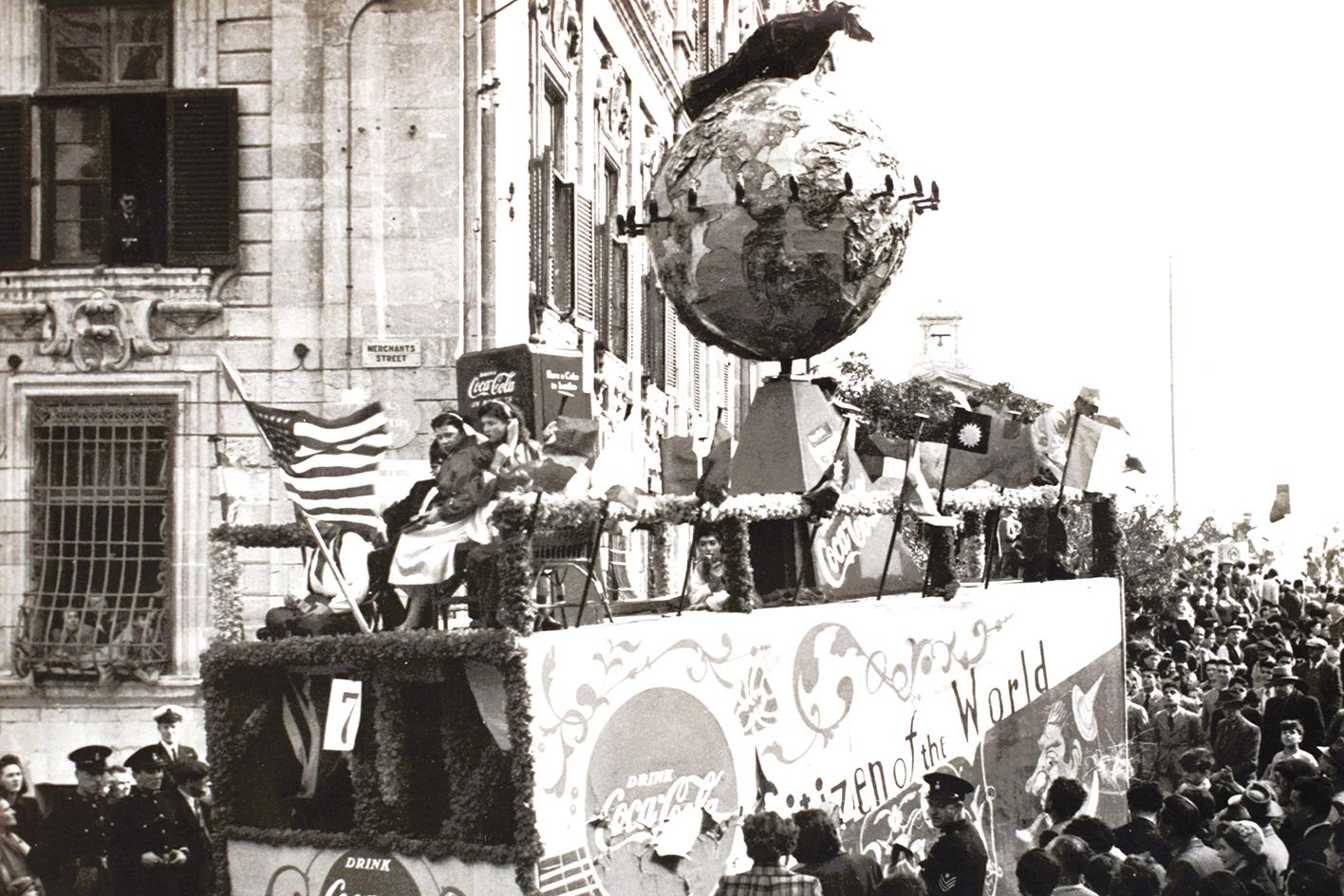
Coca-Cola repeatedly promoted their soft drinks in carnival.

A 1956 carnival float promoting Coca-Cola.
In my collections, I found photos of three different floats, spanning over many years, with Farsons carnival promotion; and of Coca-Cola, Seven-Up, and Ovaltine; and the designs were rather unsophisticated, and of course, execution compared to foreign contemporary floats and to the best products out there today.
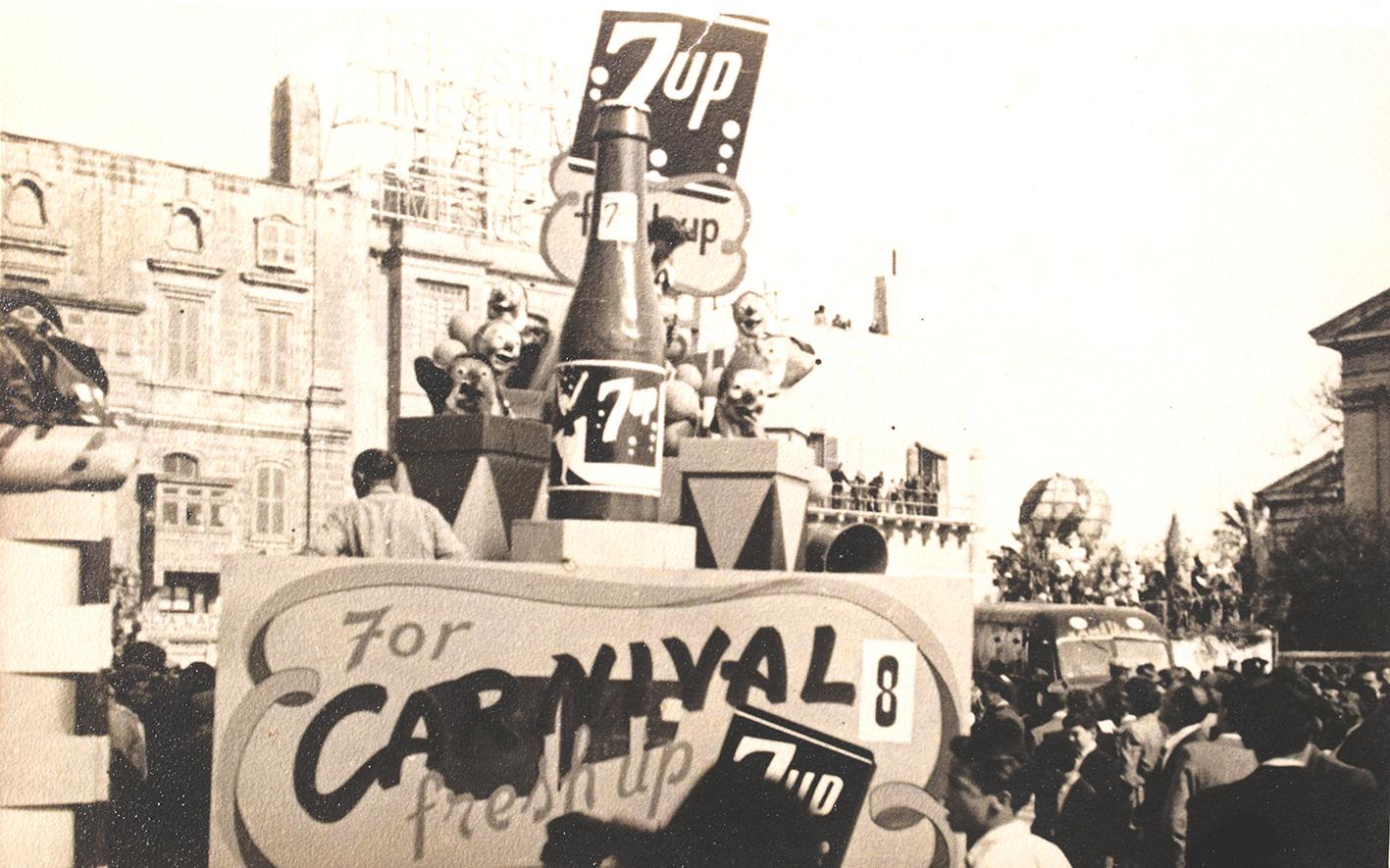
Portanier, distributors of Seven-Up, were present in a carnival 'défilé' of the late 1950s.
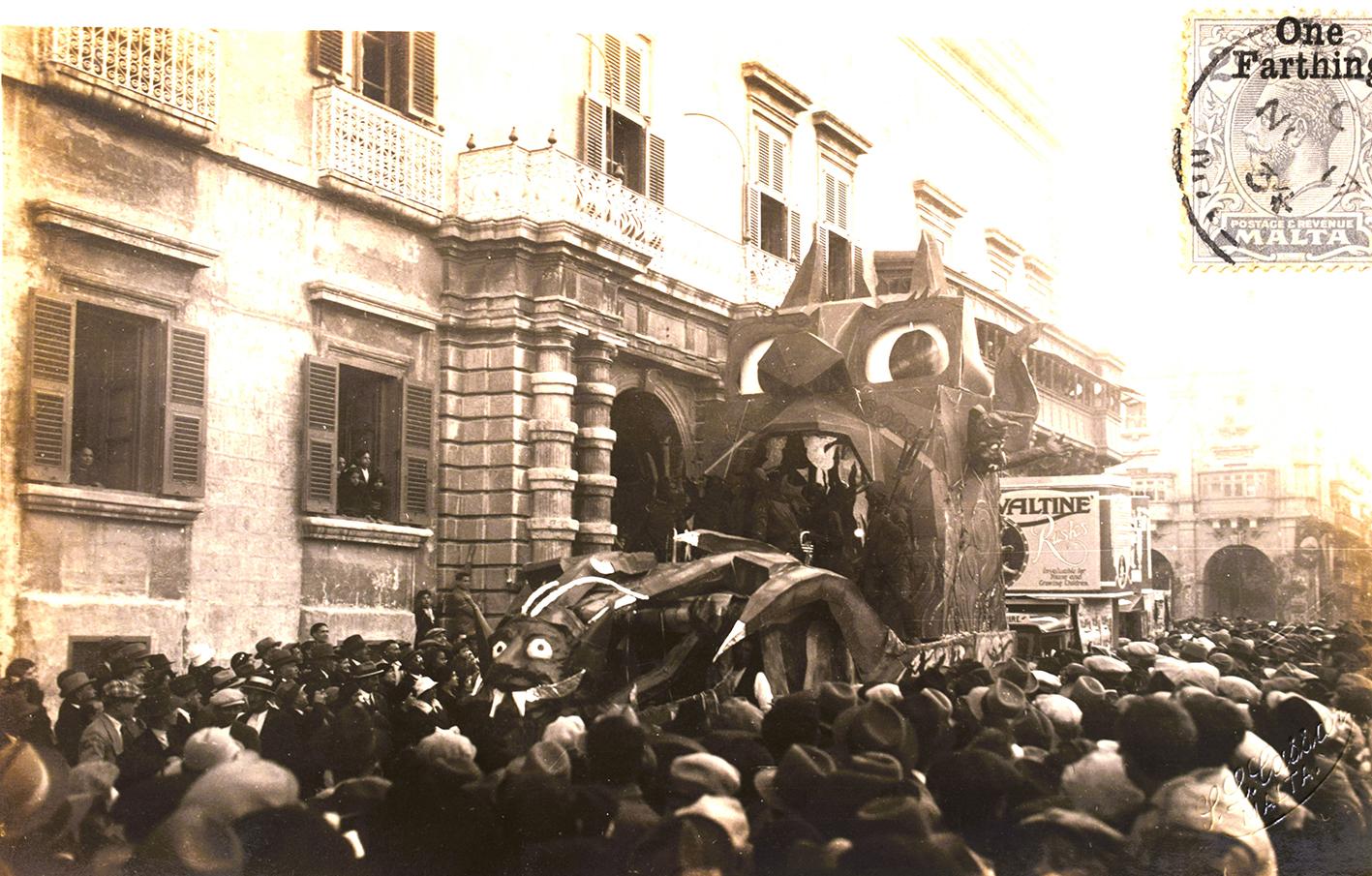
Ovaltine publicity can be seen in this carnival postcard used in 1934.
Almost all the objects promoted were imports, with minimal, if any exceptions. One majestic float advertised tinned ravjul – possibly of Maltese origin.
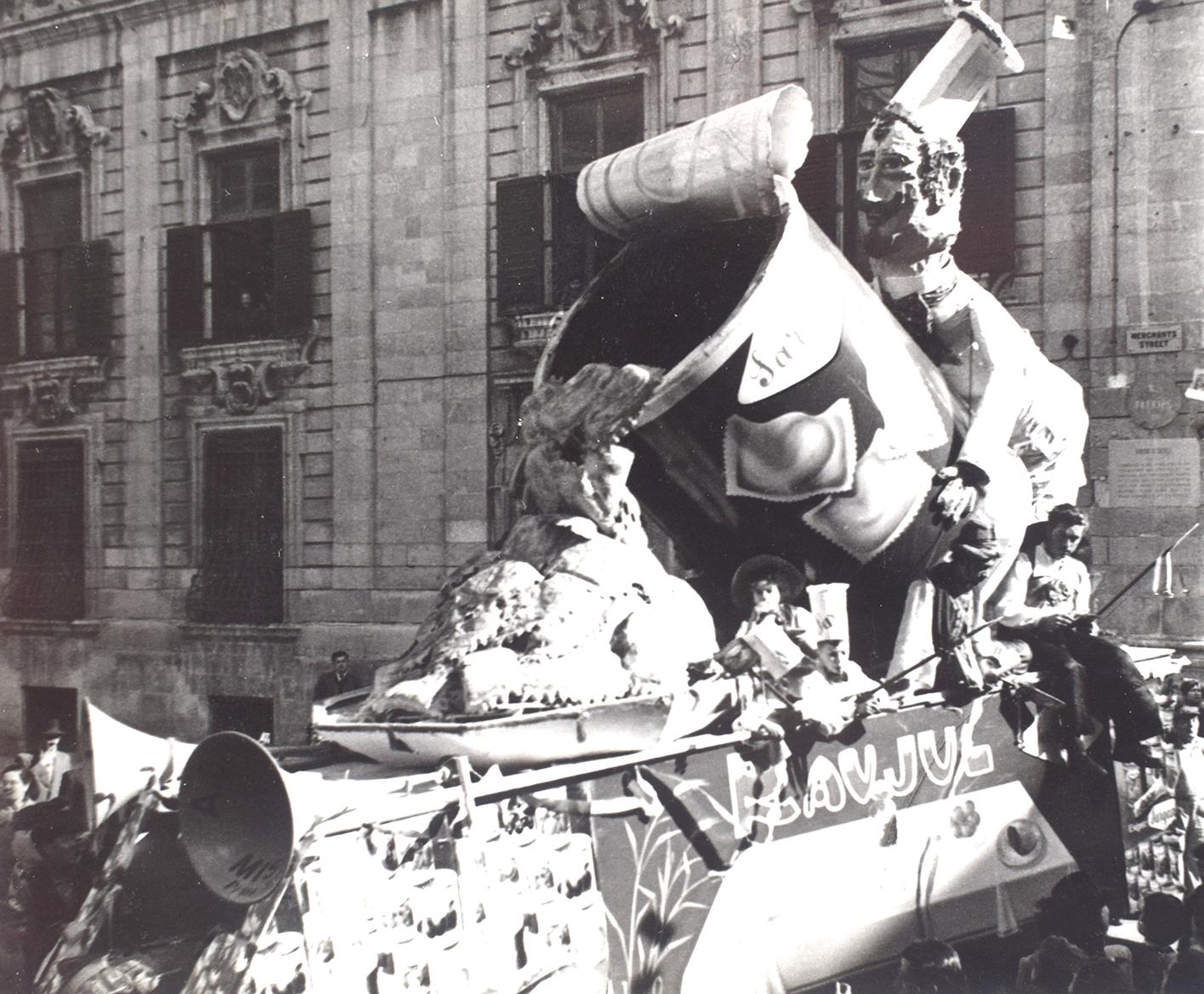 A 1960s carnival promotion for canned 'ravjul'
Mostly edibles and consumables, like Johnnie Walker whisky, born in 1820 and still going strong; or Philips light bulbs of iconic pedigree; or Gevaert’s photographic products; or British paints.
Not surprisingly, very few photos were marketed as postcards.
 A 1920s postcard of a carnival float advertising Philips light bulbs.
All images from the author’s collections