In pictures: Early images of Manoel Island
The islet that has been making headlines has centuries of history
To a rock as unpretentious as Manoel Island, micro-history has been lavishly generous. In 1570, the Church purchased the islet, from then onwards nicknamed the Bishop’s island.
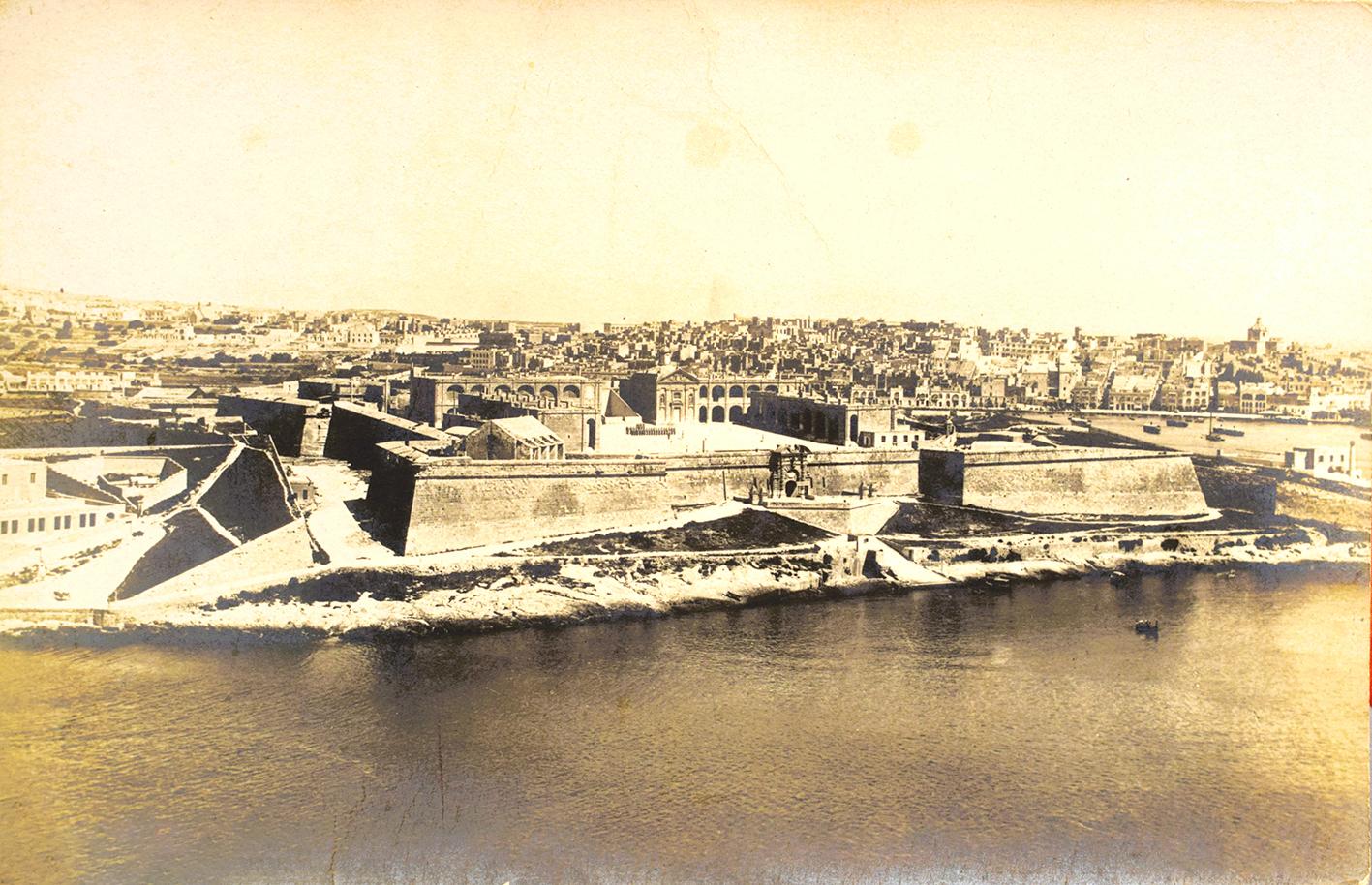 A panoramic postcard by Salvatore Lorenzo Cassar, 1920s
During the disastrous plague epidemic of 1592, a makeshift hospital and isolation lazzaretto were erected there. In 1643, the Church and the grand master agreed on a swap: the Order gave the bishop landed property near Rabat, and, in exchange, the islet in Marsamuscetto returned to the civil authorities.
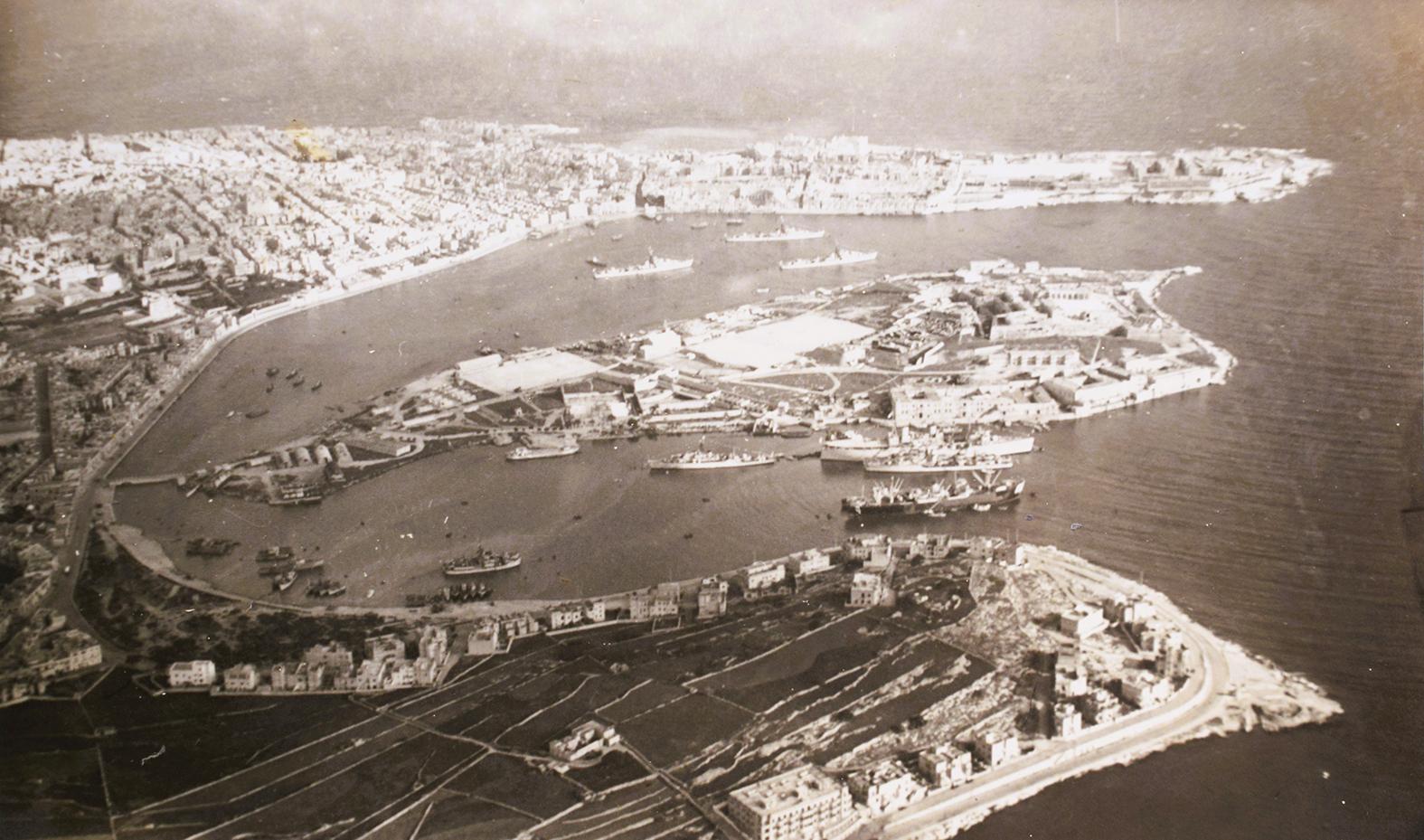
A bird’s eye view of Manoel Island in the 1930s
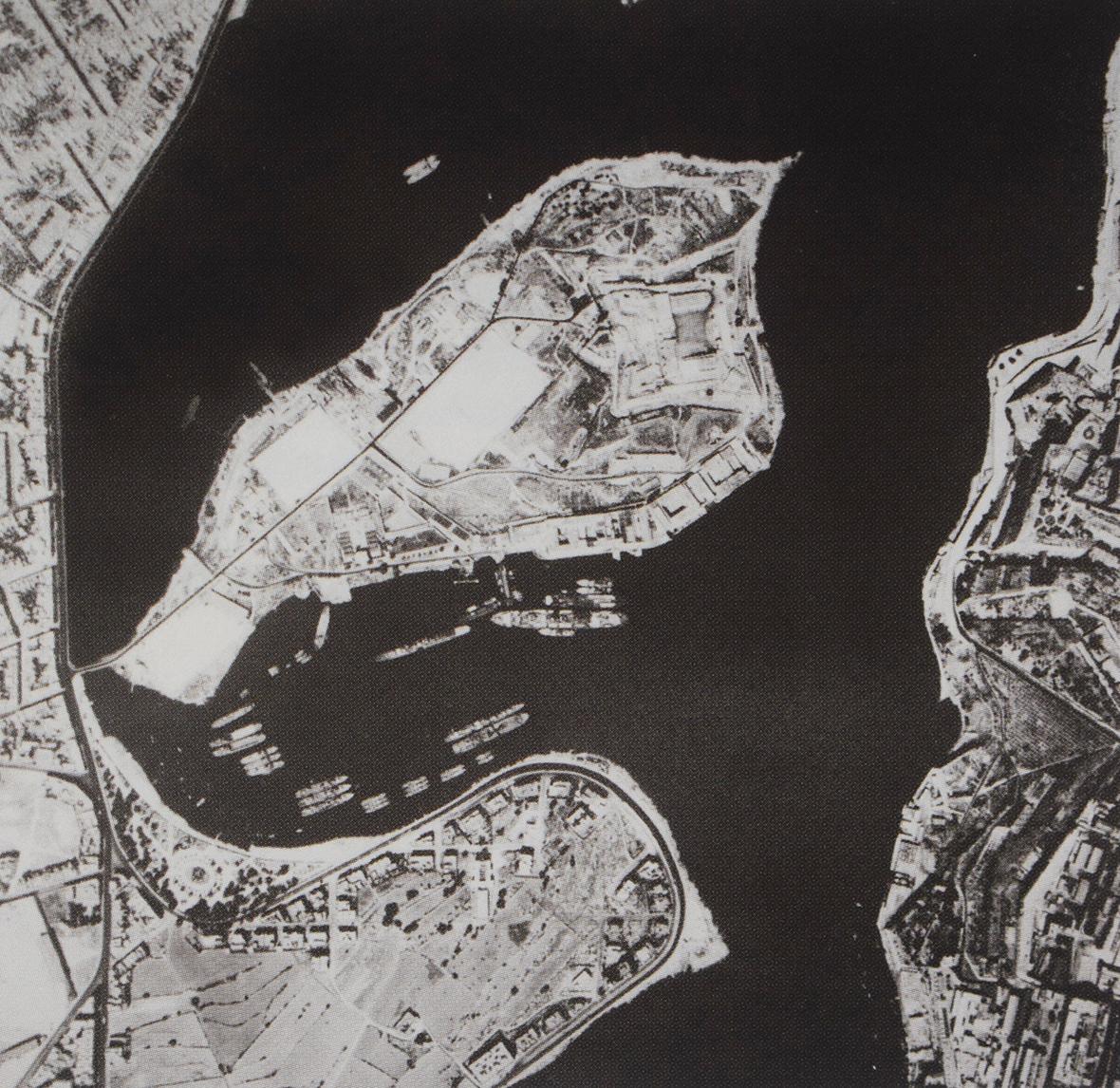
Aerial photo of Manoel Island, 1930s
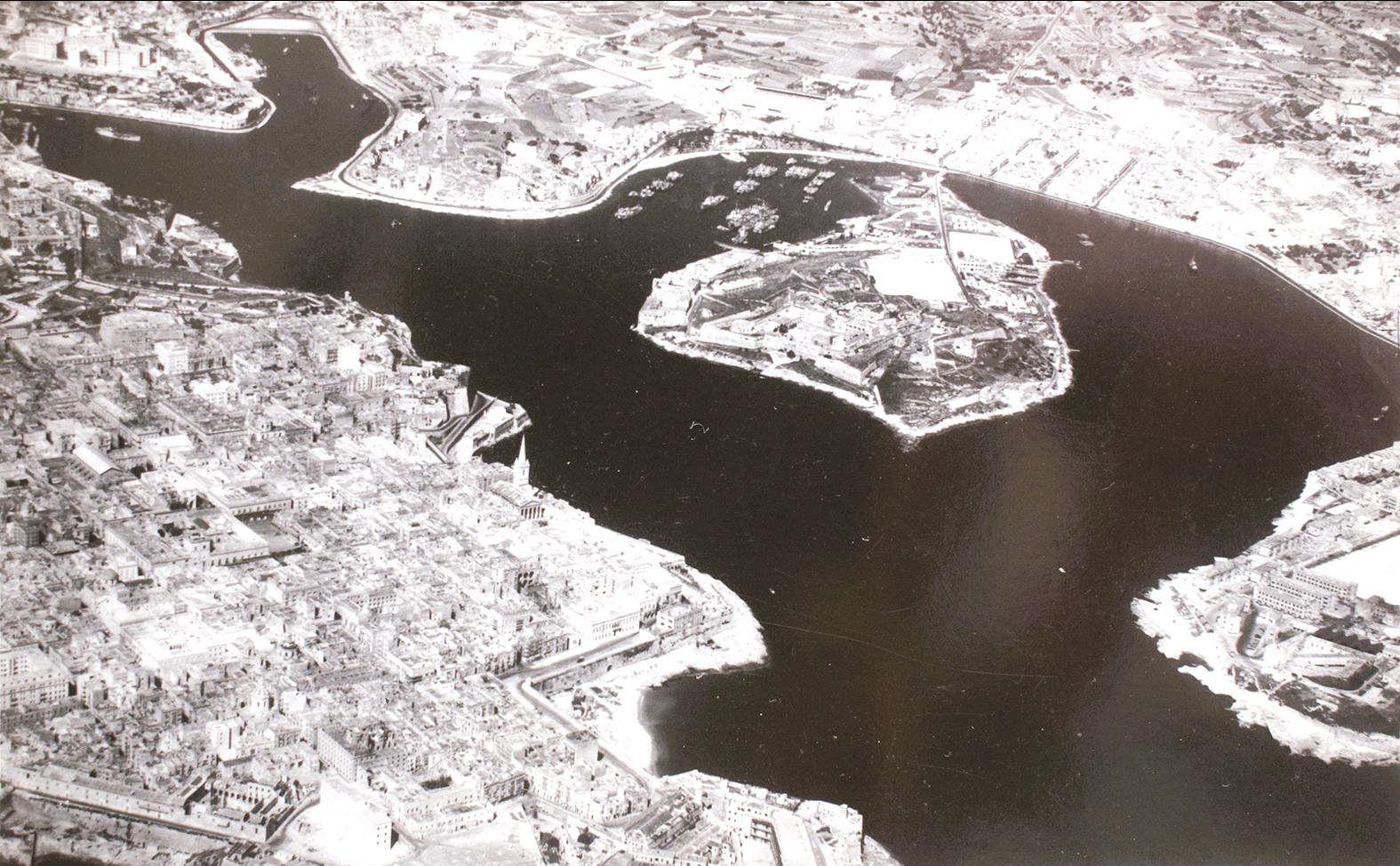
An aerial view of Manoel Island in 1953
The island gained the reputation of being one of the most efficient lazzaretti in Europe
It began being used exclusively for health-protection purposes – as a quarantine establishment, as an isolation hospital for highly infective diseases like cholera, yellow fever and plague, and for the disinfection of what were considered carriers of contagion, like letters, paper in general, clothes and other suspect material.
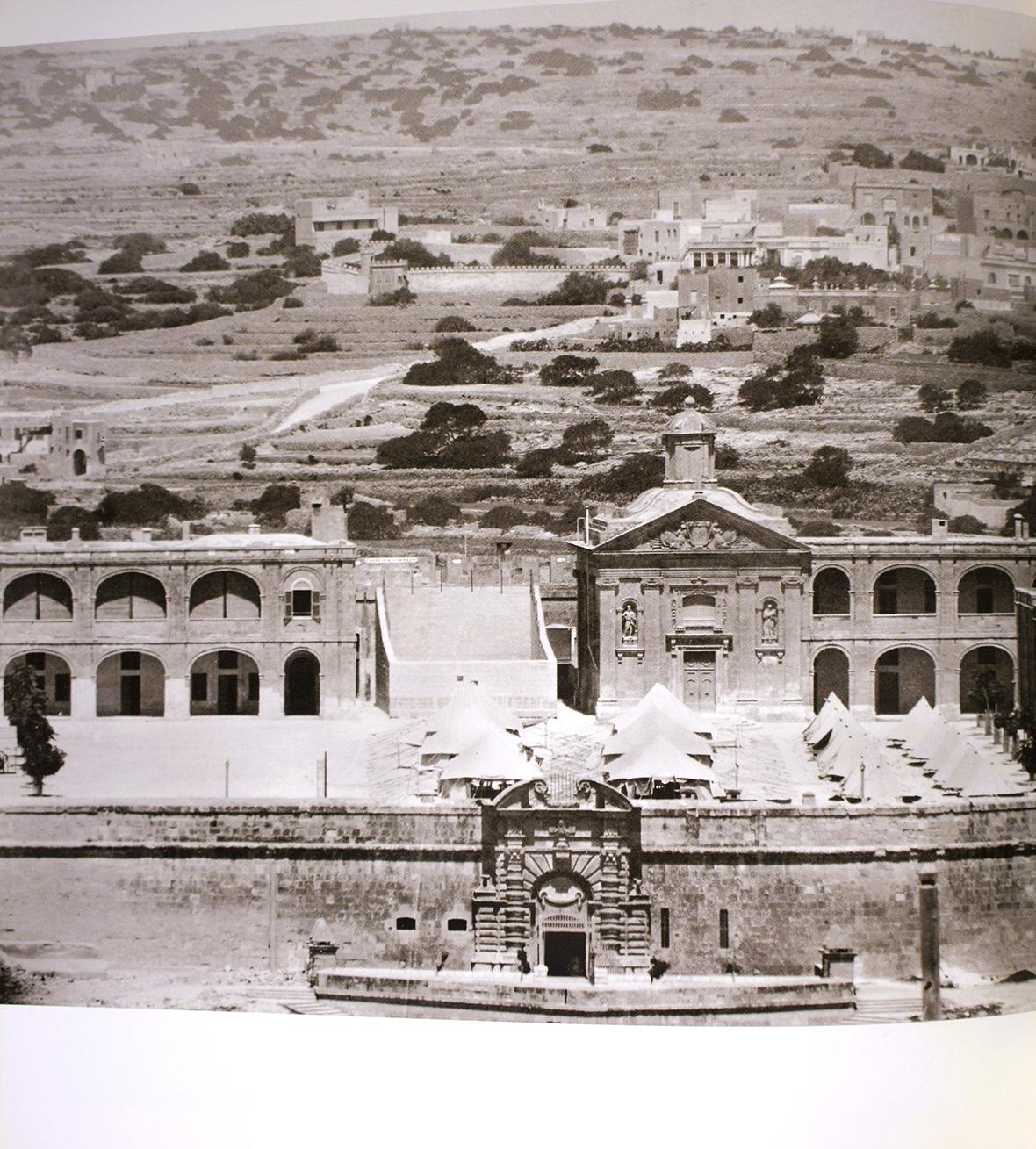 A 1920s postcard of Manoel Island by Richard Ellis
The process of disinfection came to be known as profumo. Over the years, Manoel Island gained the reputation of being one of the most efficient lazzaretti in Europe.
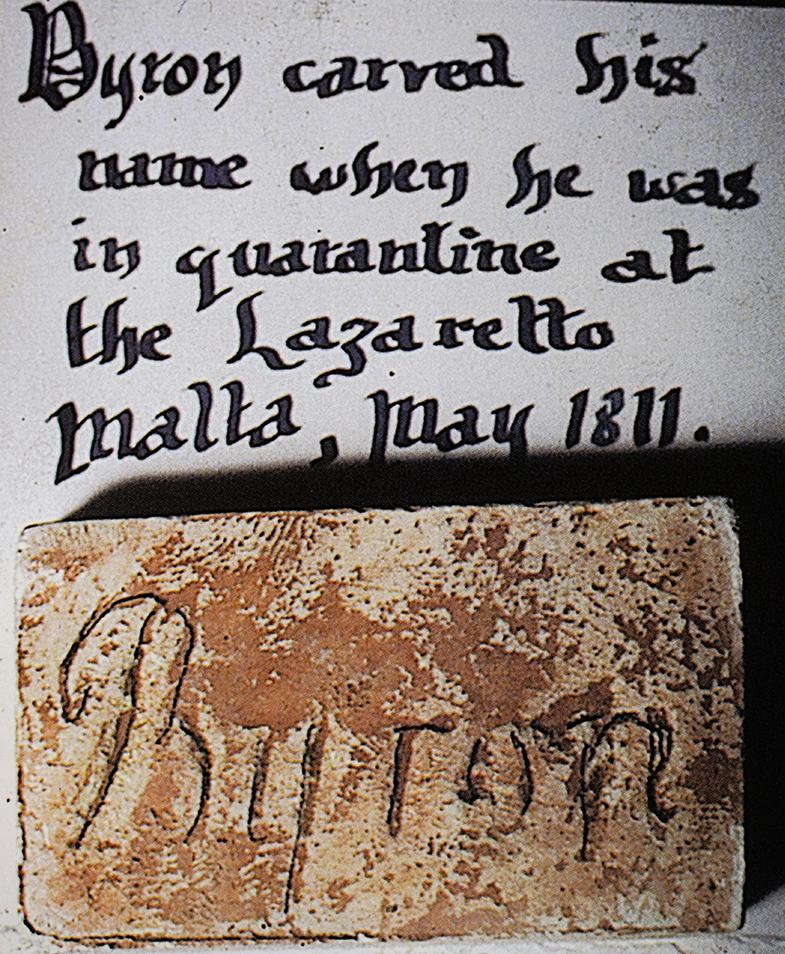 The poet Lord Byron engraved his name while in quarantine on Manoel Island in 1811.
The Order, and later the British, enforced sanitary precautions and isolation, with contraventions attracting the death penalty. Many bored inmates scratched their graffiti on the stonework. Lord Byron too incised his name but someone later stole his memento.
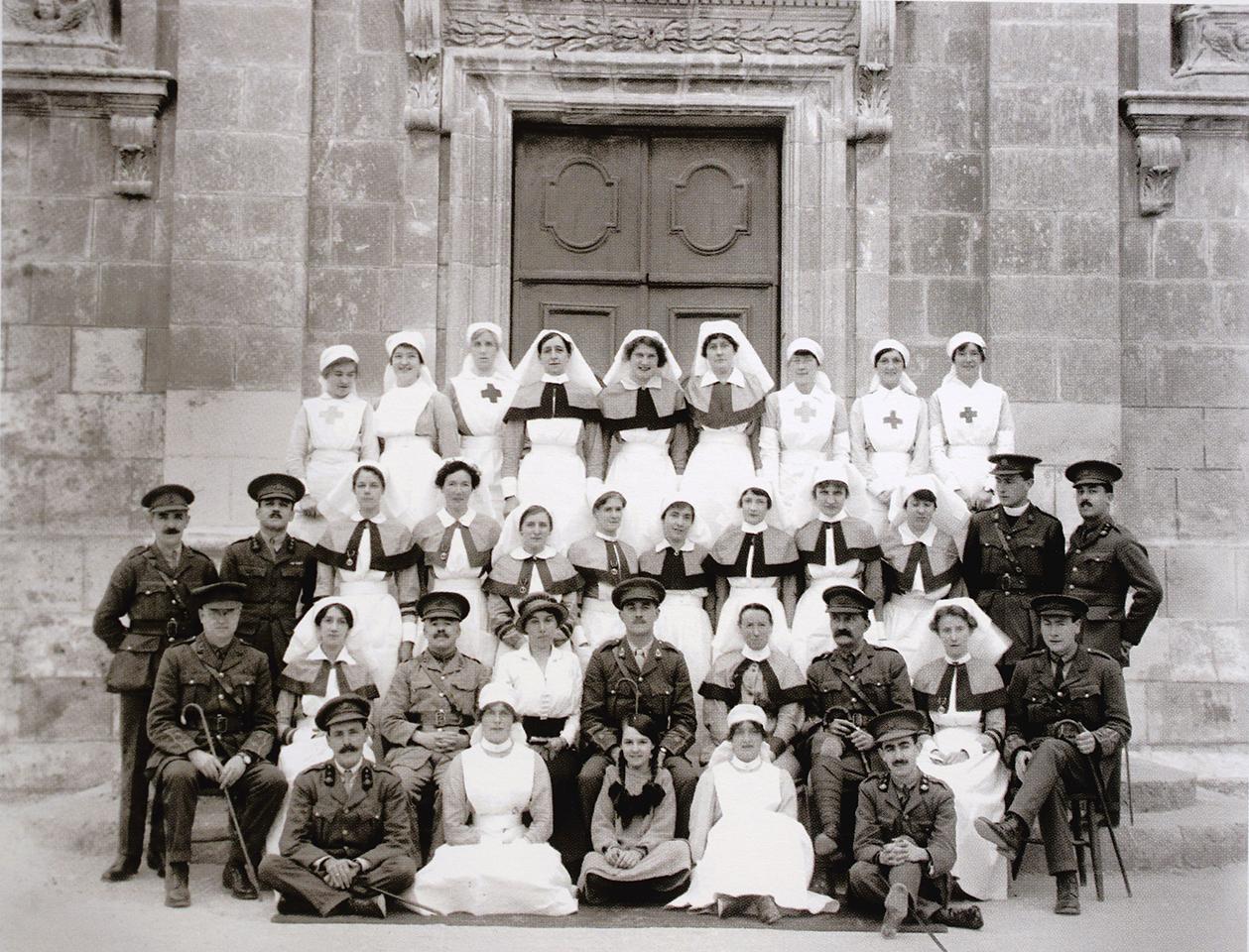 In World War I, Manoel Island became a hospital. This is a group photo of the nursing staff
The Order’s compulsion for fortification found another outlet in the building of a magnificent star fortress, starting in 1723. Two gifted military engineers of the Order, Tigné and Mondion, contributed to realise Grand Master Vilhena’s ambition.
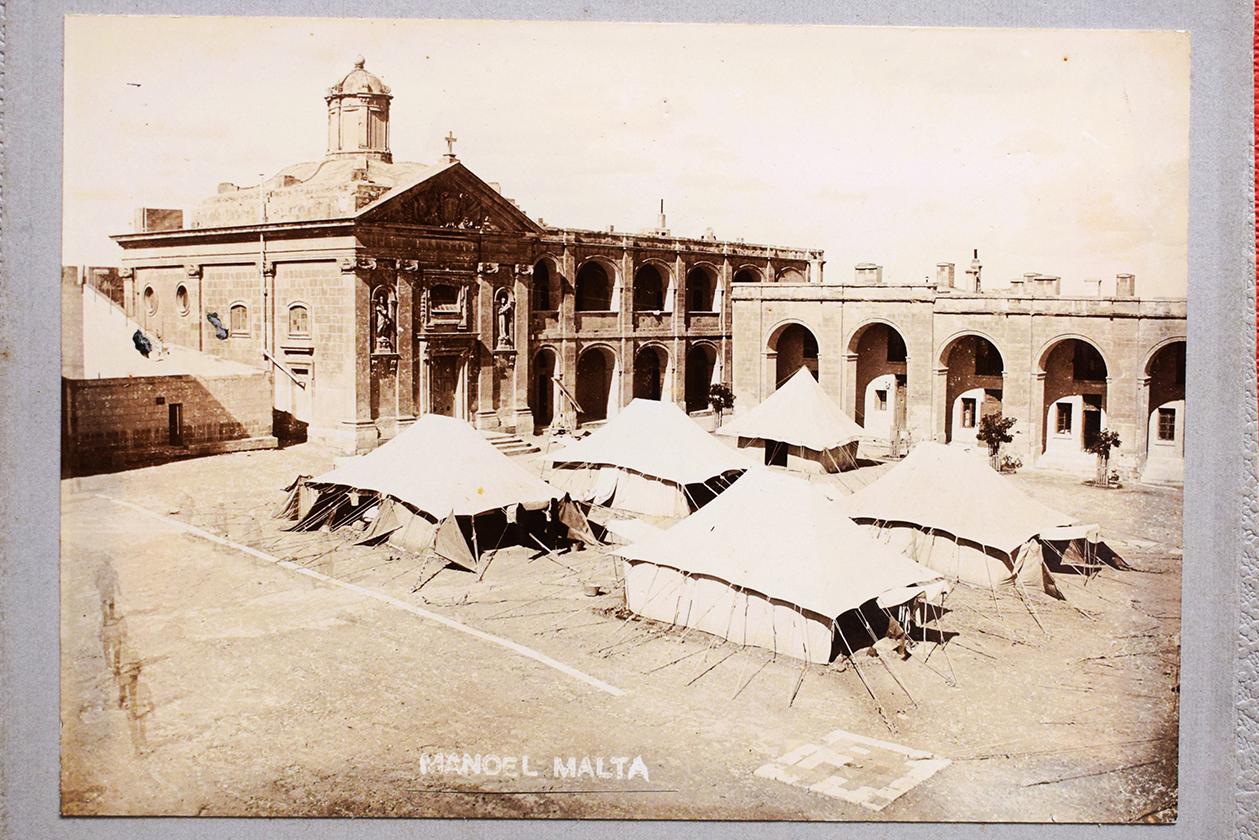 Hospital tents in the quadrangle in Fort Manoel in World War I
A splendid parade quadrangle lies at the centre, once dominated by the grand master’s monument, gifted by a knight who wanted to be in Vilhena’s good graces, but never paid for. The monument and the chapel figure in the very first photograph taken in Malta.
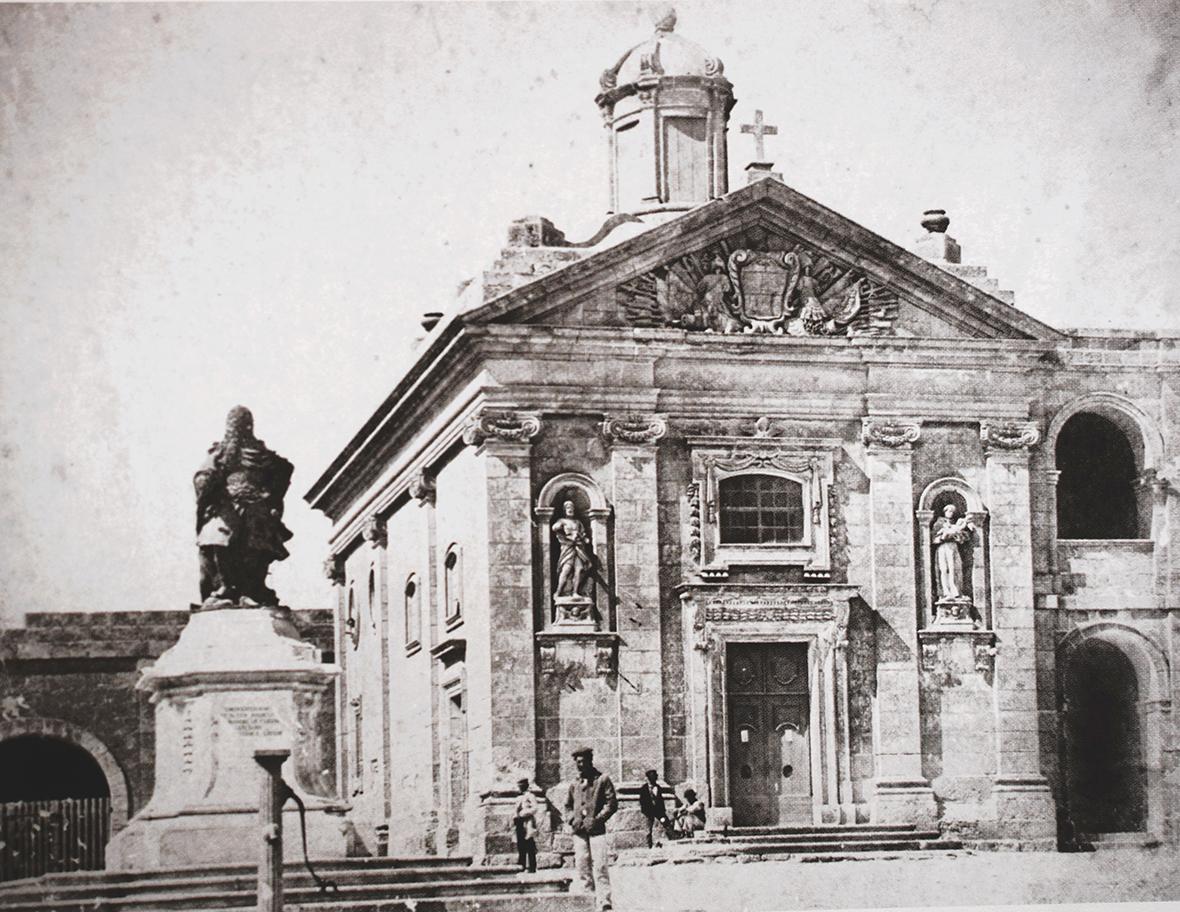 An 1870s photograph by Richard Ellis of Grand Master Vilhena’s monument and St Anthony’s chapel
During World War II, Manoel Island served as the major British submarine base in the Mediterranean.
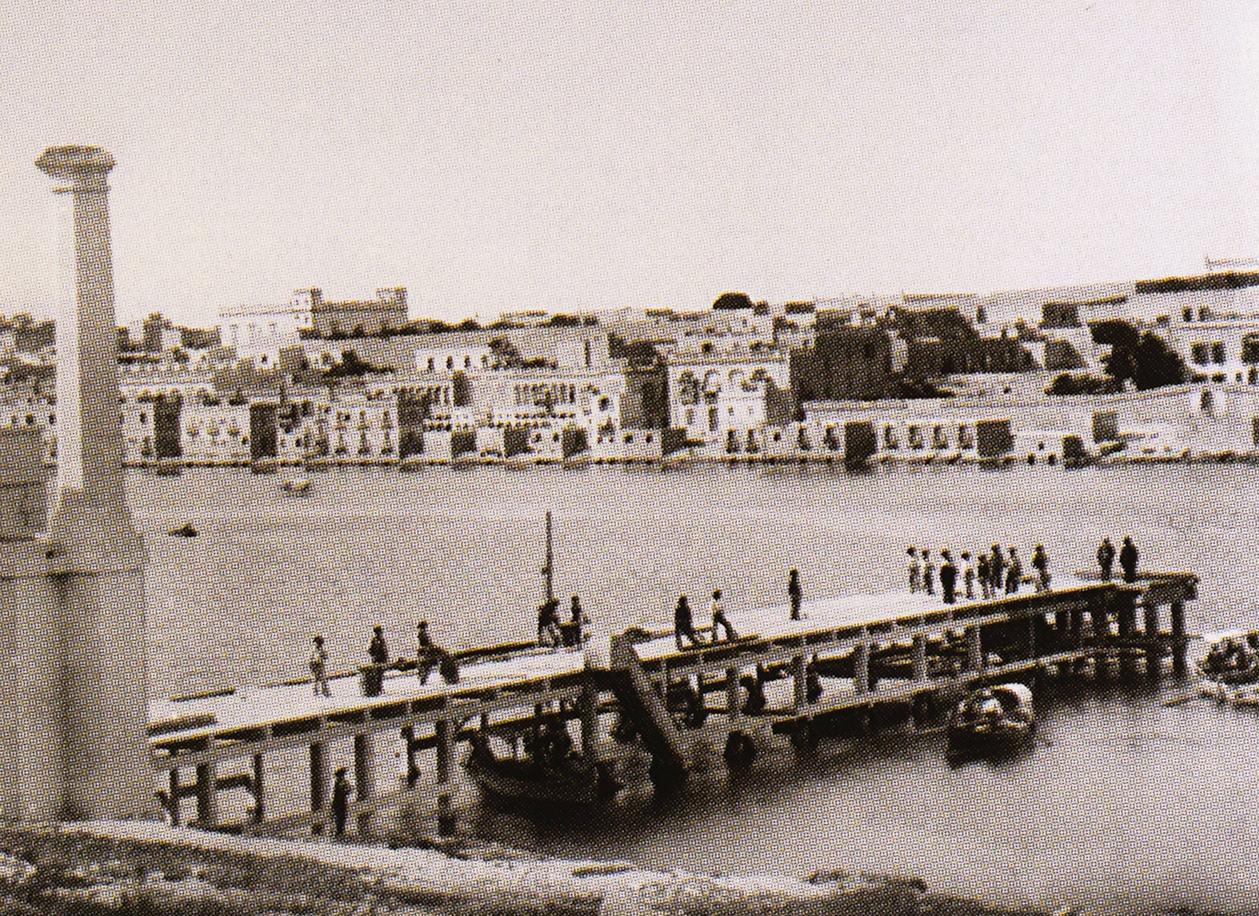 The torpedo quay on Manoel Island, before World War I
Most images from the author’s collections.
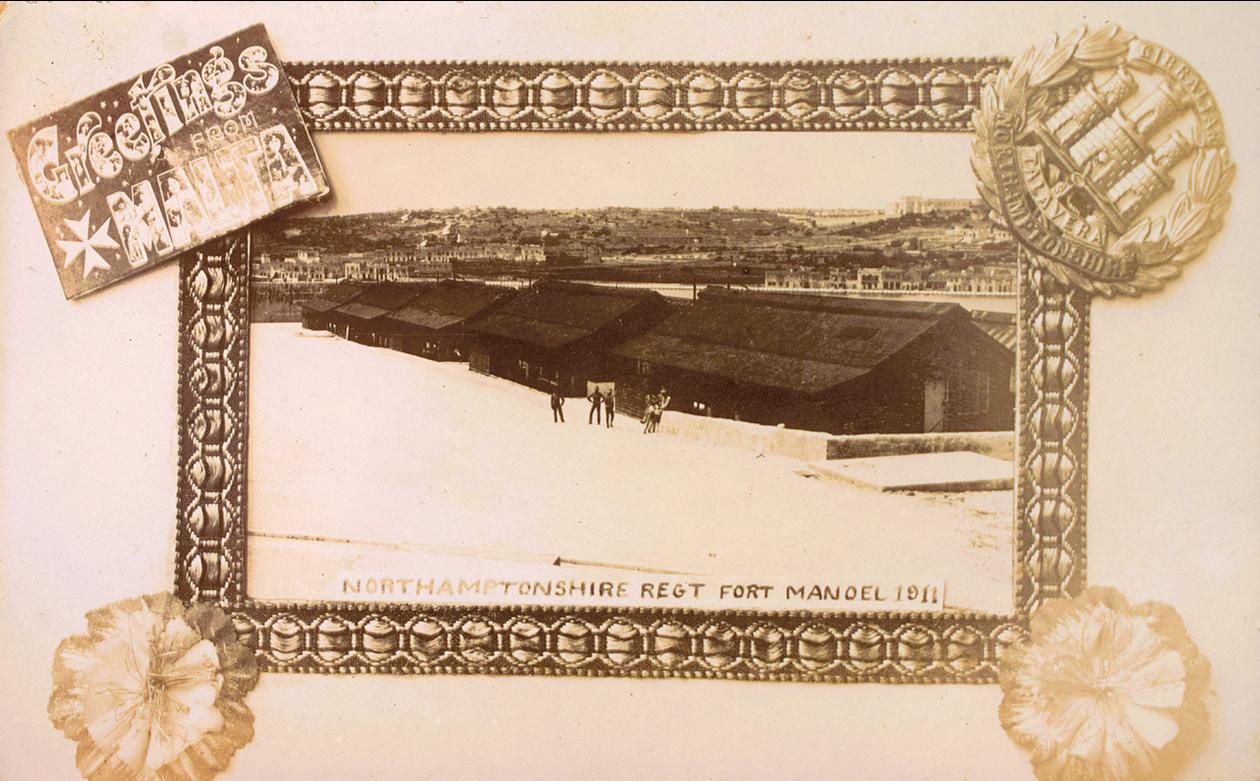 A Northamptonshire regiment Christmas card from Manoel Island, 1911
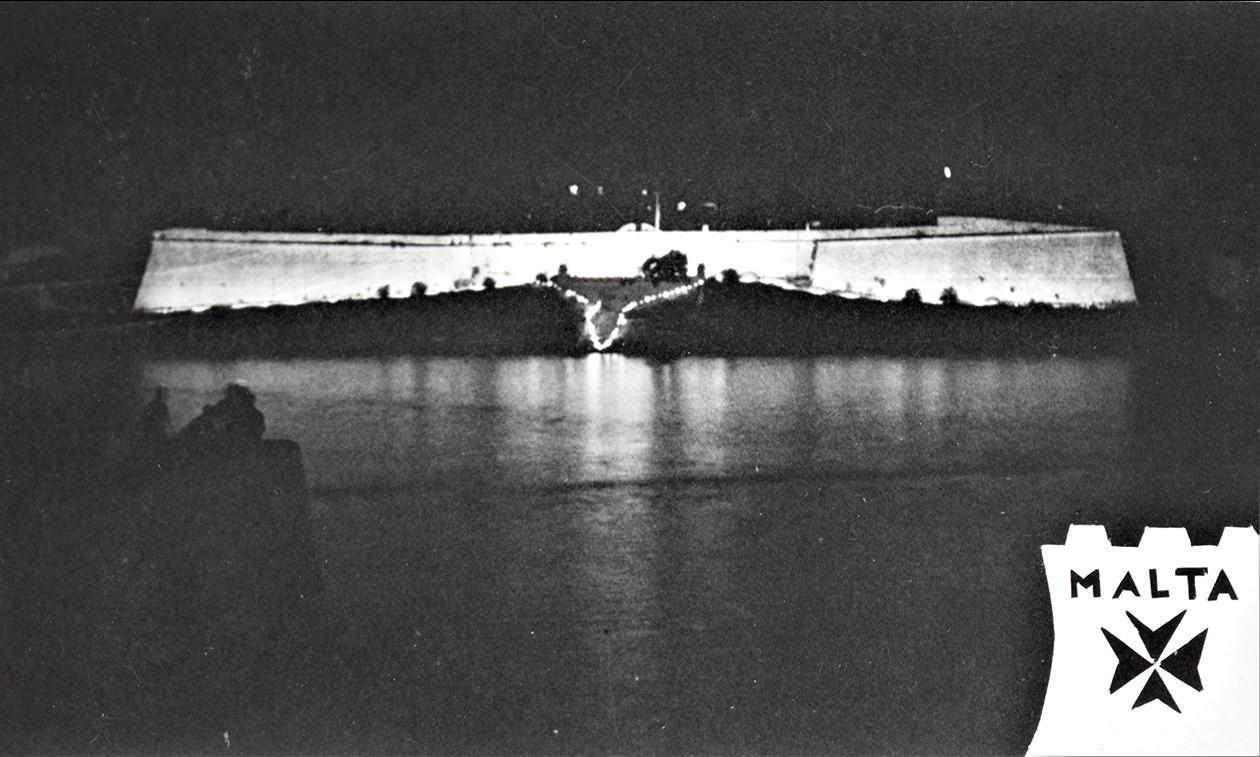 A 1964 Independence postcard showing Fort Manoel floodlit