In praise of famous men
Of the 12 Bonello focuses his attention on, 10 are Maltese, one is Italian and one half-Irish, half-Maltese
Made in the Image, More Histories, Vol. III,
by Giovanni Bonello,
published by Fondazzjoni Patrimonju Malti, Malta, 2025
Having, in the first two volumes of his new series of More Histories, awarded us with the thrilling stories of quite a few dastardly villains who stained the pages of our history books, Giovanni Bonello now turns his pen to chronicle the deeds of men who made positive contributions to the nation’s history and culture.
Of the 12 he focuses his attention on, 10 are Maltese (one a Gozitan, truth be told), one is Italian and one half-Irish, half-Maltese. There is one, however, who did sneak in who was no paragon of honesty.
Bonello does not just praise where praise is due; his untiring curiosity succeeds in prising information and often those tiny details that flesh the personality. Add to this his delightful mastery of the language and his impish sense of humour that just loves to cock a snook at the pompous, the vain and the self-important, and you have the formula that has been so tremendously successful in his historical writings. As if Bonello’s writings need any encomium by a humble reviewer!
One might as well start by getting the only gatecrasher with no Maltese genes in his DNA out of the way. The knight Fra Ciro di Pers (1599–1663) distinguished himself as a poet in his time and still holds a scholarly reputation nowadays, although, for most of us, his poetical productions lurk in the foothills of Parnassus.
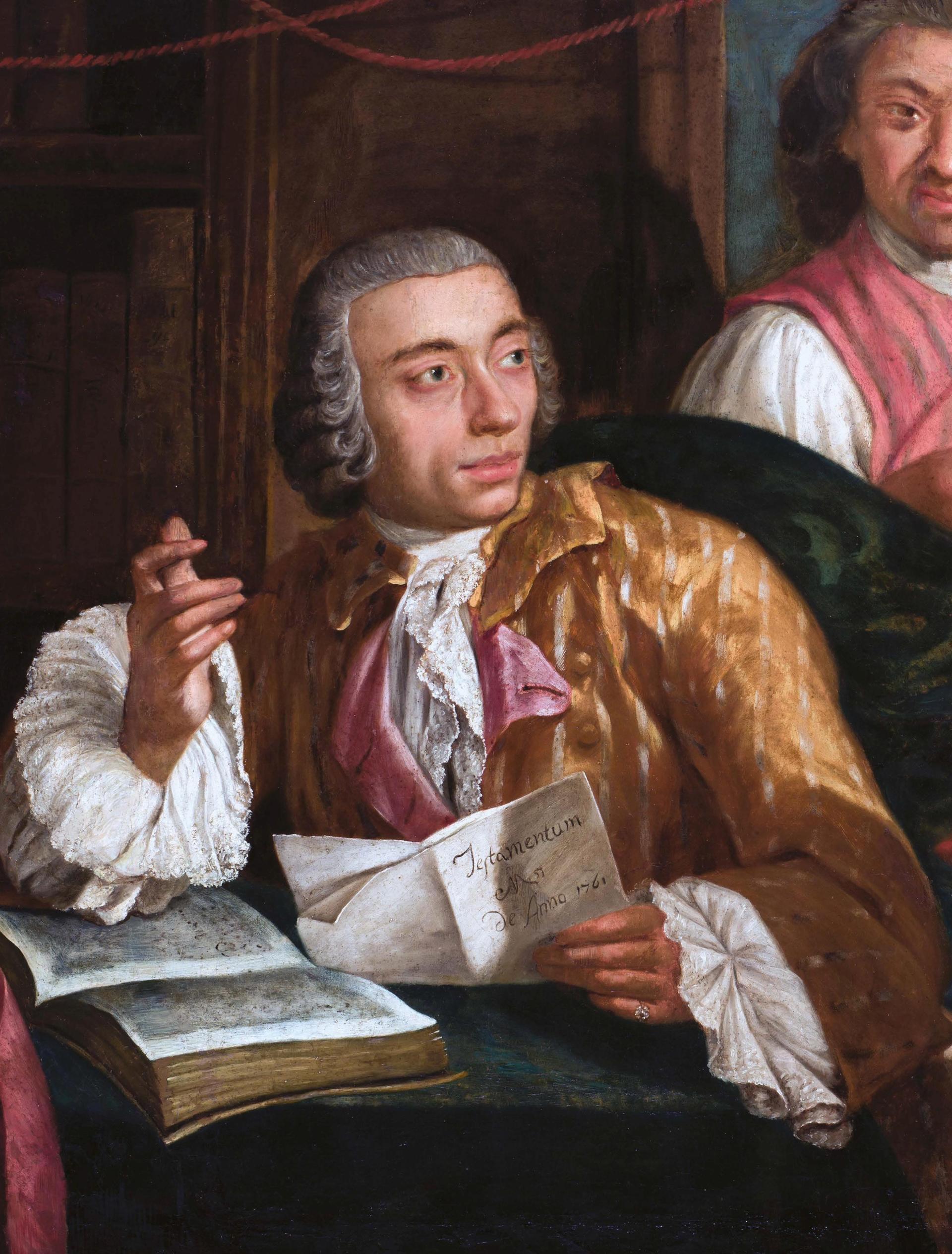 Giò Nicolò Muscat by Antoine Favray
As for one of our undeservedly less-known compatriots, Bonello attempts to sort out details of the life of Antonio Bosio (c.1575–1629), in his time well-known all over the contemporary literary and scientific world as the “Columbus of the catacombs”.
The illegitimate son of a dignitary of the Order who was the brother of the great historian of the Order, Iacomo Bosio, who eventually adopted him, Antonio lived most of his life in Rome where he pioneered the scientific exploration of the catacombs in the process heralding a new approach to archaeology. At one time, his intrepid underground research nearly cost him his life. His literary masterpiece, Roma Sotterranea, was only published posthumously but it gained him international recognition.
His untiring curiosity succeeds in prising information
Girolamo Cassar made sure of leaving his genetic mark on the nation, fathering a number of legitimate and illegitimate offspring. The military engineer and dabbler in magic Vittorio is the best known, while Gabriele is rather a shadowy figure. Both were inducted into the Order and both had a quarrelsome and violent disposition.
Gleaning the few available records, Bonello shows that Gabriele was quite conversant with the Order’s tribunal, appearing before it as both victim and accused. The standard-bearer of Żejtun, he suffered considerable losses to his property and livestock in the 1614 Turkish razzia.
Gio Nicolò Muscat (1735–1803) was quite a weighty figure in his time. A leading jurist, a grand master’s uditore or minister, reformer and enlightened personality, according to recent research, he was also, Bonello alleges, “a political opportunist, a fawning bootlicker… the model primordial switcher”. Not exactly a race in danger of extinction!
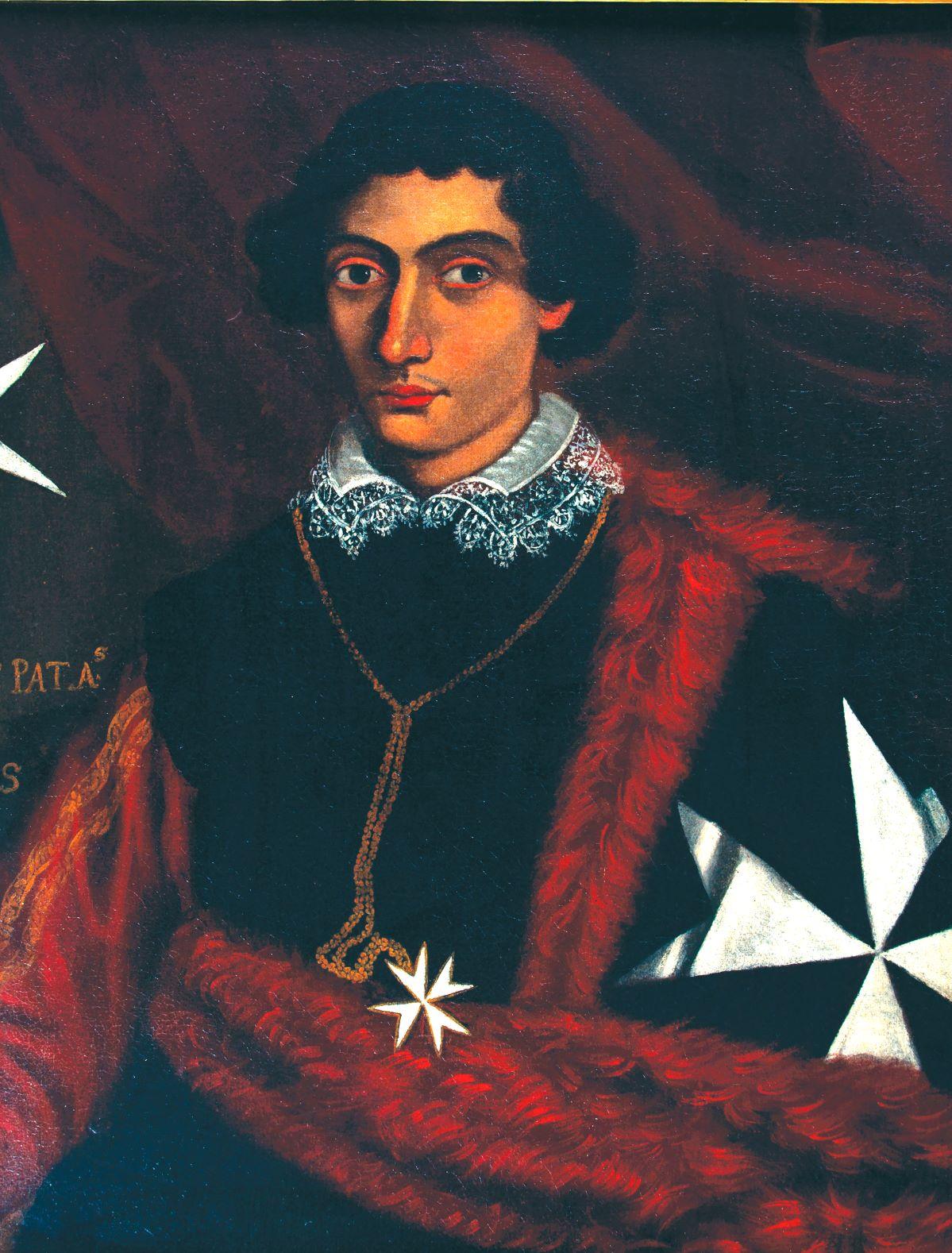 Possible portrait of Antonio Bosio
It is hard to imagine that the very (stress on very) considerable fortune he accumulated was the result of calloused hands. The grand masters’ uditori had a solid reputation for corruption and pliability where money and favours were concerned.
But it may also be fair to point out that Muscat has in recent years emerged as the enlightened defender of the state against the power of the obscurantist Church. Unless his fervour was inspired by the need to defend his milch cow!
Muscat may also have been involved in Mikiel Anton Vassalli’s anti-Order conspiracy of 1797, but the ailing de Rohan unwittingly chose him as one of the investigators, which may explain why Vassalli got off lightly in the end.
He found it just as easy to serve under the Order, as under the French, as under the British. All that was needed was a change of hats.
Bonello’s essay about Vassalli records his visionary plea to open a school to teach reading and writing in Maltese in 1795. He also presents an extract from a book by an English doctor with a learned interest in eastern languages on Vassalli’s linguistic and etymological research, and agrees with him on “the usefulness and antiquity of the Maltese tongue”.
 Frederick W. Ryan
Three men of law Bonello chooses to write about had tons of honesty and integrity to sell, and more than make up for Muscat’s sullying of the profession.
Sir Arturo Mercieca (1878–1969), whom he describes as “a Colossus of the Law”, basically started his brilliant career with the public prosecutor’s office. For 16 years, from 1924 to 1940, he served as chief justice until he became the only chief justice to be removed from office by the colonial authorities. He marked his tenure by the depth and learnedness of his judgements, in particular referring to the supremacy of the rule of law.
Fearless, in spite of the burning political scenario which was present during his time, he delivered judgements based on his depth of legal knowledge and towering sense of justice. The result was his removal from office, being interned and banishment to Uganda in one of the less glorious episodes of our colonial period.
For Judge Robert Ganado, Bonello presents the foreword to the book about the judge written by his son, Albert Ganado, and which includes the older Ganado’s research on Maltese legal practitioners from 1666 as well as a schematic history of the civil service under British rule.
The third lawyer, Maurice Caruana Curran, still lives among us thanks to his visionary setting-up of Din L-Art Ħelwa, the pioneer of local environmental NGOs, that has kept the light of sanity burning in the darkness the general greed and barbarism that have been imposed on our islands.
The paper on Frederick W. Ryan is a little masterpiece of research
A most learned and upright person, Caruana Curran started his public life by a brief foray into politics which did not leave any mark whatsoever, before distinguishing himself first as a prosecutor and then as a judge who, however, seemed sometimes to find it hard to come to terms completely with the nascent emphasis of human rights.
He finally paid for his uprightness by being abused and humiliated – no doubt he escaped Sir Arturo’s fate because our constitution bars the deportation of its citizens.
The sculptor Antonio Sciortino had an obsessive concern to protect details of his personal life. Making use of information gleaned from private letters, private archives and contemporary newspapers, Bonello delves into the great controversies that plagued Sciortino, who was accused of plagiarism with regard to his monument of Christ the King and his (eventually unaccepted due to the high costs involved) proposal for that of Fra Diegu.
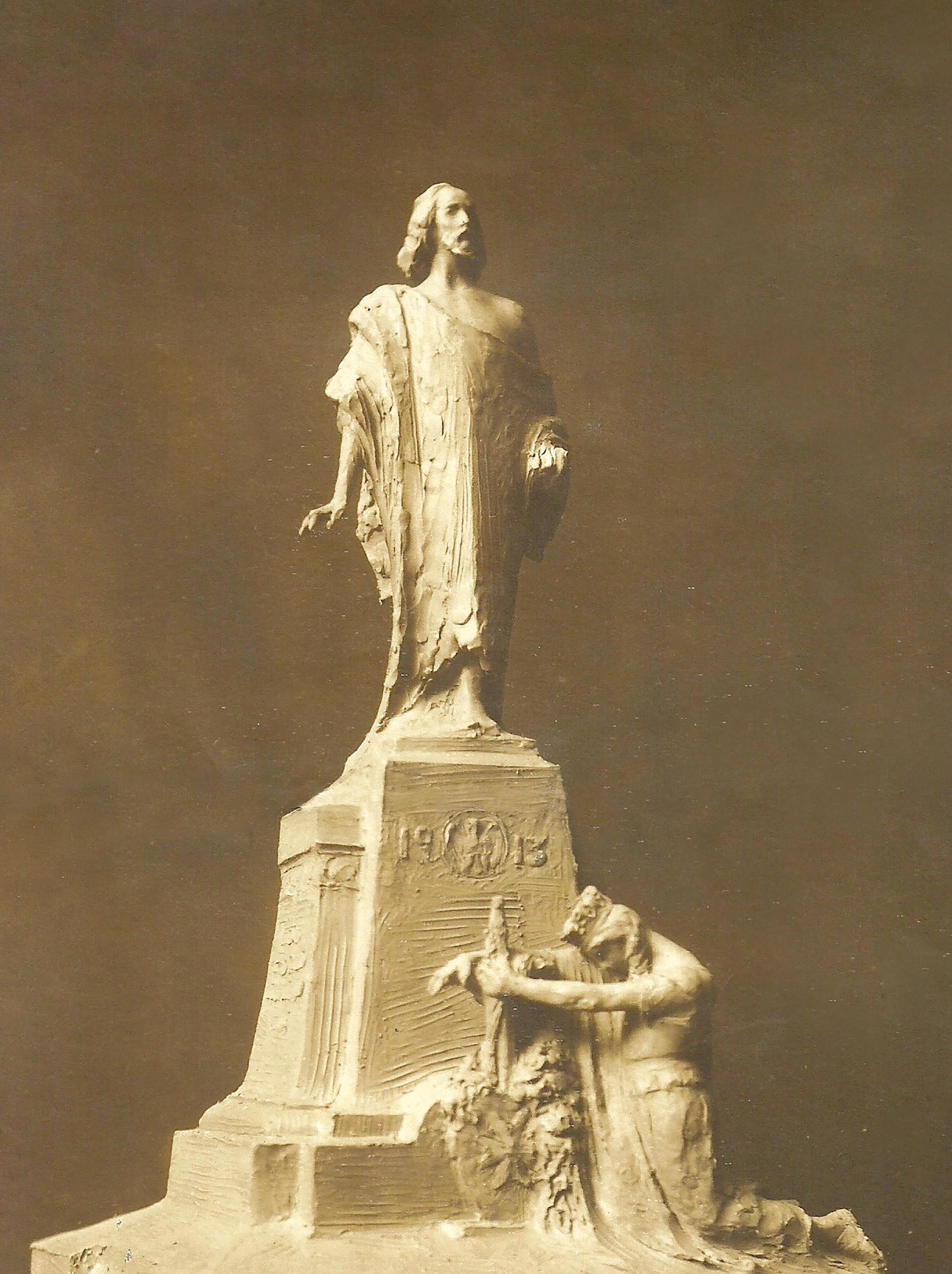 Bozzetto for Christ the King monument by Antonio Sciortino
Bonello’s paper on his father Vincenzo, art critic and historian among his many other talents and abilities, concentrates on his contributions to the artistic heritage of Gozo. He designed most of the decorations at Ta’ Pinu and he was regularly consulted when other churches considered alterations or new additions.
But surely what Gozo (and Malta) should bear most gratitude for Vincenzo was his spearheading the efforts of safeguarding the Banca Giuratale from demolition when there was a strong ‘progressive’ current for it to make way for more Monti stalls. His son retells the story in all its sordid details.
Frederick W. Ryan is best known today for his collaboration with Italian artist Vittorio Boron for one of the most charming books in Melitensia, Malta, published in England in 1910. Both Ryan and Boron have been rather shadowy figures but now, thanks to Bonello’s sleuthing and a touch of serendipity which always favours the indefatigable, Ryan has emerged with a rather full history of his own. His more deeply researched House of the Temple has retained its value to this day.
Not just a historian able to look back and interpret the past, Ryan was a visionary whose ideas to make Malta a hub of international learning were seen as an impossible dream of an unpractical person by the authorities. The suggestions he offered were regularly thwarted but he seemed to have remained a positive person till the end, even after many years of having left Malta. The paper on Ryan is a little masterpiece of research, the result of Bonello’s assiduity.
The loss of Dun Ġwann Azzopardi was a great loss for Maltese culture. A fine researcher of his own with some significant contributions, such as the ferreting out of the date of Caravaggio’s arrival, he was also selfless in his assistance to one and all. As curator of the Cathedral Museum, he helped make it one of the island’s outstanding institutions.
A natural multi-tasker, he was regularly involved in several projects at the same time, while yet dreaming of others. And then there was his incredible character to add, impossible not to love.
Born and brought up in most humble circumstances, humbler it would be hard to imagine, Dun Ġwann achieved well-deserved international recognition for his work and then went on to achieve uniqueness after his death. He was exceptionally given the great honour of being buried in the Rabat grotto of the saint he championed all his life, not more than five metres away from the famous statue. I wonder if he has managed to sneak an even closer seat to St Paul in the heavenly abode.
Some may lament the absence of any worthy representative daughter of Eve in this array of commendables but this is surely not because of any innate misogyny on the part of the author. Perhaps, as they say, a good woman is a treasure but hard to find.