In the Queen of Malta’s employ
George Sammut was the author of Roamer’s Column in the Sunday Times of Malta
Unfinished Business
by George Sammut
published by Midsea Books, 2024
That George Sammut was the author of Roamer’s Column in the Sunday Times of Malta was one of the island’s worst kept secrets. The column ran for 17 years up to March 12, 1972, that is, until Mable Strickland, owner of Progress Press and Allied Malta Newspapers Ltd, arbitrarily decided that her star journalist had become surplus to requirements and sacked him.
Thus was Sammut’s 26-year journalistic career abruptly cut short when the so-called Queen of Malta exercised her droit de seigneuresse.
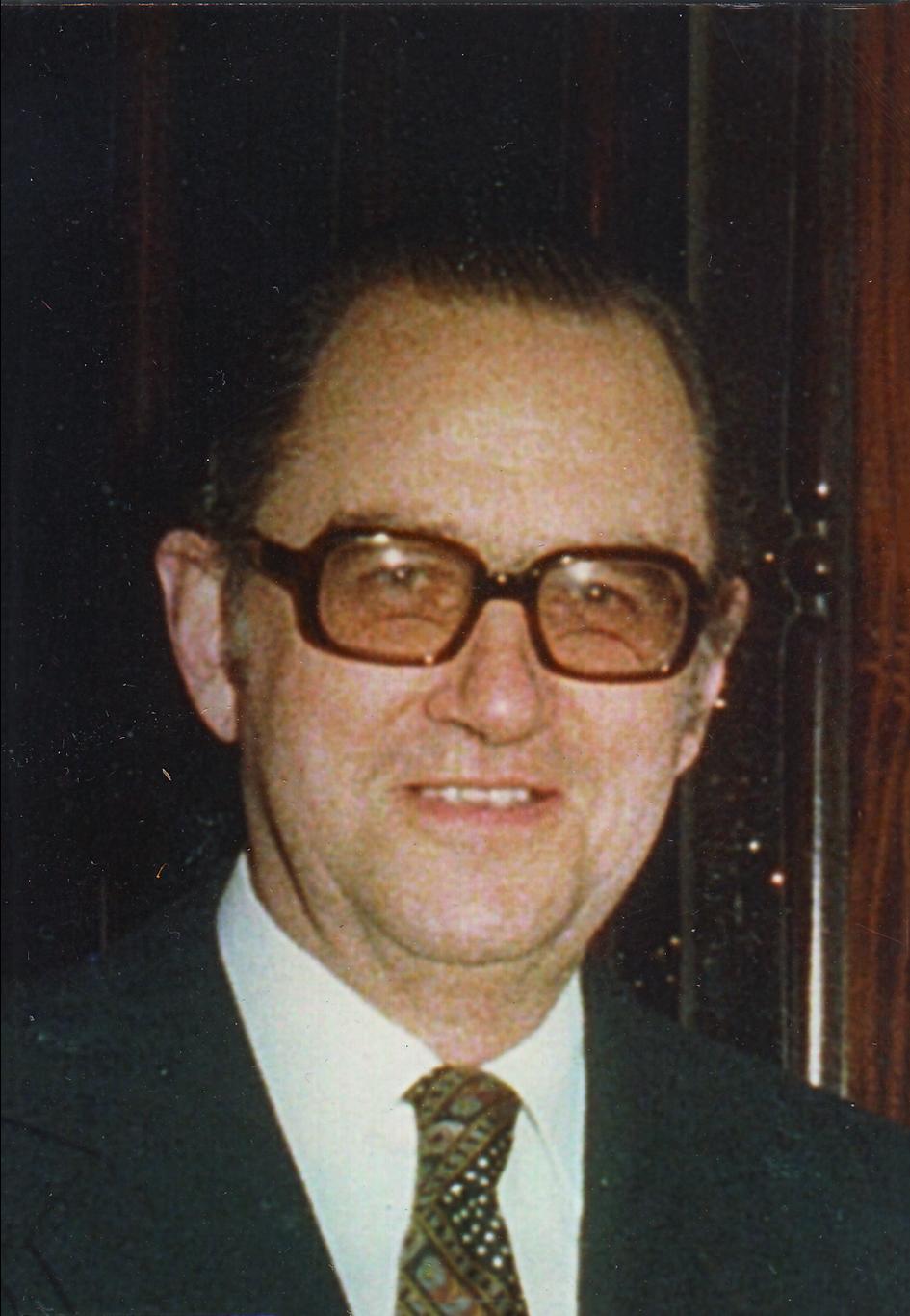 George Sammut
Cut adrift at the age of 52 at a time when unemployment was rife and ‘quality’ jobs scarce, Sammut had to do with low-paid journalistic work until he was employed by Simonds Farsons Cisk Ltd as the brewery’s public relations officer. Later he was also responsible for welfare and social affairs.
In 1982, Sammut began to write his memoirs, a task cut short on June 30, 1984, when the Grim Reaper unexpectedly called. Sammut’s wife, Lola, aptly titled the typescript Unfinished Business, and added an introduction.
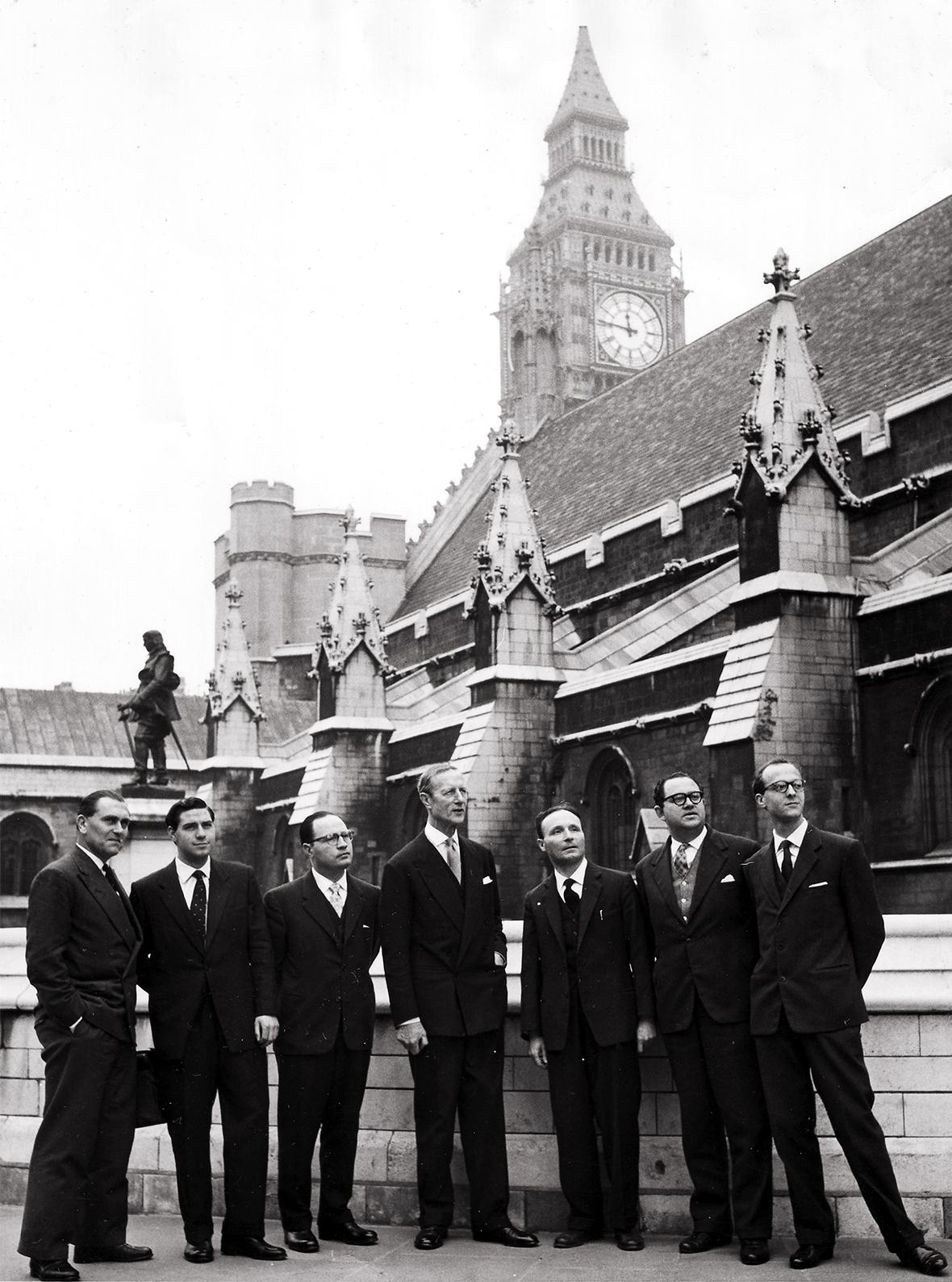 Sammut on a visit to the UK with a group of journalists as guests of the Central Office of Information in 1960.
For 40 years it remained in a drawer as the family wanted to avoid controversy. However, some years after Lola’s passing, her daughter Marguerite and sons Austin and Julian decided to publish their father’s memoirs, which Austin edited.
Unfinished Business is a highly interesting, entertaining, and always engaging and informative book that throws further light on a number of personalities and some of the goings-on in the process of producing the Times of Malta, the Sunday Times of Malta, and the now long defunct Il-Berqa. Reading it, I was left with the distinct impression that in his final hurrah, Sammut was attending to unfinished business of his own.
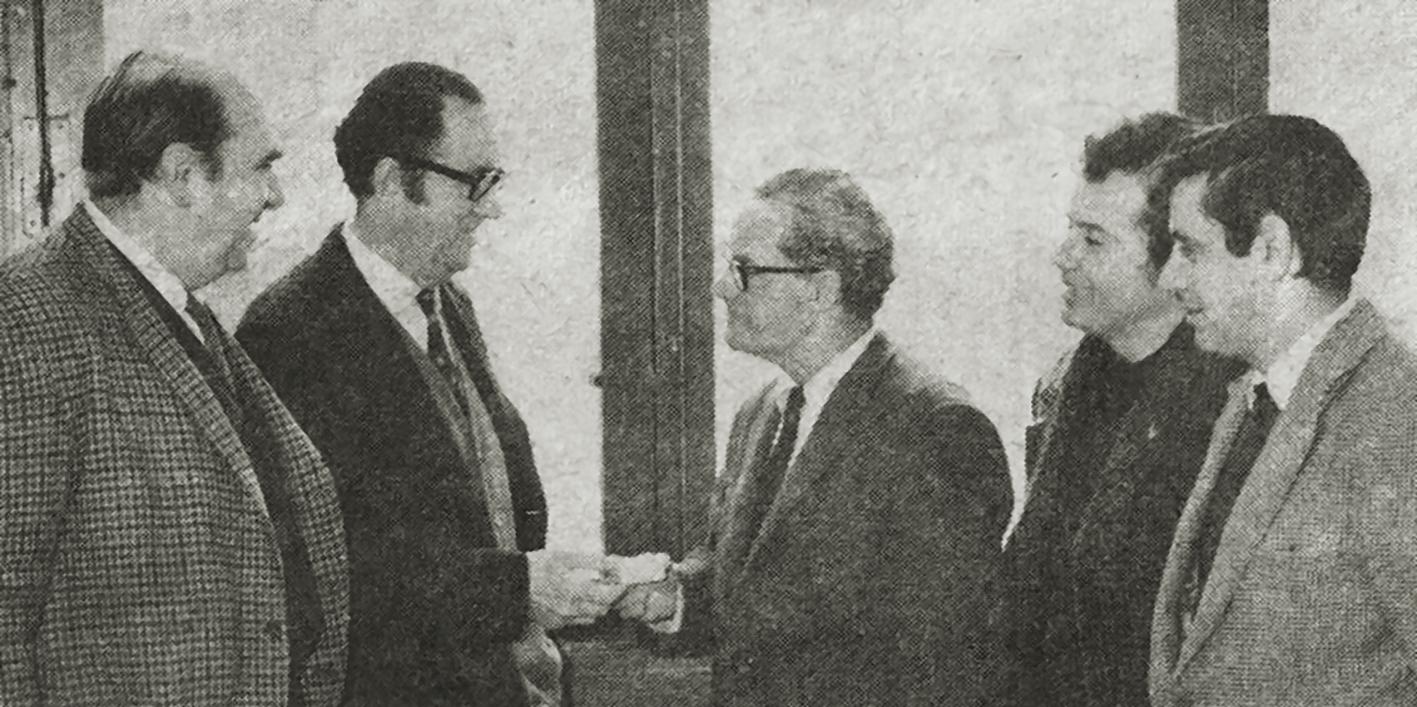 Sammut being presented with a pair of engraved gold cufflinks by shop steward A. Faure in 1972 on the termination of his employment as director of Progress Press, where he was in charge of welfare.
In 1935, aged 16, Sammut had gone to Italy to become a Jesuit. He lost his vocation and returned to Malta in December 1945 armed with a licentiate in Philosophy. Strickland employed him as a journalist, starting him on the bottom rung – the Proofreaders’ Department. Within seven years he became editor of the Sunday Times of Malta.
During his career, Sammut became the local correspondent of The Times (London) and the BBC, an accredited and a respected member of the Institute of Journalists – of which he was president of the local branch and the only Maltese to be appointed a fellow of the institute. He also lectured on journalism at the University of Malta and became a director of Allied Malta Newspapers, with responsibility for the employees’ welfare.
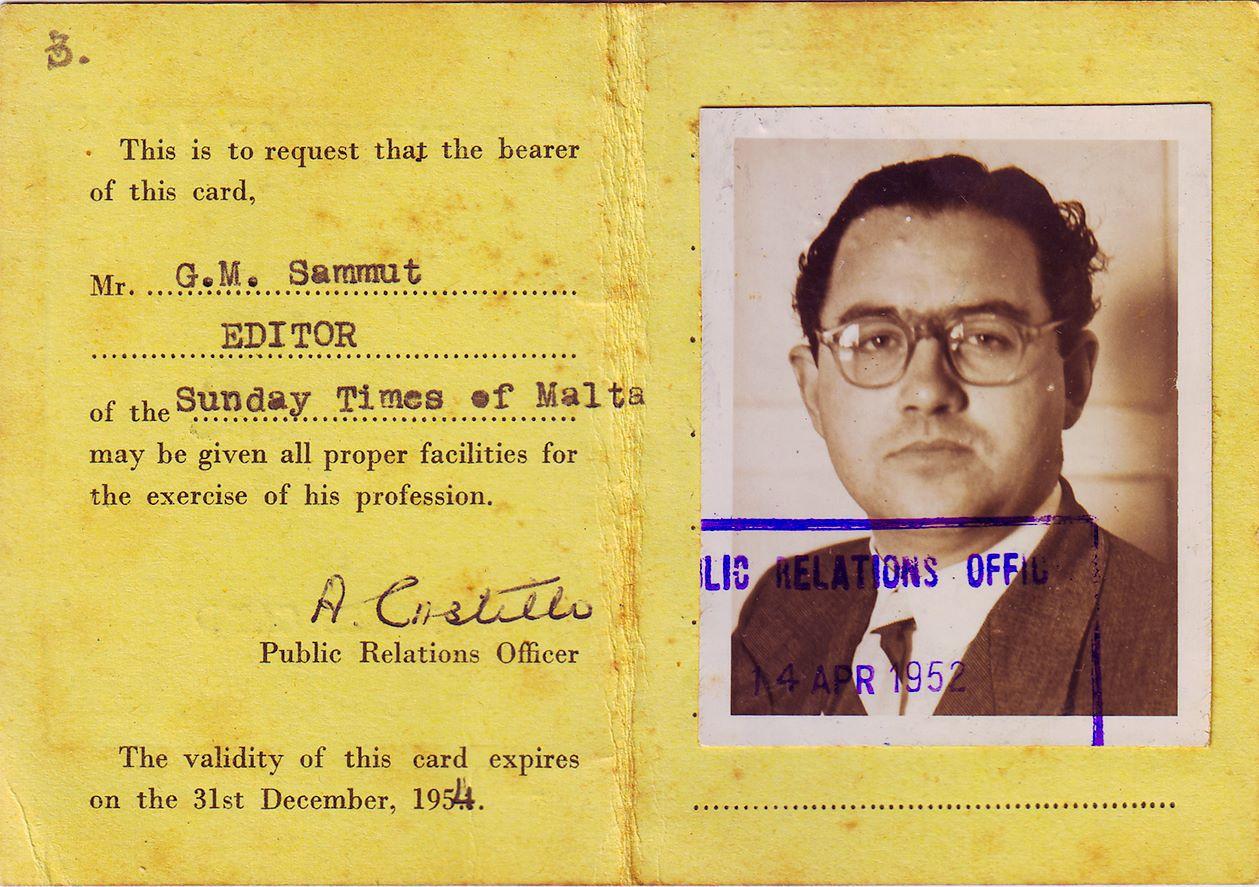 George Sammut’s press card for the year 1954.
Sammut was not overjoyed when he was appointed editor in 1953 of the “stale, pedantic, dull, uniform, dead” Sunday paper, which was “considered in editorial circles as the backwater” of the Strickland stable. Unsurprisingly, the first edition under his editorship on April 19 signalled his intention to revamp the paper: an additional four pages, and a four-column local story on the front page.
The latter change was particularly significant since the Sunday catered first and foremost for British Services personnel, their families and local aficionados of the Empire. Slowly but steadily, the paper increasingly concentrated on covering local news and cultural affairs. It became a national sounding board with the largest local readership – no mean feat for a quality paper.
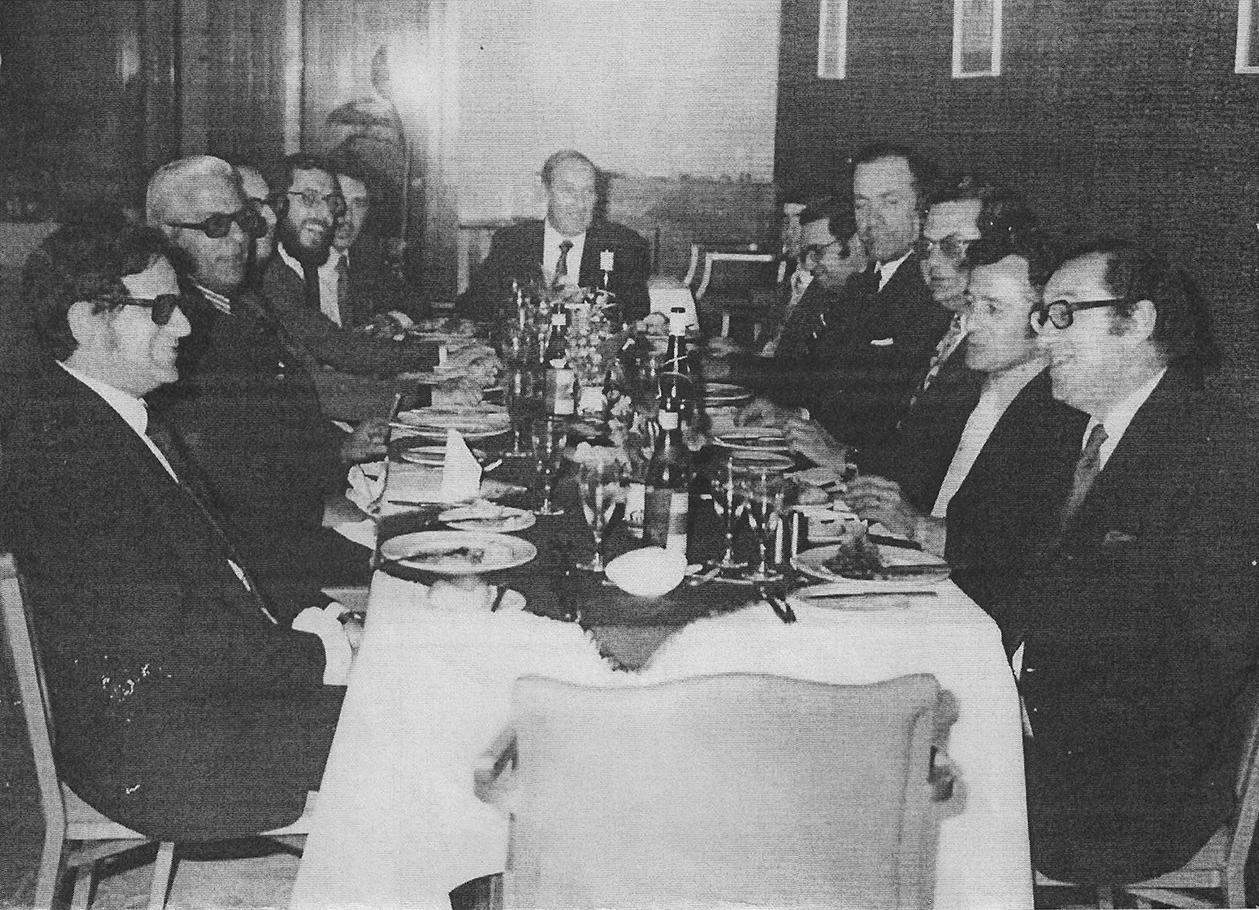 Sammut at a dinner of the Institute of Journalists, local branch, of which he was chairman.
Publication of the forty-eight-page special issue of March 28, 1966, commemorating the 400th anniversary of the foundation of Sammut’s beloved Valletta (reproduced in the book), was replete with contributions by experts in their particular fields. It unmistakably signalled that there would be no turning back.
However, Sammut is probably best remembered locally as ‘Roamer’. From February 13, 1955, onwards, except for a five-month hiatus while Sammut recuperated from a massive heart attack, he contributed a “mostly controversial and, at times, bitingly sarcastic” column. His readership reflected all shades of political opinion.
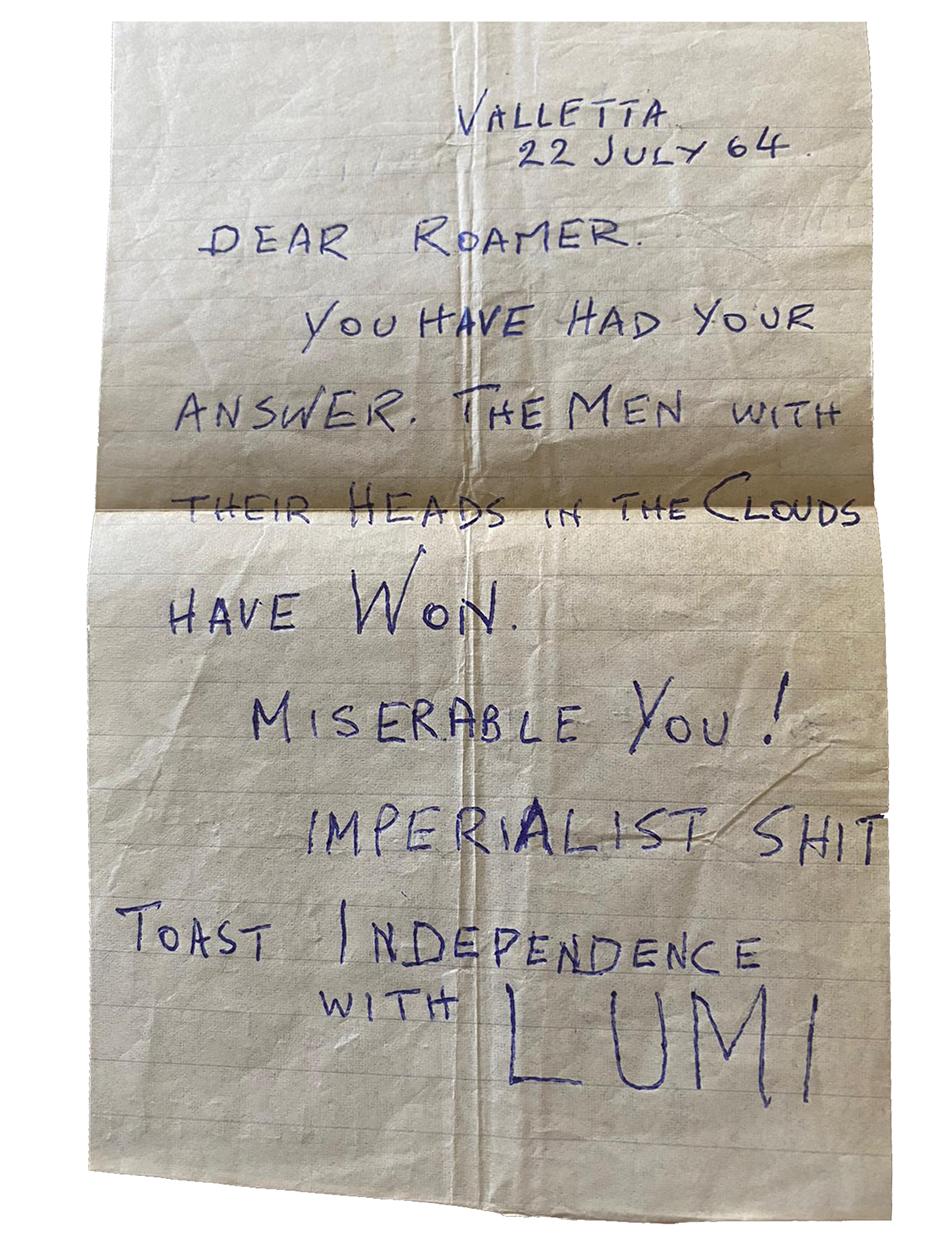 An anonymous letter to ‘Roamer’ regarding Malta’s independence.
Insult was added to the injury of his untoward sacking by an obvious attempt to stem readers’ ire by belittling his actual input. A misleading note was appended to his last column. It stated that “Roamer’s Column, like Peterborough of the Daily Telegraph and similar newspaper features, is a composite column from various contributors…”. Though very angry, Sammut should not have been surprised.
Sammut shows that the success of Strickland’s newspapers should be credited not to her but to the hard work put in by capable editors such as Tom Hedley, Anthony Montanaro, Manuel Gauci and Charles Grech-Orr.
As for their financial stability and that of Progress Press, credit belongs to Captain Joe Agius, until he too, like Hedley and the author, was summarily dismissed by the chaotic and temperamental Strickland.
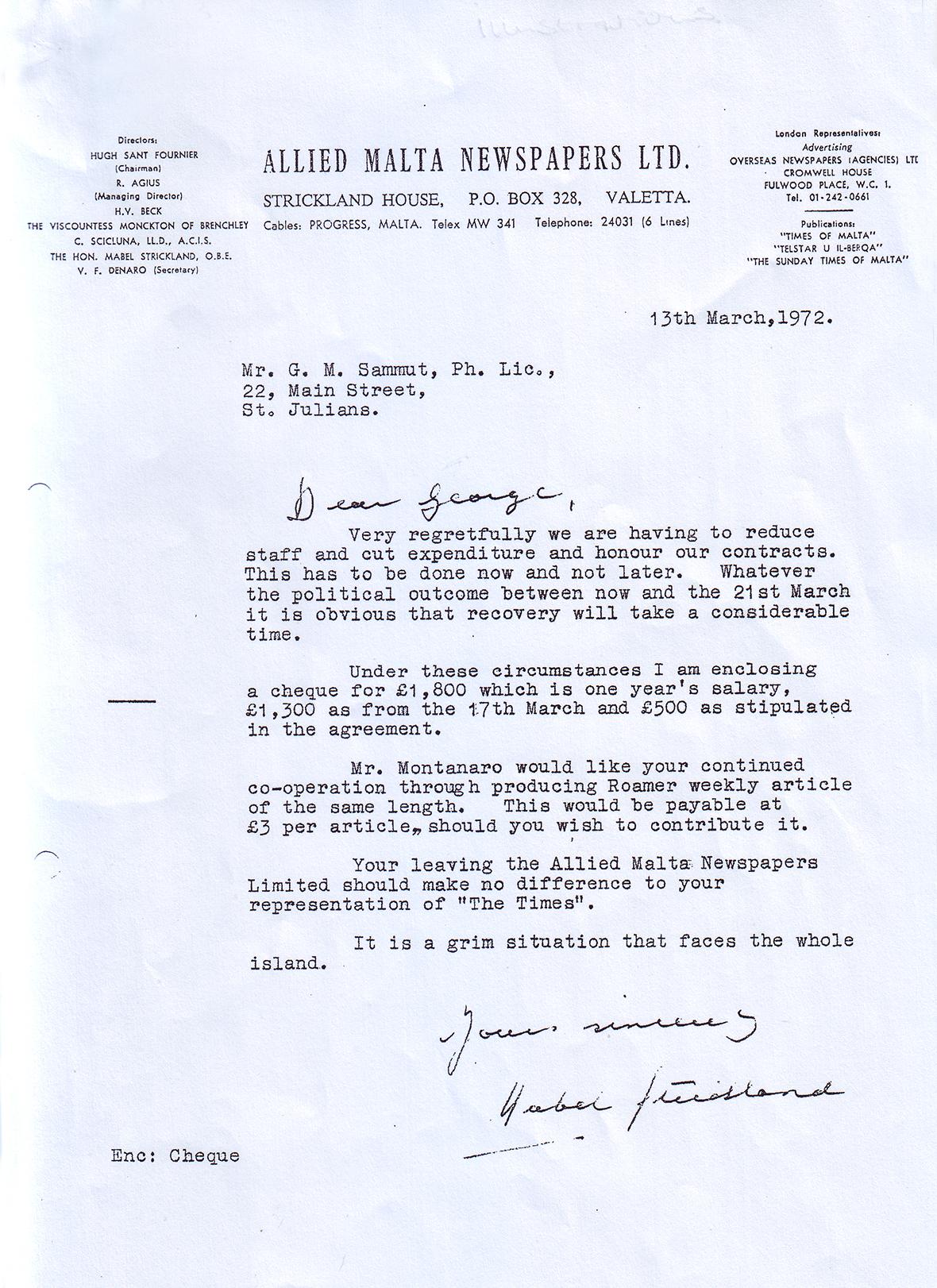 Mable Strickland’s letter dismissing Sammut, abruptly cutting short his 26-year journalistic career.
Sammut notes that Strickland’s Who’s Who entry read “educated privately in Australia 1904-1917”, which he interprets as “cover[ing] a multitude of cultural deficiencies”. Strickland was awed by qualifications, and “had a terrible complex where the Church was concerned”.
“So it was Gonzi, right or wrong, and woe betide the journalist in her employ who thought otherwise,” he wrote.
The archbishop, who in a “Catholic island was an extremely powerful personality”, expected Strickland’s newspapers to toe the official Church line – an attitude she insisted her journalists should follow. Since Gonzi’s feathers were easily ruffled, Sammut was often caught between the archbishop’s pretensions and Strickland’s expectations.
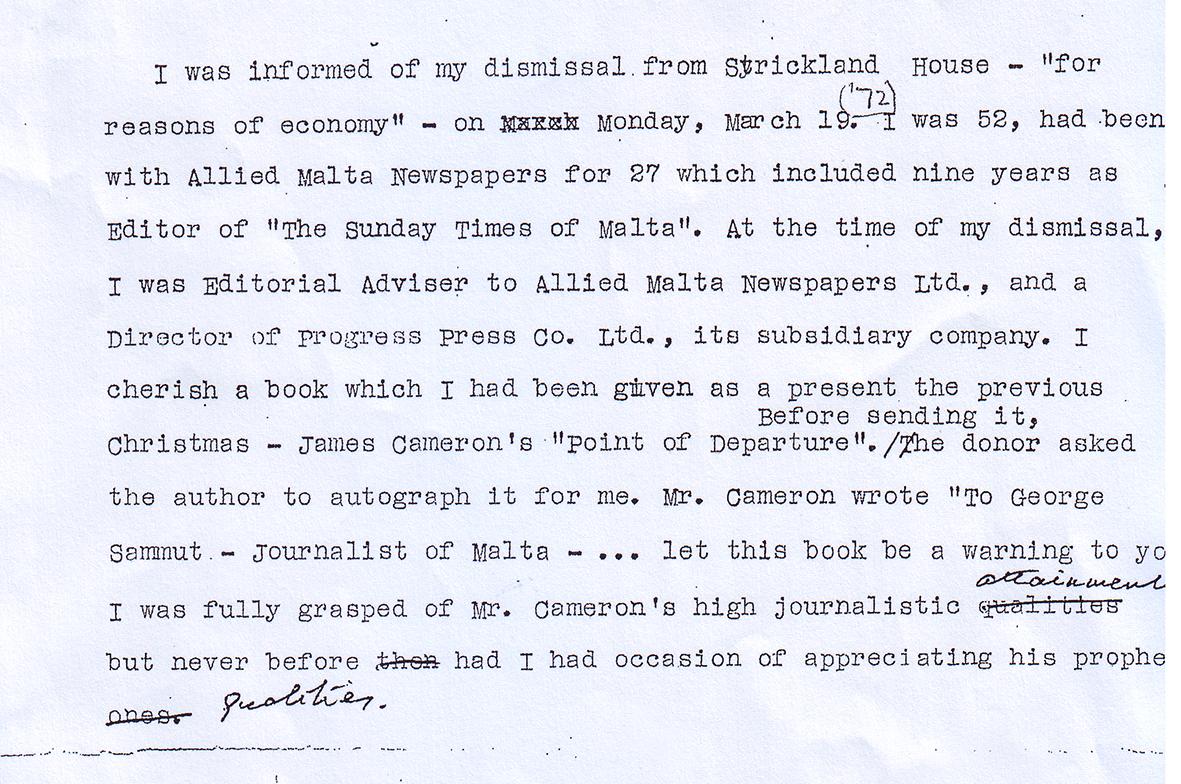 His personal note on the dismissal.
Here, Sammut gets some of his own back. His introduction of Malta’s leading prelate is a satirical gem, and not the only one in the book: “His Grace Mgr Sir Michael Gonzi, K.B.E., D.D., J.C.D. (Greg.), LL.D. (Hon. Causa), B. Litt., B.L.Can., Bailiff Grand Crown of the Order of St John of Jerusalem, until recently Major General in the British Army, and since his retirement as Archbishop of Malta at the age of 91, Archbishop Emeritus of the archdiocese, is a man of extraordinary physical stamina, but that is, in my opinion, one of his few positive attributes”.
Unfinished Business is a welcome addition to Melitensia. The book has interesting appendices, including interviews with members of the first Cabinet of independent Malta and with accredited ambassadors.
It is further enriched with various photos as well as with facsimiles of private and published letters, all of which make for a very enjoyable read.