‘Instagram reels are like slot machines’
Matthias Ciappara – the man who walked away from gaming to challenge life’s illusions
When work experience in the iGaming industry, often perceived as lucrative and glamorous, pushed an employee to the limits of his mental and emotional resilience, he penned a self-help book that sought to “break life’s illusions”.
During a personal crisis last year, Matthias Ciappara took a career break to focus on writing a candid guide – It’s All a F*cking Façade – “to better understand ourselves and the patterns we inherently follow without even realising why”.
Was life just a random spin of the roulette wheel, “where we are drowning in distractions, pretending that is living, while wondering if there is any meaning to the chaos and suffering,” he questioned.
A decade of work in gamification taught him that we live in a world obsessed with stimulation and external validation.
Fascinated by “why we like what we do, why we behave the way we do and why we feel the way we do”, he specialised in gamification – the use of game elements and mechanics in non-game contexts to increase engagement, influence behaviour and encourage desired actions.
Gamification, he said could be both beneficial and dangerous, but widely used in education, it could also drive negative behaviour.
After years of research into uncovering the psychological concepts that “govern what makes us tick”, in his book, Ciappara set out to challenge readers to question themselves, their “own bullsh*t and break through the comfortable lies” they built.
It’s All a F*cking Façade explores the automatic patterns people lived by without noticing, aiming to tear down the illusions that controlled life – until there was no choice but to face what truly mattered.
“This book is my war journal – a battle against the illusions that dictate how we live, think and feel. Writing it broke me down more times than I can count.
“Even after years of studying these concepts and using them in my work, consolidating them into this journey of transformation forced me to realise just how much I was still deceiving myself.”
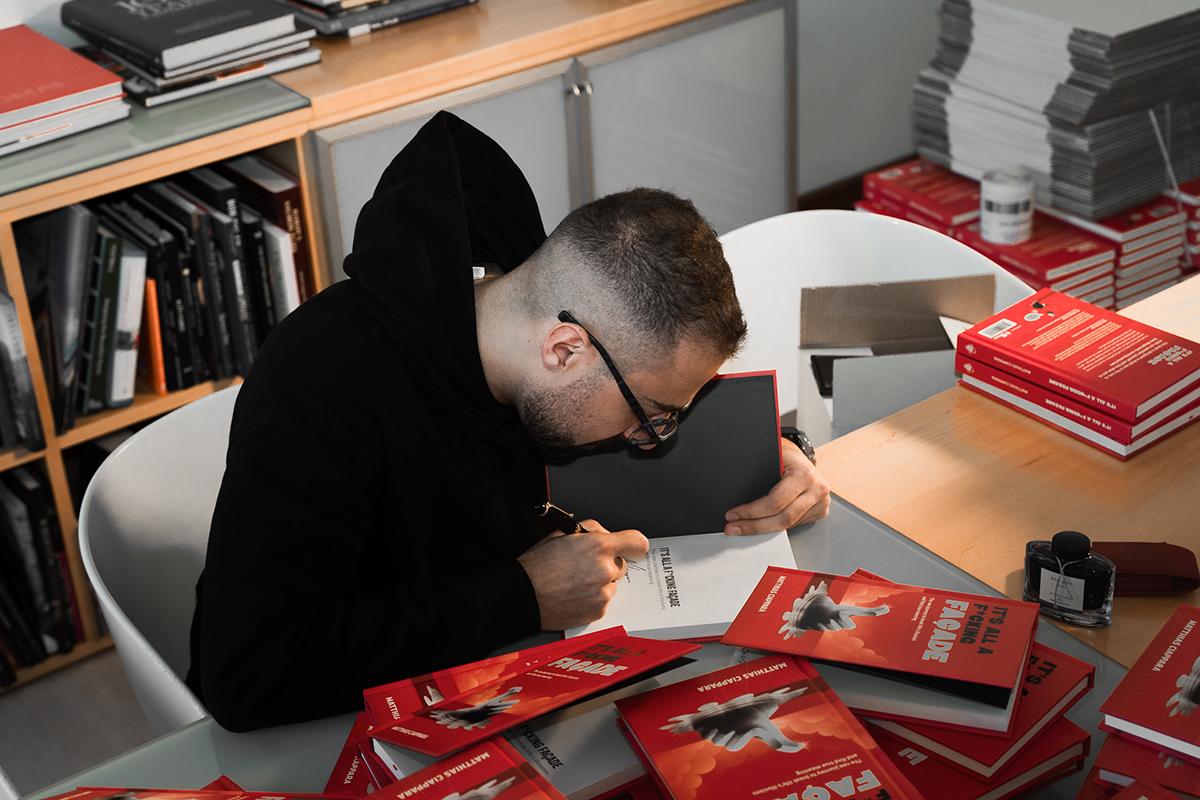 Matthias Ciappara signing copies of his book.
Impact of phones on mental health
The gambling industry gave Ciappara deeper insight into how people behaved, what excited and interested them – but gambling had a cost.
But what if there were no cost? TikTok, Instagram reels and YouTube shorts worked in the same way as a slot machine, he warned.
“You never know if the next video will be something you like, or something that makes you question your faith in humanity, and it is that exact thing that keeps us scrolling like mindless monkeys.”
Ciappara drew parallels between gambling and social media, which made users crave things they did not need by weaponising human psychology through targeted manipulation, algorithmic precision and social comparison.
Reels used a similar psychological layer as slot machines – fully unrestricted and unregulated, he said. Much of the content could be entirely wrong and reality was seen through a distorted lens.
“We may think this is just about gambling, but it goes much deeper than that,” Ciappara said, pointing out that one of the primary drivers for his self-help book was seeing the impact phones were having on mental health.
“If you lose an hour on social media, your mind does not attach a cost to that, so you do not even notice how much you are really struggling with your addiction to your phone.”
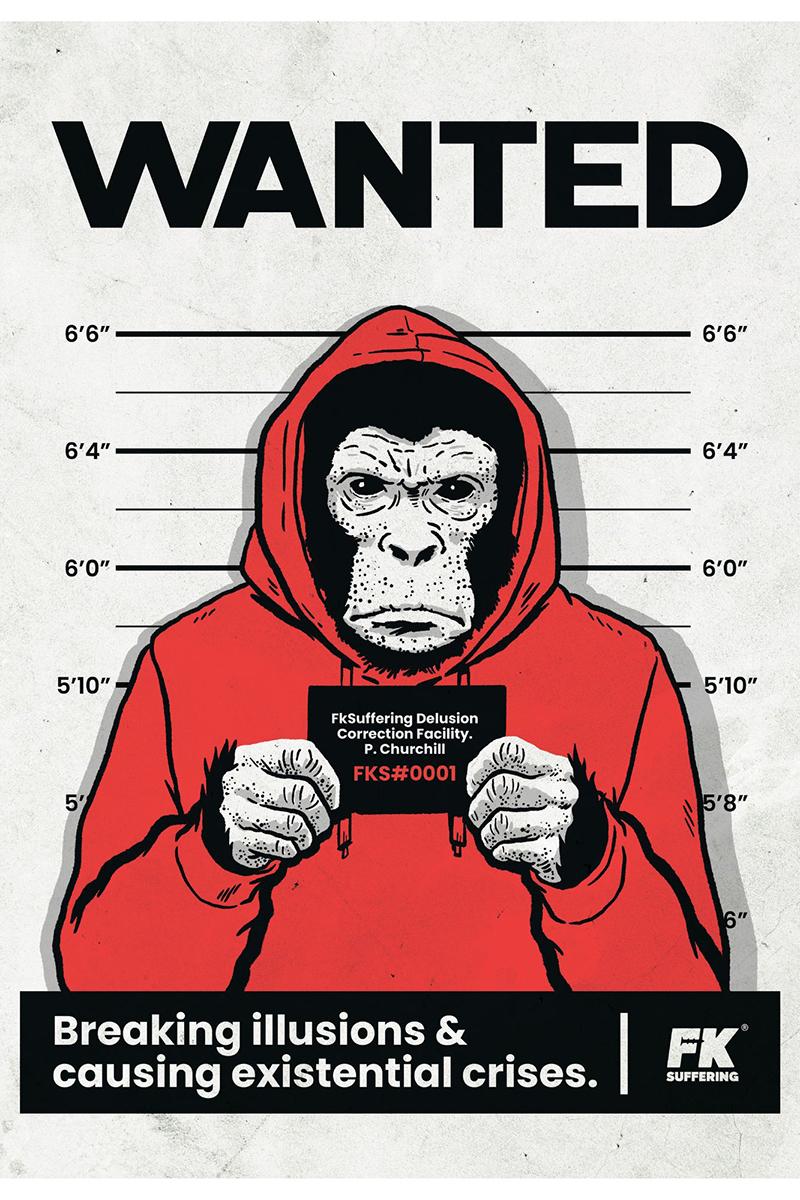 One of the images from the book
The dopamine released in the mind when using reels and social media affected mental health dramatically, he said.
“Once we are used to it being at a certain level, we cannot bear the silence of being in peace,” he continued.
We cannot bear the silence of being in peace
Ciappara felt the “biggest illusion” that controlled his life was that success was measured by title or money.
“I am not saying I am now somehow immune to the appeal of external validation and success, but it is not my goal in life and, more importantly, my work does not determine my own value.”
There was no right answer for what brought about meaning and happiness. But Ciappara has learnt that “what stays constant is the massive need for connection with others”.
He acknowledged the world was full of self-help books, and while believing they could be effective, he said their main issue was they could be authoritarian.
“This was something I kept in mind when writing the book. I do not know who will read it, so being prescriptive can give a reader either wrong or potentially harmful information. Instead, it asks questions that readers have to answer for themselves.”
Cringe-worthy moments laid bare
The book is based on a decade of scribbled poems, focused on observations of his own behaviour and that of others, which became the basis of each chapter.
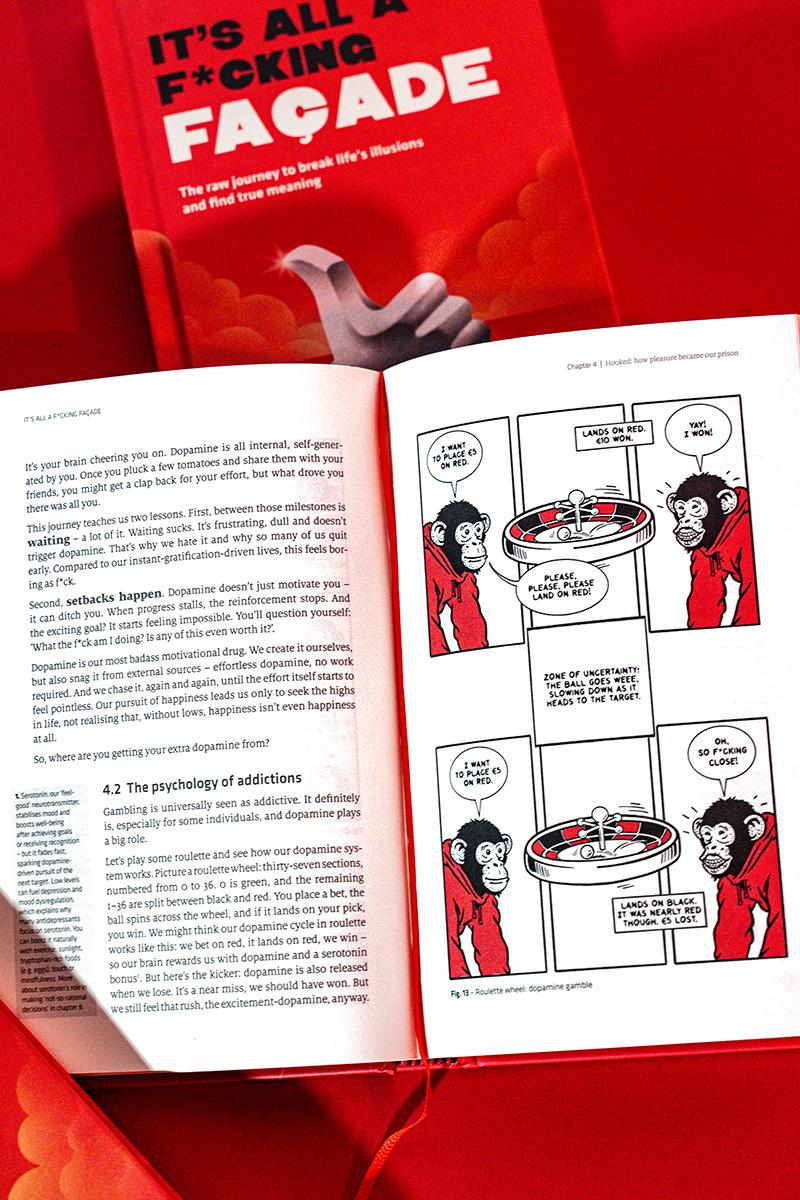 Pages from the book
Ciappara got so sucked into understanding where the book would take him that he was writing almost every waking hour of the day by the end of it.
Charles Cassar, former president of the European Association of Psychotherapy and the Maltese Association of Psychotherapy, has written the foreword, and both are open about Ciappara’s psychotherapy sessions.
Seeing a psychotherapist was something most people should do, he advised.
“Not everyone may need the same intensity, but the taboo, especially in our country, is incredibly damaging to many who may be discouraged from seeking help when they need it”.
Ciappara was also open about his own “cringe-worthy moments”, listing too many to mention.
But an embarrassing situation that may have led to one of his best lessons was when he had to present his own products to his company and experienced a deer-in-the-headlights moments, where he completely froze.
“I could not even speak. It tore me apart as I am incredibly passionate about what I build, and I had to be saved by the CEO, who realised I was not going to be able to talk,” he said.
These situations made the content a lot more relatable, “ensuring that people do not feel alone”, Ciappara said.
While the author was back working in the iGaming industry for the moment, he was now armed with his self-help book – a process that proved to be a cathartic experience of “continually cracking at my own comfortable lies”.
Writing the book shaped him dramatically, he said, “as the more you understand yourself, the more you can understand and empathise with others”.