‘I won’t govern with the stick’ − Abela on traffic, construction, politics
Robert Abela says there's plenty more to do before he calls an election
In his first sit-down interview with Times of Malta in a year, Robert Abela discusses Budget 26, the country's challenges and how the country can find justice after Daphne Caruana Galizia's murder.
HG: Budget 2026 was a positive one, yet many say expectations were raised so high that they felt no real impact. Wasn’t it meant to be the best budget? Am I mistaken in that analysis?
RA: People reacted very positively. There was a €9.3 billion investment. And left money in people’s pockets. A middle class couple earning less than €60,000 will save €257,000 over 25 years, it’s phenomenal. We managed to do that because we have the best economy in the EU.
HG: The only scientific test of its impact so far is last weekend’s Malta Today survey. Labour remains ahead but the gap remained the same. You didn’t comment on it last week – why?
RA: And I have no intention of commenting on it today either, just as I never comment on surveys. The real survey is the election. I never commissioned a survey before I became prime minister... I admit I don’t believe much in them. Because the real survey is what you hear inside people’s living rooms.
HG: Although the Labour Party remains ahead, the gap has narrowed. Could it be that perhaps after 13 years, people simply want change because chronic issues won’t change until the government changes.
RA: Despite the challenges, people believe Labour provides the best solutions. The biggest challenge you can ever have, and which I believe is where we are managing well, is keeping people comfortable financially, because that contributes directly to quality of life.
Meaning, you can never separate quality of life from financial comfort; you don’t have one without the other. It is not the only aspect of quality of life, but one of the most crucial.
HG: Don’t you think there are more profound problems? Problems that are caused because of the money you speak of.
RA: I disagree with you. Improving the financial standing of people must remain the priority of every government. I do not say that money is everything either; there’s quality time. That is why I announced the national environmental project of White Rocks.
We could only do that because of the economy. Between White Rocks and Manoel Island, the revenue foregone is hundreds of millions.
On construction and development
HG: There is broad agreement on White Rocks. But the fact remains that although we are seeing the GDP rising, we have youths who cannot afford to buy their first property. And you have people who have to go abroad to enjoy the environment. Don’t you think the time has arrived to start looking a bit at ‘gross domestic happiness’ instead of GDP?
RA: One of the main aims of Malta Vision 2050 is that while the traditional measurement was GDP, now we will be moving towards the measurement of life satisfaction.
You mentioned that people our age want to go abroad; that is why we mentioned these two massive environmental projects. And today I will add a third one. We are in the process of bringing Manoel Island back and giving it to the people.
It’s a very intensive process going on right now; meaning, it is not easy. You have a contract that favours the developers, but we secured a commitment that there will not be development. The same with White Rocks.
It’s necessary to go for a third large site our people can enjoy.
And I looked at the north of the country, towards the Selmun side, and Fort Campbell came to mind. The fort has been in a dilapidated state for a number of years. There were many who told me Fort Campbell should be an integral part. However, I believed that [while] a part, yes, goes for investment, the other part must go to our people.
I am announcing today as well that that fort will be restored, and we will also create a place for our families, a place for the people where they can go relax. Beautiful views, beautiful surroundings. And that is the way we want to work.
You mentioned the issue of property affordability. I speak to youths daily and I understand that is a primary challenge. However, if you see the plethora of measures we introduced... the grant of €10,000, the preferential tax rate to first-time buyers, the equity sharing scheme... Tell me, which country does the government enter as a partner with you in the property?
Something else I wish to do is raise the ceiling of the preferential tax rate for first-time buyers. However, if we look statistically, you have 82% of our population that owns its home.
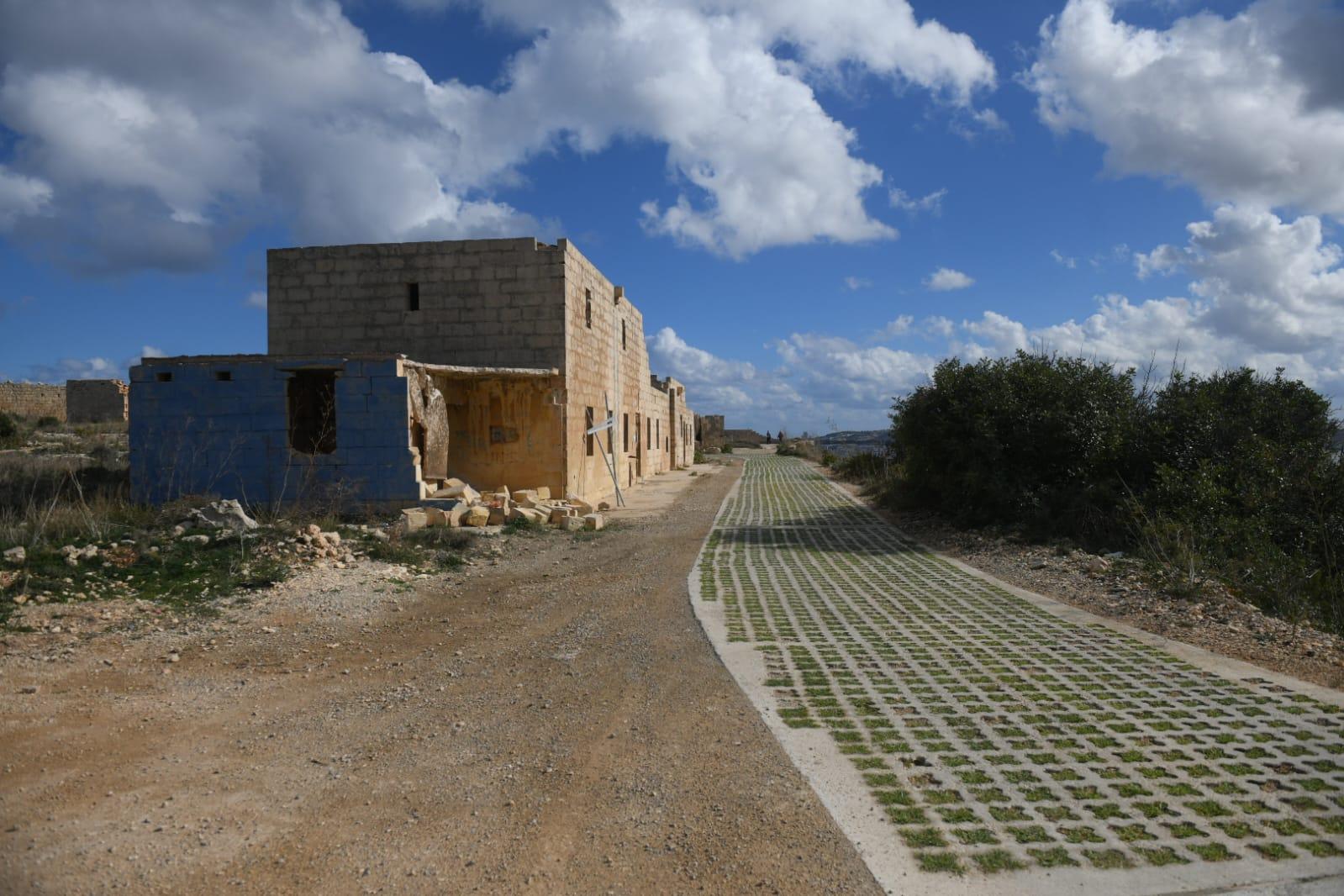 Fort Campbell lies in a dilapidated state. Photo: Matthew Mirabelli
HG: While people will be happy with the Fort Campbell announcement, they are hesitant of that Planning Authority notice being affixed next door; that they are going to demolish the house next to them and build a block of flats. Broken pavements, cranes everywhere. This is affecting their quality of life. You’re telling people go drive to White Rocks or Fort Campbell to enjoy a bit of environment while their village is being ruined. Don’t you think the horse has bolted already?
RA: No.
HG: Don’t tell me those villages still look the way they did in the past?
RA: There are changes. They didn’t start 10 years ago because construction didn’t start 10 years ago...
HG: No, but it’s now on steroids.
RA: Construction has accelerated, there is no doubt about that. However, just as much, we’ve been stringent with ODZ. We didn’t do like others who, inserted a zone the size of Siġġiewi, which was ODZ, into the development zone. Do you expect that whoever is the owner of that land won’t develop?
HG: Malta changed dramatically in the last 10 years.
RA: Development is not only done by big developers. You have a plethora of people who have that one plot that perhaps they inherited from their parents, they demolished it, developed a small block of apartments. What was ODZ, we left that way... You have the planning laws reform which is pending and I am not going to run from it.
HG: Construction contributes 4.3% to 4.6% to the economy, nowhere as close to sectors like tourism. When you see the cost it inflicts to tourism, the uglification of the country, people’s quality of life, dust, traffic, deaths, don’t you say: ‘I have too many disadvantages with this sector, let me try to do something to truly control this sector’? Because for 4.6%, it is not worth the quality of life of the people.
RA: First of all, the way one carries out construction. We have quality projects. This week we inaugurated Verdala. It respects quality development and I think no one is saying that development is making the surroundings ugly; rather, it complements the residences of the surroundings. Why can’t that model be replicated?
Of course, we can say: ‘listen, despite the local plan today giving you the right to develop, or you even have a permit, the government will legislate and say that you cannot develop that.’ However, it creates a profound social injustice.
HG: The property owner might benefit but the neighbours are seeing their street ruined.
RA: The choice is between taking draconian measures and a question of balance. You mentioned the fatalities on work sites. We have industrial fatalities in this country everywhere.
What did we do to address that phenomenon in construction? Ask anyone developing a site and the biggest complaint is OHSA and BCA pestering them as they perform regular inspections every week. And God forbid it wasn’t so.
I do not believe that the people, in their majority, are against the construction sector, but they are against those who abuse.
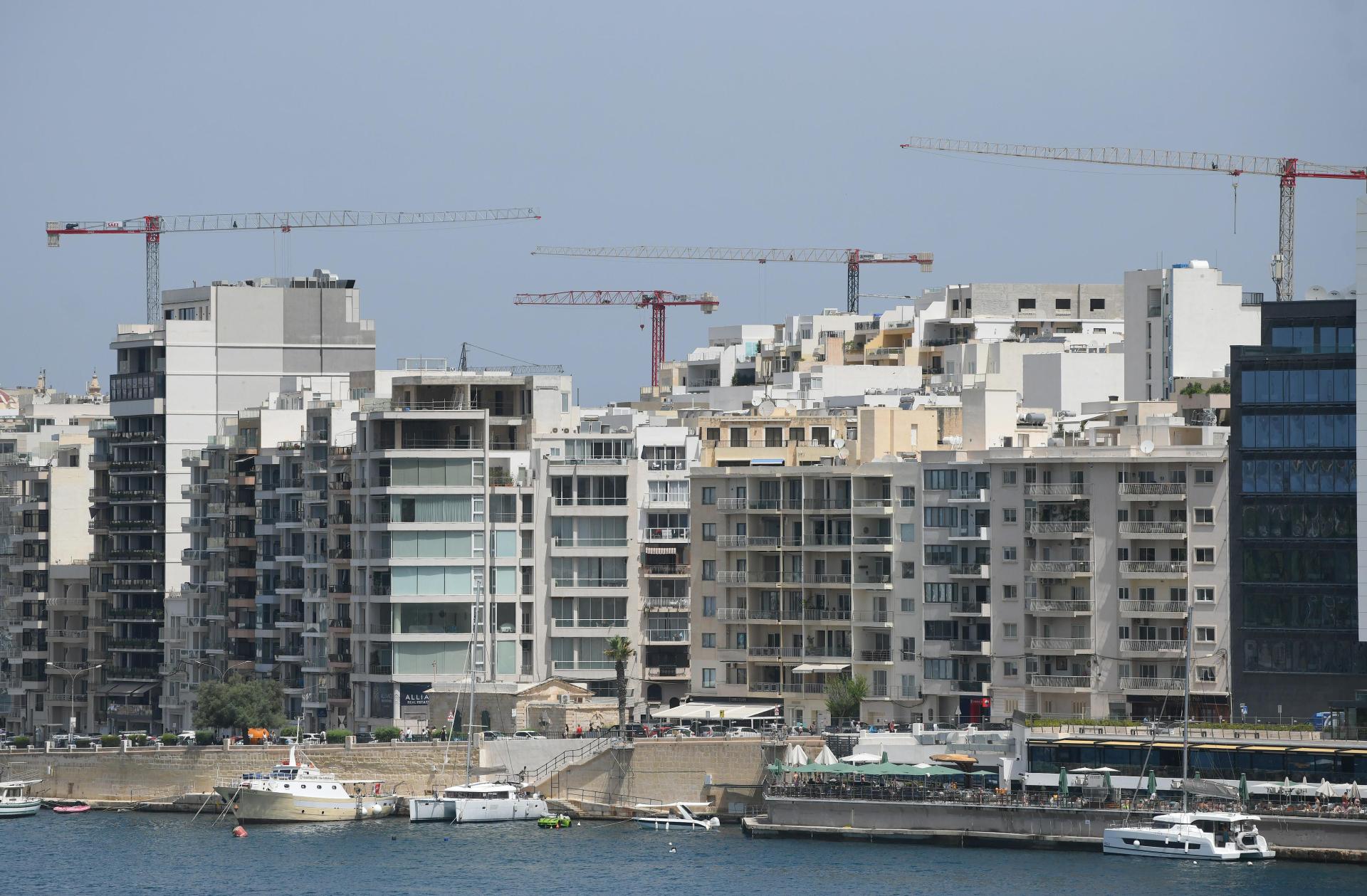 The urban sprawl in Malta.
HG: In surveys, everyone cites construction... but let me mention another issue. We’re in a situation where people demolish grandma’s house, build three luxury flats that sell for €500,000 each, and yet we see youths who can never afford to buy a place for half a million, while the government is coming up with schemes of affordable housing... Isn’t this system a bit schizophrenic? And who is buying €500,000 properties? Speculators, contractors... adding to their second, third, fourth property.
RA: And what if you keep part of that building within the family. What we truly need to address, where I believe there is an element of disappointment for the sector, is the question of property affordability. While we introduced several measures, affordability remains a challenge, and people are equating that anger towards the development sector.
HG: There is no need for draconian measures. Do you know how many vacant properties there are in Malta? Thousands.
RA: We give thousands as an incentive for vacant properties in the UCA.
HG: Why don’t you tax properties left vacant for no justifiable reason.
RA: Because I believe in the politics of incentives, not the stick. We give properties that have remained vacant for 20 years or more massive tax exemptions. I believe you should incentivise them.
While we introduced several measures, [property] affordability remains a challenge
HG: But you are hurting others. Instead of occupying vacant properties, we are building apartment blocks.
RA: You help people by putting more money in their pocket and giving more incentives so they can access the property sector.
HG: The planning laws. What are you going to do? Because we have been hearing they will change, and meetings are being held, and we’re almost at the end of the year.
RA: We are still in a process where the cabinet sub-committee is analysing the reactions, mostly from NGOs. We have not reached agreement yet; particularly where it concerns Bill 143.
HG: What are you disagreeing on?
RA: There are several points. We will not be stomping our feet and we will not do anything before there’s broad convergence between what the NGOs are telling us and the people.
HG: Do you accept the strategy was wrong?
RA: We could have had a public consultation before. Yes.
HG: But then you were exposed.
RA: I disagree with you. The drafts made it to parliament the same way the Nationalist Party wanted to reform our constitution in the past. I’m making it clear: I will wait until I see major convergence, particularly on Bill 143... But that is why I am prime minister, to decide as well.
HG: I think the prime minister needs the backing of the parliamentary group as well. I’m hearing that you don’t have this backing.
RA: I disagree with you.
HG: Do they all agree with you?
RA: I make a distinction between the two bills and the legal notices. Even I have certain reservations on Bill 143.
On traffic
HG: The second issue mentioned in surveys is traffic. We have approximately 37 new cars daily on the road. Do you fear we will reach gridlock?
RA: No, not unless we keep investing in infrastructure. I believe the solution is the accumulation of various measures. You don’t have one measure that will solve everything. We are discussing mass transport, and working hard in that direction with ARUP.
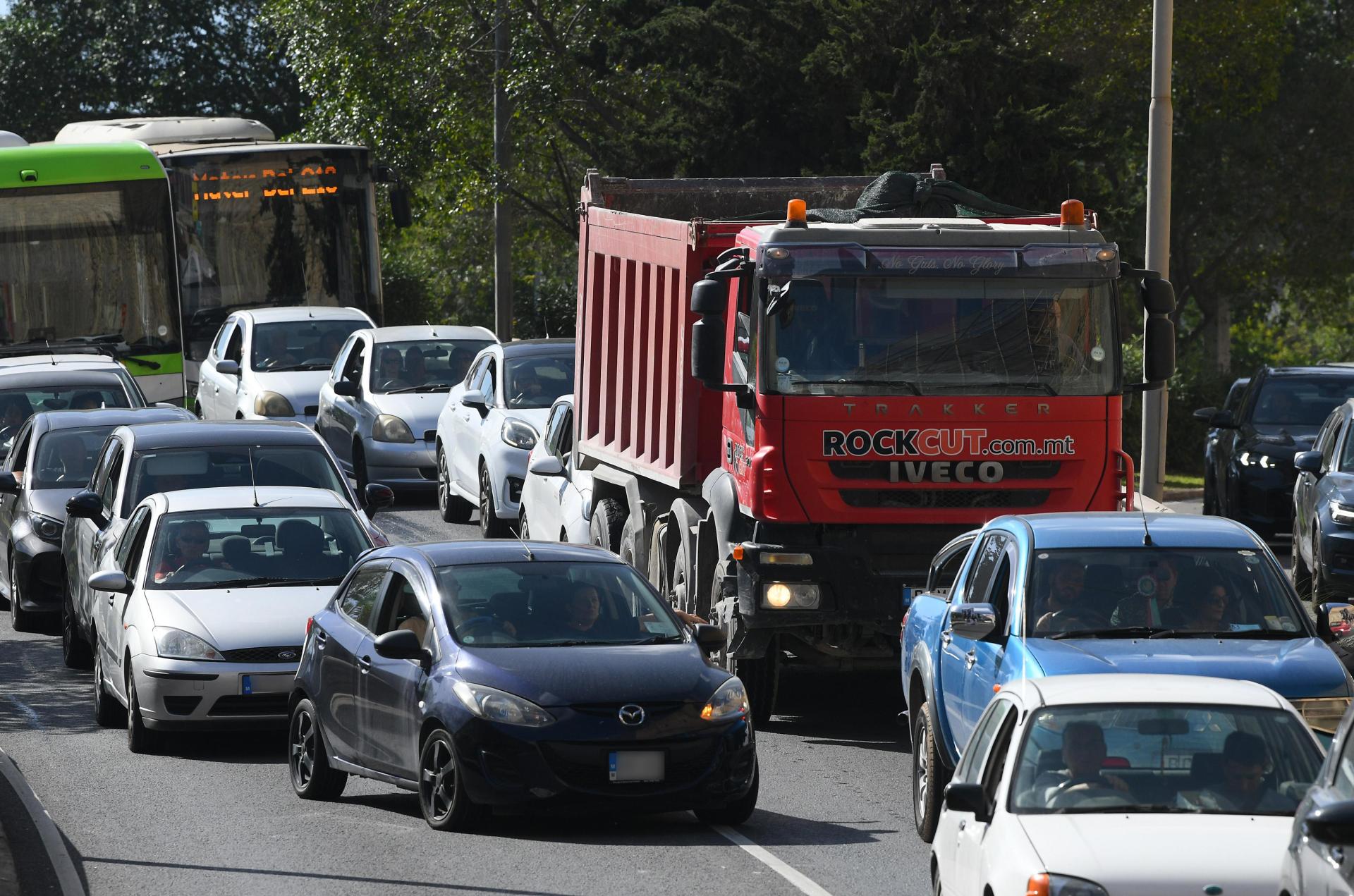 About 37 cars are added daily to our roads. File photo: Matthew Mirabelli
HG: Will these studies ever be completed?
RA: The studies are very complex. We are talking of a (mass transportation) project costing around €3 billion. However, that is a project that takes 15-20 years.
HG: What can you do in the short term?
RA: One of the solutions is sea transport. We also need better utilisation of our roads. We have a country that works over a span of 12 hours a day. And the demand we are trying to find the answer is especially in the commerce sector, like utilising non-peak hours.
HG: Do you know how long we’ve been talking about these proposals? Ten years.
RA: And we will get there, but again... not with the stick but with the carrot. We need better management of traffic; we are seeing better management of traffic from LESA officers, Transport Malta, police.
HG: I know you don’t like the stick approach because it will harm you politically. But, ultimately, no government has had the guts to punish the use of the car. Convince me to start catching public transport and keep the car at home. The transport minister yesterday said he has no intention of reducing parking even if a report showed the spaces were disrupting public transport.
RA: I disagree with you. We again moved with a carrot approach... I mention free public transport, the same by sea. I don’t believe in penalising the use of vehicles to find solutions. We invested in park and ride facilities.
HG: Of course, there have been incentives, even to encourage the use of motorbikes, but we still have 37 new cars a day.
RA: We invested in infrastructure. Had the investments not happened, the situation would not have improved... I mention the Msida project happening right now, that will help.
HG: When the Marsa junction was being built we were told we could almost fly through the area. It simply shifted the bottleneck elsewhere.
RA: The Marsa, Luqa and Kappara junctions helped. Long term... we need an accumulation of measures. We need to spread traffic over a longer span of hours... Deliveries could be done in the evening hours.
On population
HG: Which leads me to the next big problem coming out of the surveys: overpopulation. Again, this is because it’s feeding an economic system that has been going on for at least 10 years.
RA: They are not going up at the same rate, and we reduced it a lot. The goal of the Labour Migration Policy was not to close the tap for foreign workers.
The new policy will ensure foreign workers need to know the Maltese system, have very basic knowledge of the Maltese language and so on. Employers now can no longer engage and fire for no reason.
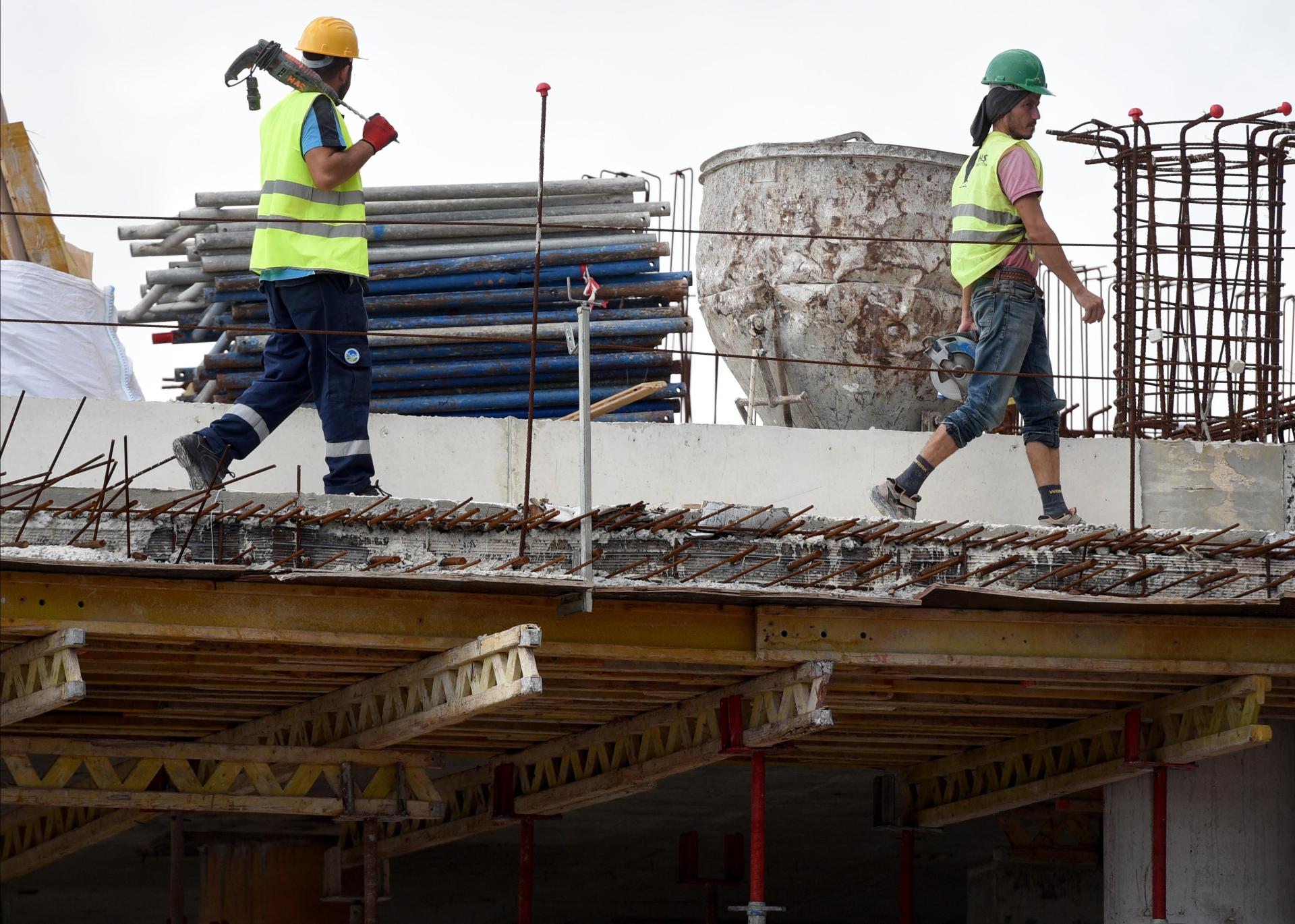 Foreign workers living in Malta have inflated Malta's population. File photo: Chris Sant Fournier
HG: Meanwhile, in the last 10 years, the public sector ballooned by more than 10,000 workers. Don’t tell me these are all productive workers.
RA: I disagree with you. Nurses, police...
HG: I’m not referring to those roles. I mean customer-care officials and similar positions. The private sector urgently needs Maltese workers. Doesn’t it make more sense to shift some of the many Gozitans employed by the government ‒ including those validating Gozo ferry tickets ‒ into private-sector jobs where they could earn more and be more productive?
RA: Government hires only when there is a need. Malta Vision 2050 aims for a stronger, more tech-driven public service. Work remains essential. Just look at current layoffs across Europe, even major economies like Germany are struggling.
On the hospitals case
HG: I’m not suggesting everything’s a disaster, heaven forbid. One of the things I think you agree with me that went terribly wrong in these last 10 years was the hospitals case. I know you inherited the problem.
RA: And we solved it as well.
HG: When the ICC case came out with its decision, the government bragged it didn’t establish fraud when you know the tribunal’s job was not to establish fraud. Meaning the claim was an absolute lie.
RA: Absolutely not. You have a specific paragraph that specifically concludes on that point.
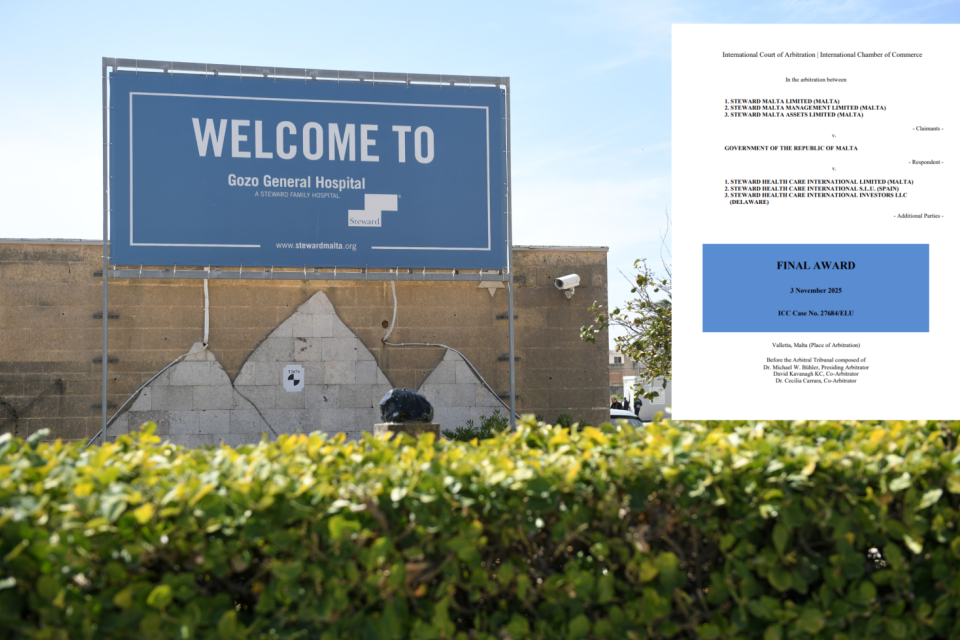 The Gozo General Hospital and (inset) the ICC decision.
HG: It wasn’t the tribunal’s job to establish fraud.
RA: I invite you to find it... which specifically says the biggest change between the sentence of the first Court of Judge Depasquale and the sentence of the Court of Appeal of the three judges... meaning that while the first sentence found fraud on the part of Steward/VGH, the Court of Appeal moved to this principle it called collusion. However, the thing that comes out strongest repeatedly was this lie the Steward ran away with €400 million...
HG: The tribunal had one clear conclusion: ‘Maltese citizens were the biggest losers’.
RA: But not because they lost one cent from their taxes. Not only did the people receive services for every cent they paid, but for the duration Steward gave us value of more services than they were paid for, and in fact a balance of €4.7 million remains.
HG: I am contesting the government’s decision to declare victory.
RA: I did not mention the word victory.
HG: The government’s been saying it everywhere, I’m even expecting to see billboards...
RA: When you have a claim of €148 million against you and you win that... you think we didn’t defend the national interest as well? Before this tribunal came out with a certificate from three arbitrators of international reputation that despite the concession not succeeding, the Maltese people did not suffer prejudice from their tax... isn’t that a certificate too? Did I wish the Steward concession succeeded? I wished it, but the reality... the tribunal said they had a concession that is not bankable.
On Labour insiders
HG: You’ve been prime minister for six years in January and you had a baptism of fire because of COVID. At the time I remember many applauding you for taking action against certain notorious characters who damaged the government or country. In these last few years, those characters seem to be coming back. Don't you think this strategy...
RA: Who are you referring to?
HG: I have a litany of people. Let’s mention someone who was recently in the news: Neville Gafà. Was it a mistake to bring him back?
RA: While Neville Gafà was doing his work, his role became incompatible with comments he started making. Meaning I cannot accept the situation where you have a person engaged with a Parliamentary Secretary who comments against the ambassadors of our country or writes articles incompatible with the government’s principles.
HG: You mean when he spoke about the LGBT sector...
RA: I meet with that community, and I listen to their pains, realities and aspirations. For me it was... unacceptable.
HG: When Gafà was involved in the removal of flowers (in memory of Daphne Caruana Galizia) you said it was freedom of speech.
RA: I make a distinction between his opinion on the Great Siege Monument which represents the Maltese people’s great victories. There is a debate...
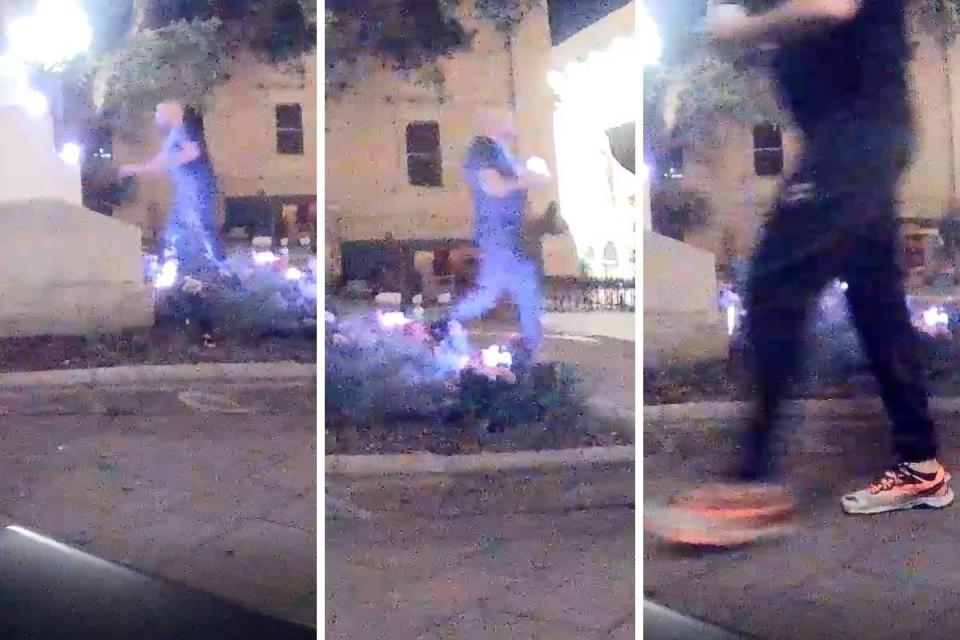 Hidden camera footage shows Neville Gafà removing tributes left at the temporary memorial to Daphne Caruana Galizia on the eighth anniversary of her murder.
HG: Even if those actions were stifling the freedom of expression of the people laying the flowers.
RA: They can go to court and argue it out. But when I see attacks on ambassadors, who I worked so hard to fix our relationship with. Remember we had to deal with Moneyval, FATF and Venice Commission. I don’t want to boast but we passed with flying colours. And ambassadors played a major role in that. Our country’s reputation was not stellar but we ended up presiding over the OSCE, with a non-permanent seat at the UNSC and we’re wrapping up presidency of the Council of Europe.
On winning moderate voters
HG: Let’s talk about Jeremy Camilleri, a well-known socialist, who wrote last week: “Labour lost half the moderates through its planning reform proposals, attacks on its critics, the perception Labour now represents hunters and out-of-control construction.” When someone like Jeremy is warning you’re losing moderates...
RA: What I can say is I meet Jeremy often. I enjoy learning his perspective. When it comes to hunting, I beg to differ.
HG: It’s a free-for-all.
RA: I don’t think so. Hunters’ complaints show there are many sides to the issue. Regardless of my views on hunting and trapping, I believe traditional pastimes should be protected. Hunters say others misled them, while we were honest. They feel enforcement and penalties are too harsh. I understand Jeremy, and we speak often. Planning isn’t a closed chapter, and he may be satisfied with the final outcome.
HG: In 2013 Joseph Muscat managed to win over moderates.
RA: I think we’re appealing to moderates. In our we position on civil rights... I am completely committed to them and think we can do more.
You win moderates with social policies. Take the big investments we’re making in healthcare, or in our social safety net. That’s what defines socialist principles.
On a monument for Daphne
HG: You mentioned the Great Siege monument. I understand it’s a national symbol and that Daphne Caruana Galizia had major clashes with Labour. But she was killed. As prime minister, why haven’t you tried to bridge the divide between activists and the government? Couldn’t you at least visit Bidnija to show respect? It would help you appear as a statesman.
RA: I beg to differ about there being a rift. I am on good terms with the Caruana Galizia family.
But the biggest sign of respect was justice. It was a very difficult case to investigate, that involved foreign authorities. A number of people were arraigned and found guilty.
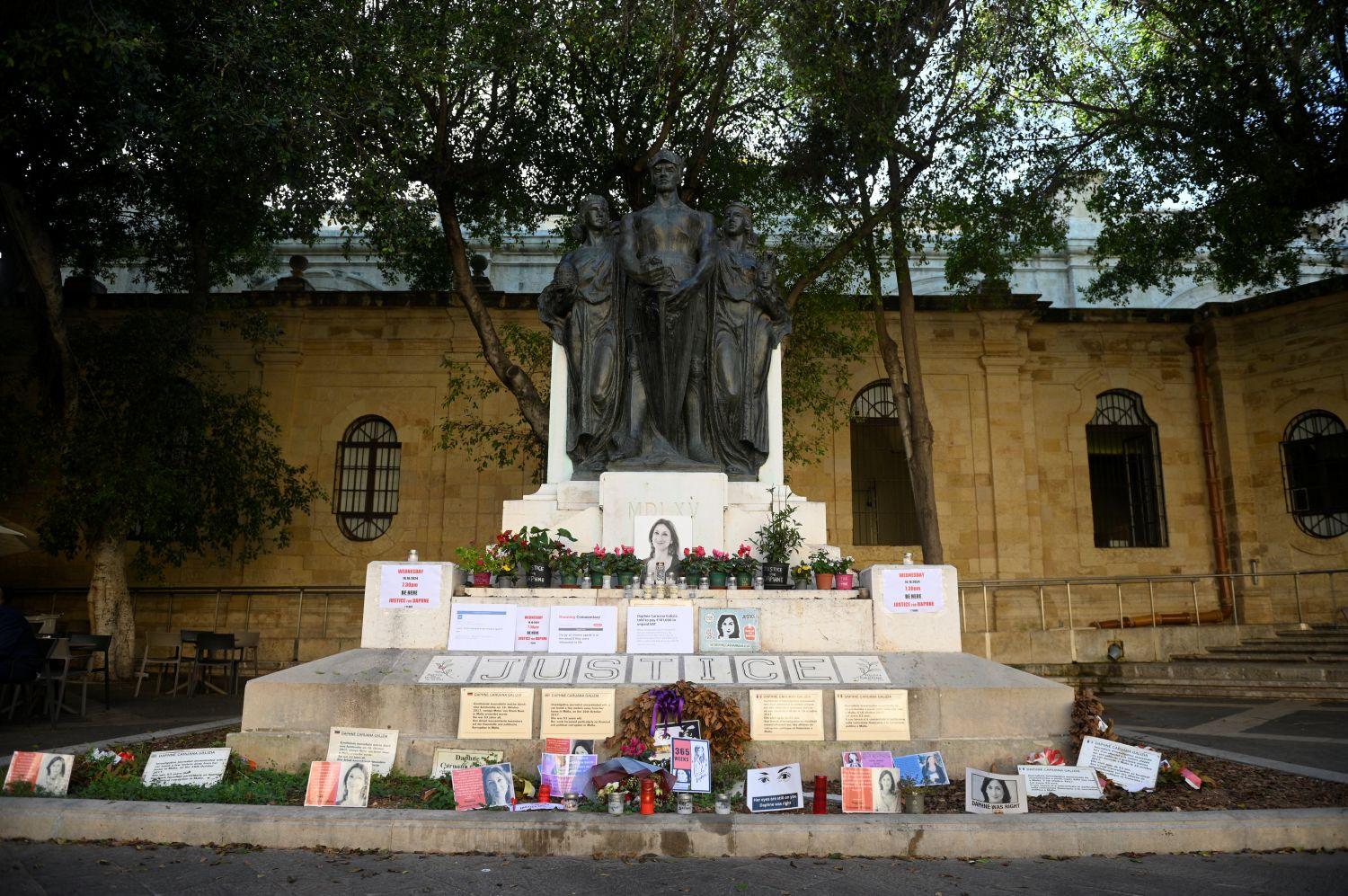 The temporary memorial to Caruana Galizia at the foot of the Great Siege monument.
HG: It’s still a national wound.
RA: I think justice will heal it. 90% is already closed.
The jury trial remains, which I understand will happen in the next months. And once that ends, everyone involved will have been sentenced. It is that justice that must bring closure.
HG: But optics are also important.
RA: I show respect every day, to her memory and her family.
HG: What stopped you from going to Bidnija? Everyone has been, from von der Leyen down...
RA: I think there should be a monument dedicated to Daphne Caruana Galizia in Bidnija. Why is there no initiative to have a monument at the crime scene? Why this monthly controversy?
HG: We are talking about someone killed. Is it right for them to see flowers and candles removed every month?
RA: I don’t want to belittle the gravity of what happened back in the years.
I have been consistent on this.
On Alex Borg
HG: Alex Borg is the new leader of the Nationalist Party. What do you think of him?
RA: I respect my political adversary. I never veer into the personal, I always debate the argument. I never underestimate anyone. What I notice, as everyone does, is that on very serious issues… like generic medicines, he made some dangerous statements that could impact patients and industries.
He talked about work practices without consultation. He tried to amend the constitution that puts pastimes and the government into conflict.
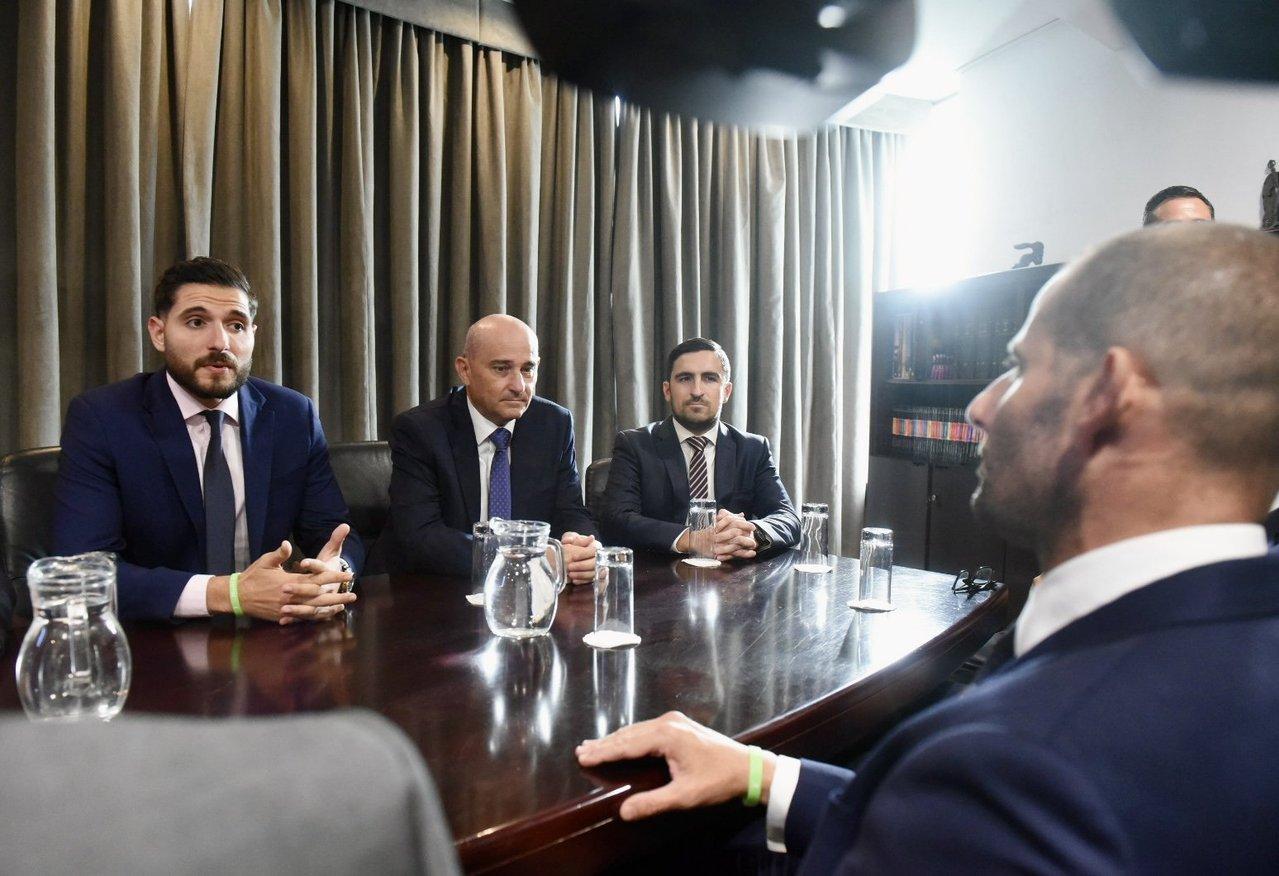 Opposition Leader Alex Borg discussing with PM Robert Abela during the latter's visit to the PN headquarters earlier this year. Photo: Charles Bonello
HG: That was government interpretation.
RA: No, it wasn’t. Imagine spending two-and-a-half years working on constitutional provision and getting it so wrong you fight with everyone.
Imagine what they’d do if they had to draft a budget. In a year and five months, people need to decide who will lead the country’s economy.
The country is producing €22 or €23 billion a year. And there are many challenges.
HG: The fact remains the gap between the two parties has been reduced. Whether it’s thanks to Borg or due to problems in government, we don’t know. But the fact remains he brought something new to the Nationalist Party, especially among young people.
RA: This time a year ago, a survey showed Bernard Grech was ahead by 12,000 votes. It is the election date that will give us a final outcome. If you ask me about young people, I see people with challenges who have so many opportunities they are seizing.
HG: We’ve almost got a presidential election. Instead of ideologies, politics has almost become a beauty contest. You and Alex Borg are both bodybuilders and success these days appears to be measured by Facebook likes.
RA: I can only speak for myself. I won’t make comparisons.
I want to talk about bringing investment to our country, improve job quality, reduce poverty. I want to address problems like housing, traffic, foreign workers. When you’re in my seat, the sweat and tears you shed when you see people’s realities certainly go beyond a beauty contest.
The weight of this seat. What used to take me hours six years ago, now I can decide within minutes. But it never gets easier. You referred to a presidential race. I beg to differ. It’s about teams.
HG: We’re heading towards that choice.
RA: There’s still time.
On an early election
HG: Let me discuss the elephant in the room. Every day, someone calls us to say the election will be held in March 10, 17…
RA: They started saying March 25. Then it became 26. Every journalist asks me this question. We have a five-year mandate and the election will be determined by the national interest.
HG: What is the national interest?
RA: Today, I don’t see any national interest need to call an early election. Christmas is coming, people should go out and enjoy it. And we’ll handle running the country.
HG: Rumours of an early election always lead to an economic slowdown. Can you give business a guarantee there won’t be an early election?
RA: I don’t see any business slowdown. I was clear. Today, I see no reason to call an early election. I can’t predict circumstances in 10 or 12 months’ time.
HG: By then it will be time…
RA: In 2022 they kept saying I’d call an early election. We ended up spending just under five years in government.
HG: So your plan is…
RA: … to run our whole mandate.
HG: So it won’t happen in March 2026.
RA: It’s a date that never even crossed my mind. Of course some people have obsessed on it.
HG: The rumours have also come from the government side.
RA: Rumours, so many of them. My focus is on implementing our 1,000 campaign promises, improving emergency and psychiatry at Mater Dei – the tender will be saved and issued. Then there’s the Ħal Far track which I’m watching closely. The horse racing track is done. One thing I’d like to be remembered for is the Grand Harbour regeneration. We will open the policy to consultation at the start of 2026. Then there’s Manoel Island, White Rocks and the Fort Campbell plan I announced today.
HG: So there will be another budget this legislature.
RA: And it will be an even better one than this one.
On 'genocide'
HG: Malta recognised Palestine. But I never heard you say the word ‘genocide’. Is what happened in Gaza a genocide?
RA: We recognised Palestine after 40 years of talks. Nobody had the courage to do what we did.
 Robert Abela with Alex Borg, Suha Arafat, and other dignitaries at the raising of the Palestinian flag at the embassy in Swieqi after Malta recognised Palestine as a state. Photo: Matthew Mirabelli
HG: True. Was it a genocide?
RA: Tens of thousands were unjustly killed. On both sides, because innocent Israelis also died on October 7.
On Muscat and Schembri
HG: Are you still in contact with Joseph Muscat?
RA: Yes.
HG: Every day?
RA: Not every day, but we talk. We meet and talk.
HG: Will he run for election?
RA: You’d have to ask him. I can say he never mentioned it.
HG: Are you still in contact with Keith Schembri?
RA: Some parts of the media gave the impression he has some role.
He has no role in the party, let me be clear. To my knowledge, he gives no policy contribution. He sends his ideas. We reply with a good morning or thank you, and when there’s a reaction to a message, I send it on. He faces criminal charges.
The interview has been cut for clarity. Watch the full interview online on Times of Malta.