Justice system mutes childhood
The Child-Friendly Justice qualitative report makes for sobering reading and casts a damning light on our persistent failure to truly see and hear children
The justice system frequently cites the principle of serving children’s best interests, yet, young people who have passed through the Family Court often tell a different story, one of feeling unseen, unheard and marginalised.
The Child-Friendly Justice qualitative report, released recently by the Malta Foundation for the Well-being of Society to coincide with Human Rights Day, makes for sobering reading and casts a damning light on our persistent failure to truly see and hear children.
This research, born from children’s courage to open up and share their experiences, shows us, clearly and painfully, how the justice system made them feel: small, powerless and alone.
I feel I cannot remain silent in the face of these profound injustices. Nothing can erase the pain etched on a child’s face when they realise that decisions about their lives, their home, their safety and their future are being made in rooms where their voice is neither welcomed nor sought. Nothing can erase the stories they share in hushed whispers, afraid of upsetting adults who stopped listening long ago.
If children’s best interests are really meant to be paramount, then why do so many say they were never asked what they wanted? Why do they say their needs were ignored? Why do they describe courtrooms that terrified them into silence?
These accounts reveal a painful truth we must stop ignoring. Children are not only falling through the cracks but they are navigating a system designed for adults, at the expense of the young.
And what compounds the harm is the pain inflicted by their own parents. This has become one of the most damaging realities surrounding family breakdown in Malta. I am in contact with families where parents spitefully refuse to sign consent forms for their children’s therapy, medication, psychological services, or even basic extracurricular activities; parents who withhold permission, not because it serves the child, but because it ‘upsets’ the other parent.
Through our work, we encounter distressing situations where children are denied therapy they desperately need; children deprived of essential medical support; and children blocked from taking part in sports, music, art, or activities that bring them joy and healing.
Weaponising a child’s mental health is abuse
Too many mothers and fathers, blinded by anger or bitterness, are using their children’s well-being as a tool of retaliation. Weaponising a child’s mental health is abuse.
Children deserve stability, support and the freedom to grow without being dragged into emotional warfare.
Courts can intervene and systems can reform but nothing replaces the responsibility of a parent. No law can fully protect a child whose parent chooses revenge over responsibility.
At the same time, we cannot keep telling children to trust a system that does not trust them enough to listen. Across Europe, and in Malta, courts still operate on adult terms and children are expected to navigate processes designed to exclude them.
While the research by the Malta Foundation for the Well-being of Society exposes the glaring gaps into which children’s voices fall, it also outlines solutions: justice processes must be designed around children; professionals must be trained to listen and engage; and decisions should be built with children, not imposed on them.
Marian Wright Edelman, a highly influential American activist and advocate for children’s rights and social justice, said it best: “If we don’t stand up for children, then we don’t stand for much.”
These words should guide every policy, every decision, every parental choice and every moment of conflict because protecting children is not only a moral obligation, it is the truest measure of our humanity.
I call on the judiciary, lawyers, policymakers, social workers, educators and, especially, parents, to stop hiding behind procedures or pride. We must stop assuming we know better than the children living through these realities.
We must begin to listen because children are not voiceless. We have simply stopped hearing them.
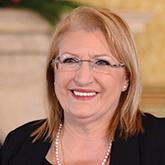
President Emeritus Marie-Louise Coleiro Preca is chair of the Malta Foundation for the Well-being of Society and special advisor to the European Commission on Children’s Interests.